
























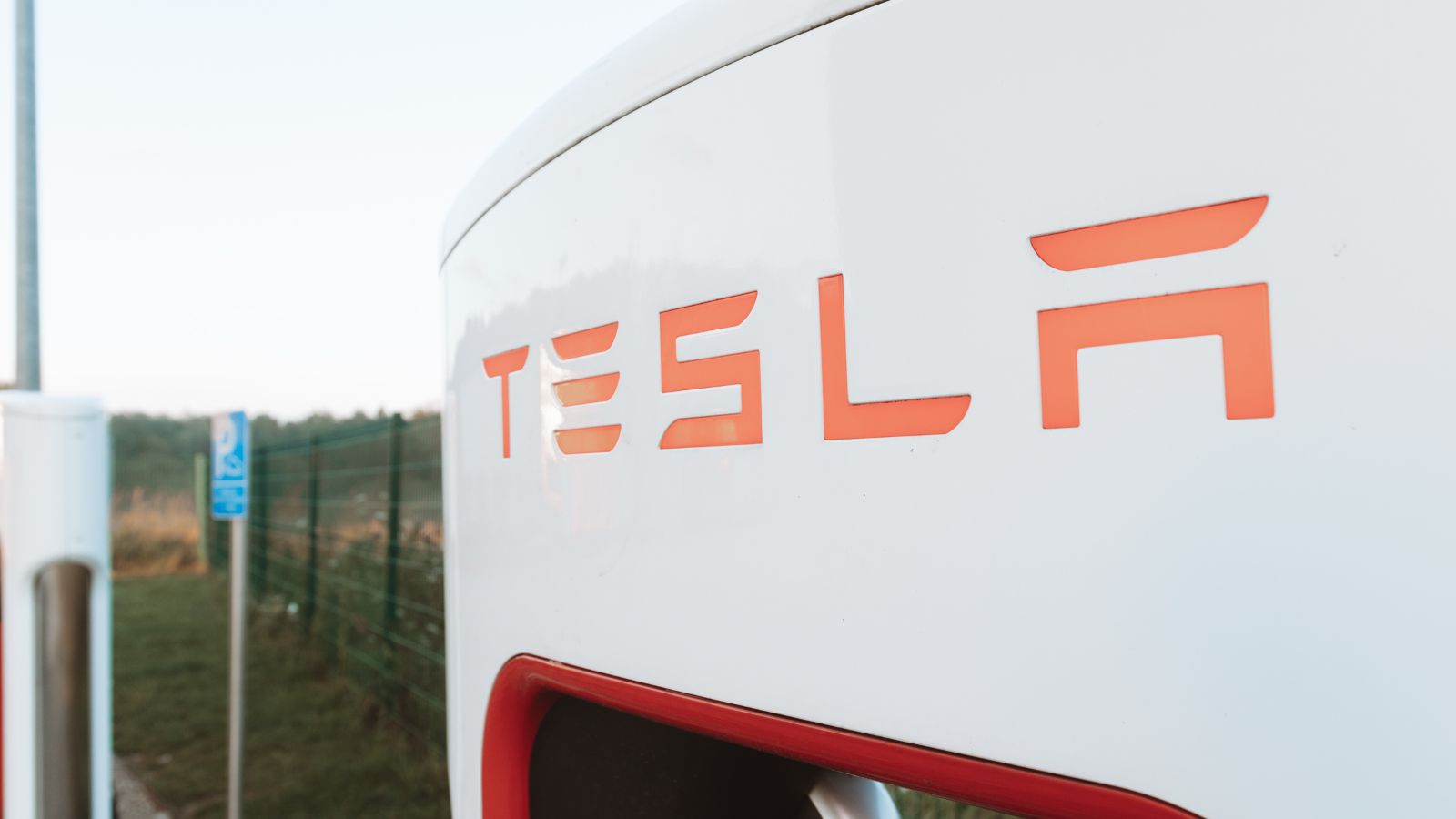
Tesla’s Canadian charging map is poised to get a little broader after drivers pushed three very different communities to the top of the company’s latest Supercharger vote. Crowsnest Pass in Alberta, Tobermory in Ontario and Mont-Laurier in Quebec have been selected as future Supercharger locations, extending Tesla’s attention beyond the country’s largest metropolitan markets and toward recreational routes, regional hubs and smaller communities.
The next decision is already underway. Tesla has opened another voting cycle containing 84 proposed Canadian locations across nine provinces and Yukon. The unusually large ballot gives EV drivers a chance to signal where charging infrastructure feels most urgently needed, although winning a vote is only the beginning of the development process.
Three Winners Put Smaller Communities on Tesla’s Map
Crowsnest Pass, Tobermory and Mont-Laurier emerged as the Canadian winners from Tesla’s latest voting cycle. Tesla lists all three among its most recent global winners, meaning each community is now expected to become one of the company’s future Supercharger locations. They are notably different from the dense suburban locations often associated with high-volume charging. Instead, each serves travellers moving through a region where distances, tourism and highway access can make reliable fast charging especially valuable.
The three selections also continue a noticeable run of Canadian communities succeeding in Tesla’s voting system. The previous round produced four Canadian winners: Drumheller, Alberta; Orléans, Ontario; Boucherville, Quebec; and Sydney, Nova Scotia. That puts seven Canadian locations among the winners of the past two rounds. For communities outside Toronto, Montreal or Vancouver, the significance is practical. A highway fast-charging stop can turn a route that requires careful battery planning into a more conventional road trip, particularly during winter or busy tourism periods when existing stations can face heavier demand.
The 84-Site Ballot Stretches Far Beyond Big Cities
The new ballot is substantially larger. There are 84 proposed Canadian sites spread across nine provinces and one territory, ranging from Vancouver Island communities to Newfoundland and Labrador and north into Yukon. Quebec has the largest representation with 24 proposed locations, while Ontario has 20. Alberta and British Columbia each have 15, and Yukon has five. Saskatchewan, Manitoba, New Brunswick, Nova Scotia and Newfoundland and Labrador each have one proposed site in the round.
The individual names reveal how much of the focus is outside traditional EV strongholds. British Columbia choices include Port Hardy, Fort Nelson, Powell River and Dawson Creek. Alberta voters can consider High Level, Grande Cache, Hinton, Wainwright, Brooks and Waterton Park, among others. Ontario’s candidates range from Bruce Mines and New Liskeard to Sarnia, Niagara Falls and several Greater Toronto Area communities. Quebec’s long list includes Val-d’Or, Shawinigan, Thetford Mines, Roberval, Alma and Sainte-Anne-des-Monts. Yukon alone has candidates around Watson Lake, Whitehorse, Haines Junction and Beaver Creek, illustrating the growing interest in filling very long-distance charging corridors.
Voting Gives Drivers Influence, Not an Opening Date
Tesla’s voting system is straightforward but should not be confused with an immediate construction announcement. The company operates the process in three-month cycles and permits participants to cast five votes, with no more than one vote going to any individual location. Tesla also invites people to suggest sites that could appear in future rounds. The leaderboard effectively gives the company another stream of demand information alongside traffic patterns, existing charger utilization and its own expansion planning.
Winning therefore moves a community forward without fixing an opening date. Tesla says a winning location will become one of its next Supercharger sites, while also noting that proposed locations can change. A physical station still requires a suitable property, electrical capacity and a workable commercial arrangement. That distinction matters when local drivers see their town appear on a winners list and reasonably begin wondering when chargers will arrive. The vote establishes a destination Tesla intends to pursue; it does not mean crews are immediately arriving with cabinets and charging posts.
Why Crowsnest Pass, Tobermory and Mont-Laurier Stand Out
The geography of the winners helps explain their appeal. Crowsnest Pass sits on Alberta’s Highway 3 corridor near the British Columbia boundary. The municipality describes Highway 3 as a major transportation route connecting southern Alberta with B.C., while the region attracts visitors for hiking, mountain biking, skiing and its mining heritage. A fast-charging location there could therefore serve both residents and drivers travelling between communities on either side of the Rockies rather than relying primarily on urban charging demand.
Tobermory occupies a similarly strategic tourism position at the northern tip of Ontario’s Bruce Peninsula. Highway 6 reaches the community, while Ontario’s seasonal Chi-Cheemaun ferry carries passengers and vehicles between Tobermory and Manitoulin Island. Bruce Peninsula National Park and Fathom Five National Marine Park also make the area a major recreational destination. Mont-Laurier, meanwhile, anchors part of Quebec’s Hautes-Laurentides region along Highway 117. Together, the winners illustrate how charging networks increasingly matter not only where EV owners live, but where they travel on weekends, holidays and long-distance trips.
Charging Demand Is Growing Even as EV Sales Cool
Tesla’s expansion arrives during an unusual moment for Canada’s EV market. Statistics Canada reported that new zero-emission vehicle registrations fell 34.7% in 2025 and represented 9.5% of new vehicle registrations, down from 14.6% in 2024. Battery-electric registrations declined particularly sharply. That cooling followed changes in consumer incentives and a burst of purchases in late 2024 as buyers anticipated rebate pauses, so slower sales do not eliminate the large and growing fleet of EVs already using Canadian roads.
Governments are still treating charging availability as an important barrier to wider adoption. Natural Resources Canada says the federal government has invested more than $1 billion since 2016 to improve EV affordability and charging accessibility. Its Zero Emission Vehicle Infrastructure Program has supported chargers at public locations, workplaces, residential buildings and transportation corridors, while federal infrastructure goals extend toward tens of thousands of additional chargers by 2029. Against that backdrop, Tesla’s 84-location ballot shows that private-network expansion is increasingly moving from basic coast-to-coast coverage toward filling regional gaps and adding redundancy.
What Happens Between Winning the Vote and Plugging In
Turning a dot on Tesla’s voting map into a functioning charging plaza requires more than demand. Tesla says ideal Supercharger host properties generally have space for at least eight charging stalls and useful nearby amenities such as restaurants, grocery stores, shops, restrooms or Wi-Fi. For Tesla-operated locations, the company says it manages construction and operation. The need to identify a host and accommodate substantial electrical loads helps explain why a winning community does not automatically receive a construction schedule.
Hardware is evolving as well. Tesla’s Canadian business materials list its V4 Supercharger post as capable of up to 500 kW when paired with appropriate equipment, while the V4 cabinet can provide up to 1,200 kW shared among eight posts. Actual charging speeds depend on the vehicle, cabinet and site configuration, but higher-capacity equipment creates room for future vehicles and heavier utilization. For Crowsnest Pass, Tobermory and Mont-Laurier, the important milestone today is selection. For the 84 communities now competing for votes, the next milestone is proving that drivers want them badly enough to join that development pipeline.