
























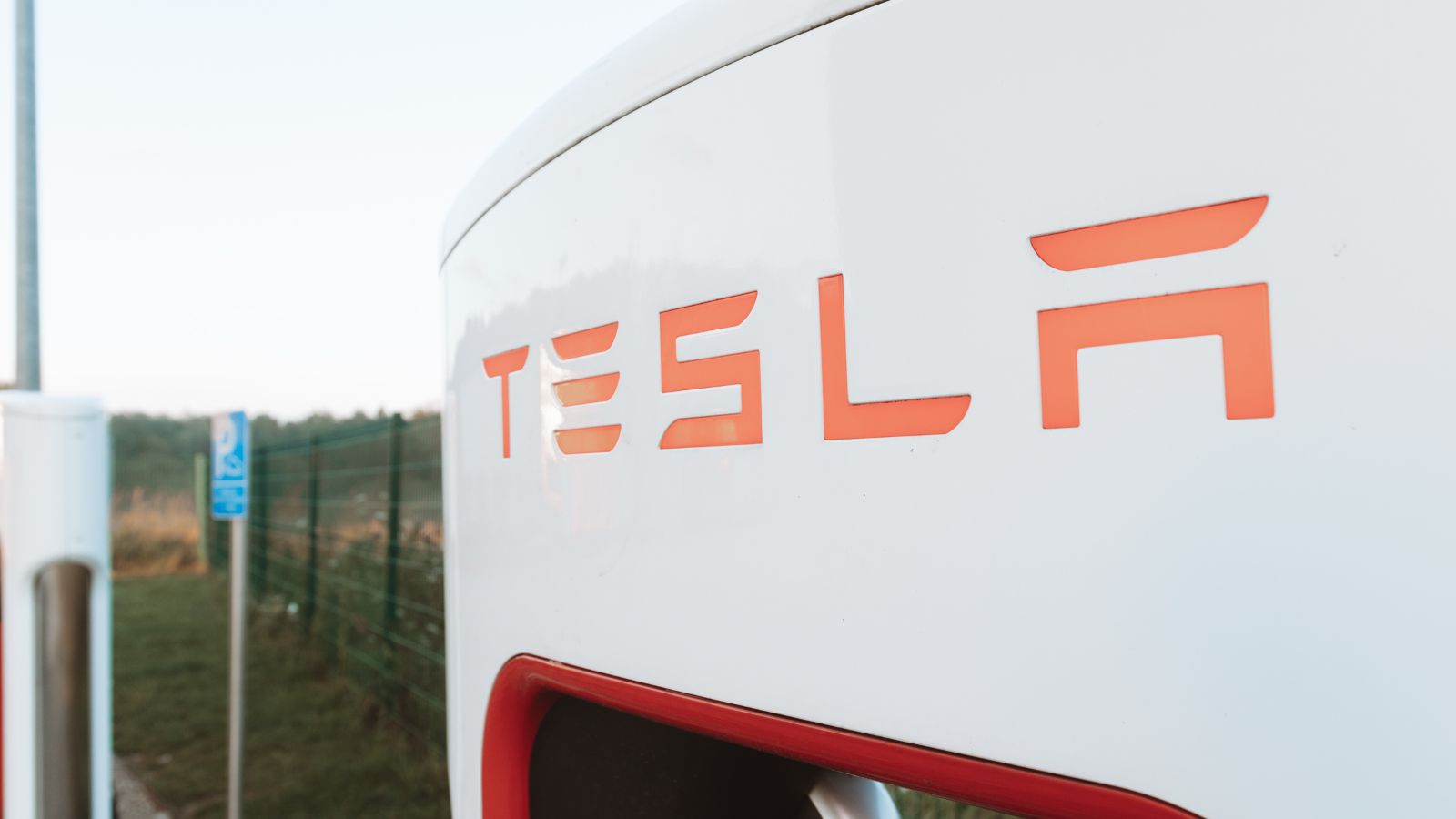
Tesla’s newest Quebec charging site has finally gone live after drivers watched the project sit in the construction pipeline for almost a year. The new Supercharger at Centre Carnaval in Drummondville officially opened on August 18, 2026, bringing 16 high-speed charging stalls to a strategically located city in Centre-du-Québec.
The opening is more than another pin on Tesla’s map. It dramatically increases the company’s charging capacity in Drummondville, introduces substantially faster hardware than the city’s older Supercharger, and offers access to compatible non-Tesla electric vehicles. In a province that has been one of Canada’s strongest markets for zero-emission vehicles, the expansion arrives as public charging infrastructure becomes increasingly important to everyday travel.
Drummondville’s Long-Awaited Supercharger Is Finally Online
Tesla officially switched on the new Drummondville Supercharger on August 18, 2026, nearly 11 months after the project was first listed as under construction. The station is located at Centre Carnaval, 565 Boulevard Saint-Joseph, giving the city another substantial fast-charging option. The lengthy construction period made the opening particularly noticeable among drivers who follow Tesla’s Canadian charging network, where projects can appear on development maps well before they become usable.
The Drummondville project entered Tesla’s construction pipeline in September 2025. Drive Tesla Canada’s tracking data specifically recorded the city as under construction on September 16, 2025. By August 2026, the site had finally moved into active service. That progression illustrates why an “under construction” designation does not necessarily mean a new charging location is only weeks away. Electrical connections, site work, equipment installation and commissioning can stretch the period between visible construction and a station actually becoming available to drivers.
The New Site Adds 16 High-Speed Charging Stalls
The biggest immediate change is capacity. Tesla’s new Centre Carnaval location has 16 Supercharger stalls, twice the number available at Drummondville’s original Tesla charging site. More stalls can become particularly valuable when several EVs arrive around the same time, such as during weekends, holiday travel periods or the evening rush. A station with greater capacity gives drivers more opportunities to plug in without relying on a single small charging cluster.
The expansion also reflects the broader evolution of public fast charging. Tesla describes Superchargers as its fastest option for charging away from home and says its newest equipment can deliver very high power when both the charger and vehicle support it. Sixteen stalls at a single property therefore represent a significant addition rather than a token installation. For a driver making a longer trip through central Quebec, the practical difference is simple: there are now considerably more Tesla charging positions available in Drummondville than there were before August 18.
Charging Power Climbs as High as 325 kW
The new station is rated for charging speeds of up to 325 kW. That figure places the Drummondville installation at the upper end of the charging rate Tesla currently advertises for its Supercharger network. Tesla also cautions that actual charging speed varies according to the Supercharger, the vehicle and other operating conditions, so a 325-kW rating should not be interpreted as a promise that every vehicle will continuously draw that amount of power.
Even so, the hardware represents a large jump from Drummondville’s older Tesla site. The original location at Les Promenades has eight Superchargers rated at up to 150 kW. On paper, the maximum power rating at Centre Carnaval is therefore more than double that of the older station. Drivers of vehicles capable of accepting higher charging rates stand to benefit most, while other vehicles will simply charge at the maximum rate their batteries and charging systems permit. The result is a site designed for newer generations of high-powered DC charging.
The Construction Wait Lasted Almost 11 Months
The long timeline is one of the most notable parts of the Drummondville opening. Tesla’s Canadian Supercharger tracking history showed the project moving into the under-construction category in September 2025. It remained there through the remainder of 2025 and much of 2026 before being marked open on August 18. That makes the journey from construction listing to activation almost 11 months, considerably longer than impatient EV drivers might imagine when physical work first appears at a location.
The delay also demonstrates the difference between building a charger and operating one. A completed-looking row of charging posts does not necessarily mean drivers can plug in immediately. Fast-charging stations require high-capacity electrical infrastructure and must ultimately be energized, tested and commissioned before opening. The Drummondville story is therefore a useful reminder that construction trackers provide evidence of progress, not a guaranteed opening schedule. In this case, the payoff arrived just before the project crossed the one-year mark on Tesla-watchers’ construction lists.
Tesla’s Drummondville Capacity Has Effectively Tripled
Drummondville already had a Tesla Supercharger before the Centre Carnaval opening. The original station is located at Les Promenades, 755 Boulevard René-Lévesque, where Tesla lists eight charging stalls with a maximum rate of 150 kW. Adding 16 stalls at the new property raises the combined number of Tesla Supercharger positions in the city to 24. In other words, Drummondville now has three times as many Supercharger stalls as it did with the older eight-stall station alone.
That extra capacity could be as important as the higher maximum charging speed. Keeping the older location operational gives travellers two places to consider rather than simply replacing one generation of equipment with another. Drivers can use Tesla’s navigation and app tools to check compatible charging locations and availability. During periods when one station is busy, having another substantial site nearby creates useful redundancy. For a city positioned along an important intercity travel region, 24 stalls provide a much deeper charging footprint than a single eight-stall site could offer.
Compatible Non-Tesla EVs Can Charge There Too
The Centre Carnaval Supercharger is not exclusively useful to Tesla owners. The new location is available to compatible non-Tesla electric vehicles using the North American Charging System, including qualifying CCS-equipped vehicles with an approved NACS DC adapter. Tesla has gradually expanded access to its North American charging infrastructure as automakers adopt NACS ports or provide adapters capable of connecting their existing vehicles to compatible Superchargers.
Tesla currently identifies numerous manufacturers with access to its NACS Supercharger network, including Ford, General Motors, Rivian, Hyundai, Kia, Nissan, Mercedes-Benz, Volkswagen, BMW, Toyota, Honda and several others. Eligibility can still depend on the specific vehicle and charging site, so Tesla directs drivers to enter their vehicle information in its app to identify compatible stations. For Drummondville, that broader access matters because the 16 new stalls can potentially serve part of Quebec’s overall EV population rather than functioning only as infrastructure for one automotive brand.
Non-Tesla Drivers Currently Pay a Higher Charging Rate
When the Drummondville station opened, Drive Tesla Canada reported a charging price of $0.29 per kilowatt-hour for Tesla vehicles and $0.41 per kilowatt-hour for other compatible EVs. That produces a 12-cent-per-kWh difference at the rates reported on opening day. The final cost of a charging stop naturally depends on how much electricity the vehicle takes on, making the rate more important on a large battery refill than on a short top-up.
Those prices should be treated as a snapshot rather than a permanent tariff. Tesla states that Supercharger pricing can change over time and that some locations may use different rates depending on conditions such as time of use. Non-Tesla drivers can also purchase a Supercharging Membership, which Tesla says can provide Tesla-vehicle pricing at eligible sites when charging through the app. For anyone planning a trip around Drummondville, checking the Tesla app shortly before plugging in remains more reliable than assuming the opening-day rate will remain unchanged indefinitely.
Drummondville Sits in a Useful Intercity Travel Region
Location gives the new station significance beyond residents who live within Drummondville. The city sits in Centre-du-Québec between the province’s two largest metropolitan destinations, Montréal and Québec City. Official Quebec tourism information describes Drummondville-area accommodations along Highway 20 as roughly halfway between Montréal and Québec City, underscoring the community’s long-standing role as a practical stopping point for travellers crossing this part of the province.
EV charging works particularly well when infrastructure is available where motorists already stop for food, shopping or a short break. The new Supercharger’s Boulevard Saint-Joseph location is surrounded by existing commercial activity. ChargeHub identifies restaurants, retail businesses, lodging and other charging infrastructure within a short distance of the site. That means charging does not necessarily have to feel like a separate destination. For motorists travelling through Centre-du-Québec, a stop can combine the electricity needed for the next leg with ordinary errands or a break from the road.
Quebec Remains an Important Market for EV Infrastructure
Quebec’s unusually strong history of EV adoption helps explain why charging additions in the province attract attention. Statistics Canada reported that Quebec accounted for 53.9% of all zero-emission vehicles sold across Canada in 2024. Zero-emission models represented 30.1% of new vehicle sales in Quebec that year, compared with 13.8% nationally. Those figures include battery-electric and plug-in hybrid vehicles and predate several changes to government incentive programs, but they demonstrate how large Quebec’s role became in Canada’s electrified-vehicle market.
The policy environment is now changing. Quebec’s Roulez vert program provides up to $2,000 in assistance for an eligible new fully electric vehicle registered in 2026, down from $7,000 in 2024 and $4,000 in 2025. The provincial government says the purchase-incentive program will end on December 31, 2026. As purchase subsidies decline, practical considerations such as charging availability, reliability and highway coverage may become even more visible to consumers deciding whether an EV works for their daily lives.
Drummondville Is Part of a Wider Quebec Charging Expansion
The new Centre Carnaval station is the fourth new Tesla Supercharger location reported to have opened in Quebec during 2026. Earlier openings tracked during the year included Sherbrooke in January and new locations in Quebec City and Laval in March. Drummondville’s August activation continues that expansion while delivering a particularly noticeable capacity increase because another Tesla station was already operating in the city.
The broader direction of Tesla’s network is also changing. Tesla says select North American Superchargers are increasingly accessible to vehicles from other manufacturers, while newer NACS-equipped EVs can connect without the adapters required by many earlier CCS vehicles. Tesla’s Canadian Supercharger information also emphasizes app-based route planning, charger availability and charging-status monitoring. In Drummondville, those larger trends have now materialized as something tangible: 16 new high-powered stalls, a second local charging site and access for a wider range of EVs. After nearly a year on the construction list, the station is finally part of the road-trip network rather than simply a future promise.