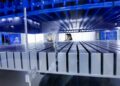














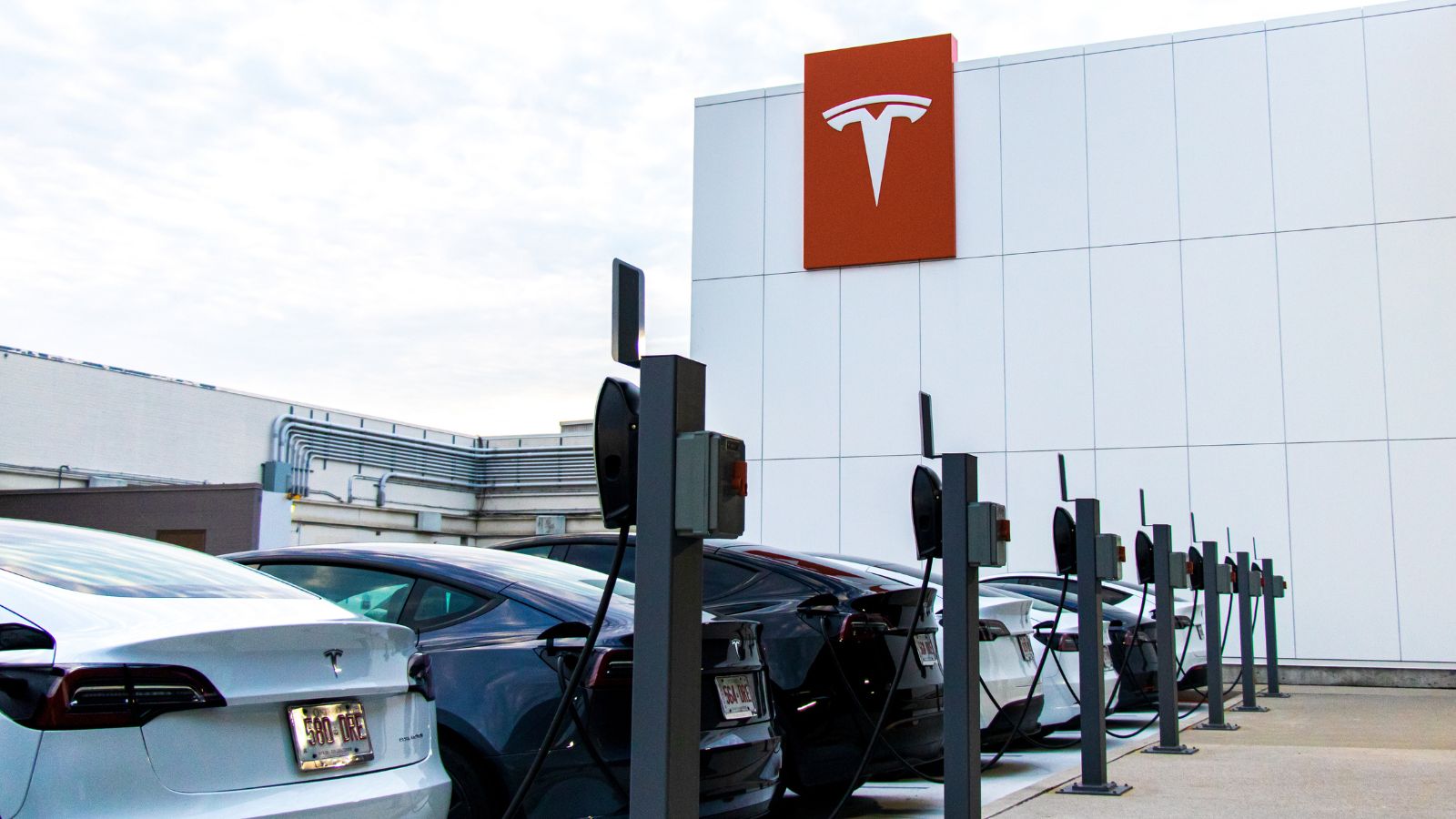
Tesla’s footprint in Vancouver is getting a major upgrade. The electric-vehicle maker has begun operating from a sprawling new facility in the city’s Strathcona neighbourhood, bringing sales, deliveries, vehicle preparation and servicing together at a purpose-built centre measuring roughly 120,000 square feet. Tesla and developer Beedie have described the project as the automaker’s largest service facility in North America and its highest-capacity service location in Western Canada.
The Raymur Avenue centre arrives at an important moment for electric vehicles in British Columbia. More than 238,000 light-duty zero-emission vehicles were registered across the province by April 2026, creating an increasingly large fleet that needs repairs, maintenance, parts and customer support long after the initial sale.
A Tesla Facility Built on a Much Bigger Scale
The new centre occupies a roughly 1.6-acre industrial property at Raymur Avenue, close to Strathcona Park and Vancouver’s established employment lands. When the project was announced in late 2023, plans called for a two-storey building of approximately 120,000 square feet. Beedie’s current project page lists 118,000 square feet, making “roughly 120,000 square feet” the safest description of its completed scale. Either figure places it far beyond the dimensions of a conventional urban car showroom. The building was designed primarily around electric-vehicle servicing, preparation and delivery rather than functioning simply as a retail storefront.
Early project details provide a better sense of what that size means. Real Estate News Exchange reported that approximately 63,000 square feet was earmarked for service and repair work, while about 15,400 square feet was planned for office and staff functions. City of Vancouver records described a two-storey development whose primary use would be an electric motor-vehicle repair shop, with vehicle storage and parking contained within the building. That combination is important in a dense city where outdoor storage yards consume valuable industrial land. Tesla is effectively concentrating dealership-scale activity vertically and indoors rather than spreading vehicles across a sprawling suburban property.
Sales, Deliveries and Service Are Coming Together Under One Roof
Although the project is frequently described as a service centre, its role is considerably broader. Tesla and Beedie said from the beginning that the Vancouver facility would handle servicing, vehicle preparation, delivery operations and customer-facing functions. Tesla’s current location directory similarly identifies its Vancouver-Raymur delivery site as also offering a store and service centre. That gives the company the ability to move a vehicle through several stages of the ownership cycle without shifting it among multiple properties. A new Tesla can be prepared for handover at the same complex where another customer is arriving for maintenance or repairs.
That integrated model matters because servicing an expanding EV fleet involves much more than replacing traditional mechanical components. Tesla vehicles combine high-voltage batteries, electric drivetrains, sophisticated thermal systems, cameras, computers and software-controlled features. Some issues can be addressed remotely through diagnostics or software, but physical repairs still require trained technicians, specialized equipment, parts inventories and enough indoor space to process cars efficiently. A facility with substantially greater service capacity therefore addresses one of the less glamorous but increasingly important challenges of EV adoption: keeping a rapidly growing population of battery-electric vehicles operating after they leave the showroom.
Tesla’s Vancouver Footprint Is Being Reshuffled
The Raymur opening is also changing how Tesla organizes its existing Vancouver operations. Drive Tesla Canada reported on August 22 that operations from Tesla’s long-running West 4th Avenue location were being merged into the new centre. Tesla’s own location directory now lists the Raymur property for deliveries, along with store and service functions. That represents a significant consolidation because West 4th has served as one of the company’s most visible locations in the city and has handled both retail and service activity.
There is, however, an important timing detail. Tesla’s website still listed West 4th as an active store and service centre when checked, and a Tesla event page advertised a Full Self-Driving (Supervised) workshop there for August 30. That means the physical transition should be described as ongoing rather than as an instantaneous shutdown of every older Vancouver function. Large automotive facilities rarely switch over like a light. Vehicles, technicians, parts, appointments and delivery schedules have to be transferred without creating unnecessary disruption for owners. Raymur is clearly becoming a major Vancouver hub, but Tesla’s own listings indicate that the operational handover may proceed in stages.
British Columbia Already Has a Huge EV Population to Support
The decision to put such a large Tesla service operation in Vancouver makes more sense when British Columbia’s EV numbers are considered. The provincial government reported that more than 238,000 light-duty zero-emission vehicles were registered in B.C. as of April 1, 2026, compared with just over 3,000 in 2015. In 2025 alone, 36,592 new light-duty ZEVs were registered, accounting for 17.9 per cent of new light-duty registrations. That share was below the 22.4 per cent recorded in 2024, but it still represents tens of thousands of additional vehicles requiring long-term service support.
Infrastructure has been expanding alongside the fleet. B.C. reported more than 8,900 public charging ports by April 2026, including more than 2,300 fast-charging ports. Nationally, Statistics Canada also recorded a rebound in new ZEV registrations during the first quarter of 2026 after the sharp decline seen in 2025, with 43,113 new ZEVs registered across Canada. For an automaker, the implication is straightforward: selling EVs at scale eventually creates an equally large after-sales responsibility. Vancouver’s new Tesla centre is infrastructure for that ownership phase rather than simply another place to display Model 3s and Model Ys.
An Old Industrial Property Is Being Reused for the EV Economy
The project also tells a story about the changing use of Vancouver’s scarce industrial land. The Raymur property was identified as a brownfield site when Tesla and Beedie announced their partnership. Rather than developing on untouched land, the project involved redevelopment and remediation of an existing industrial parcel in Strathcona. Architectural firm TKA+D said the development was designed as an electric motor-vehicle repair shop with preparation, delivery, demonstration and administration spaces, turning a previously underused property into a modern automotive employment site.
That approach fits the broader challenge facing Vancouver. Industrial businesses need room for equipment, loading, storage and employees, yet land close to the downtown peninsula is limited and expensive. Tesla’s design attempts to fit unusually intensive automotive operations onto a compact site by containing parking and vehicle storage within the development. The City of Vancouver’s building-grade documentation explicitly contemplated up to two underground parking levels. For nearby residents, the project is more than a recognizable automotive brand arriving in Strathcona; it is an example of how older industrial properties can be rebuilt for emerging transportation technologies while remaining employment-generating land.
The Grand Opening Will Put Tesla’s Newest Technology on Display
Tesla is preparing to formally showcase the Raymur centre on August 29, with a grand-opening event advertised to Vancouver-area owners. Drive Tesla Canada reported that invited guests will be able to tour the facility and see several pieces of Tesla technology, including the Tesla Semi. The publication said the appearance will mark the electric Class 8 truck’s first showing on Canada’s West Coast after an earlier Canadian appearance in Ontario. Full Self-Driving (Supervised) demonstrations are also planned, alongside Tesla advisors, refreshments and other activities.
The event provides Tesla with an opportunity to make the new building part service operation and part technology showcase. Yet the more consequential story will unfold after the opening-day crowds disappear. A roughly 120,000-square-foot facility only matters if the additional capacity translates into easier appointments, efficient deliveries and quicker repairs for owners. With hundreds of thousands of ZEVs already operating in British Columbia, service infrastructure is becoming as important as chargers and vehicle inventory. Raymur gives Tesla considerably more physical capacity to handle that reality—and makes Vancouver home to one of the company’s most ambitious customer-service investments on the continent.