


























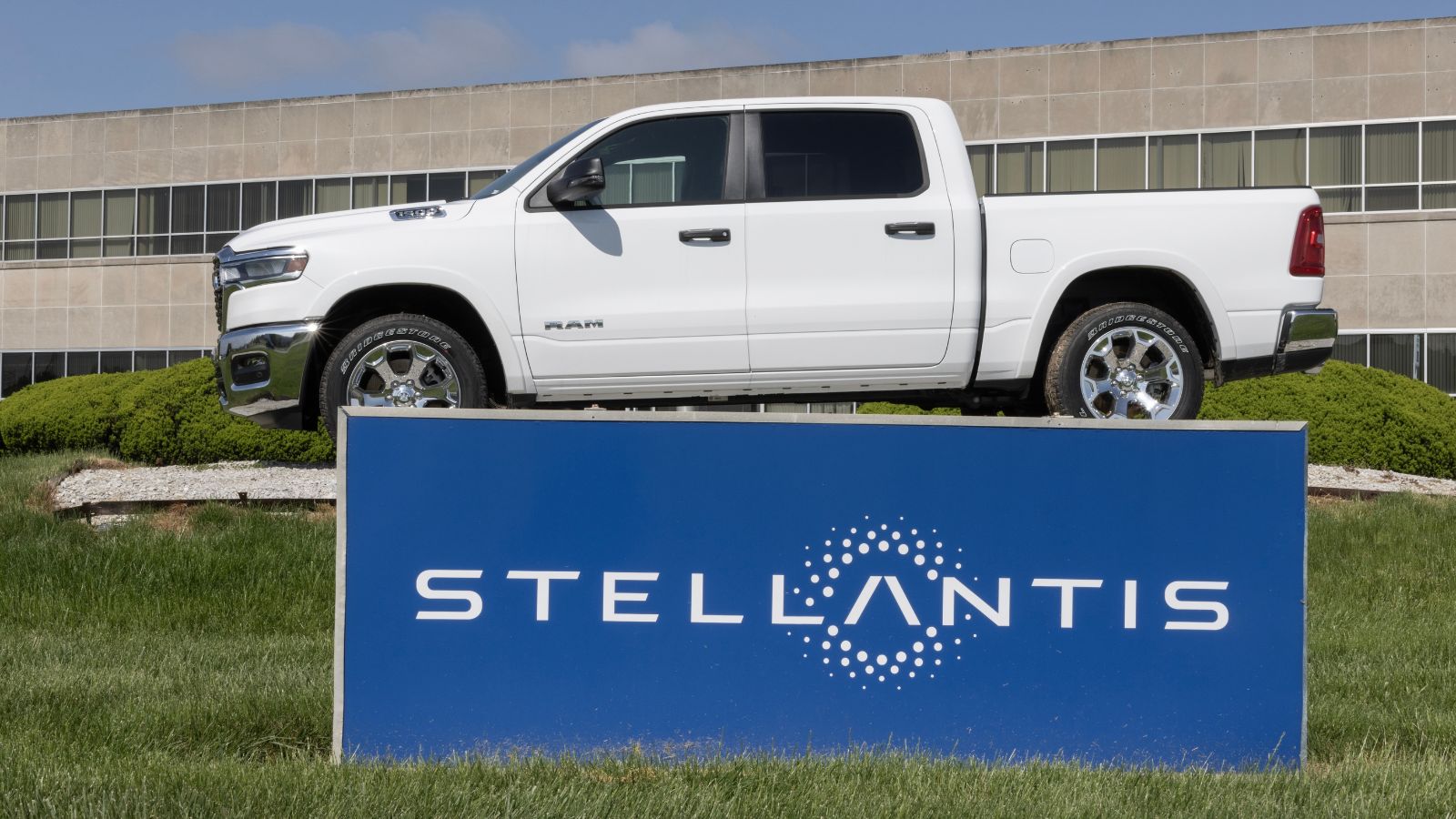
For more than two years, thousands of Brampton autoworkers have been waiting for an idled factory to come back to life. Now the uncertainty has deepened. Unifor says Stellantis has told the union it is seriously considering closing and selling its Brampton Assembly Plant, where more than 2,200 members have been on layoff since late 2023. The disclosure lands at an unusually sensitive moment: Canada and the United States are still negotiating over auto tariffs, Stellantis has already moved the planned Jeep Compass program to Illinois, and a new round of Canadian labour talks is approaching. No sale or closure has been formally announced, and Stellantis says it remains focused on finding a sustainable manufacturing solution for the site. Even so, the possibility of a sale raises larger questions about jobs, public subsidies, trade policy and the future of Canadian vehicle assembly.
A Possible Sale Is Now on the Table — but It Is Not a Done Deal
Unifor says Stellantis informed the union on August 12 that it intended to open discussions with another company about a possible sale of Brampton Assembly. That is a significant escalation from the plant’s long period of uncertainty, but it is not the same thing as a completed transaction or a formal shutdown. The union says Stellantis has not delivered the written closure or sale notice required under the current collective agreement. Stellantis, meanwhile, has publicly said it has nothing to announce and that its focus remains on finding a sustainable manufacturing solution for Brampton. That distinction matters because workers, suppliers and governments are reacting to a possibility that could become a major industrial decision, not to a finalized deal with an identified buyer.
The unnamed-buyer element adds another layer of uncertainty. Unifor has said the company intends to explore a sale, but neither the union nor Stellantis has publicly identified the other firm. That leaves open several very different outcomes: another automaker could take over the site, a manufacturing investor could repurpose it, or the discussions could ultimately go nowhere. Brampton is also not an ordinary piece of industrial real estate. The city has moved to protect the Williams Parkway lands for automotive assembly and related manufacturing uses, making the site’s future part of a broader local strategy to preserve high-value production. For now, the most accurate description is that Stellantis is evaluating options while workers remain in limbo and governments press for a manufacturing outcome.
More Than 2,200 Workers Have Already Been Waiting Since 2023
The human scale of the dispute is unusually large even by auto-industry standards. More than 2,200 members of Unifor Local 1285 have been on layoff since the plant was idled in December 2023. Many had expected the shutdown to be temporary because Brampton was supposed to be retooled for a new generation of Jeep production. Instead, the retooling was paused in February 2025, and the plant has remained without an active vehicle program. That means the people at the centre of the story are not facing a sudden one-week production interruption. They have already spent years in a prolonged transition, watching expected reopening dates and product plans change while trying to plan mortgages, retirements, training and family finances around an uncertain return to work.
The collective agreement provides an important buffer, but it does not remove the anxiety. Unifor says Stellantis must provide at least one year of notice before a closure or sale can take effect. The 2023 agreement also included enhanced income-security provisions intended to support workers through the EV transition and the Brampton retooling period. Those protections were negotiated when the plant still had a defined future product. A potential sale changes the context because job security depends not only on benefits during an idle period, but on whether vehicle production actually returns. For a skilled tradesperson or assembly worker who has spent decades at the site, the difference between “temporarily laid off” and “plant for sale” is not semantic. It can change decisions about retraining, retirement and whether to remain in the industry.
Losing the Jeep Compass Changed Brampton’s Future
Brampton’s current predicament is closely tied to the Jeep Compass program that never arrived. Stellantis had planned to modernize the plant and use it for a next-generation product as part of its electrification strategy. The company later confirmed that the Jeep Compass would instead be built at its Belvidere Assembly Plant in Illinois. In October 2025, Stellantis announced a US$13-billion investment program to expand its U.S. manufacturing footprint, including more than US$600 million to reopen Belvidere for the Jeep Cherokee and Compass. The company said the broader U.S. plan would add more than 5,000 jobs and increase finished-vehicle production there by 50 percent over current levels. For Brampton workers, that announcement effectively removed the program around which their plant’s retooling had been organized.
The contrast was especially sharp because Brampton had been a major production site before the shutdown. The factory built the Chrysler 300, Dodge Charger and Dodge Challenger, including the final generation of those well-known rear-wheel-drive cars. The current facility dates to 1986 and was acquired by Chrysler through its purchase of American Motors in 1987. In earlier periods it employed well over 3,000 people and produced hundreds of thousands of vehicles in strong years. That history helps explain why the lost Compass mandate carried more weight than a routine model reshuffle. Brampton was not waiting for its first chance to become an auto town; it was trying to convert a long-established assembly operation to a new generation of vehicles. Losing the promised replacement product left a fully recognized manufacturing site without a clear assignment.
Tariffs Have Changed the Math Behind Canadian Auto Production
Tariffs are central to the dispute because North American vehicle production was designed around cross-border supply chains rather than national silos. Since April 2025, Canadian-made vehicles have faced a 25 percent U.S. tariff on non-U.S. content, while Canada has imposed counter-tariffs on certain U.S.-made vehicles. The federal government says more than 90 percent of Canadian-made vehicles and about 60 percent of Canadian-made auto parts are exported to the United States. When a vehicle assembled in Ontario contains components that cross the border multiple times, even partial-content tariffs can change the economics of where a company chooses to assemble the final product. That pressure is one reason Brampton has become a symbol of a much larger argument over whether integrated North American production can survive a more protectionist trade regime.
The tariff picture is still moving. As of August 20, Canadian and U.S. negotiators were continuing talks on a broader trade arrangement, with Reuters reporting that a proposed deal could reduce the U.S. auto tariff on Canadian-built vehicles from 25 percent to 15 percent. The details were not final, and negotiators were still debating how vehicle content would be treated. That uncertainty is important for Brampton because an assembly mandate lasts years, while tariff rules can change in months. Automakers making billion-dollar allocation decisions need to model not only labour and logistics costs but also the risk that a vehicle built in Canada will face a persistent penalty entering its largest export market. A lower tariff could improve the equation, but it would not automatically restore the Compass or guarantee a replacement product.
More Than $1 Billion in Government Support Raises the Stakes
The debate is also about public money and contractual commitments. In 2022, Stellantis announced a C$3.6-billion program to modernize its Windsor and Brampton operations and expand research and development. The federal government committed up to C$529 million through the Strategic Innovation Fund, while Ontario committed up to C$513 million. Ontario said up to C$132 million of its support was specifically connected to the Brampton retooling. At the time, the investment was presented as a way to secure the future of both assembly plants as flexible facilities capable of producing electrified vehicles. The scale of that support means governments have more at stake than the general desire to preserve manufacturing jobs. They also have to account for whether public incentives delivered the production commitments that helped justify them.
Ottawa has already treated the Compass move as a contractual problem. Federal briefing material states that Stellantis agreed to maintain its Canadian footprint, including a Brampton production mandate, in connection with government support. After the Compass was shifted to Illinois, the federal government initiated a dispute-resolution process and said it expected Stellantis to provide a plan for Brampton. Federal records also show that C$222.4 million had been disbursed under the C$529-million Strategic Response Fund agreement by March 31, 2025, and that payments were put on hold after the U.S. production decision. That does not automatically mean taxpayers are entitled to a particular repayment if the plant is sold, because contractual remedies depend on the agreements. It does mean any sale would likely face intense scrutiny over compliance and public accountability.
The Economic Risk Reaches Well Beyond the Factory Gates
Brampton’s concern extends beyond the 2,200 workers directly represented at the plant. Automotive assembly tends to support a web of parts suppliers, logistics companies, tool-and-die shops, maintenance contractors and local service businesses. City officials have repeatedly described the Stellantis site as an anchor of Brampton’s manufacturing economy. In February 2026, council unanimously backed planning protections intended to keep the Williams Parkway property designated for automotive assembly and related manufacturing. The move was explicitly framed as a way to protect high-value jobs and preserve the local industrial ecosystem. That matters because the loss of an assembly plant can reduce demand across many smaller businesses at once, particularly suppliers that have invested in equipment and staffing around the production schedules of a major customer.
The city has also cited an estimate that each auto job can support five to six spin-off jobs in the broader community, a figure it uses to illustrate the sector’s multiplier effect. Such estimates should not be read as a precise forecast of how many positions would disappear if Brampton Assembly closed; indirect employment effects depend on how suppliers diversify and whether another manufacturer uses the site. Still, the underlying point is straightforward. An assembly plant buys parts, transportation, engineering, maintenance and professional services, while its workers spend wages locally. A new buyer that continued automotive production could preserve much of that network. A prolonged vacancy or conversion to a less labour-intensive use would create a much different economic footprint, which is why municipal leaders have pushed to keep the property tied to manufacturing.
The Plant’s Future Is About to Become a Major Bargaining Issue
The timing also puts Brampton directly into Unifor’s 2026 bargaining cycle. The current Stellantis master agreement expires at 11:59 p.m. on September 20. It covers Brampton Assembly, Windsor Assembly, Etobicoke Casting and other represented operations. Unifor began this year’s Detroit Three talks earlier than usual, saying tariffs, changing regulations and broader trade uncertainty made the environment unusually difficult. The union has already signalled that Brampton’s future will be raised when it bargains with Stellantis. That gives the plant issue a formal negotiating channel, but it also raises the stakes. Traditional auto bargaining often focuses on wages, pensions, benefits and investment commitments. Here, the more fundamental question is whether one of the covered assembly plants will have an owner and a product mandate capable of sustaining those jobs.
The previous round shows why product commitments matter so much. When Unifor members ratified their Stellantis agreements in 2023, the union highlighted investment and product commitments for Brampton and specifically pointed to retooling for future electric vehicles. The contract also contained EV-transition income protections designed to carry workers through the shutdown. Three years later, bargaining is taking place after the planned Compass program moved to Illinois and after Stellantis raised the possibility of selling the plant. That sequence gives Unifor a strong reason to seek more concrete job and investment assurances, not merely another promise of future consideration. For Stellantis, however, any new commitment must fit within a North American production strategy being reshaped by tariffs, U.S. investment incentives, demand changes and the company’s own effort to use factory capacity more efficiently.
A Sale Could Still Preserve Manufacturing — but the Details Will Decide Everything
A sale would not necessarily mean the end of vehicle manufacturing in Brampton. In the best-case scenario for workers, a buyer could acquire a large, established assembly complex and bring a credible product program, preserving at least part of the skilled workforce and supplier base. The site has major industrial infrastructure and decades of automotive history, while municipal policy now strongly favours continued automotive use. Stellantis has also previously explored possible Canadian EV production options involving its Chinese partner Leapmotor, although Unifor has expressed serious concerns about that possibility. None of those ideas should be treated as the likely outcome today. The potential buyer has not been named, and there is no public agreement showing what it would manufacture, how many people it would employ or whether existing workers would transfer.
The more immediate milestones are therefore procedural and political. Unifor will press the issue in bargaining, Ottawa and Ontario will continue examining Stellantis’ commitments, and Canada-U.S. tariff negotiations could materially alter the cost of assembling vehicles in Ontario. Brampton’s planning protections add another consideration for any purchaser contemplating a different use for the land. Most importantly, workers still do not have a final closure notice, a confirmed sale or a replacement production mandate. The plant’s story has already moved from retooling, to delay, to a lost vehicle program, and now to a possible sale. That progression explains the urgency surrounding the 2,200 jobs. The next development that truly changes their position will not be another expression of concern; it will be a binding manufacturing plan, a formal sale agreement or a closure notice.