






















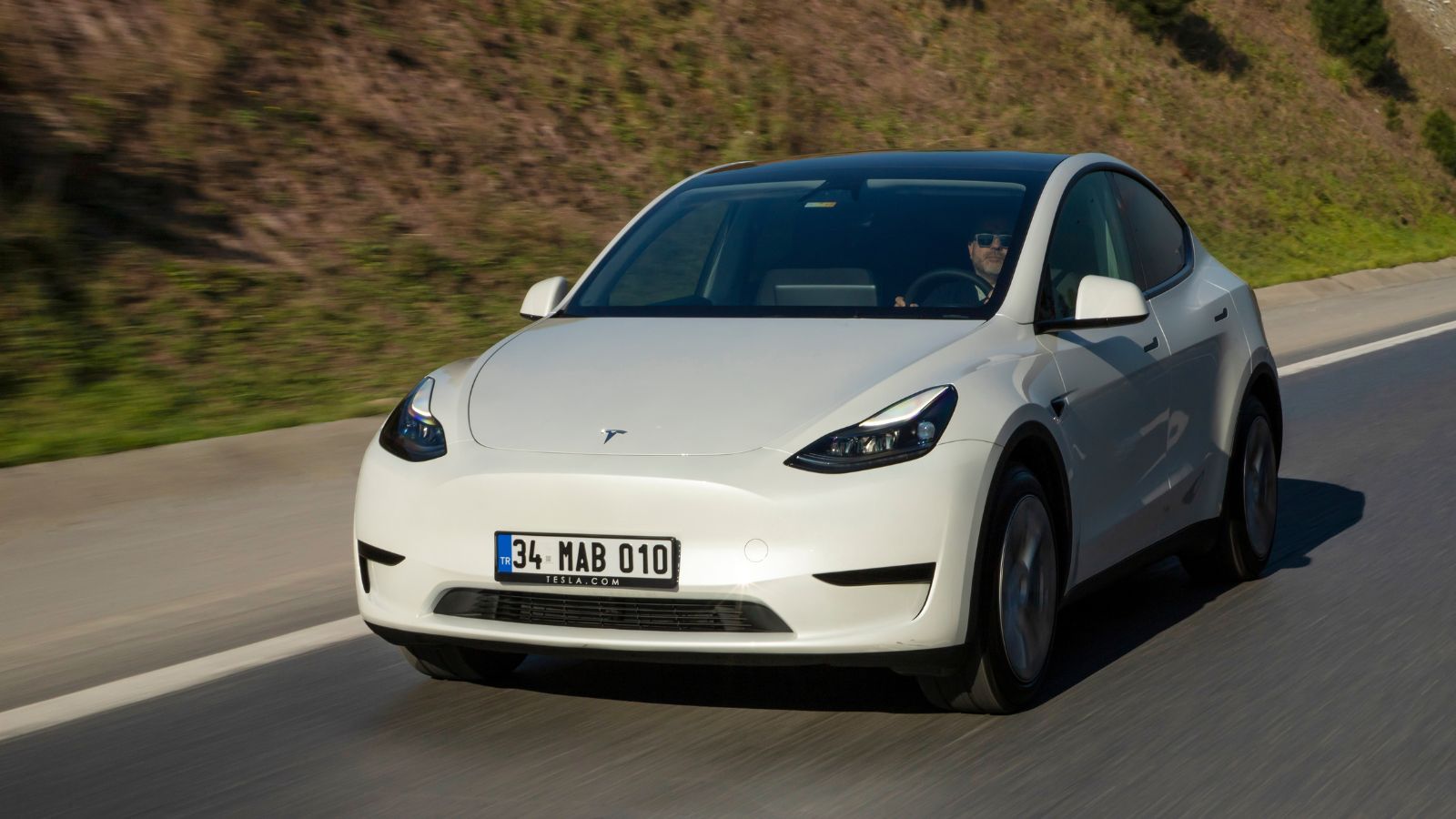
Tesla’s newest Model Y power feature sounds deceptively simple: connect an accessory and turn the vehicle’s high-voltage battery into a portable source of household electricity. The reality is more complicated. Tesla has expanded vehicle-to-load capability to eligible Model Y vehicles in the United States, offering up to 2.4 kW through its Outlet Adapter. Yet some recently delivered 2026-model vehicles appear to have older power-conversion hardware that cannot support the feature. A retrofit procedure exists in Tesla’s service documentation, while recent reporting puts the required replacement parts at roughly US$1,750 before labour. Canadian Model Y owners face a different barrier altogether. Tesla’s Canadian store lists the same adapter for C$110, but currently restricts its use to Cybertruck, while Model Y documentation specifically excludes Canada.
An $80 Accessory Unlocks a Much Bigger Battery
Tesla’s Outlet Adapter gives eligible Model Y owners something many competing EVs have offered for years: the ability to draw usable alternating-current electricity directly from the traction battery. In the United States, Tesla lists the adapter at US$80 and rates it for 120 volts, 20 amps and a maximum output of 2.4 kW. That is enough capacity for many common household and recreational devices, including laptops, lighting, refrigerators and numerous power tools, provided their electrical demands remain within the adapter’s limits. Rather than installing a conventional socket inside the vehicle, Tesla routes the electricity through the charge port.
The setup requires more than the small US$80 adapter itself. Tesla says the Outlet Adapter must be paired with its Gen 3 Mobile Connector. The Mobile Connector currently carries a US$300 retail price when purchased separately and consists of a 20-foot cable along with household charging adapters. In V2L operation, its normal role is essentially reversed: instead of moving AC electricity into the vehicle, compatible hardware allows energy stored in the battery to be converted and delivered outward. That makes the headline accessory inexpensive for an already-equipped owner, but the full equipment path is more substantial for anyone who does not already possess the required connector.
Some 2026 Model Ys Do Not Have the Right PCS
The uncomfortable surprise for some owners is that the model year printed on the vehicle paperwork does not necessarily determine whether V2L works. Recent owner reports documented by Teslarati show 2026 Model Ys receiving Tesla’s incompatibility warning when owners attempted to purchase the adapter. One example involved a 2026 Model Y delivered on August 31, 2025. According to the report, that vehicle carried an older 48-amp, single-phase Power Conversion System rather than the newer configuration that supports the newly enabled V2L function. Another owner reporting a February 2026 delivery said the vehicle also contained the earlier equipment.
That distinction matters because the Power Conversion System performs critical electrical-conversion duties between the high-voltage battery and other parts of the vehicle’s charging architecture. Tesla’s own service documentation shows that multiple PCS configurations now exist for the refreshed Model Y platform, including PCS2 Lite hardware. Tesla has even published a service procedure specifically titled “PCS1 to PCS2 Lite (Retrofit),” dated July 23, 2026. The documentation therefore confirms that Tesla has engineered a path for replacing the earlier system. It does not, however, mean every incompatible owner automatically qualifies for a consumer retrofit or that Tesla has announced a universal upgrade program.
The $1,750 Figure Is a Parts Estimate, Not an $80 Fix
The biggest source of frustration is the potential difference between the price of the feature and the price of making an incompatible car capable of using it. Teslarati reported that owners with the older PCS appear able to move to the newer hardware, but estimated the required parts alone at about US$1,750. Labour would be additional. That means a feature promoted through an US$80 accessory could require hardware costing more than 20 times the adapter price for an owner whose vehicle landed on the wrong side of Tesla’s production transition.
There is an important qualification to that number. Tesla has not published a US$1,750 consumer retrofit package for Model Y V2L customers. The figure comes from reporting around the components needed for the PCS change, while Tesla’s service manual independently confirms that a PCS1-to-PCS2 Lite retrofit procedure exists. Consequently, US$1,750 is best understood as a reported hardware cost rather than a guaranteed Tesla service quote. Actual bills could vary depending on parts, labour, vehicle configuration and whether Tesla ultimately offers the work as a customer-requested upgrade. For someone who took delivery only months ago, however, even the possibility of a four-figure hardware change makes the US$80 accessory feel considerably less straightforward.
Canada Is Excluded From the Model Y Rollout — For Now
The Canadian situation is easy to misunderstand because Tesla actually has a Canadian product page for the Outlet Adapter. The accessory is listed there at C$110 and carries the same core electrical specifications: 120 volts, 20 amps and a 2.4-kW maximum output. The critical language appears farther down the listing. Tesla says the adapter is currently available with Cybertruck in Canada. It does not extend Model Y compatibility to Canadian vehicles, even though the U.S. version of the Tesla Shop now identifies Model Y Premium, Model Y Performance and Cybertruck as compatible vehicles.
Tesla’s U.S. Model Y owner documentation reinforces that geographic restriction from another direction. Its instructions for powering devices through the charge port say the Outlet Adapter is available for Model Y Performance but specifically note that Canada is excluded. The wording across Tesla’s various pages is not perfectly synchronized as the rollout expands, but the practical position is clear as of August 17, 2026: Tesla is supporting Model Y V2L through the official adapter in the United States, while its Canadian retail and documentation channels do not currently extend that eligibility to Model Y. Canadian Cybertruck availability is a separate matter, so Canada is not excluded from the adapter product entirely.
This Is V2L, Not Full Model Y Home Backup
The phrase “bidirectional charging” can make the new feature sound more powerful than it actually is. Tesla’s Model Y implementation is vehicle-to-load, or V2L: electricity leaves the battery and powers individual devices through a portable outlet. Tesla’s full Powershare Home Backup system is different. That system can automatically detect a grid outage and feed a properly equipped home through dedicated electrical hardware. Tesla currently rates Cybertruck home backup at up to 11.52 kW of continuous real power, far above the 2.4-kW ceiling of the Model Y Outlet Adapter.
More importantly, Tesla’s Powershare information still states that full Powershare is currently available only for Cybertruck and specifically says it is not available for Model S, Model 3, Model X or Model Y. That distinction keeps expectations realistic. An eligible Model Y can become a useful campsite, tailgate or emergency-device power source, but connecting the Outlet Adapter does not suddenly turn the crossover into an automatic whole-home battery. Proper vehicle-to-home systems require additional equipment to isolate a house from the grid safely, manage power flow and prevent electricity from being sent back onto utility lines during an outage. For now, Tesla has stopped well short of giving Model Y that capability.
Tesla Gives Owners Control Over How Much Battery They Use
Tesla has built several safeguards into the Model Y’s portable-power operation. After the Gen 3 Mobile Connector and Outlet Adapter are connected, the vehicle can check for required adapter software updates. Owners can then start or stop power sharing through the vehicle touchscreen or Tesla mobile app. Tesla also allows a discharge limit to be selected, providing a practical way to preserve driving range rather than accidentally consuming most of the battery while running equipment at a campsite, work site or during a household outage.
There is also a hard lower boundary. Tesla says Powershare through the adapter will not start when the high-voltage battery contains less than 5% remaining energy. Once battery charge falls below the discharge limit selected by the owner, electricity to the connected device shuts off and a notification appears. The adapter itself is capped at 2.4 kW, so it should not be treated as an unlimited household circuit simply because the vehicle battery stores far more energy than a portable power station. Tesla instructs owners to ensure the connected appliance does not exceed the adapter’s rated draw and also warns against feeding electricity from an external battery or solar source back into the adapter.
Tesla Is Entering a V2L Market Other Automakers Built Years Ago
Tesla’s move is significant because Model Y is a high-volume electric crossover, but V2L itself is no longer unusual technology. Hyundai introduced the Ioniq 5 with the ability to provide as much as 3.6 kW through its V2L system. Kia likewise designed the EV6 around an Integrated Charging Control Unit capable of exporting up to 3.6 kW. Those figures give the Korean models roughly 50% more peak V2L output than Tesla’s 2.4-kW Model Y implementation, although electrical standards and equipment configurations differ among markets.
Electric pickups push the numbers considerably higher, though their size, price and intended use make the comparison imperfect. Ford has offered F-150 Lightning configurations with Pro Power Onboard capable of up to 9.6 kW, while Chevrolet’s Silverado EV PowerBase system can supply as much as 10.2 kW through available outlets and accessories. Tesla therefore is not trying to make Model Y a rolling construction-site generator. Its approach is closer to adding a convenient portable household circuit. The attraction is that the underlying vehicle battery already represents an enormous energy reserve; the feature simply gives owners another controlled way to access part of that stored energy.
Owners Should Check the Vehicle, Not Just the Model-Year Badge
For U.S. owners considering the Outlet Adapter, compatibility should be treated as a vehicle-specific question rather than an assumption based on a “2026” badge. Tesla’s online shop requires owners to sign in with the account associated with their vehicle and can use vehicle eligibility information to restrict purchases. Reports from owners also indicate that checking the Tesla parts catalog against a VIN can help reveal which PCS configuration is fitted. The existence of Tesla’s PCS1-to-PCS2 Lite service procedure shows that hardware differences are real and serviceable, but owners should obtain an actual Tesla service assessment before assuming a retrofit is available or economically sensible.
Canadian owners have an even simpler reason to hold off. Tesla’s Canadian product page currently limits official Outlet Adapter availability to Cybertruck, and Tesla warns that vehicle-warranty coverage does not extend to damage caused by third-party bidirectional adapters or chargers. That makes experimenting with unofficial workarounds a potentially expensive way to chase a 2.4-kW feature. Tesla can change regional eligibility through future hardware, software, certification or product updates, but no Canadian Model Y rollout should be assumed until the company changes its own documentation. For buyers, the episode is also a reminder that increasingly software-defined EVs can still contain meaningful hardware differences within the same nominal model year.