






















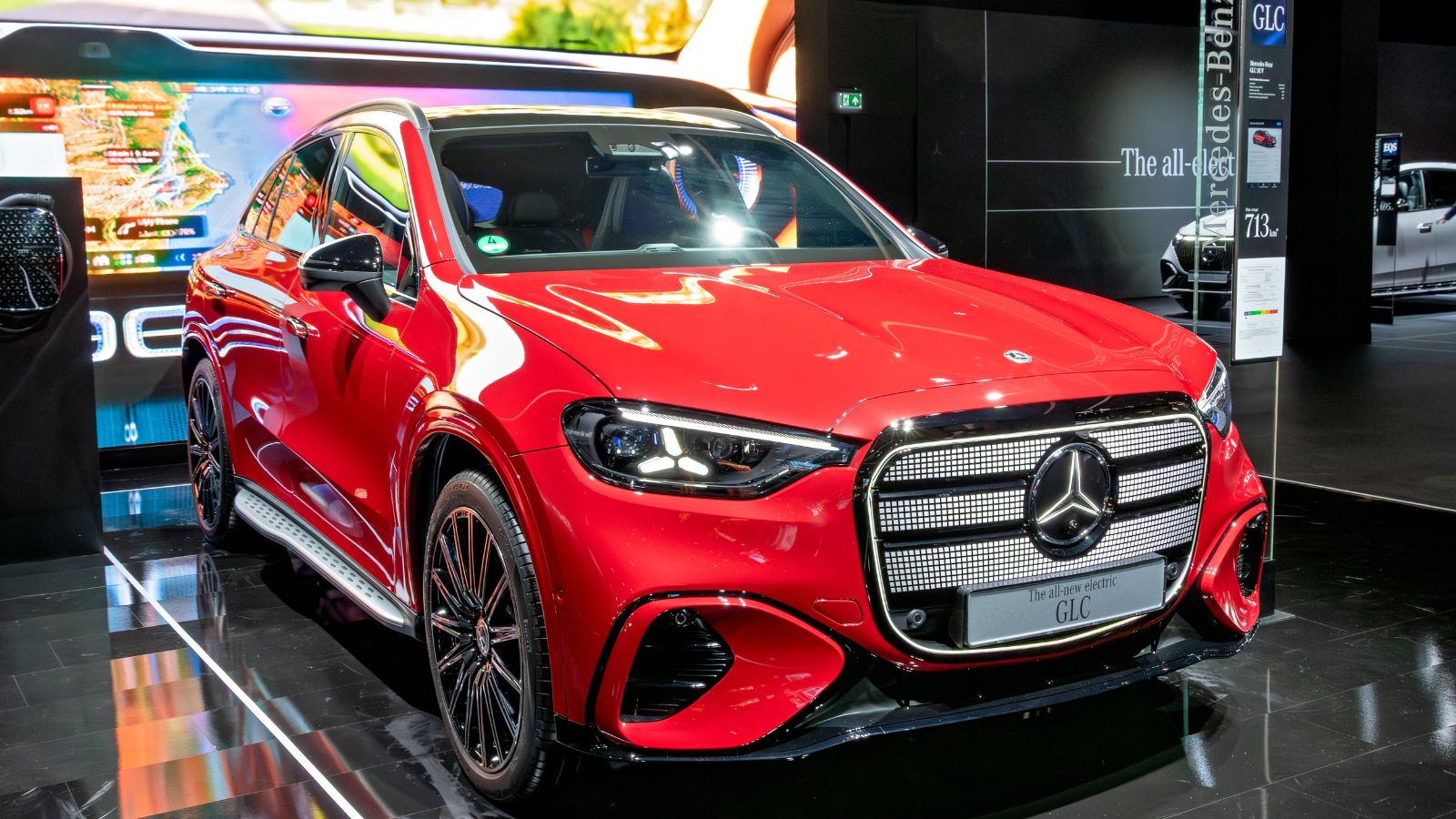
Mercedes-Benz has brought its latest electric luxury SUV to Toronto, marking another important step in the German automaker’s transition toward battery-powered vehicles. The all-new 2027 Mercedes-Benz GLC 400 4MATIC Electric is taking centre stage at Mercedes-Benz Studio Toronto, offering Canadian consumers a closer look at a vehicle designed to combine traditional Mercedes-Benz luxury with advanced electric technology.
With a starting manufacturer’s suggested retail price of $78,400 and an all-inclusive selling price of $84,491 before taxes, the electric GLC enters a competitive premium SUV market. Its estimated 563-kilometre range, powerful dual-motor drivetrain and rapid-charging capability make it an ambitious addition to Mercedes-Benz’s Canadian lineup. However, its arrival also raises questions about affordability, charging convenience and how much Canadian buyers are prepared to spend on an electric luxury vehicle.
A Toronto Debut That Brings Electric Luxury Into the Spotlight
Mercedes-Benz officially showcased the new electric GLC at Mercedes-Benz Studio Toronto on November 4, 2026. Located inside Holt Renfrew’s flagship store at 50 Bloor Street West, the space offers a different kind of automotive experience. Rather than relying on a traditional dealership showroom, the German manufacturer has integrated its newest electric SUV into an environment featuring luxury shopping, design displays and hospitality-inspired experiences. The exhibition forms part of the studio’s holiday transformation, which runs through December 31, 2026.
The Toronto presentation emphasizes the everyday experience of owning a premium electric vehicle, from personalized interior lighting to advanced digital assistance and available comfort features. Visitors can explore the vehicle alongside displays highlighting Mercedes-Benz craftsmanship and personalization. For the company, the setting provides an opportunity to connect electric mobility with the familiar appeal of luxury shopping. For prospective buyers, it places the GLC’s ambitious technology in a more relatable environment, where comfort, design and practicality matter as much as acceleration and battery capacity.
The $84,491 Price Tag Is Only the Beginning
Mercedes-Benz has confirmed a Canadian manufacturer’s suggested retail price of $78,400 for the 2027 GLC 400 4MATIC Electric. However, the company’s advertised all-inclusive selling price is considerably higher at $84,491. The $6,091 difference reflects additional costs such as freight, pre-delivery inspection, administration charges and applicable levies. Although the higher figure provides a more complete picture of the vehicle’s advertised cost, it still excludes sales taxes, licensing, registration and insurance. Final pricing may also vary depending on the dealership, location and optional equipment selected.
For Ontario buyers, the provincial 13% harmonized sales tax adds another significant expense. Applying that rate to the advertised $84,491 selling price produces an illustrative total of approximately $95,475 before registration, insurance or optional upgrades. That puts the electric GLC remarkably close to a six-figure purchase even in its standard configuration. For a household considering the switch from a gasoline-powered luxury SUV, the difference between the headline MSRP and the eventual purchase price could influence financing decisions, trade-in plans and whether the vehicle fits within the family budget.
Powerful Electric Performance Comes Standard
The new electric GLC launches in Canada as the GLC 400 4MATIC, featuring two electric motors and Mercedes-Benz’s 4MATIC all-wheel-drive system. Together, the motors generate 483 horsepower and 590 lb-ft of torque, giving the SUV considerably more performance than many drivers would normally associate with a family-oriented vehicle. Mercedes-Benz claims the GLC can accelerate from zero to 100 km/h in just 4.3 seconds. The combination of strong acceleration and standard all-wheel drive positions the vehicle as an alternative for buyers who want both electric efficiency and confident performance.
The impressive power figures are only one part of the driving experience. Electric motors provide immediate torque, which can make merging onto busy highways or accelerating from traffic lights feel exceptionally smooth. Independent testing by MotorTrend has also highlighted the GLC’s strong acceleration and comfortable driving characteristics, particularly when equipped with its available air suspension. For Canadian drivers, the more meaningful advantage may be how effortlessly the vehicle handles ordinary journeys, from stop-and-go traffic on Toronto’s Gardiner Expressway to longer highway trips with passengers and luggage.
The 563-Kilometre Range Faces a Canadian Winter Test
One of the electric GLC’s most important selling points is its estimated driving range of up to 563 kilometres on a full battery. Mercedes-Benz bases that estimate on Natural Resources Canada-approved testing guidelines, although it remains a manufacturer estimate rather than a guarantee of real-world performance. The vehicle uses a 94-kWh lithium-ion battery, giving it enough advertised capacity to handle daily commuting and longer journeys without requiring constant recharging. For many households, the possibility of completing several days of ordinary driving between charging sessions could make electric ownership considerably more appealing.
Canadian weather, however, introduces an important complication. Cold temperatures can affect battery performance, while cabin heating, highway speeds and winter tires can influence how much electricity a vehicle consumes. Mercedes-Benz acknowledges that actual driving range can vary substantially depending on weather, driving conditions and equipment. A family using the GLC for short trips around Toronto may experience very different energy consumption from someone travelling across Ontario during a freezing February weekend. The advertised range is promising, but winter performance will remain an important consideration for Canadian buyers.
Ultra-Fast Charging Could Make Long Trips Easier
Mercedes-Benz has equipped the electric GLC with an advanced 800-volt electrical architecture that supports DC fast charging at up to 330 kilowatts. Under optimal conditions, the company estimates that drivers can replenish approximately 260 to 303 kilometres of driving range in 15 to 20 minutes. Its Canadian specifications also indicate that charging the battery from 10% to 80% can take approximately 22 minutes using a compatible high-power charger. These capabilities could significantly reduce the inconvenience traditionally associated with longer electric vehicle journeys.
However, charging performance depends heavily on the available infrastructure. At a 400-volt charging station, the GLC’s maximum supported charging power drops to approximately 100 kilowatts. The vehicle uses a North American Charging Standard connector for DC charging, with adapters potentially required at CCS1-equipped stations. Through Mercedes-Benz’s MB.CHARGE Public service, drivers can access participating charging networks, including Tesla Superchargers and ChargePoint. For owners charging at home, the Canadian model supports AC charging at up to 9.6 kilowatts, with Mercedes-Benz listing approximately 12.5 hours for a full recharge under specified conditions. Convenient charging access remains essential to making those technical advantages useful.
A High-Tech Interior With a Strong Focus on Digital Luxury
Inside the electric GLC, Mercedes-Benz has created a technology-focused cabin built around its latest operating system. Standard equipment includes a 10.3-inch digital instrument display and a 14-inch central multimedia screen, alongside navigation technology that can account for charging requirements when planning journeys. The fourth-generation Mercedes-Benz User Experience system, powered by MB.OS, integrates artificial intelligence into its voice assistant and digital controls. Drivers can interact with vehicle functions through voice commands, while connected services help manage navigation and other aspects of the ownership experience.
For customers seeking a more dramatic interior, Mercedes-Benz offers an optional 39.1-inch MBUX Hyperscreen extending across the dashboard. It is one of the most visually distinctive features available in the new SUV, although it is not included in the standard configuration. The technology has also attracted mixed reactions from independent reviewers. Edmunds praised the electric GLC’s range and driving refinement but criticized the complexity of its screen-heavy interface. That distinction matters because sophisticated technology can enhance everyday convenience, but only when basic functions remain intuitive and easy to operate.
Family Space and Practicality Remain Important Selling Points
Despite its technology-heavy presentation, the electric GLC is designed to function as an everyday five-passenger SUV. Mercedes-Benz lists an overall length of 4,845 millimetres and a wheelbase of 2,972 millimetres, providing a relatively spacious foundation for the cabin. The Canadian model offers approximately 570 litres of cargo capacity behind the rear seats, along with a 128-litre front storage compartment. That front trunk can be useful for keeping charging accessories, smaller bags or other items separate from the main luggage area.
Practicality does involve some compromises. A comparison published by Mercedes-Benz Brampton indicates that the gasoline-powered GLC 300 offers approximately 620 litres of cargo capacity behind its rear seats, meaning the electric version does not necessarily provide more storage in every configuration. The electric GLC does, however, have a manufacturer-listed towing capacity of up to 2,400 kilograms when appropriately equipped. For households transporting sports equipment, luggage or recreational gear, those capabilities are important. The vehicle’s appeal will ultimately depend on how comfortably it handles ordinary family responsibilities, not simply how impressive its technology looks in a showroom.
Optional Luxury Packages Can Push the Price Beyond $100,000
While the electric GLC includes an extensive range of standard equipment, Mercedes-Benz offers several upgrade packages that can substantially increase the purchase price. The Exclusive Trim Package costs $2,500 and adds features including an illuminated grille, enhanced ambient lighting, a front-passenger display and the SKY CONTROL panoramic roof. The $5,800 Pinnacle package incorporates those features while introducing a Burmester 3D surround sound system, upgraded DIGITAL LIGHT headlights and additional cabin refinements. The $8,500 Pinnacle Plus package takes luxury further with the MBUX Hyperscreen, heated rear seats, ventilated and massaging front seats, and a high-end Burmester 4D sound system.
Those options can significantly change the financial picture. Adding the $8,500 Pinnacle Plus package to Mercedes-Benz’s advertised $84,491 selling price would produce an illustrative pre-tax price of $92,991. With Ontario’s 13% HST, the amount reaches approximately $105,080 before registration and additional equipment. For customers attracted by the vehicle’s most heavily promoted luxury features, the actual cost of obtaining them may therefore be considerably higher than the advertised starting price. The distinction reinforces the importance of comparing standard and optional equipment before committing to a premium electric vehicle.
Competition From BMW, Audi and Volvo Raises the Stakes
Mercedes-Benz is entering an increasingly competitive electric luxury SUV segment. Among its most important rivals is the 2027 BMW iX3 50 xDrive, which BMW Canada announced with a starting MSRP of $75,900 and an NRCan-certified driving range of up to 698 kilometres. By comparison, the Mercedes-Benz GLC Electric carries a starting MSRP of $78,400 and a manufacturer-estimated range of up to 563 kilometres. BMW therefore offers a lower advertised base MSRP and a longer published range, although equipment differences, final transaction prices and real-world driving conditions require consideration.
Competition also comes from the Audi Q6 e-tron and Volvo EX60, both aimed at buyers seeking premium electric transportation without moving into the largest luxury SUV categories. Audi lists an estimated range of up to 523 kilometres for its 2027 Q6 e-tron with specified equipment. Mercedes-Benz is emphasizing a different combination of strengths, particularly acceleration, interior technology, charging capability and personalized luxury. For prospective buyers, the growing number of alternatives makes comparison shopping increasingly important. Brand reputation alone may no longer be sufficient to justify a significant price difference when competing vehicles offer compelling combinations of range, comfort and equipment.
Canada’s Growing EV Market Creates Opportunity, but Affordability Remains a Challenge
The electric GLC arrives as Canada’s electric vehicle market shows renewed growth. Statistics Canada reported that 22,716 new zero-emission vehicles were sold nationwide in August 2026, representing 13% of new motor vehicle sales, compared with 8.8% in August 2025. Those figures include battery-electric and plug-in hybrid vehicles. Earlier registration data also showed that Ontario’s new zero-emission vehicle registrations increased 46.6% year over year in the second quarter of 2026. These figures suggest growing interest in electrified transportation, although they do not guarantee strong demand for expensive luxury models.
Government incentives also highlight the affordability divide. Canada’s Electric Vehicle Affordability Program offers eligible buyers up to $5,000 in 2026, but generally restricts eligibility to vehicles with a final transaction value of $50,000 or less, with an exception for Canadian-made vehicles. The electric GLC is manufactured in Bremen, Germany, and its announced selling price is well above that threshold, placing it outside the program’s eligibility requirements at the advertised price. Ultimately, Mercedes-Benz’s newest electric SUV offers substantial technological progress, but its success in Canada will depend on whether consumers believe its comfort, performance and everyday usability justify the premium price.