























Mercedes-Benz is bringing one of its most important SUVs into the electric era with a distinctly premium price tag. The 2027 GLC 400 4MATIC Electric arrives in Canada with an all-inclusive selling price of $84,491, an estimated driving range of up to 563 kilometres and a new 800-volt electrical architecture designed for substantially faster charging. Beneath the familiar GLC badge is a much more ambitious machine than a simple battery-powered conversion: dual motors produce 483 horsepower, charging can peak at 330 kW, and Mercedes has packed the cabin with its latest digital technology. The result puts the electric GLC directly into an increasingly crowded Canadian luxury-EV market, where range, charging speed, winter usability and price are becoming just as important as the badge on the grille.
The $84,491 Price Is More Complicated Than It First Appears
Mercedes-Benz Canada lists the GLC 400 4MATIC Electric at an MSRP of $78,400, but the number buyers are more likely to notice is the advertised all-inclusive selling price of $84,491. That higher figure includes several charges that are often separated from a vehicle’s headline MSRP, including freight and pre-delivery inspection of up to $5,250, a $100 air-conditioning surcharge, tire charges, dealer administration costs and applicable regulatory fees. It makes the GLC’s pricing somewhat easier to understand at a glance, while also showing how quickly a premium SUV’s advertised MSRP can grow before a customer has even started selecting options.
The word “all-inclusive” still requires some context. Mercedes says sales taxes, registration, licensing and insurance remain extra, along with certain regional charges such as Quebec’s specific new-tire duty. Financing or leasing can also introduce additional third-party registration expenses. Optional equipment is not included either. That matters because Mercedes offers three major equipment packages priced at $2,500, $5,800 and $8,500 before tax. A generously equipped electric GLC can therefore move comfortably into the low-$90,000 range before provincial sales taxes are applied. For households comparing monthly payments rather than MSRP alone, that distinction could be significant.
The 563-Kilometre Range Is the Number Canadian Buyers Will Watch Closely
Mercedes-Benz estimates that the GLC 400 4MATIC Electric can travel as far as 563 kilometres with a fully charged battery under testing conducted using Natural Resources Canada-approved guidelines. Power comes from a 94-kWh lithium-ion battery. The figure places the GLC comfortably beyond the range offered by many earlier premium electric SUVs and is substantial enough to make the vehicle practical for more than urban commuting. A driver starting the day with a full battery could theoretically handle several days of ordinary commuting and errands before plugging in, although individual usage patterns can change that equation dramatically.
The important word is “estimated.” Mercedes specifically warns that actual range can vary substantially with temperature, wheel and tire choices, speed, terrain, battery condition, passenger and cargo load, climate-control use and driving style. Those variables are particularly relevant in Canada, where cold weather can reduce the efficiency of nearly every battery-electric vehicle. The 563-kilometre figure therefore should not be treated as a promise that every owner will reproduce it on a February highway trip. It is more useful as a standardized comparison point. Mercedes directs customers to Natural Resources Canada’s EnerGuide information for additional comparison data as official figures become available.
An 800-Volt System Makes Charging Almost as Important as Range
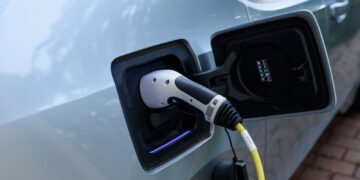
The electric GLC’s underlying electrical architecture may ultimately matter as much as its battery capacity. Mercedes has moved to an 800-volt system capable of accepting DC fast-charging power at up to 330 kW. Under optimal conditions, the company estimates that a charging stop lasting approximately 15 to 20 minutes can add between 260 and 303 kilometres of driving range. For long-distance EV use, that kind of performance can make a meaningful difference because the inconvenience of charging depends not just on how far the vehicle travels but on how quickly useful range can be recovered.
Those numbers represent peak capability rather than a guarantee at every charging station. Charging speed depends on charger output, battery temperature, battery state of charge, weather and the vehicle’s own charging conditions. Even so, 330 kW places the GLC firmly among a newer generation of premium EVs designed around high-powered public chargers. Mercedes also integrates several charging networks through its MB.CHARGE Public service. The Canadian announcement specifically lists ChargePoint, BC Hydro, Circuit Électrique, Ivy, FLO and Tesla Superchargers among supported providers. That wider network access could become as important to owners as the battery specifications themselves, particularly for drivers who regularly travel beyond their home-charging radius.
Dual Motors Give the Electric GLC Sports-Sedan Levels of Acceleration
Mercedes is not treating the GLC 400 4MATIC Electric as an efficiency-focused SUV that happens to carry a luxury badge. Its dual electric motors produce a combined 483 horsepower and 590 lb-ft of torque, with standard 4MATIC all-wheel drive. Mercedes quotes a 0-to-100-km/h time of 4.3 seconds. That is enough acceleration to put a family-oriented electric crossover into territory that would have belonged to dedicated performance cars not very long ago, while the instant response of electric motors should make the available torque especially noticeable during passing and highway merging.
For perspective, the current gasoline-powered Mercedes-AMG GLC 43 is rated at 416 horsepower and requires a claimed 4.8 seconds to reach 100 km/h. The much more powerful AMG GLC 63 S E PERFORMANCE remains quicker, at a claimed 3.5 seconds, but the electric GLC sits surprisingly close to AMG territory without being marketed as a full performance model. Mercedes also says the EV uses an advanced electric drive unit with a high-efficiency two-speed transmission. That combination reflects a broader change in premium EV engineering: manufacturers are no longer forcing customers to choose between useful highway range and serious acceleration. Increasingly, buyers expect both.
Mercedes Has Made the Cabin and Everyday Practicality Part of the EV Pitch
The standard equipment list helps explain why Mercedes is positioning the GLC above mainstream electric crossovers. Every Canadian GLC 400 4MATIC Electric includes a 10.3-inch digital instrument display and a 14-inch central media screen, along with Google Maps navigation featuring Electric Intelligence, a digital vehicle key and Mercedes-Benz Digital Extras. Heated front seats, a heated steering wheel, wireless phone charging, KEYLESS-GO, hands-free cargo access, LED headlights, Blind Spot Assist Plus and MB.DRIVE Parking Assist are also included. A fixed panoramic glass roof comes standard, reinforcing the idea that the entry configuration is meant to feel substantially equipped before options are added.
Buyers willing to spend more can turn the interior into a much more elaborate technology showcase. The Pinnacle Plus package includes the huge MBUX Hyperscreen, ventilated and massaging front seats, heated rear seats and a Burmester high-end 4D surround-sound system. Mercedes describes the available Hyperscreen as 39.1 inches across, making it the company’s largest continuous display to date. Practicality has not disappeared beneath the electronics, either. Mercedes’ specifications list approximately 570 litres of rear cargo capacity, up to 1,740 litres with the rear seats folded and a roughly 128-litre front trunk. The GLC 400 can also be configured to tow up to 2.4 tonnes in markets where the applicable equipment is offered.
Canada’s Federal EV Incentive Will Not Rescue the Purchase Price
The GLC arrives during a very different Canadian EV-incentive environment than the one that helped support electric-vehicle sales earlier in the decade. Under the federal Electric Vehicle Affordability Program, battery-electric vehicles can receive incentives of up to $5,000 during 2026, but non-Canadian-made vehicles generally need a final transaction value of $50,000 or less to qualify. Canadian-made EVs receive more favourable treatment because that transaction-value ceiling does not apply to them.
That effectively puts the new GLC far outside the standard federal affordability threshold at its announced price. Mercedes builds the electric GLC at its plant in Bremen, Germany, where it shares production infrastructure with combustion-powered and hybrid GLC models as well as other vehicles. A base selling price of $84,491 is more than $34,000 above the federal program’s normal transaction ceiling for imported EVs. Provincial programs can differ and buyers still need to check the rules where they live, but Ottawa’s current framework illustrates an important shift in the market. Federal consumer support is increasingly aimed at more affordable EVs rather than luxury models costing well above the national program’s price limit.
BMW and Volvo Make the Competitive Math Uncomfortable for Mercedes
Mercedes enters a segment where rival manufacturers have made big advances in both range and charging. BMW’s new 2027 iX3 50 xDrive carries a Canadian starting MSRP of $75,900 before applicable fees and has a Natural Resources Canada-certified range of up to 698 kilometres. BMW also claims maximum DC charging power of 400 kW. On headline numbers alone, that means the BMW starts $2,500 below the electric GLC’s $78,400 MSRP while offering a significantly higher maximum Canadian range estimate. Buyers shopping primarily with a spreadsheet will notice that immediately.
Volvo presents a different challenge. The 2027 EX60 P10 AWD Plus starts at $77,500 before freight, PDI, fees and taxes. Volvo currently quotes a maximum range of 531 kilometres with 20- or 21-inch all-season tires, a 95-kWh battery, 503 horsepower and DC charging at up to 400 kW, with a claimed 10-to-80-percent charging time of around 18 minutes under suitable conditions. Mercedes therefore does not enter this fight as the cheapest, longest-range or fastest-charging option on paper. Its case rests more heavily on the combination of performance, traditional Mercedes luxury, equipment, cabin technology, brand loyalty and the familiarity of the GLC name.
The Electric GLC Is Bigger Than a Single New Mercedes Model
The significance of the electric GLC stretches beyond one Canadian price announcement. Mercedes says the GLC has been one of its most important global model lines for years, and the electric version is now being produced in Bremen alongside combustion and hybrid vehicles. The company said earlier in 2026 that the new electric GLC had accumulated more orders during its first three months than any previous Mercedes-Benz electric model. That is a company-reported figure rather than independent sales data, but it illustrates why Mercedes is putting so much technical and design effort behind an electric version of an established name rather than creating another completely separate EV sub-brand.
Mercedes is also making an environmental argument around the vehicle. Its independently verified lifecycle assessment estimates that the electric GLC can produce roughly two-thirds less lifecycle carbon emissions than the current combustion-powered GLC under the study’s assumptions. Mercedes says production emissions were reduced by 23 percent through measures involving batteries, steel, aluminum, recycled plastics and renewable energy. Those environmental claims depend on lifecycle methodology, electricity supply and usage assumptions, but they show the broader strategy clearly. Mercedes is betting that the next stage of premium EV adoption will depend less on novelty and more on making electric power feel like a normal — and desirable — choice within familiar model families.