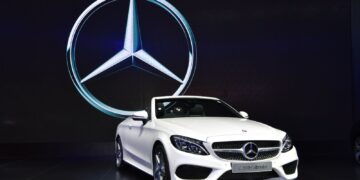





















Mercedes-Benz is experiencing two very different realities at once. Its electric vehicles are finding more buyers than ever, but the company’s core passenger-car business is struggling to turn that momentum into stronger profits.
In the third quarter of 2026, Mercedes-Benz Cars recorded a 61% surge in battery-electric vehicle sales, reaching a quarterly record. Yet adjusted operating profit for the same division fell by nearly 51%, highlighting the financial pressure facing one of the world’s best-known luxury automakers.
Weakness in China, currency headwinds, and the expense of introducing new models have complicated the company’s recovery. Meanwhile, customers in Europe and North America are responding positively to its latest vehicles.
The result is a revealing contradiction: Mercedes-Benz’s electric transformation is gaining speed, even as the business behind it faces a difficult profitability challenge.
Electric Vehicle Sales Reach a Record as Overall Deliveries Decline
Mercedes-Benz Cars sold 68,428 battery-electric vehicles during the third quarter of 2026, compared with 42,622 during the same period a year earlier. That represents a 61% increase and the highest quarterly electric-car sales total in the company’s history. Deliveries also increased 29% from the second quarter, suggesting the improvement was not limited to an unusually weak comparison with 2025. Fully electric models accounted for 16.8% of Mercedes-Benz’s global passenger-car sales, a record share for the company. The figure means approximately one in every six passenger vehicles sold during the quarter ran entirely on battery power.
The achievement becomes more notable when placed beside the company’s overall performance. Mercedes-Benz Cars delivered 407,232 vehicles across all powertrains, an 8% decline from the previous year. Electric models were therefore growing rapidly while the broader passenger-car business was contracting. Across the entire Mercedes-Benz Group, including vans, battery-electric sales rose 52% to approximately 78,100 units. That distinction matters because the headline’s 61% increase applies specifically to passenger cars, not every electric vehicle sold by the group. The numbers point to genuine progress in electrification, but they also show that strong demand in one category cannot automatically compensate for weakness elsewhere.
Adjusted Operating Profit Falls Nearly 51% Despite EV Momentum
The financial picture was considerably less encouraging. Mercedes-Benz Cars reported adjusted earnings before interest and taxes of €560 million for the third quarter, down from €1.139 billion a year earlier. The decline amounted to 50.8%, effectively cutting adjusted operating earnings in half. Its adjusted return on sales also dropped from 4.8% to 2.5%. Put simply, the division generated roughly €2.50 in adjusted operating profit for every €100 in revenue, compared with €4.80 during the previous year’s quarter. For a manufacturer whose reputation depends heavily on premium pricing, that deterioration represents a significant challenge.
There is an important accounting distinction. Reported operating profit at Mercedes-Benz Cars actually increased 5.8% to €455 million, compared with €430 million in the third quarter of 2025. However, reported and adjusted earnings measure different things. The latter removes specified items to provide a clearer view of the underlying business. Mercedes-Benz attributed the pressure on adjusted results to lower earnings from China, adverse currency movements, spending on new-model launches, and product lifecycle measures. Cost savings partially offset those effects. The figures do not establish that electric vehicles caused the profit decline. Instead, they demonstrate how rapidly improving EV sales can coexist with weaker overall financial performance.
China’s 31% Sales Decline Becomes a Major Obstacle
China remains one of the clearest explanations for Mercedes-Benz’s difficulties. Passenger-car sales in the country fell 31% year over year to approximately 86,800 vehicles during the third quarter. Across the first nine months of 2026, deliveries reached about 297,000 vehicles, a 29% decline from the corresponding period in 2025. The downturn also affected Mercedes-Benz’s broader Asian operations, where quarterly passenger-car sales decreased 25% to 132,300 units. China accounted for more than one-fifth of the company’s global passenger-car volume during the quarter, making its weakness particularly difficult to offset.
The challenge extends beyond selling fewer vehicles. Mercedes-Benz faces increasingly intense competition from Chinese manufacturers, particularly as domestic brands improve their technology offerings and challenge established luxury competitors on price and features. The GLC and E-Class remained important products, accounting for nearly two-thirds of Mercedes-Benz passenger-car sales in China during the quarter. The company has responded with locally tailored vehicles, including the electric GLC L introduced in July and the locally produced GLE L launched in September. These products demonstrate a commitment to the market, but rebuilding demand will require more than refreshing the showroom. Mercedes-Benz must also protect its pricing, improve cost competitiveness, and adapt to customers whose expectations are changing quickly.
Europe and the United States Deliver a More Encouraging Picture
Outside China, Mercedes-Benz’s sales performance tells a substantially different story. European passenger-car deliveries increased 5% to approximately 168,700 vehicles in the third quarter. Germany performed particularly well, with sales rising 13% to 58,300 units, while the United Kingdom recorded 7% growth. The company’s electric transformation was especially visible in Europe, where battery-electric sales surged 78% compared with the previous year. Nearly one in every three Mercedes-Benz passenger cars sold in the region was fully electric, a much higher proportion than the company’s global average.
North America also provided some relief. Mercedes-Benz Cars sold approximately 83,200 vehicles across the region, a 4% annual increase, while U.S. sales rose 6% to about 75,300 units. The American market benefited from the arrival of refreshed SUV offerings, including the GLE, GLE Coupé, and GLS at dealerships in September. Mercedes-Benz reported passenger-car sales growth outside China for the third consecutive quarter in 2026. These results indicate that the brand continues to attract buyers in important markets, even while facing serious pressure elsewhere. However, the geographical imbalance remains a problem. Growth in Europe and America has not been sufficient to prevent an overall decline in global passenger-car deliveries, leaving China as a central concern for the company’s financial recovery.
The Electric GLC and CLA Become Key Drivers of Growth
Much of Mercedes-Benz’s electric momentum is coming from newer vehicles rather than its older EV portfolio. Sales of the electric GLC more than tripled from the second quarter to the third, making it a leading contributor to the record result. Electric CLA variants also gained traction, with deliveries increasing 24% from the previous quarter as the model expanded into additional markets, including the United States and Japan. Meanwhile, the electric GLB began reaching customers, broadening the company’s selection of battery-powered vehicles. These developments are particularly important because they bring electric propulsion into familiar Mercedes-Benz model families that already have established customer recognition.
Demand has become strong enough to influence the company’s production plans. Mercedes-Benz said its electric GLC, CLA, GLB, and GLA models were sold out in Europe for the remainder of 2026, with order books extending well into 2027. Manufacturing facilities in Bremen and Rastatt, Germany, and Kecskemét, Hungary, are operating three-shift schedules to accommodate demand. For factory employees, suppliers, and dealerships, these production decisions make the sales momentum tangible. Still, a full order book does not immediately translate into higher operating margins. New vehicles require manufacturing ramp-ups, marketing expenditure, and continued investment before their long-term financial contribution becomes clear. Mercedes-Benz has demonstrated that customers want its newest electric models; converting that enthusiasm into consistently profitable growth is the next challenge.
Weakness in High-End Models Adds Pressure to Profitability
While electric cars generated encouraging headlines, the most expensive Mercedes-Benz vehicles faced a much more difficult quarter. Sales in the company’s Top-End segment dropped 21% to approximately 53,900 vehicles. That category includes some of its most recognizable premium products, including Mercedes-AMG and Mercedes-Maybach models, the G-Class, S-Class, and selected luxury electric vehicles. Mercedes-Maybach sales fell particularly sharply, declining 46% to 2,590 units. Mercedes-AMG deliveries decreased 23%, while overall S-Class model sales were also down 21% compared with the previous year. The figures show that the slowdown affected vehicles closely associated with the company’s luxury identity.
These declines matter because premium automakers depend not only on sales volume but also on the mix of vehicles customers purchase. More expensive models can support stronger revenue and profitability, although actual margins vary by model and market. Mercedes-Benz identified China’s weaker luxury market and ongoing model changeovers as factors behind the Top-End segment’s performance. Its larger Core segment also declined 6% to approximately 234,200 vehicles, while Entry sales fell 4% to about 119,200. There were some encouraging developments: S-Class sales outside China more than doubled compared with the second quarter as the refreshed model reached customers. Nevertheless, Mercedes-Benz faces the complicated task of expanding its electric lineup while restoring demand for the premium vehicles that help define its financial performance and brand positioning.
Plug-In Hybrid Sales Reveal a More Complicated EV Transition
The 61% electric-car increase does not tell the entire electrification story. Mercedes-Benz Cars sold 101,900 electrified vehicles during the third quarter when battery-electric models and plug-in hybrids are counted together. That was an increase of approximately 6% from 96,327 units a year earlier, far smaller than the growth recorded by fully electric cars alone. The difference reflects a substantial decline in plug-in hybrid sales. Mercedes-Benz delivered 33,472 plug-in hybrids during the quarter, down 38% from 53,705 in the corresponding period of 2025. As a result, the growing battery-electric category accounted for roughly two-thirds of the company’s combined plug-in hybrid and fully electric passenger-car deliveries.
The change suggests that Mercedes-Benz’s electrified sales mix is shifting increasingly toward vehicles powered entirely by batteries. However, the data alone cannot establish whether individual customers are replacing plug-in hybrids with electric cars or whether product availability and model changes are driving the difference. Across the first nine months of 2026, battery-electric passenger-car sales increased 40%, while plug-in hybrid sales declined 34%. That contrasting performance reinforces the importance of looking beyond a single growth percentage. Mercedes-Benz is making meaningful progress with electric vehicles, but its transition involves changes in product mix, production requirements, and spending. The company’s challenge is to manage those changes without sacrificing the earnings strength traditionally associated with its premium business.
Vans and Financial Services Help Cushion the Earnings Decline
Mercedes-Benz’s passenger-car business may be under pressure, but other operations provided meaningful support during the quarter. Mercedes-Benz Vans sold 84,421 vehicles, a modest 1% increase from the previous year. Electric van sales grew 12%, indicating that electrification is gaining traction beyond the company’s passenger-car lineup. The van division generated adjusted operating earnings of €397 million and achieved a 9.4% adjusted return on sales. Although its adjusted earnings were slightly below the previous year’s level, the division remained substantially more profitable relative to revenue than Mercedes-Benz Cars. Its performance helped soften the impact of weaker passenger-car earnings.
Mercedes-Benz Financial Services delivered an even stronger improvement. Adjusted operating profit rose 42% to €445 million, supported by improvements in portfolio margins, favorable credit-risk developments, and cost management. Its adjusted return on equity reached 13.8%, compared with 9.6% a year earlier. The company reported that nearly half of vehicle sales were financed or leased through its financial-services operation. Across the entire group, reported operating profit increased to €1.77 billion from €750 million, partly because of lower accounting adjustments than in the prior-year quarter. Adjusted group operating profit, however, declined 15% to €1.78 billion. The contrast illustrates why the strength of the wider Mercedes-Benz business should not be confused with the profitability of its passenger-car division alone.
Rising Inventories Put Additional Pressure on Cash Flow
Beyond operating profit, Mercedes-Benz also faced pressure on cash generation. Free cash flow from its industrial business fell to €172 million during the third quarter, compared with €1.367 billion in the same period a year earlier. The company attributed much of that decline to increased working capital, particularly inventories of newly manufactured vehicles expected to reach customers in the coming months. Inventory building is not necessarily a sign of unsold cars gathering dust. Automakers often manufacture vehicles ahead of scheduled deliveries, especially during major product launches. However, money tied up in vehicles awaiting delivery cannot immediately be used for other business priorities.
The broader nine-month figures also show why cash management has become important. Industrial free cash flow reached €3.1 billion during the first three quarters of 2026, compared with €5.6 billion a year earlier. That included approximately €1.1 billion in restructuring-related cash outflows, primarily connected to the company’s voluntary severance program in Germany. Mercedes-Benz nevertheless maintained industrial net liquidity of €31 billion at the end of September, compared with €32.2 billion at the end of 2025. This provides considerable financial flexibility, but it does not eliminate the need to improve cash generation. For investors, the coming quarters will reveal whether deliveries of newly launched vehicles can help convert accumulated inventories into stronger cash flow.
Mercedes-Benz Cuts Its 2026 Profit Outlook as Cost Pressures Persist
Mercedes-Benz has already acknowledged that its financial recovery will be more difficult than previously expected. On October 27, the company reduced its full-year 2026 adjusted return-on-sales forecast for Mercedes-Benz Cars to between 2% and 3%, down from its earlier guidance of 3% to 5%. It also revised its group operating-profit outlook, expecting earnings to remain around the previous year’s level rather than increase significantly. Industrial free cash flow is now expected to finish significantly below 2025 levels. The changes reflect deteriorating conditions in China and higher anticipated fourth-quarter expenses, including material costs. The company left its profitability guidance for vans and financial services unchanged.
Management is responding by intensifying efficiency measures across the business. Mercedes-Benz said its fixed costs have fallen approximately 25% since 2019, while combined research-and-development and capital spending at the passenger-car division declined 11% during the first nine months of 2026. It also plans to reopen a voluntary severance program for certain employees in Germany starting in December. Chief executive Ola Källenius has emphasized that China remains central to the company’s long-term strategy, with a broader strategic update expected in 2027. The months ahead will test whether stronger electric demand, refreshed luxury models, and disciplined spending can improve profitability. Mercedes-Benz has shown that its newest EVs can attract customers. The more difficult task is proving that growing electric sales can become a lasting financial advantage.