
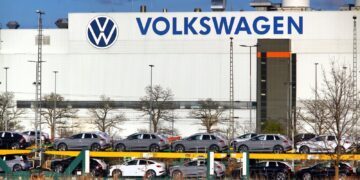




















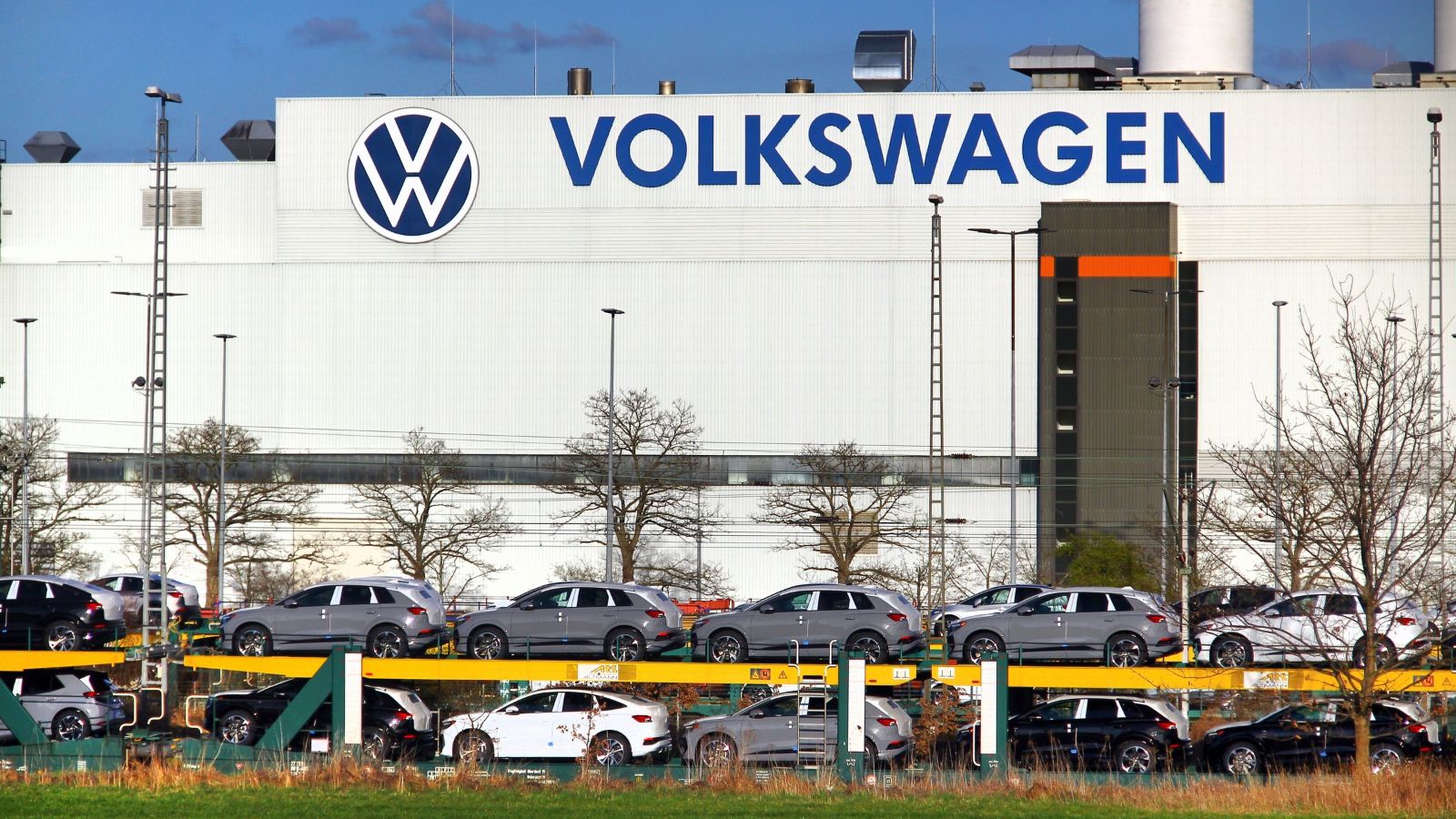
For decades, Volkswagen’s technology story largely ran from Germany outward. Its latest turn points in the other direction. On October 28, 2026, the automaker announced plans to use vehicle platforms and electronic systems developed in China in selected overseas markets, beginning with South America before 2030.
The initiative draws on engineering work in Hefei and partnerships with Chinese technology companies. Canada and the United States are not part of the announced rollout, and Europe is also excluded for now. This is not a promise to ship Chinese-developed Volkswagens to every country. Instead, it is an ambitious test of whether ideas forged in one of the world’s most fiercely competitive car markets can strengthen a German brand abroad—and why North American customers will initially be watching from the sidelines.
Volkswagen Is Reversing the Flow of Its Car Technology
Volkswagen spent years adapting vehicles conceived elsewhere to suit Chinese customers. More recently, its “In China, for China” strategy gave local engineers greater responsibility for software, electronics and new models. At a technology event in Hefei on October 28, that approach acquired a second purpose: taking successful Chinese-developed solutions into other regions. Volkswagen calls the next phase “In China, Beyond China.” Chief executive Oliver Blume described the country as an increasingly important source of products and technology for the wider group, not merely a place to manufacture and sell cars.
That change has practical implications. Volkswagen Group China Technology Company, its local software organization and Chinese partners are producing systems that may eventually serve drivers thousands of kilometres from the original development teams. Engineers must still adapt those systems to different climates, regulations, road conditions and customer budgets. For Volkswagen, the attraction is a potentially reusable technical foundation rather than the cost of designing everything separately for each market. The ambition is clear; the commercial payoff outside China has yet to be proved.
South America Will Be the First Major Test
The first named destination for Volkswagen’s Chinese-developed vehicle architecture is South America. The group says its Compact Main Platform, known as CMP, and China Electronic Architecture, or CEA, will support locally tailored next-generation vehicles in the region before 2030. South Africa is another intended destination for the technology, while Southeast Asia and other developing markets are among the wider opportunities under consideration. No Canadian or American launch date, model list or showroom pricing accompanied the announcement.
South America’s selection is not random. Frank Han, the head of Volkswagen’s CARIAD China software operation, told Reuters that the region’s price-sensitive buyers and strong competition from Chinese automakers made it a logical starting point. Volkswagen already has an established regional business: its October delivery report showed 502,500 vehicles handed over in South America during the first nine months of 2026, a 4.3% increase. That gives the company an existing customer base against which to test whether its new technology can make future models more competitive. It does not guarantee those models will succeed.
The Important Breakthrough Is Hidden Under the Bodywork
The announcement is less about a single futuristic car than about the equipment and software that make many different cars possible. CMP is a vehicle platform developed in China for mainstream models, including battery-electric and plug-in hybrid vehicles. CEA is the electronic architecture that connects major computer systems and supports functions controlled by software. Volkswagen designed the two to work together, allowing the same underlying approach to be adapted to different models rather than rebuilt from scratch every time.
CEA uses a zonal layout with central computing instead of relying on a sprawling collection of separate electronic controllers. Volkswagen says this reduces the number of control units by roughly 30% compared with earlier systems and enables full-vehicle over-the-air software updates. Its first production application was the China-built ID. UNYX 07. In October, Volkswagen also confirmed that the ID. ERA 5X had become the first production vehicle on CMP. These are tangible milestones, although they do not establish that either exact model will be sold in South America or Canada.
Chinese Partners Helped Volkswagen Move Faster
Volkswagen did not develop its entire new technology stack alone. Chinese electric-vehicle maker XPENG worked with Volkswagen Group China Technology Company and CARIAD China on CEA. Separately, Volkswagen’s CARIZON joint venture with Horizon Robotics develops advanced driver assistance systems. The partnerships bring different expertise to the table: XPENG’s role centres on vehicle electronics and collaborative engineering, while Horizon’s work with CARIZON helps power the systems that interpret traffic and assist a driver on the road.
The speed of the results matters to a company accustomed to lengthy development cycles. Volkswagen says its first CEA architecture moved from concept to production in 18 months, and that localized development processes can shorten overall vehicle development by as much as 30%. It has also cited major potential cost reductions compared with its older German-developed MEB approach, though the figures reflect specific projects and comparisons, not a guaranteed saving on every future export. Collaboration can accelerate progress, but the overseas test will still depend on reliability, service support and competitive vehicle prices.
VEGA Adds Fast Charging and Ambitious Driving Technology
Alongside the export strategy, Volkswagen introduced VEGA, its integrated Chinese-developed technology package covering vehicle platforms, electronics and driver assistance. The broader family includes CMP for mainstream electrified cars and CSP for larger electric or range-extender models. For selected CSP applications, Volkswagen describes an electrical system exceeding 850 volts and a potential 10%-to-80% fast-charge time as short as 13 minutes. Those are platform-related claims under specified conditions, not a charging guarantee for every Volkswagen arriving in an overseas market.
The software ambitions go further. CARIZON’s Hyper Sense 8 system supports assisted navigation on highways and urban roads, but it remains a driver-supervised Level 2++ system. Volkswagen is targeting Level 3 readiness in China during 2027 and developing technology aimed at more advanced automation later on. Readiness is not the same as regulatory approval or permission to stop paying attention at the wheel. For motorists, the meaningful question is whether these features work consistently in daily traffic, receive reliable updates and remain affordable after they reach production vehicles.
Volkswagen’s Falling China Sales Explain the Urgency
The shift comes at an uncomfortable time for Volkswagen in China. Its official delivery figures show that the group handed over 1,378,800 vehicles there in the first nine months of 2026, down 30.2% from the same period a year earlier. The decline was even steeper in the third quarter, when China deliveries fell 38.5%. Worldwide, Volkswagen’s deliveries declined 9% through September. Competition from homegrown brands such as BYD and Geely has made both pricing and technology more difficult for long-established foreign manufacturers.
There are encouraging details within those disappointing totals. Volkswagen reported that deliveries of electrified vehicles in China, a category including hybrids and range-extender vehicles, rose by around 30% in the third quarter compared with a year earlier. That does not cancel out the wider sales slump, but it helps explain the company’s focus on locally engineered electrification and software. Exporting that expertise could spread development costs across more vehicles and offer factories new opportunities. First, Volkswagen must show that its technology can win buyers beyond the market that shaped it.
The United States Has an Additional Software Hurdle
Volkswagen has not announced a U.S. introduction of its CMP-and-CEA export programme. There is also a distinct regulatory challenge. Under a U.S. Commerce Department rule finalized in January 2025, certain connected-vehicle and automated-driving software with a sufficient Chinese or Russian connection is barred from new U.S. vehicles beginning with model year 2027. Restrictions on specified connectivity hardware follow for model year 2030. The rule focuses on defined technologies and supplier relationships, rather than treating every invention developed in China as automatically prohibited.
That distinction prevents a simple conclusion that Volkswagen’s entire Chinese architecture is legally banned. Assessing any U.S. version would require examining the software, components, suppliers and applicable authorizations. Volkswagen has not publicly identified the regulation as the definitive reason for its October 28 market choices. Nevertheless, the requirements illustrate why selling a software-defined vehicle in the United States can involve more than changing its charging plug or adjusting its price. A new electronics strategy must pass demanding compliance reviews before reaching American showrooms.
Canada’s Exclusion Cannot Simply Be Blamed on Old Tariffs
For Canadians, the absence of a planned launch is striking because Ottawa has already changed its approach to Chinese electric vehicles. On March 1, 2026, Canada removed the additional 100% surtax it previously applied to Chinese-made EVs. Instead, the federal government introduced an initial annual import quota of 49,000 vehicles eligible for a 6.1% tariff rate. That arrangement concerns imported vehicles made in China; it is not a blanket authorization for every China-developed software system or a promise that Volkswagen will offer such vehicles here.
Volkswagen’s decision therefore should not be described as an automatic consequence of a tariff that no longer applies in its old form. Market planning, vehicle certification, dealer support, technology compliance and the economics of a new model all matter when an automaker chooses where to launch. Volkswagen has not provided a detailed, Canada-specific explanation for leaving the country off this rollout. For someone comparing EVs at a Canadian dealership, the immediate implication is straightforward: no new CMP-and-CEA Volkswagen has been confirmed for local sale through this announcement.
Mexico Reveals an Important Exception to the North America Story
There is a geographic wrinkle in the phrase “North America excluded.” Volkswagen’s October announcement separately says it intends to expand exports of China-built Volkswagen and Jetta vehicles to Mexico, Egypt and Vietnam by the end of 2026. China-built models have already been shipped to markets including the Middle East, Uzbekistan, Kazakhstan and parts of sub-Saharan Africa. Mexico is, of course, in North America. The more precise distinction is that Canada and the United States are outside the announced rollout for the China-developed CMP-and-CEA technology package.
This also separates two different commercial activities. Exporting a completed car from a Chinese factory is not identical to supplying the platform and electronics that a region can use to develop its own future vehicles. A Volkswagen shipped to Mexico does not automatically demonstrate that the South America-bound architecture has already been adopted there. Nor does it mean the same vehicle is headed to Canadian dealers. Keeping those timelines separate avoids making the global strategy sound more complete than it currently is.
Europe Has Its Own Technology Debate With Rivian
Europe is outside Volkswagen’s immediate China-developed architecture rollout too, but the picture may evolve. On October 26, Reuters reported that the company was considering wider use of CEA-derived software in future European Volkswagen, Škoda and Cupra models, citing a report in Germany’s Manager Magazin. Volkswagen declined to comment, so the idea remains a reported proposal rather than a confirmed European product programme. CARIAD China’s leadership has also said European use is technically possible, with any decision resting at headquarters in Germany.
The question is particularly sensitive because Volkswagen has invested heavily in a different route for Western markets. Its partnership with U.S. electric-vehicle maker Rivian, announced with a potential total deal value of up to US$5.8 billion, is developing software and electrical architectures for future vehicles. Volkswagen has said the first group model using that joint venture’s technology is planned for 2027. Choosing where the Chinese and Rivian-developed systems belong could shape costs, product schedules and the kinds of digital features Volkswagen customers receive in different countries.
The Next Four Years Will Show Whether the Strategy Works
Volkswagen has put several markers on the calendar. The CMP-and-CEA combination is moving into more Chinese vehicles, the company is aiming for Level 3 readiness in China in 2027, and South America is scheduled to begin using China-developed technology before 2030. Longer term, the plan could give Volkswagen more flexibility to offer electric, hybrid and combustion-powered vehicles with modern electronics in cost-conscious markets. But export model names, final specifications, prices and local production arrangements have not all been disclosed.
For Canadian and American drivers, the most important point is what the announcement does not say. It does not cancel existing Volkswagen models, end their software support or rule out future launches indefinitely. It says only that these two markets are not among the initial destinations for this particular China-developed technology strategy. The decisive evidence will come from actual vehicle launches, independent road tests and subsequent market announcements—not from an ambitious technology presentation alone. Volkswagen has turned China into a potential source of worldwide innovation. Whether that innovation eventually crosses the Canada–U.S. border remains unanswered.