
























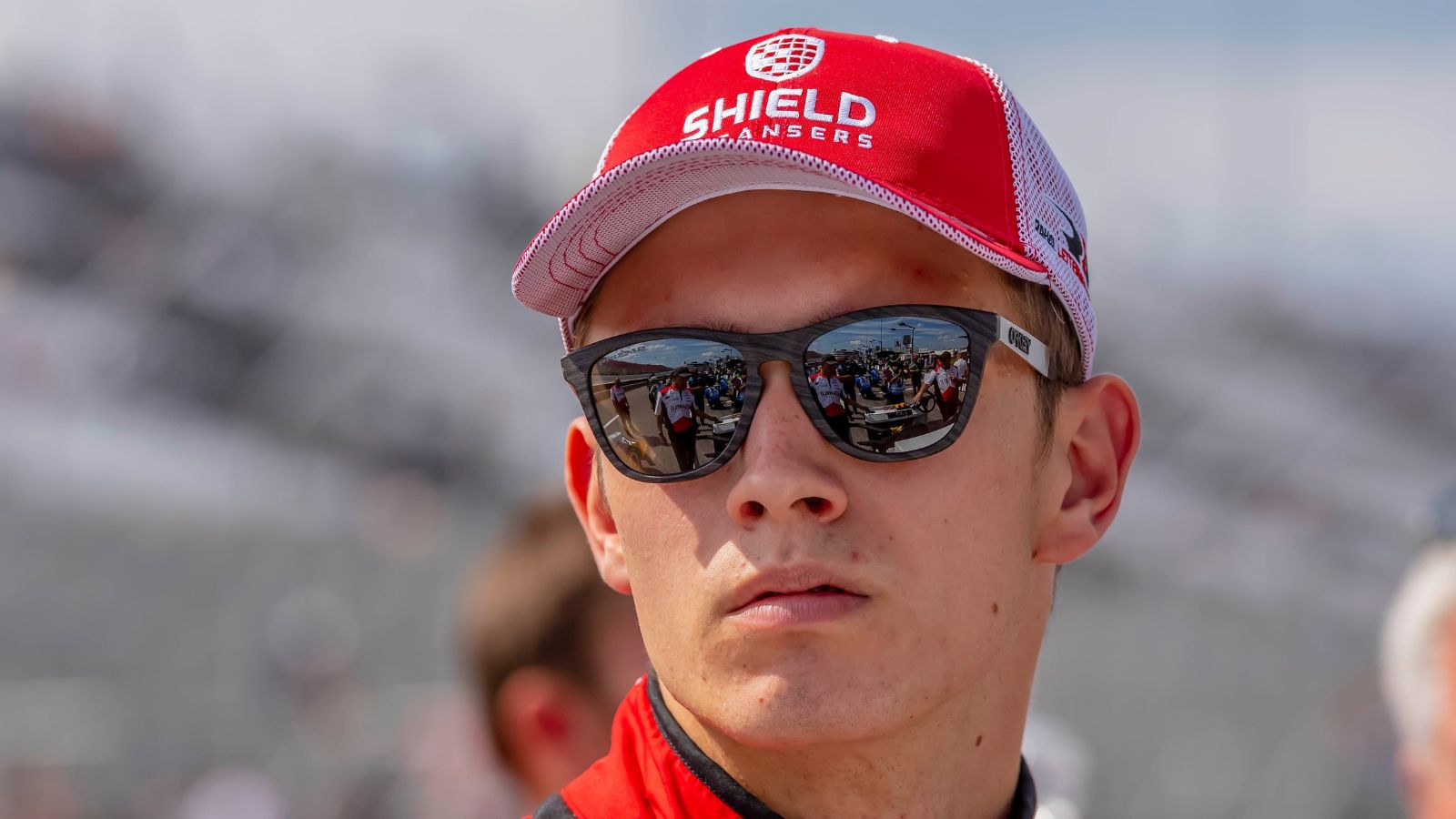
Christian Lundgaard delivered the final statement before racing began on the streets of Markham, putting his Arrow McLaren Chevrolet atop Sunday morning’s warm-up as the city prepared for its first NTT IndyCar Series race. The Danish driver entered the session already positioned on the front row beside polesitter Louis Foster, giving him both pace and track position for a historic afternoon in Ontario.
The inaugural event arrives with more than sporting significance. IndyCar’s longtime Greater Toronto Area stop has shifted from Exhibition Place to a newly built street circuit in Markham, creating a fresh challenge for teams while extending a Canadian racing tradition that began four decades ago. After track-construction delays erased Friday’s running, a compressed weekend has only increased the uncertainty surrounding the 90-lap race.
Lundgaard Sends a Clear Final Signal
Lundgaard finished Sunday morning with the quickest lap of the warm-up, leading Rinus VeeKay of Juncos Hollinger Racing and Rahal Letterman Lanigan Racing polesitter Louis Foster. Romain Grosjean placed fourth in the session and Kyffin Simpson fifth. It was a useful final confirmation for Arrow McLaren after Lundgaard had already qualified second, particularly on a circuit where every driver and engineer entered the weekend without previous IndyCar race data.
The warm-up order also offered an intriguing contrast with the championship standings. David Malukas, third in points entering Markham, was the highest-ranked member of the championship’s top three in the session, finishing seventh. Points leader Alex Palou was only 19th fastest. Warm-up pace does not guarantee race performance—teams often work through different fuel loads, tire plans and setup priorities—but Lundgaard’s combination of speed and a front-row starting position gave his crew considerably fewer questions to answer before the green flag.
Foster Owns the First Markham Pole
Louis Foster secured a permanent place in the new event’s record book Saturday evening by earning the first IndyCar pole on the Streets of Markham. The Rahal Letterman Lanigan Racing driver produced a 1-minute, 13.2383-second lap in the final qualifying round. Lundgaard’s 1:13.6352 put him second, leaving Foster with an advantage of roughly four-tenths of a second—an unusually comfortable margin in a series where street-course qualifying can be decided by hundredths.
It was Foster’s second career IndyCar pole after his first at Road America in 2025, but his first on a temporary street circuit. His Saturday progression made the result more convincing: Foster was third quickest in the opening practice before topping the second session and then qualifying. For a second-year driver still pursuing his first series victory, beginning Markham’s inaugural race from the best possible position created an opportunity considerably larger than another strong qualifying statistic.
The Front Row Brings Two Very Different Opportunities
Foster and Lundgaard may share the front row, but they enter Sunday with very different résumés. Foster is chasing the breakthrough victory that would convert his growing qualifying speed into his first IndyCar win. Lundgaard, meanwhile, has already demonstrated that he can close races. He arrived in Markham with two victories during the 2026 season and fourth place in the championship standings, making him one of the more established threats behind runaway points leader Palou.
Their positioning could make the opening phase particularly important. Neither driver needs to immediately compensate for a poor starting spot, and both have an opportunity to control the rhythm at the front while competitors deeper in the field work through traffic. Foster has the historical distinction of leading Markham’s first IndyCar field to the start; Lundgaard carries considerably more winning experience. That combination gives the inaugural front row a compelling balance between a driver seeking his first breakthrough and another trying to add to a career-best season.
Markham’s New Circuit Was Designed to Encourage Racing
The temporary Streets of Markham circuit measures 2.19 miles, or 3.52 kilometres, and contains 12 turns through the city’s downtown district. Unlike the narrower Exhibition Place configuration it replaced, the new course was designed with a wider surface and several potential passing areas. A broad Turn 5 hairpin leads onto a long stretch of Enterprise Boulevard, where organizers expected Indy cars to reach speeds exceeding 180 mph before braking for Turn 6.
Another unusual feature is the double-sided pit lane, incorporated partly because the Unionville GO rail line passes through the circuit area. The layout requires cars to cross beneath the rail corridor around the Turn 4-5 section. IndyCar also planned an unconventional starting procedure, with the green flag displayed on the backstretch between Turns 5 and 6 to create better spacing. The finish line, meanwhile, is positioned between Turns 12 and 1. Those details make Markham more than a simple replacement for Toronto’s former track.
The Move Closes One Chapter of Ontario Racing History
Indy-style racing had been associated with Exhibition Place since 1986, when Bobby Rahal won the first event there. Thirty-nine races were ultimately held at the Toronto venue, producing generations of recognizable moments and winners including Scott Dixon, Will Power, Josef Newgarden, Christian Lundgaard and Pato O’Ward. Markham therefore represents a geographic move without abandoning the Greater Toronto Area or the event’s broader Canadian identity.
The 2026 relocation was linked to scheduling restrictions surrounding Toronto’s FIFA World Cup responsibilities, which made another race weekend at Exhibition Place impractical. Green Savoree Toronto, the City of Markham and IndyCar announced the new venue in September 2025. Markham has committed to hosting the event for five years beginning in 2026. The arrangement gives organizers an opportunity to establish a new tradition rather than treating the move as a one-season detour, while preserving an Ontario presence that has become one of IndyCar’s longest-running international relationships.
Friday’s Delay Made the Debut Weekend More Complicated
Markham’s introduction to IndyCar did not begin according to schedule. Friday’s planned track activity was abandoned while promoter Green Savoree Racing Promotions continued completing the street-circuit build. IndyCar publicly expressed disappointment that construction had not been finished on time, while series president J. Douglas Boles apologized to fans who had arrived expecting to see cars running. The lost day placed additional pressure on organizers, teams and drivers at an already unfamiliar venue.
Saturday consequently became an unusually compressed learning exercise. IndyCar scheduled the first practice for 10 a.m., another session for 2:30 p.m. and qualifying during the evening. Once the cars finally ran, however, several drivers praised the circuit itself. The streets had been fully repaved, creating a notably smooth surface, while veterans including Will Power and Scott Dixon highlighted the layout and available racing room. The weekend therefore moved quickly from concerns about readiness toward questions about how the new track would actually race.
Palou’s Rare Error Adds Championship Intrigue
Alex Palou arrived in Markham with 510 points and a commanding 110-point advantage over Kyle Kirkwood, while David Malukas sat another eight points behind Kirkwood. Lundgaard entered fourth with 375. Palou’s position meant the championship increasingly looked like his to manage, but qualifying supplied an unusual complication when the four-time champion lost control entering Turn 10 during the Top 12 session and hit the wall.
The mistake left Palou 12th in qualifying, although penalties elsewhere promoted him to 11th on the official starting grid. It also ended a remarkable run of 30 consecutive races in which he had qualified inside the top 10. His principal pursuers did not fully capitalize. Malukas starts seventh, while Kirkwood’s engine-related penalty sends him to 22nd. With five races remaining entering the Markham weekend, Palou still possessed substantial mathematical protection, but the inaugural circuit created exactly the kind of unknown conditions capable of disrupting an otherwise controlled championship afternoon.
Engine Penalties Reshaped the Back Half of the Grid
Qualifying did not tell the complete story of Markham’s starting order. Six-position grid penalties for unapproved engine changes affected several competitors, including Kyle Kirkwood, Will Power and Arrow McLaren’s Pato O’Ward. Alexander Rossi, Christian Rasmussen and Marcus Armstrong were also among the drivers dealing with engine penalties. The adjustments left some highly competitive cars much deeper in the field than their outright speed might have suggested.
The official front six became Foster, Lundgaard, Scott McLaughlin, Marcus Ericsson, Dennis Hauger and VeeKay, followed by Malukas and Dixon. Palou starts 11th, while Kirkwood and O’Ward are buried in 22nd and 23rd respectively and Power sits at the rear in 25th. That distribution creates potential traffic throughout the field. Markham’s wider corners and identified passing zones may provide opportunities unavailable on tighter street courses, but drivers trying to recover positions must still balance aggression against the unforgiving concrete barriers surrounding a circuit that has never hosted an IndyCar race before.
Ontario Has Already Been Good to Lundgaard
Lundgaard’s strong Markham weekend carries extra significance because Ontario produced the breakthrough moment of his IndyCar career. Driving for Rahal Letterman Lanigan Racing in 2023, he won at Exhibition Place for his first series victory. That result established him as a street-course winner before his later move to Arrow McLaren and means a Markham victory would give the Danish driver wins at both of Ontario’s modern IndyCar venues.
His 2026 season has strengthened that storyline. Lundgaard won the Indianapolis Motor Speedway road-course race in May, ending a 47-race victory drought dating back to Toronto. He then produced one of the season’s more dramatic performances at Road America, recovering after an opening-lap incident and unscheduled stop dropped him to the back of the 25-car field. He still came through to win, securing his second victory of 2026 and third overall. Markham therefore finds Lundgaard returning to Ontario not as an outsider, but as a proven contender.
Markham Is Betting on a Race With a Longer Legacy
For Markham, the first IndyCar race is also a major infrastructure and economic-development project. The city’s agreement calls for the event to return annually for five years, while the federal government announced $3.5 million through FedDev Ontario for infrastructure and readiness initiatives connected with Markham’s ability to host major international events. Planned work included municipal road, transportation, track and event-facility improvements.
Federal officials have said the motorsports festival can attract roughly 150,000 visitors, creating activity for hotels, restaurants and other businesses across Markham and the Greater Toronto Area. The weekend itself extends beyond IndyCar, with NASCAR Canada, USF2000, USF Pro 2000 and other racing on the program. Sunday’s headline event is scheduled for 90 laps and 197.1 miles, with television coverage beginning at noon ET on FOX in the United States and TSN in Canada. For Markham, successfully reaching the checkered flag represents both a sporting milestone and the beginning of a much larger five-year experiment.