


























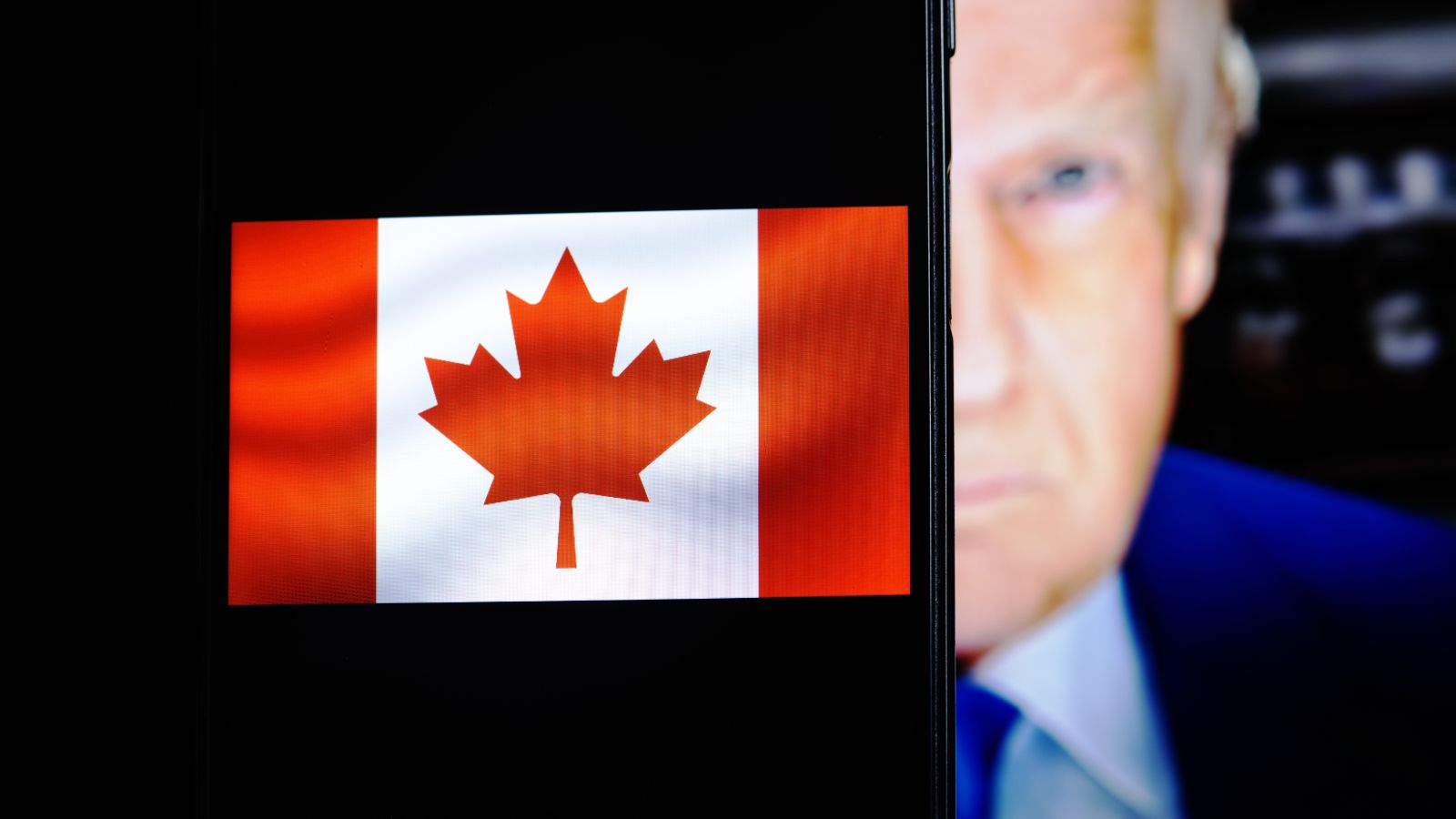
Manitoba Premier Wab Kinew has turned an already tense Canada–U.S. trade fight into something unusually personal. As Ottawa works against a looming tariff deadline, Kinew described U.S. President Donald Trump as erratic, irresponsible and untrustworthy, arguing that Canada should be cautious about making additional concessions to secure a deal. His message to consumers was equally direct: even if American products return to provincial shelves, Canadians can continue choosing domestic alternatives. The intervention exposes a difficult political balance for Prime Minister Mark Carney. Provinces may be willing to remove formal restrictions to help Ottawa negotiate, but governments cannot compel shoppers to resume old buying habits. Behind the rhetoric lies a much larger economic question about how Canada should respond when its most important trading relationship also becomes a source of persistent uncertainty.
Kinew’s Language Marks an Unusually Sharp Rebuke
Kinew’s criticism went well beyond the carefully calibrated language normally heard from provincial leaders discussing a U.S. president. Speaking on August 20, he described Trump as a “bad person” and said the American president was “not to be trusted.” His argument was fundamentally about negotiating risk: concessions lose some of their value, Kinew suggested, if the other side might later change course or reopen the dispute.
The Manitoba premier nevertheless stopped short of rejecting Ottawa’s negotiating strategy outright. He said his province could support Carney’s broader “Team Canada” approach even though he personally favoured fighting harder. That distinction matters. Kinew was criticizing the reliability of the negotiating partner rather than calling for provinces to abandon federal coordination. His stance combines political confrontation with practical flexibility, allowing Manitoba to help Ottawa remove obstacles to a deal while continuing to signal that Canadian governments should be prepared for another dispute.
The Boycott Could Continue Even If the Ban Ends
The most striking part of Kinew’s intervention was his separation of government policy from consumer behaviour. Manitoba has been considering whether to allow American alcohol back into provincial Liquor Marts, but Kinew urged shoppers to continue choosing Canadian products even if the formal restriction disappears. In effect, the province could satisfy a negotiating demand without ending the economic pressure created by individual purchasing decisions.
That distinction makes the boycott harder to resolve through diplomacy alone. Governments can change procurement policies, alter regulations and tell liquor boards what may be stocked. They cannot force customers to select a California wine or Kentucky bourbon instead of a Canadian alternative. Manitoba originally ordered American alcohol removed from Liquor Mart shelves in February 2025 in response to U.S. tariffs. More than a year later, consumer habits have had time to adjust, giving Canadian producers an opportunity to establish relationships with customers who previously bought American brands.
Alcohol Became a Surprisingly Powerful Trade Weapon
Alcohol represents only a small part of the enormous Canada–U.S. economic relationship, yet provincial control over liquor distribution gave Canadian governments an unusually visible pressure point. Manitoba says its decision to prioritize domestic alcohol removed approximately $80 million annually from the U.S. economy. Ontario was an even larger market: its LCBO sold close to C$1 billion worth of American products annually before U.S. alcohol was pulled from shelves.
American producers have recorded substantial losses. Wine Institute figures show U.S. wine exports to Canada fell 78% in 2025, reducing export value by approximately US$357 million compared with 2024. The Distilled Spirits Council reported that U.S. spirits exports to Canada fell roughly 70% between March and December 2025 compared with the same period a year earlier. Those declines help explain why provincial liquor restrictions have become a significant negotiating issue despite alcohol’s relatively modest place in overall bilateral commerce.
Carney Wants Provinces to Help Clear the Final Obstacles
Prime Minister Mark Carney has been pressing provincial leaders to restore American alcohol sales as Ottawa tries to complete a broader agreement with Washington. Provinces control important pieces of the puzzle because publicly controlled liquor distribution and certain procurement practices fall within provincial authority. Kinew said Carney made the importance of restoring U.S. alcohol exceptionally clear during discussions with premiers.
For Kinew, cooperating does not necessarily mean endorsing every concession. He has indicated Manitoba could remove formal restrictions while preserving its preference for Canadian suppliers where legally possible and encouraging residents to buy domestic goods. That approach illustrates the complexity of the federal government’s “Team Canada” strategy. Ottawa negotiates the international agreement, but implementation can require assistance from governments with different industries, political pressures and economic vulnerabilities. A compromise acceptable in Saskatchewan or Nova Scotia may look considerably less attractive in Manitoba, Quebec or steel-dependent Ontario.
Negotiators Are Racing Against Another Tariff Deadline
Kinew’s comments came at a particularly sensitive moment. Canadian Trade Minister Dominic LeBlanc and chief negotiator Janice Charette were preparing for another meeting with U.S. Trade Representative Jamieson Greer in Washington on August 21. LeBlanc had said Canada and the United States were “very close” to an agreement after several rounds of discussions, but negotiators still had unresolved work ahead of them.
Without a finalized arrangement, Trump has threatened a new 50% tariff on roughly $20 billion worth of Canadian goods beginning at 12:01 a.m. Eastern time on August 22. Existing U.S. measures already affect Canadian steel, aluminum and automobiles. Reuters reported that a potential agreement could reduce the headline tariff on Canadian-built vehicles from 25% to 15% and cut steel and aluminum tariffs to 25%, although final terms had not been publicly released. That uncertainty helps explain Kinew’s reluctance to celebrate before the details are known.
Canadian Public Opinion Gives Kinew Political Room
Kinew’s combative position is not occurring in isolation. A Leger poll conducted from August 15 to 17 found 56% of Canadians wanted Ottawa to take a harder line and make no further concessions, compared with 31% who supported greater flexibility. The same research found 64% backed continuing restrictions on U.S. liquor, while only 33% supported fully resuming American alcohol sales.
Other polling points in the same direction. Angus Reid Institute research conducted in July found 62% supported Canadian counter-tariffs and 75% did not trust the Trump administration to honour a trade agreement. Consumer intentions were also notable: 60% said they would probably or definitely avoid American wine, beer and spirits even if market access increased. Those numbers do not mean every Canadian supports Kinew’s rhetoric, but they help explain why telling consumers to keep buying Canadian can carry relatively limited political risk domestically.
Canada Still Has Enormous Exposure to the U.S. Market
Calls to “keep fighting” collide with an economic reality Ottawa cannot ignore. Statistics Canada reported that 71.7% of Canadian merchandise exports went to the United States in 2025. Although that was down from 75.9% in 2024, the American market remained overwhelmingly more important than any other destination. In June 2026 alone, Canada exported approximately $53.9 billion in merchandise to the United States out of total exports of about $77.5 billion.
That dependence explains why federal negotiators may accept compromises that look frustrating from a purely political perspective. A prolonged tariff confrontation can affect manufacturers, farmers, transportation companies and communities whose businesses were built around cross-border supply chains. Canada has been expanding trade with non-U.S. markets, and exports elsewhere rose strongly during 2025, but diversification cannot instantly replace decades of geographic and industrial integration. Kinew’s argument for leverage therefore exists alongside a genuine Canadian vulnerability.
Manitoba Has More at Stake Than the Rhetoric Suggests
Manitoba itself demonstrates why the dispute cannot be treated simply as a political confrontation. Provincial figures show Manitoba exported about $14.5 billion worth of goods to the United States in 2024, representing roughly 70% of its domestic merchandise exports. Provincial officials have repeatedly described the U.S. as Manitoba’s dominant international market, particularly for industries such as agriculture and manufacturing.
The Kinew government has responded by combining retaliation with diversification measures. Manitoba promoted its Buy Local campaign, changed purchasing rules to favour Canadian suppliers in some circumstances and committed money to infrastructure including the Hudson Bay Railway and Port of Churchill. The province has also supported exporters dealing with tariff disruption. That context makes Kinew’s message more nuanced than a simple call to cut economic ties with the United States. Manitoba cannot realistically abandon its largest customer, but it can try to reduce vulnerability while directing more consumer spending toward businesses closer to home.
Premiers Are Not All Taking the Same Approach
Canada’s provincial governments broadly support maintaining a coordinated national front, but they are not identical in their willingness to restore American products or accept an emerging deal. Saskatchewan and Nova Scotia leaders have publicly signalled support for moving ahead with restoring U.S. alcohol. Newfoundland and Labrador Premier Tony Wakeham said premiers agreed during their discussions with Carney to put American products back on shelves, although individual governments had not all publicly confirmed the same commitment.
Quebec Premier Christine Fréchette has been more cautious, saying her government needed to assess the economic impact and emphasizing that Quebec would make its own decision on provincial alcohol sales. Manitoba likewise had not announced an immediate return of U.S. products when Kinew made his remarks. The differences reveal a basic feature of Canadian trade politics: Ottawa may negotiate internationally, but provinces possess significant economic powers that can either strengthen federal leverage or complicate the final stages of an agreement.
The Dispute Extends Beyond One Tariff Deal
Even a successful agreement this weekend would not settle every Canada–U.S. trade question. The first formal joint review of the Canada–United States–Mexico Agreement took place on July 1, 2026. Canada and Mexico supported extending the agreement, while the United States did not agree to renewal at that stage. CUSMA nevertheless remains legally in force until 2036, with the parties moving into an annual review process unless they eventually agree on an extension.
That longer horizon gives Kinew’s warning additional significance. Canada may secure immediate tariff relief while still facing years of negotiations over automobiles, steel, aluminum, lumber, dairy, procurement and other economic issues. Consumer behaviour could remain part of that landscape long after formal provincial restrictions disappear. If Canadians continue choosing domestic products voluntarily, the political and commercial consequences of the tariff dispute may outlast whatever governments sign in Washington. For Ottawa, restoring predictability may ultimately prove harder than simply restoring products to store shelves.