




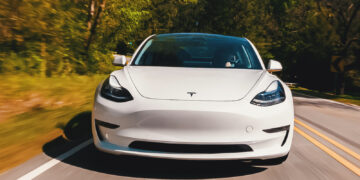



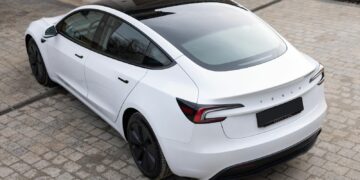

















Europe’s electric-vehicle market is accelerating at a remarkable pace, with new figures showing that battery-powered cars are becoming a mainstream choice for drivers across the continent.
Registrations of fully electric vehicles surged 70.3% in September 2026 compared with the previous year, according to industry data released October 19. More than 300,000 battery-electric cars were registered across 17 major European markets, giving them a 32.6% share of new passenger-car registrations.
The increase comes as high fuel prices, government incentives and a growing selection of affordable electric models reshape purchasing decisions. France and Germany recorded particularly strong results, while Norway continues to lead the transition.
The figures highlight a significant shift in Europe’s automotive industry, even as political leaders debate future emissions rules and manufacturers face growing competition.
Electric-Vehicle Registrations Jump 70.3% in September
Europe registered 300,202 new battery-electric passenger cars during September 2026, representing an increase of 70.3% compared with the same month in 2025. Fully electric models accounted for 32.6% of all new passenger-car registrations in the 17 European markets included in the figures. The statistics were compiled by E-Mobility Europe, New Automotive and Fier Automotive, reflecting an acceleration in demand across several of the continent’s largest automotive markets. The results mean that roughly one in every three new passenger cars registered in the surveyed countries during September was powered entirely by electricity.
The distinction between battery-electric vehicles and other electrified cars is important. These figures cover fully electric vehicles, rather than conventional hybrids or plug-in hybrids that retain combustion engines. The 32.6% share also applies specifically to the 17 markets examined, not every country in Europe or the European Union alone. Nevertheless, the scale of the increase is significant. The previous September’s comparable registrations were approximately 176,000 vehicles, meaning the surveyed markets added roughly 124,000 battery-electric registrations in a single year. For manufacturers and dealerships, that represents a substantial change in the types of vehicles customers are choosing.
Nearly Two Million Electric Cars Registered During the First Nine Months
September’s extraordinary growth builds on a much broader trend. Between January and September 2026, approximately 1.98 million battery-electric vehicles were registered across the European markets covered by the latest industry dataset. That represents a 38.1% increase compared with the same nine-month period in 2025. The figures suggest that the market’s strength is not confined to a single unusually successful month. Earlier industry reporting also documented a strong August, when JATO Dynamics recorded 242,425 battery-electric registrations, an increase of 52.2% year over year, giving fully electric vehicles a 29.3% share in its European market coverage.
The longer-term figures provide additional perspective. According to the European Automobile Manufacturers’ Association, battery-electric vehicles accounted for 21.7% of new registrations across the European Union during the first eight months of 2026, compared with 15.8% a year earlier. Conventional hybrids remained the most popular individual powertrain category at 36.6%, while gasoline and diesel cars together represented 29% of registrations, down from 37.5%. These statistics use different reporting periods and geographic coverage, so their percentages should not be treated as directly interchangeable. Taken together, however, they show that Europe’s automotive market is undergoing a sustained transition rather than experiencing an isolated spike in demand.
France Reaches More Than 40% Electric-Vehicle Market Share
France delivered one of September’s strongest performances among Europe’s major automotive markets. According to French electromobility association Avere-France, 65,641 new battery-electric passenger cars were registered during the month, giving fully electric vehicles a record 41.91% market share. That means more than four out of every ten new passenger cars registered in France were fully electric. The result reflects growing consumer interest alongside government support programs designed to make electric transportation accessible to households that may struggle with the purchase price of a new vehicle. The industry association also reported that electric-vehicle registrations, including commercial vehicles, more than doubled during the third quarter compared with the previous year.
France’s social leasing initiative is one important part of that strategy. The program was renewed in July 2026 and allows qualifying lower-income households to lease eligible electric vehicles for no more than €200 per month, excluding additional services and insurance. Participating providers must also offer at least one qualifying model at €140 per month or less, with some exceptions. For workers travelling significant distances between home and employment, the arrangement can reduce the initial financial barrier to electrification. France has also introduced support for eligible used electric vehicles. The policies do not explain every new registration, but they demonstrate how targeted affordability measures can accompany stronger market demand.
Germany Registers Nearly 89,000 Electric Cars in a Single Month
Germany, Europe’s largest national automotive market, also recorded an exceptional September. Figures analyzed by the German Association of International Motor Vehicle Manufacturers show that 88,599 battery-electric passenger cars were registered, giving them a 34.5% share of all new passenger-car registrations. That was the country’s highest monthly electric-vehicle market share on record. During the first nine months of 2026, German buyers registered 604,144 fully electric vehicles, up approximately 58.1% from the same period in 2025. Battery-electric models accounted for 27.2% of German passenger-car registrations during that nine-month period, demonstrating that the September result was part of a broader rise.
The German figures matter because the country is home to Volkswagen, BMW, Mercedes-Benz and several major automotive suppliers. These manufacturers are increasingly competing with international brands in a market that is changing rapidly. According to the manufacturers’ association, foreign automotive brands accounted for approximately 46.1% of Germany’s battery-electric registrations during the first nine months of 2026. That underlines the importance of competition from manufacturers based outside Germany, including those from Asia. For traditional German brands, the growth creates opportunities to sell more electric cars but also increases pressure to develop competitive models, improve software and control manufacturing costs. The country’s electric transition is now a major commercial reality, rather than simply a regulatory objective.
Norway Approaches 99% EV Adoption as Nordic Countries Set Records
No European country illustrates the scale of the electric transition more dramatically than Norway. According to the Norwegian Road Traffic Information Council, battery-electric cars accounted for 98.8% of new passenger-car registrations in September, establishing another national record. Norway registered 18,733 new passenger cars during the month, of which approximately 18,511 were fully electric. The Tesla Model Y alone accounted for 4,810 registrations, making it the country’s leading individual model. Norway’s experience demonstrates what a market can look like when the overwhelming majority of new passenger-car customers have already shifted away from conventional combustion engines.
The transformation extends across the Nordic region, although adoption rates differ considerably. Denmark recorded an electric-vehicle share of 88.8% in September, while Finland reached approximately 62% and Sweden approached 49%. Norway’s automotive industry association reported that the Nordic countries collectively experienced record electric adoption in three of their four markets. These results reflect years of policy support, expanding vehicle choice and developing charging infrastructure. They also show that colder climates do not automatically prevent large-scale electric-vehicle adoption. Challenges involving battery range and winter charging remain relevant, but consumers in these countries have increasingly adapted their transportation habits and purchasing preferences to electric mobility.
Italy, Poland and the Czech Republic Show How Uneven the Transition Remains
Despite the strong European figures, several markets remain much more dependent on gasoline, diesel and hybrid vehicles. Italy recorded a battery-electric market share of just 7.6% in September, according to the national automotive association UNRAE. That represented an improvement from 5.6% a year earlier but remained far below the European markets leading the transition. Plug-in hybrids accounted for another 11.1% of Italian registrations, highlighting a stronger appetite for vehicles that combine electric and combustion power. Meanwhile, Poland recorded a battery-electric market share of 6.2%, with approximately 3,478 registrations, and its electric registrations actually declined compared with September 2025.
The Czech Republic performed somewhat better, with battery-electric vehicles capturing 11.2% of new registrations in September, a national monthly record. Its Centre for Transport Research reported 2,141 registrations during the month, up approximately 57% from a year earlier. These differences reveal why Europe’s overall growth should not be mistaken for a uniform transition. Charging availability, household purchasing power, vehicle prices and government support can all influence adoption. A buyer in a city with accessible charging and competitive leasing options faces a different calculation from someone who frequently drives through rural areas without dependable charging infrastructure. Expanding access beyond Europe’s wealthier and more electrified markets remains an important challenge.
Rising Fuel Prices Make Electric Cars More Attractive to Households
One of the biggest economic forces behind Europe’s electric-vehicle boom is the rising cost of conventional transportation. Oil-market disruptions and higher fuel prices have increased the appeal of vehicles that can be charged using electricity instead of repeatedly purchasing gasoline or diesel. Reuters identified elevated oil prices as one of the factors supporting September’s electric-car registrations. The shift is especially important for commuters who travel substantial distances each week, because recurring fuel expenses can become a major part of a household’s transportation budget. A purchase that once appeared expensive may look more attractive when monthly operating costs are considered.
Research from the International Council on Clean Transportation provides evidence of the financial difference. Its September 2026 assessment found that battery-electric passenger cars in Europe were, on average, approximately 33% cheaper to drive than comparable gasoline vehicles under the study’s operating-cost assumptions. The organization also estimated that existing electric cars were saving the European Union around €4.5 billion annually in fossil-fuel imports. Those figures do not mean every household will save the same amount. Electricity tariffs, public charging prices, vehicle efficiency and annual mileage all matter. Nevertheless, higher fuel costs strengthen the financial argument for electrification, particularly for motorists who can regularly charge at home or through reasonably priced workplace facilities.
More Affordable Models and Expanding Charging Networks Help Drive Demand
Electric vehicles are also becoming easier to consider because buyers have more choices at different price points. Research published by the International Council on Clean Transportation found that the number of battery-electric models offered in Germany quadrupled between 2020 and 2025, reaching approximately 160. Around 35 models were available for less than €30,000 in 2025. After adjusting for inflation and improvements in vehicle specifications, the study estimated that electric-car prices had fallen approximately 18% over five years. Newer vehicles such as the Renault 5, Škoda Elroq, Kia EV2 and Volkswagen ID. Polo are contributing to a broader market that no longer revolves primarily around expensive premium sedans and SUVs.
Charging infrastructure has expanded alongside the vehicle lineup. The International Council on Clean Transportation reported approximately 1.2 million public charging points across Europe by the end of June 2026. The number of direct-current charging points, generally associated with faster charging, increased 29% from a year earlier. Nevertheless, infrastructure remains unevenly distributed, with particularly strong networks in countries such as Denmark, Norway and the Netherlands. Buyers without private parking can still face higher charging costs and greater inconvenience. Increasing vehicle affordability will therefore need to be accompanied by dependable charging access if Europe’s electric transition is to reach a wider range of households.
France and Germany Seek Changes to EU Emissions Rules Despite EV Growth
Europe’s record electric-vehicle growth is occurring alongside renewed political debate about the future of combustion-engine vehicles. On October 16, France and Germany announced a joint position calling for greater flexibility in the European Union’s automotive emissions framework while strengthening support for European manufacturing. Their agreement backs a proposed 90% reduction in new-car carbon dioxide emissions by 2035 compared with 2021 levels, replacing the previously adopted 100% reduction requirement. The two countries also want policies that support manufacturing investment and favour vehicles produced within Europe and certain closely connected partner countries. The agreement remains a political proposal, not an enacted change to EU law.
The compromise reflects competing concerns within the automotive industry. Some manufacturers and political leaders argue that flexibility is necessary to protect jobs, preserve investment and accommodate markets where electric-vehicle adoption remains relatively slow. Environmental organizations and other critics warn that weakening emissions requirements could discourage long-term electric-vehicle investment and leave European manufacturers less prepared for competition. The European Parliament and EU governments must still determine the final regulatory framework. Meanwhile, the registration figures show that consumer demand is moving rapidly in several markets regardless of the unresolved political debate. Automakers must continue developing electric vehicles while planning around rules that may change before the next decade.
Canada’s EV Market Is Growing, but Europe’s Surge Highlights a Significant Gap
Europe’s rapid electric-vehicle adoption offers an important comparison for Canada, where demand is increasing but market penetration remains considerably lower. According to Statistics Canada, 58,811 new zero-emission vehicles were registered during the second quarter of 2026, an increase of 26.7% compared with a year earlier. These vehicles accounted for 10.7% of all new motor-vehicle registrations, up from 8.6% in the second quarter of 2025. Registrations of fully battery-electric vehicles specifically increased 37.4% year over year. However, Canada’s broader zero-emission category and quarterly reporting period differ from the European battery-electric-only September figures, making direct percentage comparisons imperfect.
Canada has also introduced new measures intended to make electric vehicles more affordable. The federal Electric Vehicle Affordability Program provides incentives of up to C$5,000 for eligible new battery-electric vehicles, subject to conditions involving price, manufacturing location and other requirements. Transport Canada reported C$1.92 billion in remaining program funding as of October 1, 2026. Europe’s experience suggests that affordability, vehicle choice, charging infrastructure and predictable government policy can collectively help accelerate adoption. Still, regional differences in income, climate and driving patterns mean the same measures will not produce identical results everywhere. The central lesson is that electric vehicles are becoming an increasingly important part of the global automotive market, and Canada’s manufacturers, dealerships and policymakers face growing pressure to keep pace.