
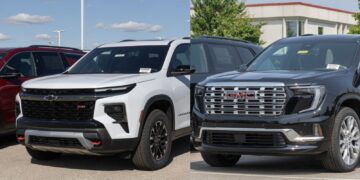






















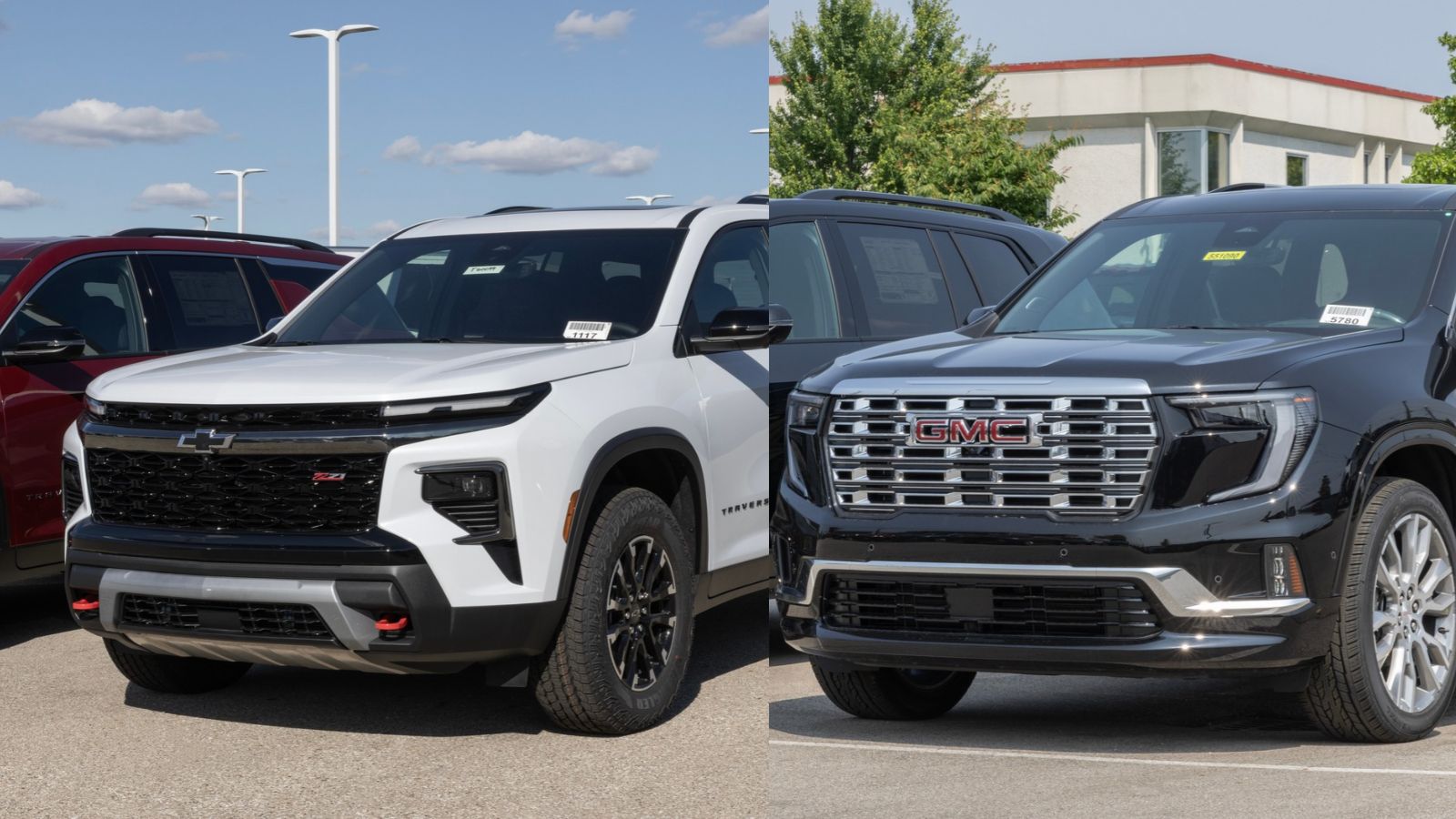
A front seat is supposed to do more than make a long drive comfortable. In a collision, its structure must help keep the person sitting in it properly supported. General Motors has recalled certain 2026 Chevrolet Traverse and GMC Acadia SUVs in Canada because a manufacturing defect could allow a driver’s or front passenger’s seatback to move or detach during a crash. Transport Canada warns that the problem could increase the risk of injury.
First published on October 21, 2026, and updated on October 28, the recall is unusually small, covering just two vehicles in Canada. However, the potential consequences make it worth attention. Owners are being directed toward a dealership repair that replaces the affected seatback frame rather than merely adjusting the seat. The distinction between a widespread defect and a handful of identifiable vehicles is central to understanding the risk and the practical steps available to owners.
Only Certain 2026 Traverse and Acadia SUVs Are Included
Transport Canada’s notice identifies the 2026 Chevrolet Traverse and 2026 GMC Acadia, two family-oriented SUVs that can accommodate up to eight people depending on configuration. It does not extend to every Traverse or Acadia on Canadian roads, nor does it suggest a problem with all the seats inside either vehicle. The affected component belongs to the driver or front passenger seat. The second and third rows are not identified as defective under this campaign, an important distinction for families who use these vehicles to carry several passengers.
The Canadian recall is recorded as Transport Canada number 2026512, with identification number RA-82886. Canadian recall records put the affected population at two vehicles in total. They do not establish that every 2026 Traverse or Acadia needs a new frame, and the published summary does not spell out how those two Canadian vehicles are divided between the Chevrolet and GMC models. A model-year match is therefore only the first step. Whether a particular SUV is included depends on its vehicle identification number, which an authorized dealer or GM’s Canadian recall service can check.
A Welding Defect at the Seatback’s Pivot
The more detailed U.S. recall filing identifies insufficient welds at the point where the front seatback’s recliner pivot mechanism attaches to a bracket on the frame. That connection matters because it links the adjustable upper part of the seat to the structure beneath it. When the seat is reclined or returned upright, the joint is part of the mechanism that maintains its position. A weakness at that attachment is different from a loose trim panel or a malfunctioning convenience feature: it concerns the strength of a structural part of the seat itself.
The defect is also difficult to judge simply by sitting in the SUV. The public recall notices do not identify a distinctive noise, dashboard warning light or everyday symptom that reliably alerts a driver to the weld problem. Instead, the concern is what could happen when collision forces act on the seatback. Transport Canada says it could move or detach; U.S. safety officials say an affected seat might not restrain its occupant as intended. That is why owners should not treat a normal-feeling recline adjustment as proof that a vehicle is unaffected. Proper identification and replacement are the relevant safeguards.
Why Seatback Strength Matters in a Collision
Seatbelts and airbags often dominate conversations about crash protection, but the seat beneath an occupant is another essential part of the system. Research examined by the U.S. National Highway Traffic Safety Administration explains that a seatback supports the torso during a rear impact and that its movement affects how crash forces are transferred to an occupant. The connection between the upper seatback and the lower frame therefore has a safety function even though it is usually hidden beneath cushions, upholstery and plastic trim.
Consider a parent driving a full SUV with another passenger directly behind the front seat. During a collision, sudden loads can act on the seat structure in ways that ordinary driving never does. If a defective seatback moves unexpectedly, the front occupant may no longer receive the support intended by the vehicle’s design; movement of a front seat can also have implications for people behind it. Those are potential mechanisms of injury, not a claim that these specific vehicles have already caused such harm. Transport Canada’s stated finding is narrower and clear: a seatback that moves or separates during a crash could increase the risk of injury.
Why the Canadian and U.S. Recall Numbers Differ
The recall covers six vehicles across Canada and the United States, according to reporting based on GM’s dealer bulletin. Three are Chevrolet Traverses and three are GMC Acadias. Four are included in the U.S. campaign, while two are assigned to Canada. These figures describe a tightly identified group of vehicles, not thousands of SUVs being withdrawn from service. The Canadian notice uses recall number 2026512, the U.S. National Highway Traffic Safety Administration uses campaign 26V696000, and GM identifies the underlying action as N262576830.
U.S. records associate the affected vehicles with a brief manufacturing period in November 2025, from November 14 through November 17, even though the vehicles carry the 2026 model-year designation. Such dates help explain how an issue in a small production population can later produce a recall across two markets. They should not, however, be used as a substitute for a Canadian VIN check: the published American production range does not by itself prove that any individual Canadian SUV is affected. Equally, the recall’s small size should not be confused with a small consequence for an owner whose vehicle falls within it.
GM’s Repair Involves Replacing the Seatback Frame
Transport Canada says General Motors will notify affected Canadian owners by mail and direct them to a dealership to replace the driver-side or front passenger-side seatback frame, as appropriate. GM’s recall information describes the work as a no-charge repair. The announced remedy addresses the structural component containing the suspect connection; it is not a software download, a seat-position reset or a routine maintenance adjustment. There is no reason for an owner to attempt to inspect or repair a weld concealed inside the seat assembly.
Dealer technicians must first establish whether the vehicle is covered and which front seat requires attention. GM’s bulletin specifies the replacement side for each of the six vehicles, with three requiring driver-side work and three requiring passenger-side work. Owners can ask the service department to explain the repair, whether the correct part is available and when the work can be scheduled. Once the replacement is complete, retaining the service paperwork makes it easier to document that the safety campaign has been addressed, particularly if the SUV is later sold or traded.
Affected Vehicles at Dealerships Must Be Held Back
The recall does not concern only vehicles already parked in private driveways. GM’s dealer instructions, as reported by GM Authority, require affected vehicles still in dealership inventory to be held until the recall repair is completed. The restriction covers more than brand-new showroom stock: it also applies to affected used and certified pre-owned vehicles, along with courtesy transportation and dealer-shuttle units. Dealers are instructed not to deliver, trade, auction or use a covered vehicle for demonstrations before the defective seatback frame has been replaced.
That matters to someone who has just purchased a Traverse or Acadia and is arranging delivery. A delay involving one of the identified vehicles may reflect a required safety repair rather than an unrelated sales problem. Buyers can reasonably ask the selling dealership to check the VIN and confirm that there are no outstanding recalls before the keys change hands. The instruction is specific to affected vehicles, not a sweeping stop-sale order for all 2026 models. For the vast majority of shoppers, the important question is not whether the nameplate appears in a recall headline, but whether the individual vehicle is listed as needing corrective work.
Canadian Owners Can Check Before a Letter Arrives
An owner does not have to rely solely on the mailbox. GM Canada offers an online recall lookup, and Transport Canada directs motorists to manufacturers’ VIN-based services for vehicle-specific answers. A VIN contains 17 characters and can typically be found near the base of the windshield on the driver’s side or on registration documents. If a result is unclear, the service department of a Chevrolet or GMC dealership can check the vehicle directly. Owners can refer to GM campaign N262576830 and Transport Canada recall 2026512 when asking about the issue.
The Canadian notice says GM will contact affected owners by mail, but it does not give a specific Canadian mailing date. A December 7, 2026, target appearing in U.S. recall records refers to American owner notifications and should not be presented as a confirmed Canadian deadline. Transport Canada’s notice also does not announce a blanket stop-driving direction. Anyone whose VIN is included should nevertheless contact the dealer promptly, confirm the repair plan and ask for vehicle-specific guidance while awaiting service. Those who bought a vehicle used should ensure GM has their current contact details, since notices can otherwise go to an earlier owner.
A Two-Vehicle Recall Still Deserves Serious Attention
Two Canadian vehicles make this an exceptionally small safety campaign, but the number alone says little about the importance of the repair. The national challenge is much broader: Transport Canada reported that 116 companies issued 785 vehicle safety recalls in 2024, affecting more than eight million vehicles, and estimated that more than one in five vehicles in use on Canadian roads had an unresolved safety recall. Those figures cover the overall recall system, not the Traverse and Acadia campaign, and they show why making it easy to identify an outstanding repair matters.
For families, a vehicle that drives normally can feel perfectly safe until a hidden defect is exposed by an unusual event. That is precisely the concern with a seatback weld whose weakness may not be apparent during everyday errands, school drop-offs or highway travel. The latest GM action should not be interpreted as evidence that every Traverse or Acadia has a seating problem. It is a targeted response to a very small manufacturing population with a potentially serious crash-safety consequence. Checking the VIN, arranging the no-charge repair if required and keeping the confirmation are straightforward ways to turn a concerning headline into a resolved safety issue.