






















• About
  • Contact
AutoIgloo
  • News & Trends
    Debit Tap Processing Fees Rise 75% for Some Canadian Auto-Parts and Home-Supply Merchants

    Debit Tap Processing Fees Rise 75% for Some Canadian Auto-Parts and Home-Supply Merchants

    Top U.S. Senate Democrat Targets Trump’s Canada Tariffs, but Election Gains Offer No Guaranteed Relief for Auto Makers

    Top U.S. Senate Democrat Targets Trump’s Canada Tariffs, but Election Gains Offer No Guaranteed Relief for Auto Makers

    Ontario EV Owners Face a 10-to-1 Electricity Price Gap Under New November Rates

    Ontario EV Owners Face a 10-to-1 Electricity Price Gap Under New November Rates

    Nova Scotia CAA Auto Insurance Renewals Bring Credit-Score Discounts and a 30% Coverage Increase

    Nova Scotia CAA Auto Insurance Renewals Bring Credit-Score Discounts and a 30% Coverage Increase

    GM’s Chinese Joint-Venture Sales Collapse 51% as SAIC’s Own Brand Jumps 33%

    GM’s Chinese Joint-Venture Sales Collapse 51% as SAIC’s Own Brand Jumps 33%

    Toronto Battery Maker Lands $26-Million Deal to Convert Diesel Trucks to Electric Across Canada and U.S.

    Teamsters Say Some Canadian Trucking Firms Cut Driver Costs 20–30% by Misclassifying Workers

  • Car Reviews
    Mitsubishi Outlander Review: Is It Still the Underrated Family SUV?

    Mitsubishi Outlander Review: Is It Still the Underrated Family SUV?

    19 Cars With Windshields That Crack Constantly on Canadian Highways

    Subaru Forester vs Toyota RAV4: Which SUV Is Better for Canadian Winters?

    20 Cars Canadians Should Avoid If They Hate Expensive Windshield Replacements

    Hyundai Tucson vs Kia Sportage: Which Compact SUV Is the Better Everyday Buy?

    BYD, CATL and Xiaomi Are in the Mix for Xi’s Washington Trip as Canada and U.S. Split on Chinese EV Access

    Toyota RAV4 Plug-In Hybrid vs Regular Hybrid: Which One Should Canadians Buy?

    17 Vehicles That Are Quietly Getting Crushed by Insurance Costs in Canada

    Honda CR-V Hybrid Review: The Family SUV That Plays It Safe

    2026 Toyota RAV4 vs Honda CR-V: Which SUV Makes More Sense for Canadians?

    2026 Toyota RAV4 vs Honda CR-V: Which SUV Makes More Sense for Canadians?

  • Buying Guides
    Mitsubishi Outlander Review: Is It Still the Underrated Family SUV?

    Mitsubishi Outlander Review: Is It Still the Underrated Family SUV?

    16 Used SUVs That Suddenly Don’t Look Like Smart Buys in Canada

    Nissan Rogue vs Honda CR-V: Which SUV Feels Better After the Test Drive?

    19 Cars With Windshields That Crack Constantly on Canadian Highways

    Subaru Forester vs Toyota RAV4: Which SUV Is Better for Canadian Winters?

    Mazda CX-5 vs Mazda CX-50: Which One Feels More Premium for the Money?

    Mazda CX-5 vs Mazda CX-50: Which One Feels More Premium for the Money?

    17 Vehicles That Are Quietly Getting Crushed by Insurance Costs in Canada

    Honda CR-V Hybrid Review: The Family SUV That Plays It Safe

    18 Cars With Parts Prices So Wild They’re Becoming Hard to Own in Canada

    Is the New Toyota RAV4 Still the Safest Bet in Canada?

  • Comparisons
    19 Cars With Windshields That Crack Constantly on Canadian Highways

    Subaru Forester vs Toyota RAV4: Which SUV Is Better for Canadian Winters?

    21 Vehicles With the Best Real-World Fuel Economy in Canada (Not Just the Sticker)

    Toyota Corolla Cross vs Honda HR-V: Which Small SUV Is Less Compromised?

    20 Cars Canadians Should Avoid If They Hate Expensive Windshield Replacements

    Hyundai Tucson vs Kia Sportage: Which Compact SUV Is the Better Everyday Buy?

    BYD, CATL and Xiaomi Are in the Mix for Xi’s Washington Trip as Canada and U.S. Split on Chinese EV Access

    Toyota RAV4 Plug-In Hybrid vs Regular Hybrid: Which One Should Canadians Buy?

    Honda Asked Suppliers for 30% Parts Cost Cuts as $9.4-Billion Savings Drive Hits Global Supply Chain

    Why Some Buyers Are Choosing Older Hondas Over Newer SUVs

    25 EV Charging Mistakes Canadians Make in March (That Wreck Range)

    Why Some Canadians Are Choosing Hybrids Over Full EVs Again

  • EVs & Hybrids
    BYD, CATL and Xiaomi Are in the Mix for Xi’s Washington Trip as Canada and U.S. Split on Chinese EV Access

    Toyota RAV4 Plug-In Hybrid vs Regular Hybrid: Which One Should Canadians Buy?

    Geely Auto’s Core Profit Jumps 46% as Chinese EV Expansion Accelerates — With Canada Now Opening to Geely-Owned Lotus

    Geely Confirms Canadian Vehicle Sales for 2027 as Chinese Automakers Challenge Established Brands

    18 Cars That Will Feel Dated Fast as New Chinese EVs Arrive

    12 EVs Now Price Below $41,000 in Canada—Fiat 500e Falls Under $30,000 With Rebate

    The Used EV Question Canadians Should Ask Before Buying One

    The Used EV Question Canadians Should Ask Before Buying One

    Why Some EV Owners Are Getting Sticker Shock From Home Charging Setups

    Why Some EV Owners Are Getting Sticker Shock From Home Charging Setups

    20 Signs Your Car Battery Is About to Leave You Stranded

    Canadian Auto Jobs Become a Central Fault Line as Ottawa Reveals Why It Rejected U.S. Vehicle Terms

  • More
    • Pricing & Deals
    • Winter Driving
    • Ownership & Maintenance
No Result
View All Result
AutoIgloo
No Result
View All Result

Home » News & Trends

Canadians Spend 1.7% More at Gas Stations While Inflation-Adjusted Sales Fall 0.5%: StatCan

Nate Brewer by Nate Brewer
October 23, 2026
Reading Time: 5 mins read
A A
Image Credit: Shutterstock

Image Credit: Shutterstock

466
SHARES
1.5k
VIEWS
Share on FacebookShare on Twitter

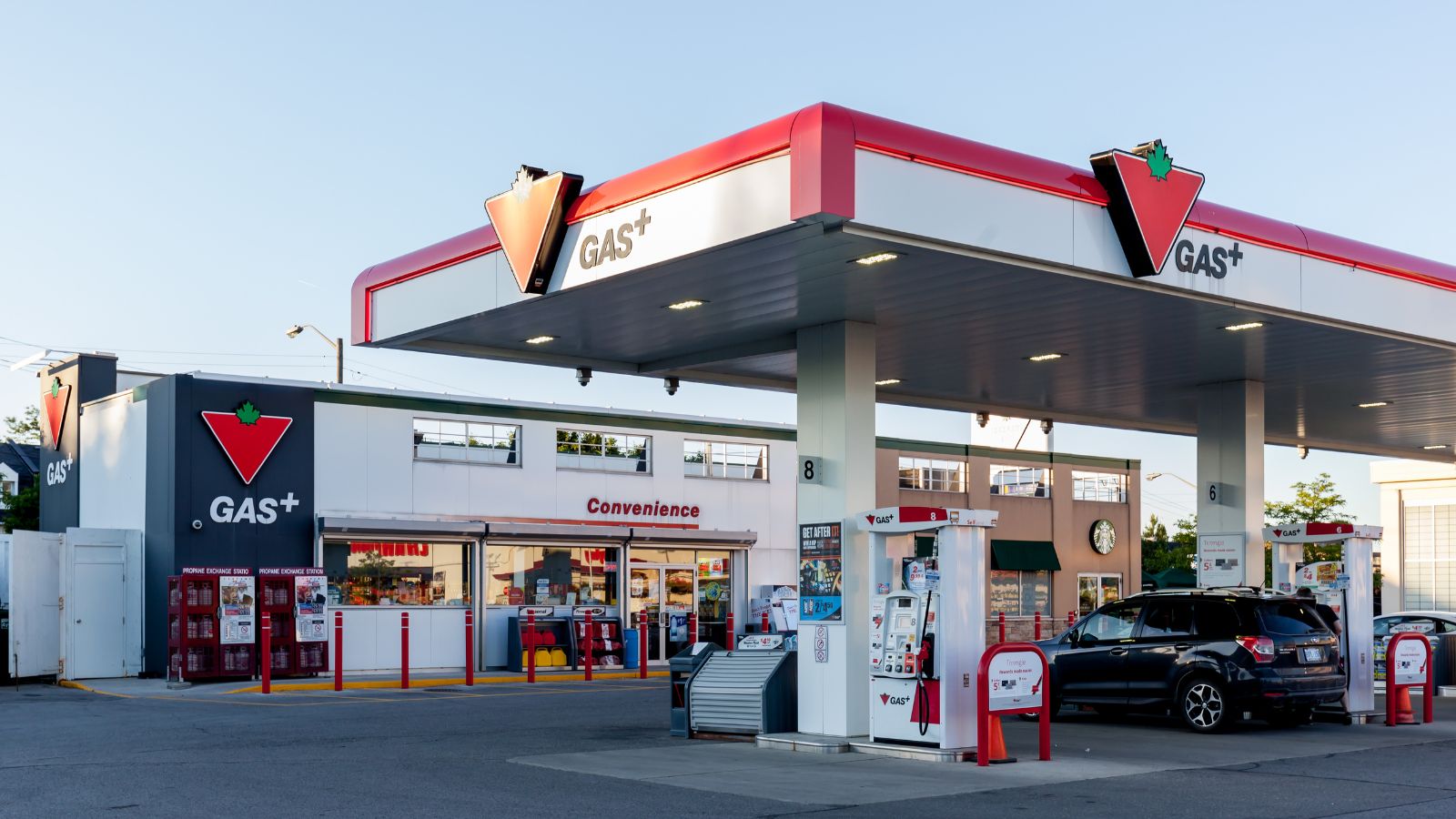
Canadian gasoline stations took in more money in August even as the inflation-adjusted volume of what they sold declined, highlighting how the amount spent at the pump can tell a different story from actual consumption. Statistics Canada reported that sales at gasoline stations and fuel vendors increased 1.7% from July, reaching roughly $7.42 billion on a seasonally adjusted basis. Yet when the effects of changing prices are removed, sales volumes fell 0.5%.

The divergence comes as fuel remains considerably more expensive than it was a year ago and offers an important window into household spending pressures. At the same time, the broader retail economy rebounded strongly in August, with sales increasing across all nine major subsectors.

Canadians Spent More Money but Bought Less Fuel in Real Terms

Sales at gasoline stations and fuel vendors climbed from approximately $7.30 billion in July to $7.42 billion in August, an increase of about $121 million. That represented a 1.7% monthly increase and the first rise in current-dollar sales for the category in three months. Compared with August 2025, current-dollar sales were 22.6% higher, making fuel one of the most striking year-over-year increases in Statistics Canada’s retail tables.

The volume figure tells a different story. After Statistics Canada adjusted sales for price changes, gasoline-station and fuel-vendor activity fell 0.5% in August. In practical terms, higher cash-register revenue does not necessarily mean Canadians drove more kilometres or bought more fuel. A household can spend more over a period even while purchasing fewer litres when the broader price environment remains elevated. Statistics Canada calculates retail sales volumes by deflating current-dollar sales using consumer price indexes, making the volume measure particularly useful for separating spending growth from price effects.

Gasoline Was Still Far More Expensive Than a Year Earlier

The broader price picture helps explain why nominal fuel spending needs to be interpreted carefully. Statistics Canada’s Consumer Price Index showed gasoline prices were 22.8% higher in August 2026 than they had been in August 2025. That was slightly less severe than July’s 25.7% annual increase, but it still meant motorists were operating in a dramatically more expensive fuel environment than one year earlier. Overall consumer prices were up 3.0% over the same 12-month period.

Month-to-month pricing was more nuanced. Statistics Canada’s national average price for regular unleaded gasoline at self-service stations was 173.8 cents per litre in August, compared with 175.5 cents in July. That means the 1.7% increase in seasonally adjusted sales at gasoline stations should not simply be interpreted as a direct result of regular gasoline becoming more expensive from one month to the next. Retail-trade data and average pump-price statistics differ in their scope and adjustments. The important takeaway is that fuel-related dollar spending strengthened while inflation-adjusted sales volume softened.

The Rest of Canada’s Retail Economy Rebounded

Fuel was only one piece of a much stronger August for Canadian retailers. Total retail sales increased 1.2% from July to $74.57 billion, reversing much of the weakness seen a month earlier. Every one of the nine major retail subsectors recorded higher current-dollar sales, a broad improvement compared with July, when sales had declined in eight of nine subsectors.

The rebound was not purely a price story. Total Canadian retail sales measured in 2017 chained dollars, Statistics Canada’s volume measure, also increased 1.2% in August. Compared with August 2025, current-dollar retail sales were 5.4% higher, while inflation-adjusted volumes were up a more modest 1.8%. The gap between those figures illustrates why nominal spending alone can sometimes exaggerate the strength of consumer demand. Canadians were clearly spending more money than a year earlier, but the quantity of goods represented by that spending increased at a considerably slower pace. August nevertheless marked a meaningful improvement from July, when total sales volumes had fallen 1.1%.

Vehicle Dealers Were a Major Driver of the August Recovery

Motor vehicle and parts dealers played an outsized role in the rebound. Sales in the category increased 1.2% to nearly $19.96 billion in August, and Statistics Canada identified the subsector as the largest contributor to the overall increase. New-car dealers were particularly important, with sales rising 1.5% from July to roughly $15.78 billion. That followed a 1.4% decline in new-car sales during July.

Not every part of the automotive market moved higher. Used-car dealer sales slipped 0.5% to about $1.63 billion, while other motor vehicle dealers posted a 1.4% decline. Automotive parts, accessories and tire retailers moved in the opposite direction, recording a 1.4% increase to approximately $1.39 billion. The mixed results show why headline auto spending can conceal substantially different conditions within the sector. New vehicles accounted for most of the roughly $20 billion spent through motor vehicle and parts dealers, giving movements at new-car dealerships enough weight to influence the national retail number meaningfully.

Core Spending Strengthened Beyond Cars and Gasoline

Removing two of the most volatile components—motor vehicles and gasoline—still left Canadian retail spending higher in August. Core retail sales increased 1.1% to approximately $47.19 billion after falling 0.7% in July. That measure was also 4.2% higher than in August 2025, suggesting the month’s improvement extended beyond filling stations and vehicle showrooms.

Food and beverage retailers recorded a 1.1% increase to $13.37 billion, their first monthly gain in three months. Supermarkets and other grocery retailers accounted for roughly $9.53 billion of that total and also posted a 1.1% increase. General merchandise retailers rose 1.0% to about $11.09 billion after declining the previous month. Health and personal care retailers were another standout, increasing 1.6% to $6.80 billion. Statistics Canada said that category had now posted higher sales for 10 consecutive months, while its sales were 13.1% above their August 2025 level. Together, those figures point to a recovery spread across several everyday spending categories.

Ontario and British Columbia Led the Provincial Gains

The national rebound was not evenly distributed. Retail sales increased in six provinces during August, with Ontario producing the largest gain in dollar terms. Sales in Canada’s most populous province rose 2.2% to approximately $28.5 billion, led by motor vehicle and parts dealers. Toronto recorded an even stronger 4.0% monthly increase, a sharp turnaround after retail sales in the metropolitan area had fallen 4.7% in July.

British Columbia also recorded a significant recovery. Provincial retail sales increased 2.1% to roughly $10.0 billion, with motor vehicle and parts dealers again contributing to the gain. Vancouver’s sales increased by the same 2.1% rate. Alberta stood out in the opposite direction, with retail sales edging down 0.1% to about $9.6 billion as weaker motor vehicle and parts sales weighed on the province. The contrast is notable because Alberta had been one of the stronger provinces in July, when its retail sales increased 1.4% while Ontario and British Columbia both declined.

Online Retail Spending Continued to Expand

Digital spending also moved higher in August. Seasonally adjusted retail e-commerce sales increased 1.1% from July to approximately $5.65 billion. Online sales accounted for 7.6% of total Canadian retail trade, slightly above July’s 7.5% share. More strikingly, e-commerce sales were 15.3% higher than in August 2025, considerably faster than the 5.4% year-over-year increase recorded for overall current-dollar retail sales.

The e-commerce figure does not capture every transaction Canadians make online. Statistics Canada notes that several common digital purchases—including travel and accommodation bookings, ticket purchases and financial transactions—are outside the retail-sales measure. The $5.65 billion figure therefore reflects online activity within the retail sector rather than the entire digital economy. Even with that limitation, the annual growth rate shows online purchasing continued to expand rapidly. For retailers balancing physical locations, delivery operations and online storefronts, the data suggest e-commerce remains an increasingly important sales channel even as Canadians continue to spend the overwhelming majority of measured retail dollars through the broader retail system.

September Data Will Show Whether the Momentum Lasted

Statistics Canada’s early estimate suggests retail sales increased another 0.7% in September, which would extend the August rebound. That number should be treated cautiously, however. The advance calculation was based on responses from 58.5% of the companies surveyed, compared with an average final response rate of 86.8% during the previous 12 months. Statistics Canada explicitly describes the advance figure as unofficial and subject to revision as more information becomes available.

There is already a useful example of how that process works. A month earlier, Statistics Canada’s advance estimate suggested August retail sales would rise 1.3%. The completed August estimate released in October placed the increase at 1.2%, only one-tenth of a percentage point lower but enough to demonstrate that early figures can change. Fuel will remain particularly important to watch. September CPI data showed gasoline prices were 27.8% higher than a year earlier, accelerating from August’s 22.8% increase. Final September retail-trade figures are scheduled for release on November 20, 2026.


Recommended.

Top U.S. Senate Democrat Targets Trump’s Canada Tariffs, but Election Gains Offer No Guaranteed Relief for Auto Makers

Top U.S. Senate Democrat Targets Trump’s Canada Tariffs, but Election Gains Offer No Guaranteed Relief for Auto Makers

November 1, 2026
18 Cars With Parts Prices So Wild They’re Becoming Hard to Own in Canada

14 Vehicles That Could Get More Expensive in Canada Before Summer

May 1, 2026

Trending.

Canada’s Ballard Puts a 250,000-Mile Performance Guarantee Behind Hydrogen Buses

Canada’s Ballard Puts a 250,000-Mile Performance Guarantee Behind Hydrogen Buses

October 2, 2026
10 Reasons the Canadian Car Market Feels Different Heading Into Summer

Canadian Auto Sales Rise 3.4% for a Fourth Straight Month—but 2026 Still Trails Last Year

October 3, 2026
PBO Warns U.S. Tariff War Threatens Up to 185,000 Canadian Jobs, With Auto Manufacturing Among Hardest Hit

PBO Warns U.S. Tariff War Threatens Up to 185,000 Canadian Jobs, With Auto Manufacturing Among Hardest Hit

October 21, 2026
22 Ways Canadians Accidentally Void Their Vehicle Warranty

B.C. Drivers Vote Today on the Future of ICBC Insurance as Parties Clash Over Private Competition and No-Fault Coverage

October 24, 2026
15 Vehicles Canadians May Want to Avoid Before May Long Weekend

Tesla Buyers in Canada Are Reporting Fresh Model Y Delivery Delays as Some Orders Slip Into October and November 2.

September 27, 2026
  • About
  • Contact
  • Privacy Policy
  • Disclaimer
  • Editorial Policies
  • Terms and Conditions
A Revir Media Group Website

2026 Autoigloo - © All rights reserved

No Result
View All Result
  • News & Trends
  • Car Reviews
  • Buying Guides
  • Comparisons
  • EVs & Hybrids
  • More
    • Pricing & Deals
    • Winter Driving
    • Ownership & Maintenance

2026 Autoigloo - © All rights reserved

This website uses cookies. By continuing to use this website you are giving consent to cookies being used. Visit our Privacy and Cookie Policy.




