























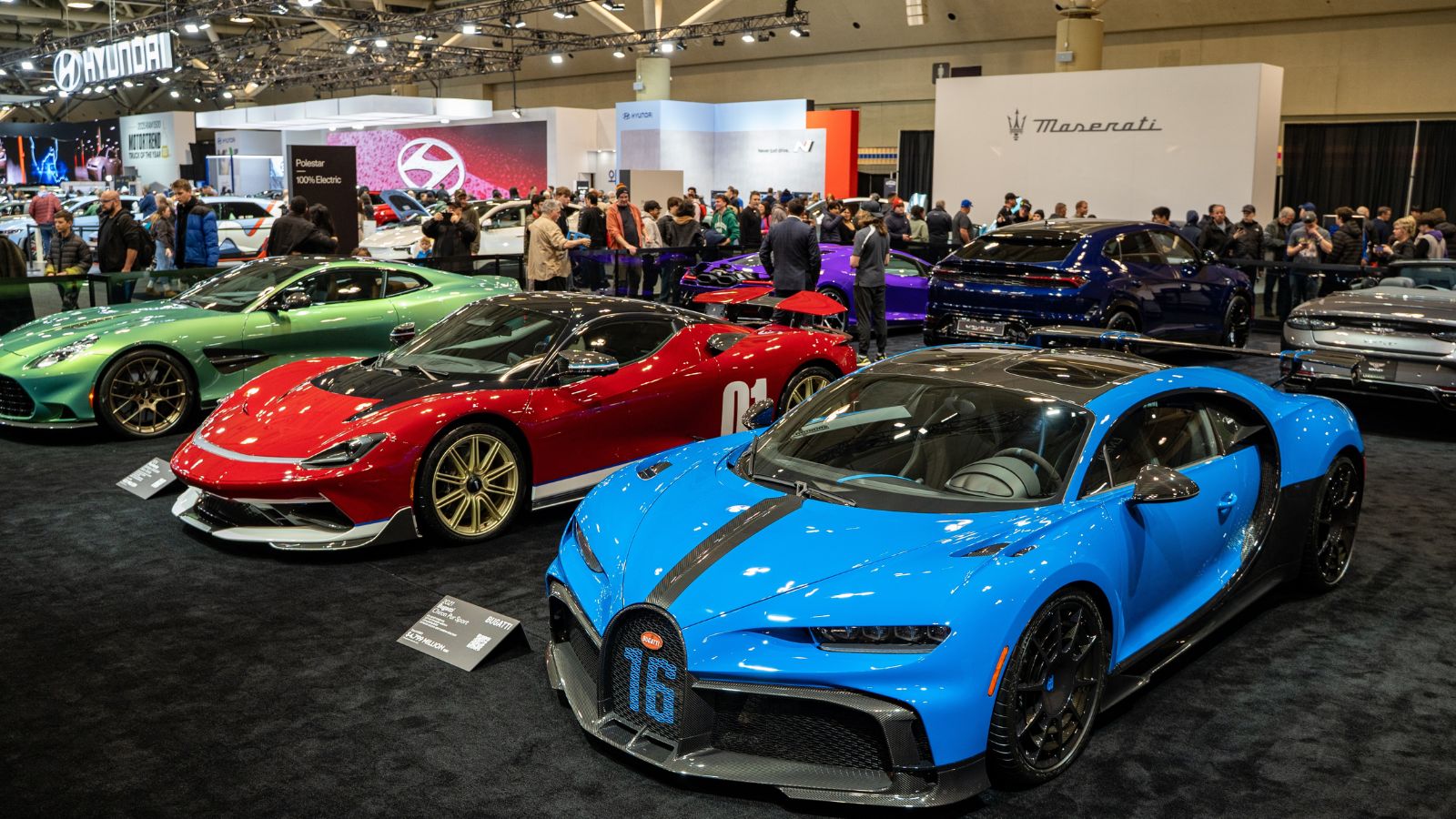
For one August weekend, Mirabel becomes one of the loudest meeting points for European car culture in Canada. Eurokracy is back at ICAR Route 66 on August 15 and 16, bringing together everything from carefully restored classics and tuned street cars to high-end Porsche, BMW, Audi and Ferrari machinery.
The event traces its roots to 2010 and is billed by organizers as Canada’s largest European car show. Its appeal now stretches well beyond polished cars parked in neat rows. A judged Top 100 competition, quarter-mile racing, road-course sessions, drifting and an extensive exhibitor area turn the ICAR grounds into a mix of automotive showcase and motorsport festival. That combination has helped Eurokracy develop a following extending across Canada and into the United States.
Mirabel Becomes the Centre of Canada’s Euro-Car Scene
Eurokracy’s 2026 gathering marks another milestone for an event that organizers say was founded in 2010. The August 15-16 weekend is being promoted as its 16th-anniversary edition at ICAR Route 66 in Mirabel, Quebec. Volkswagen, Audi, BMW, Porsche and Mercedes-Benz are among the core marques highlighted by organizers, while the wider field reaches considerably further into the European performance and luxury market. The official description says enthusiasts travel from across North America, giving what began as a regional gathering a much broader reach.
The Mirabel location also gives Eurokracy something a conventional indoor display cannot easily reproduce. Cars can move from the show area toward acceleration runs and road-course sessions instead of spending the entire weekend stationary under exhibition lights. Public opening is scheduled for 10 a.m. on both days, with activity continuing into the afternoon. That format helps explain why the gathering feels as much like a motorsport festival as a traditional car show.
The Finest Top 100 Puts the Best Builds Under a Microscope
One of Eurokracy’s defining features is the Finest Top 100, a judged show-and-shine competition intended to separate particularly detailed builds from the much larger field. Organizers say judging considers elements such as paint, modifications, components and wheels. Instead of rewarding only rarity or purchase price, the structure gives extensively personalized cars a way to compete on execution. For builders who may have spent years refining suspension, fitment, interiors or engine bays, those details become part of the main attraction rather than background decoration.
The award list shows how seriously the event treats customization. Beyond Finest of Show, there are dedicated honours for fitment, static suspension setups, air ride, engine bays, wheels, paint and interiors. Performance has its own recognition through categories tied to burnout, quarter-mile drag racing and lapping. The result is an unusual mix: a car can be admired for immaculate paintwork in the morning and another can earn attention later because of what it accomplishes on the track.
Porsche Brings Both Heritage and Track-Bred Attitude
Porsche occupies a particularly interesting place at Eurokracy because the marque can fit comfortably into several sides of the event at once. Organizers have dedicated awards for both Finest Porsche and Finest Air Cooled, allowing older cars and newer performance models to share attention without being judged through exactly the same lens. Previous Eurokracy coverage from Mirabel has documented Porsche among the regular European marques on display, reinforcing the brand’s longstanding place in the gathering.
The track environment adds another layer. ICAR’s Eurokracy program advertises an exotic-driving experience that includes a Porsche 911 GT3, placing one of the marque’s track-focused road cars alongside the privately owned machines parked around the grounds. That contrast is part of Eurokracy’s appeal. A spectator can move from an older, carefully preserved Porsche to a heavily modified contemporary build and then hear a GT3 being driven rather than merely displayed. It turns Porsche’s presence into a broader look at how enthusiasts interpret the brand across generations.
BMW’s Generations Get Their Own Spotlight
Few marques illustrate Eurokracy’s generational reach better than BMW. The judging structure includes separate recognition for E30, E36 and E46 cars, followed by E90/E92 models and the later F30/F31/F34 generation. There are also awards for BMW M vehicles, the 5 Series and BMWs more generally. That breakdown would be unnecessary at a show with only a handful of cars from the brand; here, it reflects how many distinct BMW communities exist within the larger European tuning scene.
Past coverage from Mirabel helps put that variety into perspective. At the 2024 gathering, Le Guide de l’auto photographed multiple BMWs, including a V10-powered 5 Series and a 3 Series. Those cars represent two different strands of the same enthusiast culture: one built around unusual factory engineering and another around the enormous modification potential of BMW’s compact sport sedans. At Eurokracy, an older E30 can attract a crowd a few metres away from a much newer M-car, and neither necessarily overshadows the other.
Audi Shows Why Factory Performance and Tuning Mix So Easily
Audi receives similarly detailed treatment. Eurokracy’s current award categories span the A3/S3 family, A4/S4/RS4, A5/S5, A6/S6/RS6, A7/S7/RS7, A8/S8, TT models and the R8. That range puts attainable compact performance cars beside large luxury models and genuine exotics. It also creates room for everything from understated daily-driven builds to cars whose suspension, wheels, bodywork and engines have been extensively reworked.
The R8 illustrates the upper end of that spectrum. Previous Mirabel coverage has documented R8s at Eurokracy, while the broader Audi categories show that the event is not dependent on supercars to draw interest. An exceptionally clean S3 or older S4 can earn attention for craftsmanship rather than price. Volkswagen remains deeply represented as well, with separate award categories stretching across multiple generations of Golf and Jetta plus models such as the Corrado, Scirocco and Passat. Together, Audi and Volkswagen form one of the event’s most developed enthusiast ecosystems.
Ferrari Adds Italian Drama to a German-Heavy Field
Although German brands dominate much of Eurokracy’s identity, the field is considerably broader. The 2026 event listing includes Ferrari alongside Lamborghini, McLaren and other European marques, helping keep the show from becoming exclusively a Volkswagen, BMW, Audi and Porsche gathering. That matters because the contrast between a meticulously modified compact European car and an exotic Italian machine can be just as interesting as comparing two vehicles built to the same formula.
Ferrari also appears in the driving side of the Mirabel weekend. ICAR lists a Ferrari 458 Italia among the exotic cars available through its on-site experience, alongside a Porsche 911 GT3 and other high-performance vehicles. Ferrari therefore has a role beyond simply providing something striking to photograph. Previous Eurokracy coverage offers another example: Le Guide de l’auto documented a Ferrari 308 at the 2024 event. That older car looked very different from the modern performance builds around it, illustrating how Eurokracy can accommodate European automotive history as comfortably as current supercars.
Owners Can Take Their Cars to the Quarter-Mile
Eurokracy does not require every interesting car to remain parked. The official program includes head-to-head runs on a quarter-mile drag strip, with drag testing included in general admission. Saturday’s schedule sets aside four hours for street drags, while Sunday includes open-drag periods and a Drag Shootout. That gives owners an opportunity to put performance modifications under considerably more pressure than a slow cruise through the exhibition grounds ever could.
Road-course driving adds another dimension. The event advertises lapping on ICAR’s 1.8-kilometre circuit for an additional $30 per session, with a Snell-certified helmet required and passengers prohibited. Those rules underline the difference between display culture and track activity. A car with an immaculate engine bay may impress judges, but sustained acceleration, braking and cornering reveal a different side of a build. Having both experiences at the same venue allows spectators to see how European enthusiast cars function as machines rather than treating every modified vehicle primarily as a visual project.
Drifting and Tire Slayer Keep the Weekend Moving
The motorsport schedule becomes especially active on Sunday, when invited drift teams are scheduled to take over part of the program from 10 a.m. until 4 p.m. Drifting brings a very different style of driving to an event otherwise filled with precision detailing and carefully presented cars. Smoke, tire noise and controlled slides provide a deliberately theatrical contrast with the quieter moments spent examining paintwork, wheels or interior craftsmanship in the show area.
Saturday has its own crowd-oriented spectacle through the Tire Slayer demonstration, scheduled for 2 p.m. The event also recognizes burnout performance among its award categories. By Sunday afternoon, the focus moves toward competition results, with the trophy presentation scheduled for 4 p.m. before the grounds close at 5. These activities help Eurokracy avoid the familiar rhythm of a static meet in which most cars remain untouched for hours. Something is usually happening elsewhere at ICAR, encouraging people to move between the display field, track areas and demonstrations throughout the day.
The Aftermarket Industry Is Almost as Visible as the Cars
Modified-car events depend on far more than the owners who arrive with finished vehicles. Eurokracy’s exhibitor area brings in businesses connected to the culture surrounding those builds. The official event information lists clothing, accessories, automotive parts, detailing companies, specialty retailers and other vendors. For enthusiasts considering their next modification, the aisle effectively becomes a marketplace positioned beside hundreds of real-world examples of how aftermarket products can look once installed.
That commercial side also reveals why judging categories such as wheels, paint, fitment, air suspension and engine bays matter. Each represents an area where owners can spend months refining relatively small details. A wheel choice can completely change a car’s proportions; an engine bay may be cleaned, rerouted and refinished until it bears little resemblance to a standard vehicle. Previous coverage of Eurokracy has also shown numerous merchants exhibiting products at Mirabel. The show therefore serves both finished builds and the network of specialists helping owners create the next generation of them.
Eurokracy Has Grown Into a Cross-Border Community
The event’s scale is not measured only by how many cars can fit inside ICAR. Eurokracy’s organizers say it now attracts enthusiasts from across North America, while the current 2026 event listing describes participants and spectators arriving from Canada and the United States. That cross-border pull is not entirely new. Historical coverage of the gathering has described enthusiasts making the trip from places including Toronto, Vermont and New York, suggesting that long-distance travel has been part of Eurokracy culture for years.
That history helps explain why Mirabel can produce such an eclectic parking field each summer. Some participants are chasing trophies, some want a quarter-mile time, and others simply want their project seen by people who understand the work behind it. A highly modified Golf may represent years of weekend labour, while a Porsche or Ferrari can bring an entirely different ownership story. Eurokracy puts those experiences in the same place, which may be its greatest strength: the badge matters, but the enthusiasm surrounding the car often matters more.