






















• About
  • Contact
AutoIgloo
  • News & Trends
    Debit Tap Processing Fees Rise 75% for Some Canadian Auto-Parts and Home-Supply Merchants

    Canadian Auto-Parts Giant Linamar Rules Out Moving Canadian Manufacturing to the U.S. as It Pursues US$1.4-Billion Deal

    Bank of Canada Warns High Oil Costs Are Still Driving Inflation Despite Relief at Canadian Gas Pumps

    Bank of Canada Warns High Oil Costs Are Still Driving Inflation Despite Relief at Canadian Gas Pumps

    Hyundai’s Affordable IONIQ 3 Electric Car Spotted on American Roads Despite No Confirmed North American Launch

    Hyundai’s Affordable IONIQ 3 Electric Car Spotted on American Roads Despite No Confirmed North American Launch

    Porsche Wants to Charge More for Its Most Expensive Cars as 9,000 Jobs Disappear

    Porsche Tests Electric Boxster at −30°C Ahead of 2027 Debut With Simulated Engine Sounds and Gear Changes

    22 Vehicles That Are Great New… But a Money Pit After 5 Years (Canada Edition)

    Nissan Pathfinder Sells for US$7,900 Below Sticker Price as American Dealers Increase Black Friday Discounts

    Oil Nears US$100 After Gulf Attacks as Canadian Drivers Face Another Pump-Price Shock

    Oil Falls Below US$80 a Barrel as Canadian Drivers Look for More Relief at the Gas Pump

  • Car Reviews
    Hyundai Reveals Redesigned Elantra With Major Styling Overhaul

    Hyundai Reveals Redesigned Elantra With Major Styling Overhaul

    Toyota Sienna vs Honda Odyssey: Which Family Hauler Makes More Sense in Canada?

    Toyota Sienna vs Honda Odyssey: Which Family Hauler Makes More Sense in Canada?

    Mazda CX-90 Review: Luxury SUV Feel Without the Luxury Badge?

    Mazda CX-90 Review: Luxury SUV Feel Without the Luxury Badge?

    17 Vehicles That Are Starting to Feel Like Bad Value for Canadian Families

    Hyundai Palisade vs Toyota Grand Highlander: Which Family SUV Wins on Comfort?

    Honda Pilot vs Kia Telluride: Which Three-Row SUV Feels More Complete?

    Honda Pilot vs Kia Telluride: Which Three-Row SUV Feels More Complete?

    Toyota Highlander vs Grand Highlander: Which One Is Worth the Extra Money?

    Toyota Highlander vs Grand Highlander: Which One Is Worth the Extra Money?

  • Buying Guides
    Mitsubishi Outlander Review: Is It Still the Underrated Family SUV?

    Mitsubishi Outlander Review: Is It Still the Underrated Family SUV?

    16 Used SUVs That Suddenly Don’t Look Like Smart Buys in Canada

    Nissan Rogue vs Honda CR-V: Which SUV Feels Better After the Test Drive?

    19 Cars With Windshields That Crack Constantly on Canadian Highways

    Subaru Forester vs Toyota RAV4: Which SUV Is Better for Canadian Winters?

    Mazda CX-5 vs Mazda CX-50: Which One Feels More Premium for the Money?

    Mazda CX-5 vs Mazda CX-50: Which One Feels More Premium for the Money?

    17 Vehicles That Are Quietly Getting Crushed by Insurance Costs in Canada

    Honda CR-V Hybrid Review: The Family SUV That Plays It Safe

    18 Cars With Parts Prices So Wild They’re Becoming Hard to Own in Canada

    Is the New Toyota RAV4 Still the Safest Bet in Canada?

  • Comparisons
    Toyota Sienna vs Honda Odyssey: Which Family Hauler Makes More Sense in Canada?

    Toyota Sienna vs Honda Odyssey: Which Family Hauler Makes More Sense in Canada?

    Mazda CX-90 Review: Luxury SUV Feel Without the Luxury Badge?

    Mazda CX-90 Review: Luxury SUV Feel Without the Luxury Badge?

    17 Vehicles That Are Starting to Feel Like Bad Value for Canadian Families

    Hyundai Palisade vs Toyota Grand Highlander: Which Family SUV Wins on Comfort?

    Honda Pilot vs Kia Telluride: Which Three-Row SUV Feels More Complete?

    Honda Pilot vs Kia Telluride: Which Three-Row SUV Feels More Complete?

    Toyota Highlander vs Grand Highlander: Which One Is Worth the Extra Money?

    Toyota Highlander vs Grand Highlander: Which One Is Worth the Extra Money?

    19 Cars With Windshields That Crack Constantly on Canadian Highways

    Subaru Forester vs Toyota RAV4: Which SUV Is Better for Canadian Winters?

  • EVs & Hybrids
    Hyundai Reveals Redesigned Elantra With Major Styling Overhaul

    Hyundai Reveals Redesigned Elantra With Major Styling Overhaul

    BYD, CATL and Xiaomi Are in the Mix for Xi’s Washington Trip as Canada and U.S. Split on Chinese EV Access

    Toyota RAV4 Plug-In Hybrid vs Regular Hybrid: Which One Should Canadians Buy?

    Geely Auto’s Core Profit Jumps 46% as Chinese EV Expansion Accelerates — With Canada Now Opening to Geely-Owned Lotus

    Geely Confirms Canadian Vehicle Sales for 2027 as Chinese Automakers Challenge Established Brands

    18 Cars That Will Feel Dated Fast as New Chinese EVs Arrive

    12 EVs Now Price Below $41,000 in Canada—Fiat 500e Falls Under $30,000 With Rebate

    The Used EV Question Canadians Should Ask Before Buying One

    The Used EV Question Canadians Should Ask Before Buying One

    Why Some EV Owners Are Getting Sticker Shock From Home Charging Setups

    Why Some EV Owners Are Getting Sticker Shock From Home Charging Setups

  • More
    • Pricing & Deals
    • Winter Driving
    • Ownership & Maintenance
No Result
View All Result
AutoIgloo
No Result
View All Result

Home » News & Trends

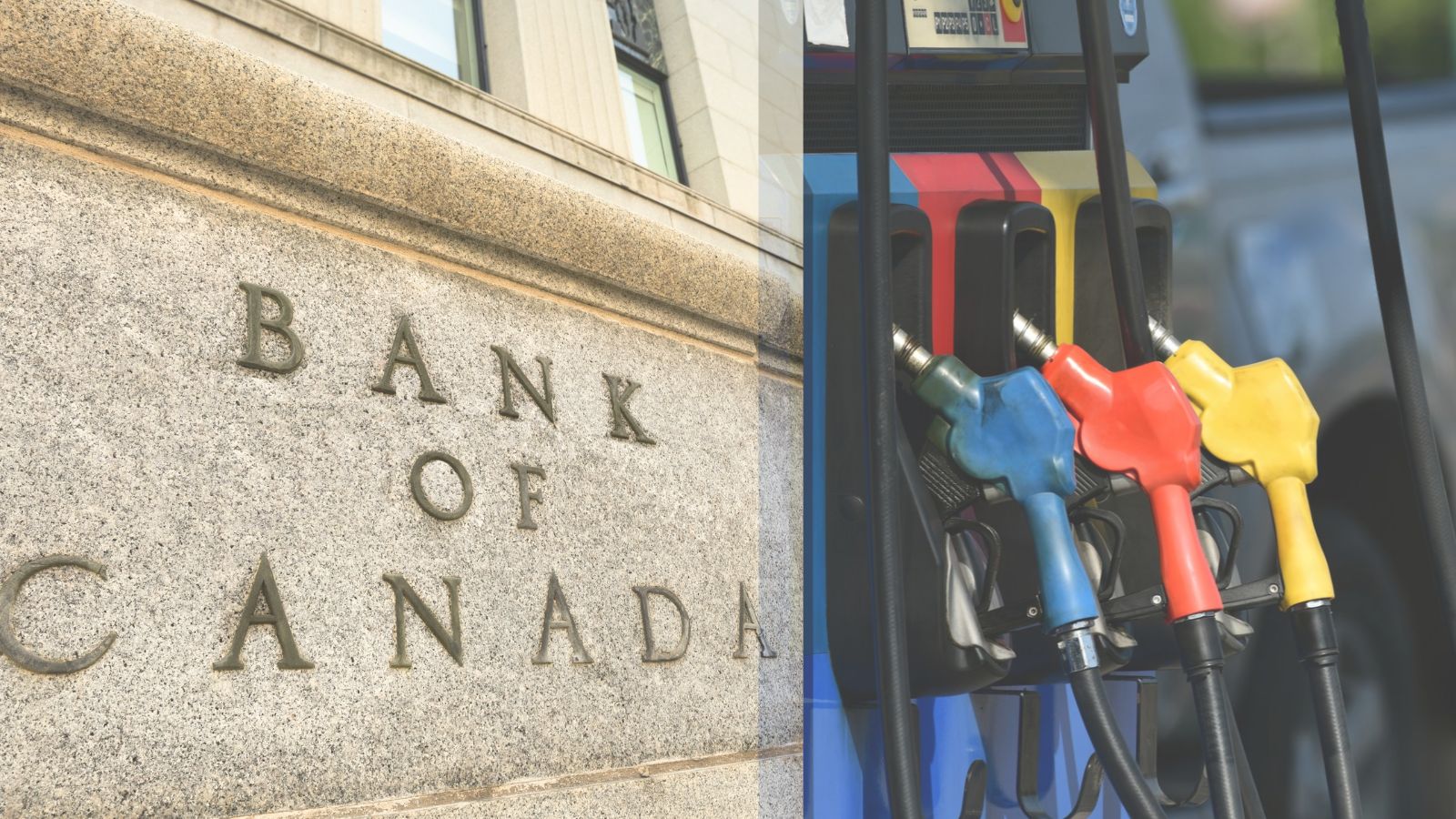
Bank of Canada Warns High Oil Costs Are Still Driving Inflation Despite Relief at Canadian Gas Pumps

Nate Brewer by Nate Brewer
November 25, 2026
Reading Time: 7 mins read
A A
Photo Credit: Shutterstock

Photo Credit: Shutterstock

465
SHARES
1.5k
VIEWS
Share on FacebookShare on Twitter

Canadian motorists are finally seeing some relief at the gas pumps, but the Bank of Canada is warning that the economic damage from months of elevated energy prices is far from over. Even as gasoline prices decline across the country, higher fuel and transportation costs are threatening to push up the prices of everyday goods and services.

Bank of Canada Governor Tiff Macklem warned on November 24, 2026, that persistent energy costs could continue driving inflation well into next year as businesses pass accumulated expenses on to consumers. Although falling oil prices and refinery margins have improved the near-term outlook, the central bank remains concerned about inflation spreading beyond energy.

For Canadian households already managing expensive groceries, housing and transportation, cheaper gasoline may offer immediate relief without delivering the broader financial recovery many have been hoping for.

Cheaper Gasoline Is Providing Relief, but Prices Remain Elevated

CAA’s national gasoline tracker showed an average of approximately $1.42 per litre on November 24, down from about $1.73 a month earlier. For a commuter filling a 50-litre tank, that difference means a bill closer to $71 rather than $87. After months of expensive driving, the change is noticeable for families balancing school pickups, work commutes and grocery runs. It also explains why recent price signs can make the inflation warnings coming from Ottawa seem surprising.

However, the same CAA comparison put gasoline above its level a year earlier, when the national average was approximately $1.32 per litre. Relief from a recent peak does not mean fuel has returned to its previous cost. Individual drivers also experience different prices because provincial taxes, local competition, refining conditions and delivery costs vary. The Bank of Canada’s concern is broader still: even if households save on their next fill-up, businesses may be dealing with fuel expenses accumulated earlier in the year.

October’s Inflation Figures Show Why Lower Gas Prices Aren’t Enough

Statistics Canada reported that the consumer price index rose 3.1% in October 2026 compared with a year earlier, unchanged from September. Gasoline prices, remarkably, were 30.9% higher than in October 2025, even though they fell 2.5% between September and October 2026. Both figures can be correct at once because they measure different periods. A lower price this month is not necessarily a low price compared with last year.

The annual comparison was also affected by a drop in gasoline prices in October 2025, which made the current increase appear larger. Meanwhile, transportation costs rose 8.9% over the year, and grocery prices rose 2.0%. Excluding energy, consumer inflation was a more moderate 2.0%. Those differences matter when interpreting the headline inflation rate. Falling pump prices can pull the overall measure down quickly, while households continue facing higher bills in categories that change more slowly. October’s numbers capture both realities rather than proving that inflation has been defeated.

Global Oil Prices Have Fallen, but the Earlier Shock Has Not Disappeared

In its October 28 economic assessment, the Bank of Canada said the front-month Brent crude contract was trading near US$115 a barrel, roughly US$35 higher than at its July assessment. Persistent disruption to oil shipments from the Gulf region had changed expectations for energy prices. The Bank also pointed to damage affecting international refining capacity, which had pushed gasoline and diesel costs beyond what crude prices alone would ordinarily suggest.

By November 24, the picture had improved. Brent crude traded around US$89 to US$91 during the day as concerns about rising supply tempered fears of shortages. Macklem acknowledged that both crude prices and refining margins had declined since the Bank’s October forecasts. Yet a cheaper barrel today cannot immediately erase costs already paid by manufacturers, freight operators and retailers. Contracts, inventories and pricing decisions move on different schedules. That delay is central to the warning: the direct energy shock may be easing even while its consequences continue working through the Canadian economy.

Refinery Disruptions Are Keeping Fuel Costs Higher Than Expected

The cost of gasoline is not determined by crude oil alone. Refineries must turn raw petroleum into products such as gasoline, diesel and jet fuel, and that processing became unusually expensive during the 2026 energy disruption. The Bank of Canada estimated that refinery margins added the equivalent of roughly US$40 per barrel in September. In its October report, those margins represented close to 40% of Canadian gasoline’s pre-tax pump price, compared with around 30% in recent years.

The explanation lies partly in damaged refineries, interrupted exports and limited spare processing capacity. The Bank noted that some damaged facilities can take up to 12 months to resume normal operations. Diesel was especially vulnerable because supplies were tight and freight, farming and mining still needed it. Although Macklem reported narrowing margins in November, the earlier bottlenecks had already raised business costs. The lesson for drivers is that crude oil and retail fuel prices do not always move together, especially when refineries are under strain.

Businesses Are Preparing to Pass Higher Costs on to Consumers

Many companies have tried to protect customers by absorbing higher energy bills instead of immediately raising prices. That can work temporarily, but it puts pressure on margins. A trucking operator may keep a contracted delivery rate unchanged for months, while a food manufacturer may hold its shelf price until the next scheduled adjustment. Once those agreements renew, past increases in diesel, packaging or shipping costs can become visible in the price paid at checkout.

This delayed effect is precisely what concerns the Bank of Canada. Its third-quarter Business Outlook Survey found that roughly half of firms planned to pass on some or all additional costs related to the Middle East conflict and tariffs. The Bank’s newer economic model, Prima, also traces the way energy costs move gradually between suppliers before reaching consumers. Macklem warned on November 24 that businesses had largely absorbed the shock so far, but more of it could reach retail prices during 2027. That is a risk, not a guarantee that every company will increase prices.

Grocery Prices Could Remain Under Pressure Even as Gasoline Gets Cheaper

Food prices help explain why households may feel little relief despite a less painful trip to the gas station. Statistics Canada said grocery prices rose 2.0% over the year to October, up from 1.7% in September. Compared with October 2020, groceries cost 31.9% more. For someone shopping on a fixed weekly budget, that longer-term increase matters more than a small change in the latest monthly inflation rate.

Energy can influence food prices at several points: farms run machinery, processors use power and transport, and grocery chains pay to move products into stores. Packaging materials made from petroleum can also become costlier. Still, October’s grocery acceleration cannot simply be blamed on oil. Statistics Canada identified movements in fresh vegetables, confectionery and condiments among the contributors. Weather, harvests, labour costs and competition also affect food prices. The Bank’s warning is that energy pressures could become another layer of expense, even if oil markets continue to calm.

Diesel and Transportation Costs Are Creating Additional Inflation Risks

Diesel matters to consumers who never buy a litre of it themselves. Trucks delivering food, construction materials and online purchases rely on fuel, while agriculture and mining depend on equipment that cannot easily switch energy sources. The Bank of Canada identified diesel and jet fuel as particularly exposed to refinery disruptions. Higher operating costs can eventually enter freight rates, contractor invoices and the prices of goods moved across long distances.

Travel offers a more immediate illustration. Statistics Canada reported that air transportation prices were 21.6% higher in October than a year earlier, making them a major upward contributor to inflation. The Bank has also identified travel-related services and intercity transportation as areas where earlier energy increases were already showing through. Fuel is not the only reason airfares move; demand, capacity and scheduling can be important. Nevertheless, a family budgeting for a flight or a business arranging deliveries may face expenses that remain elevated long after local regular gasoline prices have started declining.

The Bank of Canada’s Interest Rate Increase Reflects Growing Inflation Concerns

The Bank of Canada raised its benchmark policy rate by a quarter of a percentage point on October 28, taking it to 2.5%. It was the first increase since July 2023. Officials were not trying to make oil cheaper through interest rates; they were trying to reduce the risk that an energy shock would turn into prolonged increases across many other prices. A stronger-than-expected economy also gave policymakers less confidence that weak demand would contain inflation by itself.

That decision carries a trade-off for households. Higher interest rates can restrain borrowing and spending, but they may also make some variable-rate debts more expensive and add pressure to businesses already struggling with costs. The next rate announcement is scheduled for December 9, and no outcome has been decided. Macklem’s November remarks emphasized that temporary supply shocks do not always require a monetary-policy response. The crucial question is whether their effects are large and persistent enough to threaten the Bank’s 2% inflation target.

Not All Canadians Are Experiencing the Same Inflation Pressures

The national inflation rate is useful, but it does not describe every family’s experience. In October, Statistics Canada recorded overall inflation of 3.1%, while inflation excluding energy was 2.0%. Shelter prices increased 1.4% from a year earlier, and rent rose 1.7%. Meanwhile, cellular service prices fell 6.2%, even as clothing prices increased. A household that drives long distances may therefore experience a very different cost trend from someone who relies on public transit.

Macklem addressed this challenge directly in his November 24 speech. The Bank is renewing its commitment to a 2% target for total consumer price inflation, rather than making a preferred measure that excludes some volatile expenses the target. It will use underlying inflation indicators, including CPI-trim and CPIX, to judge whether price pressures are becoming widespread. That distinction matters because cheaper gas is welcome, but households also need lasting stability in the wider basket of things they purchase.

Canada’s Inflation Outlook Could Improve, but Significant Risks Remain

There is a credible path to lower inflation, although its timing remains uncertain. The Bank’s October projection put inflation at approximately 3.5% near the end of 2026 and above 3% through much of 2027, before easing close to its 2% target by the middle of 2028. On November 24, however, Macklem acknowledged that falling oil prices and refinery margins might produce a somewhat lower year-end result than initially expected. The encouraging development did not cancel the risk of delayed business price increases.

Much now depends on energy shipments, refinery repairs, consumer demand and how aggressively companies pass on their earlier expenses. The Bank also identifies Canada’s trade relationship with the United States as a major source of uncertainty. If oil supplies improve and businesses absorb more costs, inflation could ease faster. Further disruptions could reverse that progress. For Canadian families, the most meaningful sign of lasting relief will not be a single cheap tank of gasoline, but several months in which prices across essential purchases rise more slowly.


Recommended.

Chery’s European Car Exports Surge 274% as the Chinese Automaker Works Toward a Canadian Entry

Chery Opens Orders for US$20,800 SUV in China as Its Other Brands Prepare for Canadian Entry

October 19, 2026
Trump’s Clean-Car Rollback Hits Court Wall as Automakers Face Another North American Rules Fight

Trump’s Clean-Car Rollback Hits Court Wall as Automakers Face Another North American Rules Fight

September 3, 2026

Trending.

15 “Hidden Fees” Canadians Keep Paying at Dealerships in 2026

15 “Hidden Fees” Canadians Keep Paying at Dealerships in 2026

November 20, 2026
Stellantis Cancels Windsor Production for Fourth Straight Week, Leaving 6,000 Auto Workers Facing More Uncertainty

Stellantis Cancels Windsor Production for Fourth Straight Week, Leaving 6,000 Auto Workers Facing More Uncertainty

November 8, 2026
21 Vehicles Insurance Companies Are Quietly Flagging as “High Risk” in Canada (2026 Update)

21 Vehicles That Are Getting Flagged for Higher Theft Risk in Canada (2026)

March 26, 2026
Ford, GM and Stellantis Push for a Quick Trump Tariff Deal as Honda and Toyota Resist Locking In Bad Terms

Ford, GM and Stellantis Push for a Quick Trump Tariff Deal as Honda and Toyota Resist Locking In Bad Terms

November 14, 2026
9 Auto Brands Canadians Are Watching Much More Closely Right Now

Honda Confirms 15-Model Hybrid Push, but Canada Is Missing From Launch Plans for Its New Six-Seat SUV

November 20, 2026
  • About
  • Contact
  • Privacy Policy
  • Disclaimer
  • Editorial Policies
  • Terms and Conditions
A Revir Media Group Website

2026 Autoigloo - © All rights reserved

No Result
View All Result
  • News & Trends
  • Car Reviews
  • Buying Guides
  • Comparisons
  • EVs & Hybrids
  • More
    • Pricing & Deals
    • Winter Driving
    • Ownership & Maintenance

2026 Autoigloo - © All rights reserved

This website uses cookies. By continuing to use this website you are giving consent to cookies being used. Visit our Privacy and Cookie Policy.