





















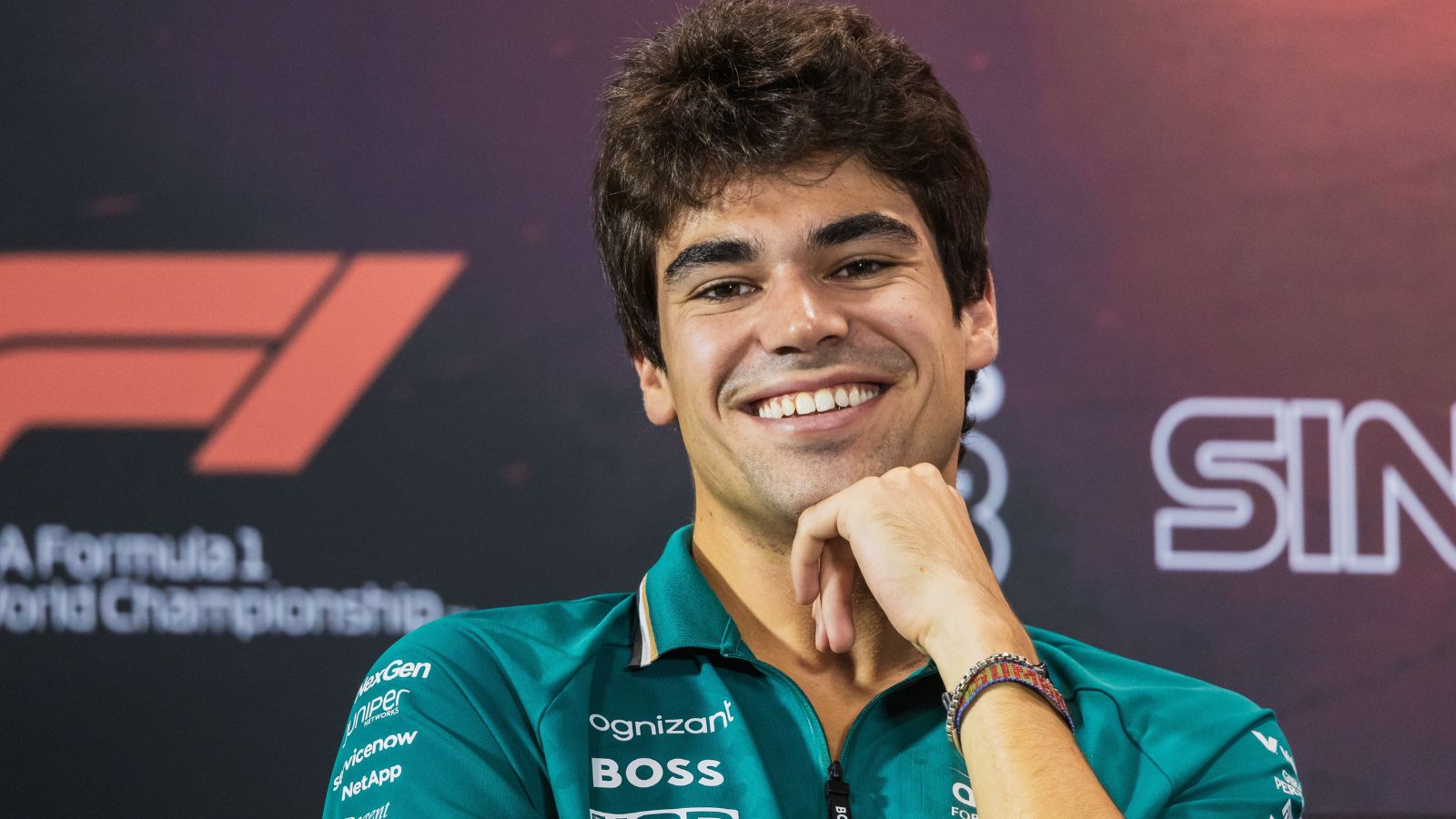
Canadian Formula 1 driver Lance Stroll endured another frustrating weekend at the 2026 Las Vegas Grand Prix, finishing 17th and publicly criticizing Honda’s lack of engine power after struggling to compete on the circuit’s long straights.
The Montreal-born Aston Martin driver completed all 50 laps but finished more than a minute behind race winner Max Verstappen, highlighting the significant performance gap that has troubled the British team throughout the season.
Stroll’s frustration was particularly evident after the race, when he estimated that the car was losing approximately two seconds on the straights and called on Honda to deliver more power.
With teammate Fernando Alonso retiring late because of a suspected power-unit problem, the result raised fresh concerns about Aston Martin’s troubled partnership with the Japanese manufacturer and its ability to become competitive under Formula 1’s new engine regulations.
Stroll Finishes 17th as Aston Martin Struggles in Las Vegas
For Lance Stroll, simply reaching the finish line represented one of the few positives from an otherwise disappointing Las Vegas Grand Prix. The Canadian completed the 50-lap race in 17th place, finishing 68.353 seconds behind Max Verstappen, who secured victory for Red Bull. Stroll also finished more than 50 seconds behind Charles Leclerc, the final driver to collect a championship point in 10th position.
The result demonstrated just how far Aston Martin remained from competing with Formula 1’s midfield teams. While the frontrunners fought for victory in a closely contested race, Stroll spent much of his evening battling Fernando Alonso and Cadillac driver Valtteri Bottas near the back of the field. He ultimately finished just 3.320 seconds ahead of Bottas, leaving Aston Martin without any championship points. For a team that entered its Honda partnership hoping to establish a stronger competitive foundation, Las Vegas offered another uncomfortable reminder of how much improvement remained necessary.
Stroll Publicly Calls on Honda to Deliver More Power
Stroll’s assessment after the race was unusually direct. Rather than blaming strategy, traffic or individual driving errors, the Canadian identified Honda’s power unit as the central reason Aston Martin could not compete. He said the team lacked the performance necessary to remain competitive on the straights, estimating that its disadvantage amounted to approximately two seconds and explicitly calling for Honda to find more power.
His frustration was particularly significant because the problems were already familiar. Aston Martin had experienced power and reliability difficulties throughout 2026, making Las Vegas another example of weaknesses the team had repeatedly encountered. Stroll acknowledged that completing the race was a positive outcome, but indicated that the weekend had provided little new information. His comments reflected the frustration of a driver who could battle rivals through corners but struggled to maintain position once the cars accelerated. Without meaningful improvements to the power unit, even strong driving performances and effective race strategies would have limited potential to change Aston Martin’s results.
Las Vegas Circuit Exposes Aston Martin’s Biggest Weakness
The Las Vegas Strip Circuit was always expected to be particularly challenging for Aston Martin. Its combination of extended straights and heavy braking zones places considerable importance on acceleration, straight-line speed and efficient energy deployment. Teams with powerful and well-optimized engines can gain substantial time, while those struggling with performance deficiencies have fewer opportunities to compensate. For Stroll, these characteristics turned an already difficult season into another demanding weekend.
The Canadian had warned about the problem before the race even began. During a pre-event press conference, he suggested Aston Martin could lose approximately two seconds on the straights and described the speed difference as potentially dangerous. His concerns were subsequently reinforced by qualifying, where he recorded the 20th-fastest time, while Alonso qualified 19th. Although the drivers reported reasonable cornering grip, their cars struggled to maintain competitive speeds elsewhere. The disparity illustrated why aerodynamic improvements or strong handling alone would not be sufficient to transform Aston Martin’s performance without corresponding progress from Honda.
Alonso’s Late Retirement Adds to Honda’s Reliability Concerns
Fernando Alonso’s race provided another example of the difficulties confronting Aston Martin. The two-time Formula 1 world champion spent much of the event competing near Stroll, unable to make sustained progress through the field despite describing the car’s cornering performance as relatively competitive. Alonso said the lack of straight-line speed prevented him from attacking cars ahead and made defending against rivals particularly difficult. His difficulties ultimately ended in another disappointing retirement.
Alonso stopped with one lap remaining after suspecting a problem with his power unit, although he was still classified 19th because he had completed sufficient race distance. The incident reinforced concerns about reliability alongside the team’s well-documented performance deficit. Aston Martin had already experienced numerous retirements during its first season with Honda, including Stroll’s battery-related retirement at the Brazilian Grand Prix earlier in November. For the team, the challenge extends beyond making the engine faster. It must also ensure that its drivers can complete races consistently, collect valuable development information and capitalize on opportunities when rivals encounter problems.
A Grid Penalty Makes Stroll’s Weekend Even More Difficult
Stroll’s Las Vegas challenges extended beyond the car’s outright performance. Ahead of the race, the Canadian received a 10-place grid penalty after Aston Martin exceeded its permitted allocation of power-unit components. FIA documents confirmed that the team had installed a ninth energy store and an eighth control electronics unit during the season. Each additional component carried a five-place penalty, producing a combined 10-place sanction under Formula 1’s technical regulations.
The penalty offered another illustration of Aston Martin’s ongoing reliability struggles. Teams are permitted to use a limited number of engine and electrical components throughout the championship, encouraging manufacturers to balance durability with performance. Exceeding those allowances can force drivers to surrender grid positions, making a difficult weekend even harder. Although Stroll ultimately finished 17th after starting toward the rear, the broader problem remained unchanged. Repeated component replacements increase operational pressure and reduce strategic flexibility. For a driver already struggling to compete on straight-line speed, additional penalties can further limit opportunities to fight for points, regardless of the quality of the race-day strategy.
Honda Acknowledges Progress but Says More Work Is Needed
Honda’s response to the Las Vegas weekend was more measured than Stroll’s criticism. Shintaro Orihara, the manufacturer’s trackside general manager and chief engineer, acknowledged that the circuit would expose weaknesses in the team’s current package. Honda had introduced countermeasures intended to address battery-related problems, and the manufacturer considered Stroll’s completion of the full race distance an encouraging development. However, Orihara also recognized that further improvements were necessary to establish acceptable reliability.
That distinction between reliability and performance is important. A power unit capable of completing a Grand Prix is not necessarily powerful enough to compete successfully, particularly under Formula 1’s demanding 2026 regulations. The latest generation of engines incorporates a much greater contribution from electrical power, making battery performance, energy recovery and deployment particularly important. Honda must therefore address multiple interconnected challenges rather than simply increasing conventional engine horsepower. Improvements to electrical systems could help reduce operational failures, while stronger overall performance would allow Aston Martin to defend positions and challenge rivals more consistently. Las Vegas demonstrated that progress in one area does not automatically resolve weaknesses elsewhere.
Formula 1’s New Engine Rules Have Made the Challenge More Complicated
The 2026 Formula 1 regulations introduced one of the most significant changes to engine technology in the championship’s recent history. The new power units retain 1.6-litre turbocharged V6 engines but place much greater emphasis on electrical performance. Electric power contributes approximately half of the total output, while the motor-generator unit’s maximum electrical power increased from 120 kilowatts to 350 kilowatts. The championship also introduced advanced sustainable fuel requirements, creating additional technical demands for manufacturers.
These changes mean that competitive performance depends on how effectively combustion and electrical systems work together. Drivers must manage energy deployment across different sections of a circuit, making some straights particularly demanding when electrical assistance becomes limited. For Aston Martin, the difficulty has been developing a Honda package capable of delivering both performance and durability under these conditions. Although Stroll attributed the team’s straight-line deficit to insufficient power, the publicly available information does not establish precisely how much of that gap came from combustion performance, electrical deployment, aerodynamic drag or other factors. Nevertheless, the team’s repeated difficulties highlight the importance of comprehensive power-unit development.
Aston Martin’s Difficult Season Creates Pressure for Major Improvements
The Las Vegas result was not an isolated disappointment. Aston Martin entered the weekend with just seven constructors’ championship points, all earned by Alonso, while Stroll remained without a point in 2026. The Canadian had experienced numerous retirements, including consecutive failures in Mexico and Brazil before finally completing the race in Nevada. That pattern has made it difficult for the team to build momentum, particularly when stronger competitors continue accumulating points and developing their cars.
There is, however, a regulatory mechanism intended to help struggling manufacturers recover. Formula 1’s governing body introduced Additional Development and Upgrade Opportunities, known as ADUO, to provide extra development allowances to engine manufacturers falling sufficiently far behind the leading competitors. The FIA confirmed in August that Honda qualified for two additional power-unit homologations in 2026 and two in 2027, alongside additional testing and cost-cap allowances. No further allowances were awarded during subsequent reviews. These provisions create an opportunity to close the gap, but they do not guarantee results. Honda must translate additional development resources into measurable improvements while Aston Martin continues refining its overall car.
Stroll and Aston Martin Face Two Final Chances to End 2026 on a Better Note
With the Las Vegas Grand Prix completed, Aston Martin has just two races remaining in the 2026 Formula 1 season. The championship moves to Qatar from November 27 to 29 before concluding in Abu Dhabi from December 4 to 6. Both weekends will provide further opportunities to evaluate Honda’s power unit, refine energy-management strategies and assess whether recent reliability countermeasures are delivering meaningful results. For Stroll, completing races consistently will be an immediate priority after a season disrupted by repeated technical problems.
The larger challenge extends well beyond the final two Grands Prix. Aston Martin needs a more competitive foundation if its Honda partnership is to achieve the progress originally envisioned. Stroll’s criticism in Las Vegas placed additional attention on the Japanese manufacturer, but resolving the team’s difficulties will require coordinated improvements across its engine, electrical systems, chassis and operations. The Canadian’s 17th-place finish may eventually be remembered less for the position itself than for the frustration it exposed. Until Honda can provide more dependable performance, Aston Martin’s drivers are likely to remain restricted by problems that race strategy and driving skill alone cannot overcome.