

















Honda is accelerating its transition toward hybrid vehicles, unveiling an ambitious plan to introduce 15 next-generation hybrid models globally by March 2030. Leading that transformation is the all-new Honda Avancier, a premium six-seat SUV featuring an advanced hybrid powertrain, electric all-wheel drive, and an entirely new vehicle platform.
Unveiled on November 20, 2026, the Avancier represents a significant step in Honda’s effort to combine improved fuel efficiency with the comfort and performance expected from larger family vehicles.
However, its launch strategy raises questions for Canadian consumers. Despite North America being a priority market for Honda’s expanding hybrid lineup, Canada is notably absent from the Avancier’s announced launch destinations.
The distinction highlights how Honda is pursuing different electrification strategies across international markets, even as its Canadian manufacturing operations prepare for a new generation of hybrid vehicles.
The Avancier Becomes the First of Honda’s 15 Next-Generation Hybrids
Honda’s November 20 announcement marked the beginning of a major product offensive designed to reshape its global vehicle lineup. The all-new Avancier is the first model equipped with the company’s newly developed Honda Hybrid system and midsize platform. It also introduces a redesigned Honda emblem, signalling a new generation of vehicles. The SUV’s debut provides the first production example of technologies Honda intends to spread across multiple vehicle categories over the next several years.
The broader strategy calls for 15 next-generation hybrid models by March 31, 2030, with North America expected to be a primary market for many of them. Honda originally outlined the program during its May 2026 business briefing, explaining that stronger hybrid demand was influencing how the company allocated development and manufacturing resources. Rather than relying exclusively on battery-electric vehicles to drive electrification, Honda is expanding its gasoline-electric offerings. The Avancier demonstrates what that approach could mean for larger vehicles that need to balance passenger space, driving performance, and efficiency.
Canada Is Missing From the Avancier’s Announced Launch Markets
Despite Honda’s emphasis on North America, the new Avancier’s launch plans focus on other parts of the world. Honda’s official announcement identifies Thailand, Japan, and China among the principal markets, with the rollout concentrated primarily in Asia. Australia and New Zealand are also confirmed destinations through regional launch announcements. Canada was not included in the announced markets, and Honda has not provided a Canadian release date, price, or availability confirmation for the new SUV.
That absence is particularly notable because Canadian consumers already have access to several Honda hybrid models, including the Civic, Accord, and CR-V. Honda has also confirmed that more hybrid vehicles are being developed for North America. However, an international launch announcement does not automatically translate into Canadian availability. Different regional product strategies, manufacturing arrangements, and customer preferences can influence which vehicles reach individual markets. For now, the important distinction is that the Avancier has not been announced for Canada, rather than Honda having formally ruled out a future Canadian introduction.
Six Seats Instead of Seven Reflect a Different Approach to Family SUVs
The Avancier distinguishes itself from many conventional three-row SUVs through its six-passenger seating configuration. Honda Australia confirmed a 2+2+2 arrangement, placing two occupants in each of the vehicle’s three rows. Rather than maximizing passenger capacity with a seven-seat layout, the design emphasizes comfort and space. The second row features two individual seating positions with a central console arrangement, giving passengers a more premium environment than the typical three-person bench seat.
The decision creates an interesting compromise for larger families. A six-seat configuration may appeal to households that regularly travel with four or five occupants and value additional comfort, but it cannot accommodate a seventh passenger. Honda Australia executives have explained that the Avancier’s development prioritized the experience of occupants throughout the cabin, including those seated in the third row. The approach is especially relevant in a market where many family SUVs compete by offering seven or eight seats. Honda is positioning the Avancier around the quality of each seating position rather than its maximum passenger count.
Australia Gets an April 2027 Launch While Canada Remains Unconfirmed
Honda’s international rollout is becoming more concrete as regional markets announce their plans. Australia has confirmed that the Avancier will arrive in showrooms beginning in April 2027, with New Zealand also included in the regional introduction. The SUV will be manufactured in Thailand, where its launch is expected to precede the Australian arrival. Japan is scheduled to introduce the model during spring 2027, while China is among the other markets identified for the new vehicle.
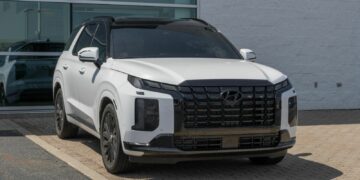
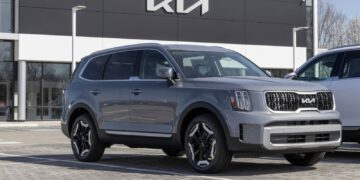
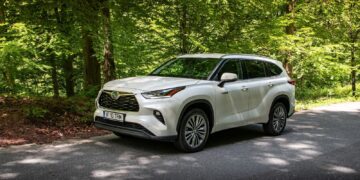
The Australian announcement is significant because it marks Honda’s return to that country’s large SUV segment after approximately two decades. The Avancier will sit above the CR-V in Honda Australia’s lineup, competing against established family vehicles such as the Hyundai Santa Fe, Kia Sorento, and Toyota Kluger. Canadian buyers face a different situation. Although Honda’s hybrid strategy includes significant North American investment, no equivalent Avancier timetable has been announced for Canadian dealerships. As a result, its presence in Australia should not be interpreted as evidence that a Canadian launch is imminent.
Honda’s New Two-Motor Hybrid System Targets Better Efficiency
At the centre of the Avancier is Honda’s next-generation hybrid powertrain, officially branded Honda Hybrid in October 2026. The system builds on the company’s established two-motor e:HEV architecture but incorporates improvements to combustion efficiency, electric motor operation, and power management. For the midsize application introduced with the Avancier, Honda has detailed a new 2.0-litre hybrid system designed to deliver smoother acceleration while reducing unnecessary fuel consumption. Its operating strategy allows electric propulsion across a wide range of speeds, with direct engine drive used during suitable high-speed cruising conditions.
Honda has also redesigned important components to reduce friction, improve energy efficiency, and save weight. Changes include a more efficient combustion process, updated motor technology, and improved thermal management. These refinements may appear technical, but their purpose is straightforward: helping a relatively large vehicle use less gasoline without sacrificing everyday performance. Honda is targeting fuel-economy improvements exceeding 10% across its next-generation hybrid technology, although that figure is a development objective rather than a confirmed Avancier fuel-consumption rating.
Electric All-Wheel Drive Introduces a New Driving Experience
One of the Avancier’s most important advances is Honda’s DualPower eAWD system, which uses electric motors to control driving force at the front and rear axles independently. Unlike conventional mechanical all-wheel-drive arrangements that transfer power through a propeller shaft, the new design uses an electrically driven rear axle. Honda says its rear drive unit belongs to a 50-kilowatt class developed for compact and midsize applications, allowing more responsive control over how power is distributed between the wheels.
The technology could prove especially valuable in challenging weather conditions. When accelerating from a stop, the system can increase the driving force directed toward the rear wheels. During cornering or deceleration, it adjusts the distribution to improve balance and stability. Honda has also developed traction-control functions that manage front and rear wheel slip independently, helping maintain useful driving force where grip is available. Although the Avancier has not been confirmed for Canada, this technology is relevant to future Canadian Honda hybrids, particularly in regions where snow, rain, and changing road conditions make all-wheel-drive performance an important purchasing consideration.
Honda’s New Platform Is Designed to Support Multiple Vehicle Types
The Avancier introduces an entirely new midsize platform that will support more than one vehicle. Honda has developed a modular architecture divided into five major sections connected through three fixed dimensions. This arrangement allows engineers to share important components across different vehicles while adapting other areas to individual body styles. The platform is designed to accommodate both sedans and SUVs, covering vehicle categories from the compact C-segment through the larger D-segment. That flexibility could help Honda introduce new hybrid vehicles more efficiently.
Weight reduction is another major priority. Honda says approximately 40% of the new body structure uses 980-megapascal high-tensile steel, helping deliver strength without excessive reinforcement. The company has also standardized the position of the hybrid battery beneath the second-row seats across relevant platform applications. In addition, redesigned engine compartments allow approximately 90% parts commonality across the model family, compared with roughly 60% in its previous midsize hybrid architecture. These engineering decisions are intended to improve manufacturing efficiency while supporting better handling, ride comfort, and collision protection.
Honda Is Applying Robotics Technology to Improve Vehicle Handling
Beyond fuel efficiency, Honda is using the Avancier to introduce improvements in how a vehicle responds to steering, braking, and acceleration. Its evolved Motion Management System draws on the company’s experience developing robotic movement and balance technologies. A six-axis inertial measurement unit monitors the vehicle’s motion, including acceleration in different directions and changes in its orientation. The system then coordinates power delivery, braking, and stability controls to help maintain more predictable vehicle behaviour in everyday driving situations.
The objective is particularly important for a larger SUV, where controlling body movement can influence how comfortable passengers feel during turns. Honda says the technology supports more precise responses on winding roads, wet surfaces, and other challenging conditions. The Avancier also includes Honda S+ Shift, a system designed to make hybrid acceleration feel more engaging through simulated gear changes. These features demonstrate that Honda is approaching electrification as more than an exercise in reducing gasoline consumption. The company is also investing in the driving characteristics that have traditionally distinguished its vehicles from competitors.
The Interior Places Unusual Emphasis on Second-Row Comfort
Honda developed the Avancier around its Grand-Journey concept, which emphasizes making long-distance travel enjoyable for every occupant. That philosophy is particularly visible in the second row, where generous armrests, substantial headrests, and available comfort features create a more luxurious seating environment. Honda has detailed heated and ventilated second-row seating, while the wider cabin design includes ambient lighting and carefully selected materials. The company also redesigned entry and exit arrangements to make accessing the third row more convenient.
A panoramic roof extends toward the rear of the vehicle, helping create a brighter and more open passenger compartment. Front occupants receive ergonomically designed seats intended to reduce fatigue during extended driving. These details suggest that the Avancier is aimed at families and passengers who spend considerable time travelling together, rather than those who simply need occasional extra seating. For Canadian households accustomed to long highway journeys, the concept is appealing. However, actual passenger comfort, luggage capacity, and third-row suitability will require independent testing before the vehicle’s practical advantages can be fully assessed.
Advanced Cabin Technology Goes Beyond the Traditional Dashboard
Honda has designed the Avancier’s interior around a more digital experience, replacing numerous conventional controls with a cleaner dashboard layout. A large central display manages many of the vehicle’s functions, while the gear selector has been relocated to the steering column to free up space between the front seats. For Australia, confirmed equipment includes a 15-inch touchscreen, digital instruments, and an available head-up display. These features give the new SUV a more technology-focused character than Honda’s traditional family vehicles.
Entertainment and connectivity are equally important parts of the package. Honda has announced a 12-speaker Bose premium audio system supporting Dolby Atmos, along with voice recognition for selected functions such as climate control. The company also plans remote cabin-viewing and surround-view features accessible through a smartphone. Over-the-air software updates are intended to introduce additional conveniences after purchase. Honda groups these improvements under its MyCabin concept, although the availability of individual features may vary by market and equipment level.
The Avancier Introduces Honda’s New Design Identity
The Avancier is also the first Honda hybrid model to introduce the company’s redesigned H emblem, representing a broader shift in its visual identity. Its exterior combines slim lighting elements, a prominent front grille, and relatively simple body surfaces with subtle SUV-inspired ruggedness. Honda has incorporated flush door handles and a concealed rear windshield wiper to create a cleaner appearance. The rear features sharply defined lighting elements and pronounced fenders, giving the three-row vehicle a distinctive profile without abandoning the brand’s established design characteristics.
The Avancier name itself has an interesting history. Honda originally introduced it on a Japanese-market wagon in 1999 before reviving the name for a flagship SUV in China in 2016. The latest version builds on that tradition of combining practical passenger accommodation with a more premium travel experience. Its new Grand-Journey styling philosophy reflects Honda’s ambition to make large family vehicles feel more refined. While the Avancier’s design is unlikely to be replicated exactly across future models, its presentation offers an early indication of the direction Honda is taking.
Important Performance Numbers and Pricing Remain Unannounced
Despite the Avancier’s extensive technology presentation, several important specifications remain unavailable. Honda has not published a complete set of final production figures covering combined horsepower, torque, certified fuel consumption, towing capacity, or pricing. Detailed dimensions and regional equipment specifications also remain incomplete. Those omissions make it difficult to determine how the new SUV will compare directly with established three-row hybrids, particularly when assessing operating costs and overall value for families.
Honda’s previously announced objective of improving next-generation hybrid fuel economy by more than 10% offers some indication of its engineering ambitions. However, that target should not be confused with a verified efficiency improvement for the Avancier itself. Actual results will depend on vehicle weight, powertrain calibration, driving conditions, and regional testing procedures. For Canadian consumers, the lack of a confirmed launch creates another uncertainty: there is no Canadian manufacturer’s suggested retail price or official Canadian fuel-consumption rating. Until Honda releases additional market-specific information, the vehicle’s potential competitiveness remains an informed possibility rather than a demonstrated result.
Canada’s Next CR-V Is Already Confirmed to Become Hybrid-Only
Although the Avancier is absent from Canada’s announced launch plans, Honda has confirmed another major development for Canadian buyers. On November 12, 2026, Honda Canada announced that its next-generation 2028 CR-V will arrive during 2027 with an exclusively hybrid powertrain lineup. The seventh-generation model will feature a new platform, updated two-motor hybrid technology, and redesigned styling. This represents a significant change for one of Honda’s most important vehicles, eliminating conventional gasoline-only choices from the next Canadian CR-V generation.
Honda’s own sales figures help explain the decision. The company reports that the CR-V Hybrid was Canada’s best-selling hybrid vehicle in 2025 and currently accounts for nearly 70% of CR-V sales. Hybrids also represent almost half of Honda’s new vehicle sales in Canada. The next CR-V therefore provides a clearer indication of Honda’s immediate Canadian electrification plans than the Avancier. While the six-seat SUV offers a preview of the company’s newest technology, the redesigned CR-V is the vehicle Honda has explicitly committed to bringing to Canadian dealerships.
Honda’s Canadian Manufacturing Investment Remains a Major Priority
Canada’s omission from the Avancier’s launch schedule does not mean Honda is reducing its commitment to Canadian hybrid manufacturing. In November 2026, Honda announced a major investment program for its facilities in Alliston, Ontario. The company identified C$166 million in capital spending for upgrades and retooling, forming part of a broader C$867 million commitment that includes planned investments and related expenses. The changes are intended to support next-generation hybrid and gasoline-powered vehicles, including renewed engine manufacturing capabilities.
Government support further demonstrates the importance of the project. On November 13, the federal government announced C$313 million through its Strategic Response Fund, while Ontario committed another C$156 million. The investment program is intended to maintain more than 4,000 jobs and support future Civic and CR-V production. Honda’s Alliston operations have produced vehicles since 1986 and remain central to its North American manufacturing network. For Canadian workers and suppliers, the implications extend well beyond one SUV. The investment supports a manufacturing transition toward increasingly electrified vehicles, even if some new Honda products are initially reserved for overseas markets.
Honda’s Remaining Hybrid Launches Could Be More Important for Canada
The Avancier represents just the beginning of Honda’s planned hybrid expansion. During its May 2026 business briefing, the automaker displayed a next-generation Honda Hybrid Sedan Prototype alongside an Acura Hybrid SUV Prototype. Both preview future products using the company’s updated hybrid technology and architecture. Honda also announced plans for larger D-segment hybrid vehicles in North America beginning in 2029, with an emphasis on combining improved efficiency with strong driving performance and towing capability.
Those developments leave Canadian consumers with reasons to watch the broader program closely. The hybrid-only 2028 CR-V is confirmed for Canada, and domestic manufacturing investment gives the country an important role in Honda’s North American strategy. However, Canadian launch commitments for other future hybrid nameplates remain less specific. The Avancier demonstrates the company’s ability to combine a premium six-seat interior, modern hybrid engineering, and sophisticated all-wheel drive in one vehicle. Whether Canadians eventually receive that exact SUV is uncertain. What is considerably clearer is that Honda’s next generation of hybrid technology is set to become increasingly important across its North American lineup.