





















Two drivers can pull into the same charging station, use the same equipment, and leave with very different bills. That is the reality at Tesla’s newly opened Supercharger in Norwood, Ontario, where Tesla owners are quoted C$0.46 per kilowatt-hour, while drivers of other eligible electric vehicles face a rate of C$0.64. The 18-cent difference works out to approximately 39% more for non-Tesla drivers.
The new location, featuring eight high-powered charging posts near a Circle K on Highway 7, expands fast-charging access in Peterborough County. But its pricing also highlights an increasingly important question surrounding Canada’s electric vehicle infrastructure: as Tesla opens more charging locations to competing automakers, will the convenience of broader access come at a noticeably higher cost?
A New Eight-Post Supercharger Arrives in Norwood
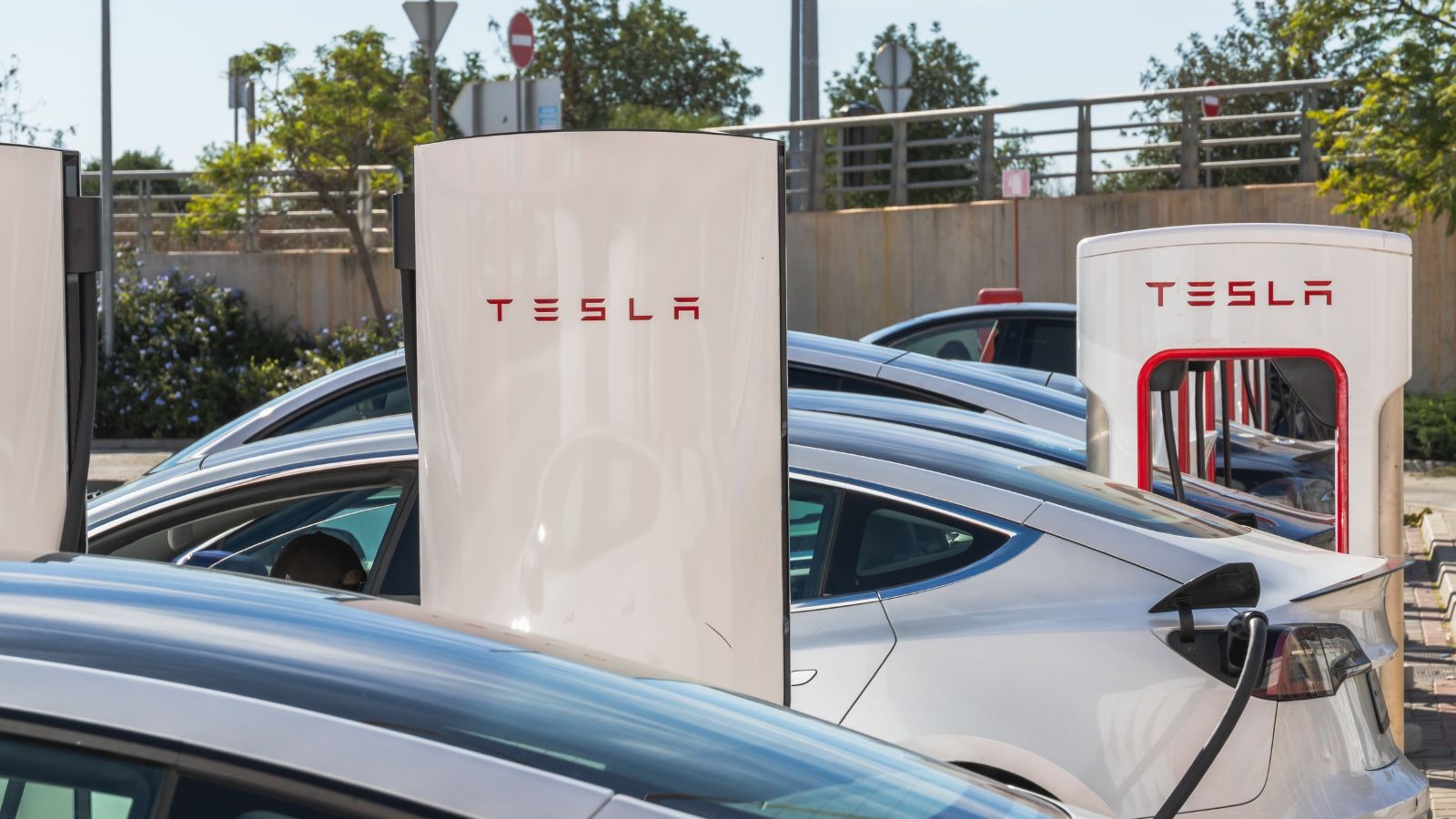
Tesla’s newest Ontario Supercharger is located at 4309 Highway 7 in Norwood, a community within the Township of Asphodel–Norwood in Peterborough County. The installation features eight V4 charging posts capable of delivering up to 325 kilowatts under suitable conditions. Drive Tesla Canada reported the opening on October 28, 2026, after construction activity was first discovered in July. Situated near a Circle K convenience store, the location offers drivers an opportunity to stop for coffee or other necessities while charging. For motorists travelling through smaller Ontario communities, such facilities can make longer electric vehicle journeys more practical.
The development also has an unusual history. When construction was initially discovered, the Norwood project had not appeared on Tesla’s official Find Us map, making it an unexpected addition to the company’s expanding infrastructure. Work progressed over the following months, turning an unannounced construction site into an operational charging location. Another eight-stall V4 installation was discovered under construction in Orangeville around the same period. The Norwood opening adds more than charging capacity: it gives local EV owners and travellers another possible stop along Highway 7, provided their vehicles meet the station’s compatibility requirements.
Why an 18-Cent Price Difference Adds Up Quickly
At Norwood, Tesla owners are quoted C$0.46 per kWh, compared with C$0.64 for eligible non-Tesla vehicles using the standard pay-as-you-go rate. That difference of C$0.18 represents a 39.1% premium when calculated against the Tesla owner’s price. Although the difference might initially appear modest, its importance becomes clearer when applied to an actual charging session. Unlike paying a fixed fee to enter a parking facility, public fast-charging costs generally increase with the amount of electricity delivered. Consequently, drivers who need to replenish larger batteries, or who routinely depend on fast chargers, can experience noticeably different expenses even when using the same charging infrastructure.
Consider a motorist adding 40 kWh of electricity during a stop in Norwood. At the reported rates, a Tesla owner would pay C$18.40, while a non-Tesla driver without a discounted membership would pay C$25.60. That represents an additional C$7.20 for the same amount of electricity. For a larger 60-kWh charging session, the respective costs would be C$27.60 and C$38.40, widening the difference to C$10.80. These are illustrative calculations based on the reported prices, rather than guaranteed final bills. Someone charging occasionally during a holiday trip might accept the higher expense for convenience. However, motorists relying on public fast chargers several times a week could find that repeated price differences significantly affect their transportation budgets.
Non-Tesla Drivers Can Charge, but Compatibility Matters
Opening Superchargers to competing electric vehicles does not mean every model can immediately connect without preparation. Tesla’s North American Charging Standard, commonly called NACS and standardized as SAE J3400, is central to the company’s charging infrastructure. Vehicles equipped with compatible native NACS charging ports can access eligible locations without a separate connector adapter. Many vehicles originally built with CCS1 charging ports, however, require an approved NACS DC fast-charging adapter. Tesla explicitly prohibits unapproved third-party adapters, making equipment compatibility an important consideration before arriving at a station. A driver discovering that the correct adapter is missing could face an inconvenient detour despite finding several unoccupied charging posts.
Tesla’s Canadian guidance identifies numerous manufacturers with access to compatible NACS Superchargers, including Ford, General Motors, Hyundai, Kia, Rivian, Volkswagen, and others. However, access is not necessarily universal across every model and model year. Drivers must confirm that their particular vehicles are supported. Tesla’s mobile application allows non-Tesla owners to register vehicle details, identify compatible Supercharger locations, and arrange payment. Ford and GM also provide charging information through their respective vehicle applications. These arrangements have significantly expanded charging choices for owners of competing brands, although planning remains essential. For motorists travelling through less densely populated areas, confirming compatibility before departure can be just as important as checking battery range.
What the 325-kW V4 Charging Equipment Actually Delivers
The new Norwood installation uses Tesla’s V4 Supercharger posts, with a reported maximum charging capability of 325 kW. That is a substantial technical specification, but it should not be interpreted as a charging speed available to every vehicle. Tesla’s official guidance states that Model S, Model 3, Model X, and Model Y vehicles can receive up to 250 kW at V4 Superchargers in North America. The Cybertruck can reach up to 325 kW under suitable conditions. Other compatible electric vehicles have their own charging limits. Actual power delivery depends on the vehicle’s battery system, the charger, battery temperature, and the battery’s current state of charge.
One of the V4 system’s most practical improvements is something drivers can physically see: longer charging cables. Unlike Tesla’s earlier charging arrangements, which were primarily designed around Tesla vehicle charging-port positions, V4 posts are intended to accommodate electric vehicles with charging ports in different locations. That can reduce awkward parking arrangements and improve accessibility for motorists using competing brands. Nevertheless, charging speed typically declines as a battery approaches full capacity, so the fastest portion of a session may be relatively brief. For a family making a stop along Highway 7, the important consideration is not simply the equipment’s maximum output. It is whether the charger can deliver enough energy efficiently to continue the journey.
Ontario’s Wider Supercharger Network Shows a Similar Pricing Divide
Norwood’s pricing difference reflects a broader pattern across Ontario’s Tesla charging infrastructure. An October 2026 snapshot from independent charging-price tracker Kilowatt Index, covering 100 Ontario Supercharger locations, showed average typical pricing of approximately C$0.44 per kWh for Tesla drivers and C$0.61 for other EV drivers. That represents a difference of C$0.17 per kWh, or roughly 39% relative to the Tesla average. Although the tracker provides a snapshot rather than an exhaustive accounting of every operational charger, its findings suggest that Norwood’s higher non-Tesla rate is consistent with pricing differences found across much of the province.
The same dataset identified 44 Ontario locations using time-of-use pricing, while 56 had flat-rate arrangements. At locations with variable pricing, the cost of electricity can change significantly depending on when charging begins. Tesla also explains that certain stations use demand-related pricing to manage utilization and congestion. This makes comparing charging costs more complicated than simply identifying the nearest available Supercharger. A station charging less overnight could potentially offer better value than another location with a shorter driving detour, depending on the circumstances. For EV owners trying to manage transportation expenses, checking the current price in the charging application can be almost as important as confirming that the charging posts are available.
Tesla’s Charging Membership Could Reduce the Price Gap
There is an important qualification to the nearly 40% premium: non-Tesla drivers are not necessarily required to pay the higher rate indefinitely. Tesla offers an optional Supercharging Membership that allows eligible drivers of other electric vehicles to receive Tesla-owner pricing at participating locations. The arrangement requires a recurring monthly membership fee, but the membership is not necessary to access Superchargers that support other brands. Drivers can still use those stations under ordinary pay-as-you-go pricing. Consequently, the difference highlighted at Norwood is best understood as a comparison between Tesla-owner pricing and the standard non-member rate, rather than an unavoidable surcharge on every competing electric vehicle.
Whether the membership delivers meaningful savings depends on charging frequency and the current subscription fee, which Tesla makes available through its application. Using Norwood’s reported 18-cent-per-kWh difference, purchasing 50 kWh at the discounted rate would save approximately C$9 before accounting for membership costs, assuming the location qualifies. At that level of savings, every C$1 in monthly membership fees would require roughly 5.6 kWh of eligible discounted charging to break even. A hypothetical C$15 monthly membership would therefore require approximately 84 kWh of charging before producing net savings. The actual subscription price must be verified in the app. Regular public-charging customers may find the arrangement worthwhile, while occasional travellers could reasonably prefer paying the higher individual-session rate.
Why a Small-Town Highway Charging Stop Matters
Norwood’s location is significant because it expands fast-charging options beyond Ontario’s largest urban centres. Situated in Peterborough County along Highway 7, the new Supercharger provides eight charging positions for motorists travelling through the region. Local EV owners who can charge at home may not need public fast charging frequently, but the situation is different for drivers making longer journeys. A reliable charging stop can determine whether a particular route is convenient or requires a substantial diversion. Facilities located near convenience stores also allow travellers to combine an ordinary rest stop with charging, making electric vehicle ownership more manageable outside major metropolitan areas.
Natural Resources Canada’s 2024 assessment of Canada’s charging infrastructure emphasizes the importance of highway and rural charging locations. The research estimated that charging along road corridors and in rural or remote regions would represent only approximately 1% to 2% of future light-duty charging ports, yet described those facilities as essential for network connectivity and reducing range anxiety. This helps explain why an eight-post installation in a smaller community deserves attention. Even where demand is lower than in major cities, accessible charging facilities help connect the broader transportation network. However, that benefit depends not only on installing equipment but also on maintaining reliable service, providing accurate charging information, and ensuring compatibility with a wide variety of electric vehicles.
More Ontario Superchargers Are Already in Development
Norwood is not an isolated addition to Tesla’s Ontario charging network. In October 2026, Tesla also opened a new 12-stall Supercharger in Kingston, adding capacity near Highway 15 and Highway 401. Other projects have been reported in Toronto, Port Hope, Hamilton, and Madoc, although their development stages differ. An additional eight-stall V4 installation was also discovered under construction in Orangeville. Some of these developments involve entirely new charging locations, while others involve upgrades or expansions of existing facilities. The distinction matters for motorists planning journeys, because a proposed or partially completed station cannot be treated as a dependable charging option until it is operational.
The broader expansion comes as Canadian governments continue efforts to improve access to electric vehicle charging infrastructure. Natural Resources Canada’s Zero Emission Vehicle Infrastructure Program supports charging installations in public places, workplaces, multi-unit residential buildings, and transportation corridors. Published federal program materials cite a target of deploying 84,500 EV chargers nationwide by 2029 through various initiatives. There is no verified indication that the Norwood Supercharger itself received federal funding, and the national target should not be confused with the number of Tesla chargers. Nevertheless, publicly supported infrastructure programs and private charging investments are both contributing to a more extensive network. The continued development of charging sites outside major cities could help make long-distance EV ownership more practical.
What Drivers Should Know Before Using the New Station
For motorists considering a charging stop in Norwood, the most important preparation involves checking the current price, vehicle compatibility, and equipment requirements. Tesla explains that Supercharger prices can change, with applicable rates displayed through its mobile application or vehicle navigation system. The charging rate is determined when a vehicle plugs in and does not change midway through that session. App-displayed charging prices include normal taxes and fees, although separate congestion charges may apply under qualifying conditions at certain locations. These policies are relevant to Tesla owners and other EV drivers alike. Keeping track of charging progress is particularly important when stopping for refreshments or taking an extended break.
There are additional payment considerations for motorists using vehicles from other manufacturers. Tesla’s Canadian support information states that non-Tesla drivers may encounter a temporary C$20 payment authorization when starting a session through the Tesla app, or C$40 when using guest checkout. These are temporary payment holds rather than additional electricity charges, and their release can depend on the financial institution. Ultimately, the Norwood opening illustrates both the progress and the complications associated with expanding electric vehicle infrastructure. More charging positions, improved hardware, and broader compatibility provide genuine advantages. Yet the 39% standard-rate premium demonstrates that access and affordability are not necessarily the same thing. As Canada’s public charging network grows, transparent prices and consistent service will remain important to the experience of drivers using it.