























Canada’s decision to welcome more Chinese-made vehicles has opened a new front in North America’s increasingly tense automotive trade relationship. Honda is urging Ottawa not to expand its 49,000-vehicle import quota and wants Canada, the United States, and Mexico to coordinate their response to Chinese automotive competition.
The warning comes as Washington refuses to extend the Canada-United States-Mexico Agreement (CUSMA) on its existing terms, raising uncertainty for manufacturers whose factories and suppliers operate across borders.
For Canada, the stakes extend beyond imported vehicles. Ottawa hopes stronger ties with China will deliver affordable electric cars and fresh investment. Honda, which manufactures hundreds of thousands of vehicles in Ontario, is concerned about what greater Chinese competition could mean for North American production, jobs, and future investment.
Honda Wants a United North American Response to Chinese Competition
Honda is pushing for a coordinated North American strategy to limit the expansion of Chinese automotive manufacturers. Jennifer Thomas, senior vice-president of corporate affairs at American Honda, outlined the company’s position during a discussion with reporters on October 27, 2026. Her argument goes beyond keeping Chinese vehicles out of American dealerships. Honda wants the United States, Canada, and Mexico to develop consistent policies addressing both Chinese vehicles and automotive investment.
The company’s concern is especially significant for Canada, where the federal government has already established an annual import quota for vehicles manufactured in China. Honda has objected to that arrangement and is urging Canadian officials not to expand it or encourage additional Chinese automotive investment. Mexico is facing similar pressure, although Chinese manufacturers already have a substantial presence in that country’s vehicle market.
Thomas acknowledged that preventing Chinese vehicles from entering the United States indefinitely may be unrealistic. Consumers are increasingly attracted to affordable vehicles equipped with advanced technology, and those preferences could eventually overcome political resistance. Honda’s immediate objective is therefore to give established manufacturers more time to strengthen their competitiveness before Chinese brands gain a larger North American foothold.
What Canada’s 49,000-Vehicle Quota Actually Allows
Canada introduced the Chinese vehicle import quota on March 1, 2026, under an agreement reached between Prime Minister Mark Carney and Chinese President Xi Jinping earlier in the year. The arrangement initially permits 49,000 qualifying vehicles annually at a most-favoured-nation tariff rate of 6.1%. It replaced the 100% surtax Canada imposed on Chinese electric vehicles in October 2024, which had sharply restricted their competitiveness in the Canadian market.
Importantly, the arrangement is not an unrestricted opening. Manufacturers or their authorized Canadian agents must obtain shipment-specific permits from Global Affairs Canada, and imports cannot exceed the established allocation. The system currently operates on a first-come, first-served basis, with the first quota year running through February 28, 2027.
However, the 49,000-vehicle limit is only the starting point. Canada’s agreement provides for a 6.5% annual increase, bringing the quota to slightly more than 63,000 vehicles by March 2030. That scheduled growth introduces an important distinction in Honda’s request: the company has publicly opposed expansion, but the available reporting does not establish whether its objection specifically targets those agreed annual increases or additional increases beyond them. For Ottawa, any proposed change would have to be considered against commitments already made to Beijing.
Honda’s Ontario Manufacturing Footprint Raises the Stakes
Honda’s concerns carry particular weight because the company is deeply embedded in Canada’s automotive manufacturing industry. Its two factories in Alliston, Ontario, employ more than 4,200 workers and produced approximately 401,000 vehicles in 2025. These facilities manufacture the Honda Civic and CR-V, including hybrid versions, and supply vehicles to both Canadian and American markets. Honda’s Canadian operations are celebrating 40 years of manufacturing in 2026, making the company one of the country’s longest-established international automotive investors.
The economic footprint extends well beyond factory employees. Honda reports purchasing approximately $3 billion in goods from Canadian suppliers annually, supporting an estimated 30,000 additional jobs connected to its manufacturing operations. Those relationships include businesses supplying components, materials, equipment, and other manufacturing services.
For workers in communities surrounding Alliston, automotive trade policy has implications that extend beyond the dealership. Decisions about where a future vehicle model will be assembled can influence employment opportunities, supplier contracts, and local business activity for years. Greater competition does not automatically translate into lost Canadian jobs. Nevertheless, Honda’s established manufacturing presence helps explain why the company is concerned about import policies that could eventually influence investment decisions across the continent.
CUSMA Rules of Origin Are Becoming a Central Battleground
Honda’s campaign arrives during a particularly sensitive period for CUSMA, known as the United States-Mexico-Canada Agreement in the U.S. The agreement already includes strict automotive rules of origin designed to encourage regional manufacturing. Passenger vehicles and light trucks generally must meet a 75% regional value-content requirement to qualify for preferential treatment. Manufacturers must also satisfy requirements involving North American steel and aluminum purchases, core automotive components, and labour value content.
Honda believes the continuing negotiations offer an opportunity to strengthen those provisions against Chinese competition. The distinction between importing a Chinese vehicle into Canada and qualifying that vehicle for preferential entry into the United States is essential. A vehicle manufactured in China does not automatically become North American simply because it passes through a Canadian port or dealership.
The uncertainty intensified on July 1, 2026, when the United States declined to renew CUSMA under its existing terms during the scheduled joint review. Although the agreement remains legally in force, Washington has continued pressing for changes. The U.S. Trade Representative has also opened consultations ahead of the 2027 review, with public comments due January 12, 2027. For manufacturers such as Honda, those discussions could influence sourcing, production costs, and investment strategies for years
Carney’s China Deal Involves Much More Than Electric Vehicles
The Chinese vehicle quota forms part of a wider economic arrangement negotiated during Prime Minister Carney’s January 2026 visit to Beijing. In return for improved access to Canada’s automotive market, China agreed to reduce several barriers affecting Canadian agricultural and seafood exports. Beginning March 1, China lowered the combined tariff on Canadian canola seed to 14.9%, down from nearly 85%. It also suspended additional tariffs on Canadian canola meal, peas, lobster, and crab through the end of 2026.
Those concessions are particularly important for agricultural producers in Western Canada and seafood exporters along the country’s coasts. Ottawa estimates that improved access for canola seed could benefit a market worth approximately $4 billion in annual Canadian exports. For farmers facing unpredictable international demand, reopening a major export destination can be as consequential as an investment announcement in the automotive sector.
The arrangement also reflects Carney’s broader ambition to reduce Canada’s dependence on the United States by developing additional trade relationships. Ottawa expects the vehicle agreement to encourage Chinese manufacturers to establish joint ventures with Canadian partners, potentially bringing new assembly operations, supply-chain investment, and employment opportunities.
Honda’s opposition creates a difficult policy choice. The federal government sees Chinese automotive investment as an opportunity to diversify Canada’s manufacturing base, while an established employer with substantial Canadian operations views that same investment as a competitive concern. Promised investment benefits, however, should not be confused with factories or jobs that have already materialized.
Most of the Chinese Vehicle Quota Remains Unused
Despite the political attention surrounding Chinese automotive imports, the available government figures show a comparatively modest level of activity. Global Affairs Canada’s quota utilization report, updated October 23, 2026, recorded 15,931 vehicles against the first-year allowance of 49,000. That left 33,069 vehicles of the national quota unused, or approximately 67.5% of the total allocation.
The pattern is especially striking during the second half of the quota year. The government recorded 15,603 vehicles between March and August, followed by only 328 in September. Its October 23 report showed no additional quota utilization for October at that point. These figures do not establish what happened after the reporting date, nor do they identify every manufacturer associated with the recorded imports.
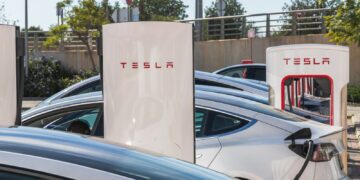
Tesla’s experience illustrates some of the complications. The American automaker stopped accepting Canadian orders for certain Shanghai-built Model 3 versions in October, saying demand had exhausted its available import allocation. Yet the government’s national figures showed tens of thousands of spaces remaining.
The apparent contradiction highlights the distinction between a manufacturer’s access and the overall national allowance. Global Affairs Canada has not publicly disclosed company-specific import allocations, making it difficult to determine precisely why an individual automaker may encounter restrictions while the wider quota remains underused. It also demonstrates why vehicles built in China should not automatically be confused with vehicles sold under Chinese-owned brands.
Cheaper Electric Vehicles Could Benefit Canadian Buyers
While Honda emphasizes manufacturing and investment risks, Canadian consumers have reasons to welcome additional competition. Statistics Canada reported that zero-emission vehicles accounted for approximately 8.7% of new motor vehicle sales in 2025, down from 13.8% in 2024. Changes to government purchase incentives contributed to weaker demand, underscoring the importance of affordability in the transition toward electric transportation.
Chinese manufacturing has demonstrated an ability to produce electric vehicles at competitive prices. In 2026, Tesla introduced a Shanghai-built Model 3 in Canada starting at $39,490 before taxes and fees. Although orders for that version have since been paused, its introduction showed how access to Chinese production could expand lower-priced choices for Canadian buyers.
Ottawa’s import arrangement is specifically designed to encourage affordability. Beginning in the quota’s second year, 10% of the allocation is reserved for vehicles with a free-on-board value of $35,000 or less. That proportion increases to 50% by the fifth year.
However, the $35,000 threshold represents the vehicle’s import value, not the final dealership price. Transportation, taxes, fees, and other expenses can raise the amount consumers ultimately pay. Lower-cost imports could increase competitive pressure on established manufacturers, but the initial quota represents less than 3% of Canada’s new-vehicle market. Its influence on nationwide prices may therefore be limited, even if particular vehicle segments experience more substantial competition.
Honda’s Suspended $15-Billion EV Project Adds Another Dimension
Honda’s opposition to greater Chinese automotive investment comes months after the company indefinitely suspended a major Canadian electrification initiative of its own. In April 2024, Honda announced plans for an approximately $15-billion investment in Ontario, including contributions from joint-venture partners. The proposal included an electric vehicle assembly facility, a battery plant, and additional battery supply-chain operations.
At the time, the planned EV factory was expected to support production capacity of up to 240,000 electric vehicles annually. Honda also anticipated creating at least 1,000 additional manufacturing jobs at the new vehicle and battery facilities. The project was initially postponed in May 2025 before Honda announced its indefinite suspension on May 14, 2026.
Honda attributed the decision to changing business conditions, shifting customer demand, and adjustments to its resource strategy. The company emphasized that the suspension would not affect existing employment or production at its Alliston facilities. It also confirmed that no federal or provincial government funds had been transferred to Honda under the project’s proposed funding commitments.
The suspension highlights the uncertainty surrounding major EV investments, even among established automakers. There is no verified basis for attributing Honda’s decision directly to Canada’s Chinese import quota. Nevertheless, the contrast is significant: Ottawa wants to attract new automotive investment from China at a time when one of its major existing manufacturers has stepped away from a previously announced expansion.
Mexico’s Trade Negotiations Could Shape What Happens Next
Mexico’s negotiations with Washington demonstrate why Honda believes a coordinated North American strategy is necessary. On October 28, Mexican President Claudia Sheinbaum confirmed that discussions with the United States were progressing, with both governments examining whether an interim agreement could be reached before the November 3 American midterm elections. Mexico is seeking substantial reductions in U.S. tariffs affecting its automotive, steel, and aluminum industries, while Washington is pressing concerns involving automotive content and Chinese investment.
Canada faces a different negotiating environment, with its own trade discussions with Washington having deteriorated. The possibility of separate arrangements creates additional uncertainty for manufacturers operating across all three countries. Different approaches to Chinese investment and vehicle imports could complicate production planning and long-term capital commitments.
Meanwhile, China’s automotive strength continues to grow. The International Energy Agency reported that Chinese manufacturers accounted for approximately 60% of global electric car sales in 2025. Honda recognizes that established manufacturers must improve their own competitiveness, pursuing an internal initiative called “Triple Half” aimed at reducing vehicle development costs, timelines, and workloads by 50% compared with 2025 levels.
For Ottawa, the challenge is balancing affordable vehicle access, existing manufacturing employment, new investment opportunities, and continued access to the American market. Honda’s opposition underscores how difficult that balance has become. The first-year quota may be relatively small, but the decisions made during the continuing CUSMA negotiations could influence Canada’s automotive industry far beyond the current import arrangement.