






















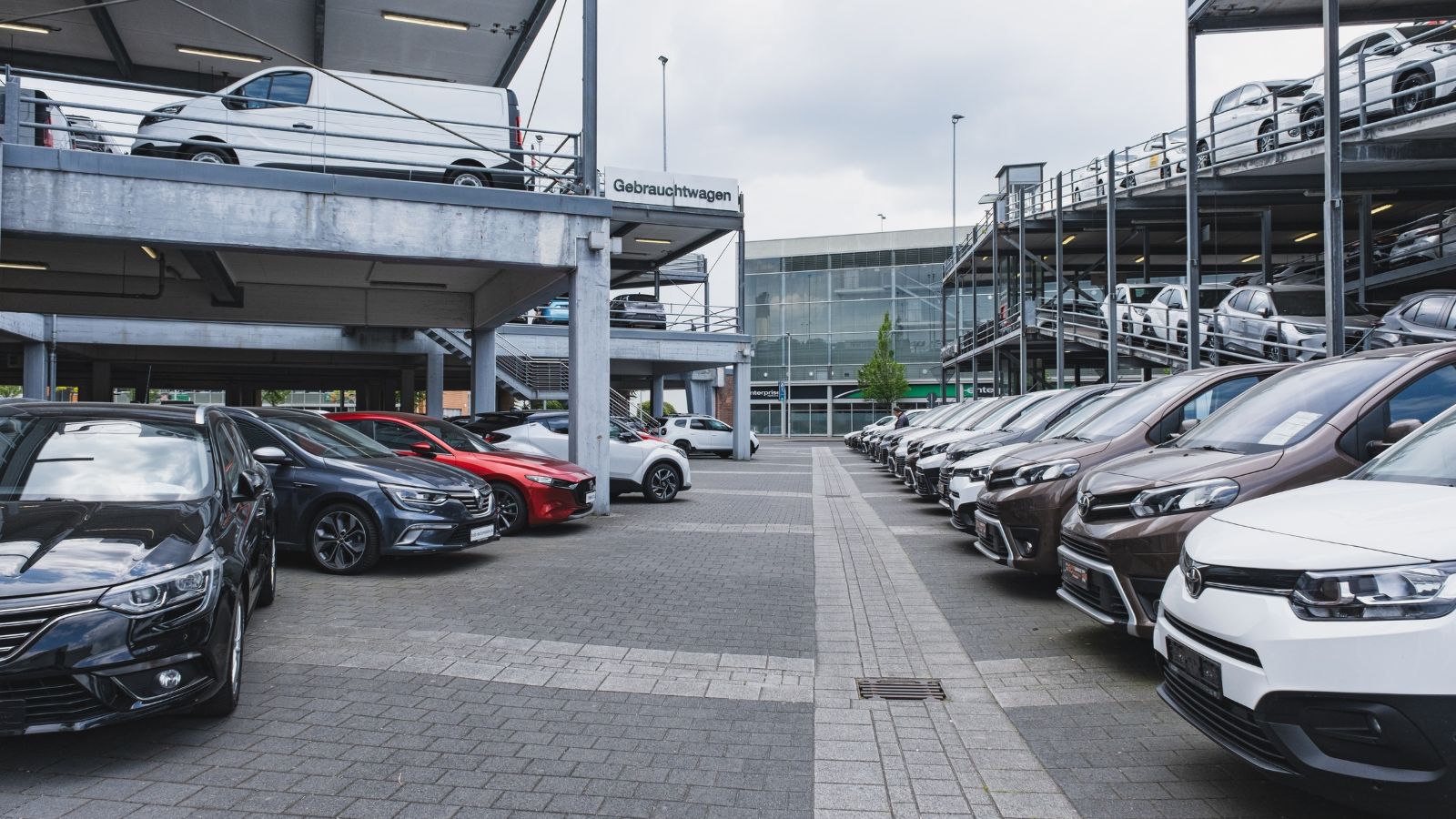
Canadian used-car pricing is beginning to look less stubborn. A national listing tracker recently showed 38,227 price cuts in its October 6 market snapshot, while newer Canadian Black Book data shows the average dealer asking price slipping to $37,900 by October 20. The combination suggests that sellers are becoming more willing to adjust, even though prices remain high by pre-pandemic standards.
The change is not a collapse. Wholesale values are easing at a measured pace, good vehicles still attract demand, and some segments are even posting gains. But rising inventory, slower transaction activity and more visible repricing are giving Canadian shoppers something they have not consistently had in recent years: more choice and, in parts of the market, more room to negotiate.
A Wave of Price Cuts Is Becoming Visible
The most eye-catching signal comes from isitfair, an Alberta-based Canadian vehicle-price comparison service that tracks used-car listings across the country. Its October 6 dashboard displayed 38,227 price cuts in the same live market snapshot that showed 31,259 vehicles labelled “new this week” and more than one million cars tracked. The site also highlighted recently reduced dealer listings, illustrating how repricing is happening across mainstream SUVs, luxury vehicles and other segments rather than being confined to one corner of the market.
There is an important caveat. The public methodology explains that listings are updated daily, duplicate advertisements are counted once and prices are asking prices rather than appraisals or final transaction prices. The extracted dashboard does not separately define the time window printed beside the price-cut counter, so the figure is best treated as a high-frequency market signal rather than an official weekly census. What it does show clearly is widespread seller adjustment. Dealers do not cut thousands of advertised prices unless inventory, competition or buyer resistance is forcing a reassessment of what the market will bear.
Dealer Asking Prices Have Slipped Through October
Canadian Black Book’s weekly retail data gives the price-cut story a firmer industry benchmark. In early October, its 14-day moving average for used vehicles on Canadian dealer lots was about $38,250, based on roughly 165,000 listings. By the October 13 report, that average had eased to $38,100. One week later, the October 20 update put it at $37,900, with the analyzed listing pool still around 165,000 vehicles. That is a visible downward move without a dramatic change in the number of vehicles being measured.
For shoppers, the practical meaning is more important than the headline average. A lower national asking price does not mean every three-year-old RAV4, F-150 or Civic suddenly became cheaper by the same amount. The average changes with the mix of vehicles available, their age, mileage and segment. Still, a sequence of lower readings across the same dealer-lot series matters. It shows that advertised retail pricing is responding to softer market conditions instead of simply holding at earlier levels while wholesale values move lower underneath it.
Wholesale Values Are Softening at the Same Time
The wholesale market is reinforcing the retail trend. Canadian Black Book reported a 0.12% decline in overall used-vehicle wholesale values for the week ending October 3, followed by a steeper 0.35% drop for the week ending October 10. For the week ending October 17, values fell another 0.27%. Cars declined 0.26% in the latest period, while truck and SUV values were down 0.28%. Those are modest weekly moves, but they matter because wholesale acquisition costs eventually influence what dealers can ask on the retail side.
The pattern also argues against describing the market as a sudden selloff. Canadian Black Book said the latest decline moderated from the previous week, while demand for high-quality vehicles remained strong. In other words, dealers are not abandoning the market; they are becoming more selective about what they pay and more realistic about what slower-moving inventory is worth. A clean, desirable model with good mileage may still command strong money, while an over-aged unit or an unpopular configuration can require repeated reductions before a buyer appears.
More Inventory Is Meeting Softer Demand
The supply-demand balance is also shifting. CARFAX Canada’s fall market update reported 228,788 used listings in August, an 18.9% increase from the previous month and the highest inventory level recorded so far in 2026. At the same time, used-vehicle transactions fell to 258,202, down 6.9% month over month and 6.6% from a year earlier. More vehicles becoming available while fewer change hands is exactly the kind of backdrop that can pressure sellers to sharpen prices.
CARFAX’s national average listing price was $30,776 in August, down 0.3% from the previous month and 2.7% year over year. That figure is lower than Canadian Black Book’s dealer-lot average because the organizations measure different pools of vehicles and use different methodologies, so the two numbers should not be blended. Directionally, however, they tell a similar story: supply has improved, demand has cooled and prices are no longer being supported by the severe scarcity that characterized the pandemic-era market. For buyers who can wait and compare, choice is becoming a competitive advantage.
The Affordable Half of the Market Is Seeing More Relief
The most meaningful price relief may be happening below the national average. Clutch’s August pricing report found that the average vehicle in its dataset sold for $33,752, down 0.5% from a year earlier and marking the first annual decline since March 2025. More revealing was its like-for-like comparison: the same model at the same age cost 2.2% less than a year earlier. The median sale price was $28,999, about $900 below the previous year and a 3.0% decline.
The difference between the average and the median matters for households shopping on a fixed budget. Clutch found that the cheapest tenth of used vehicles sold for 4.5% less than a year earlier, while the upper quarter of the market was broadly flat and the top tenth was slightly higher. That means the easing is not evenly distributed. Someone shopping for a practical commuter, older compact SUV or mainstream sedan may encounter more genuine price relief than a buyer hunting for a newer premium model. The market is getting cheaper from the bottom up, not through a uniform reset.
Where a Vehicle Is Sold Still Changes the Picture
Canada’s used market is increasingly regional. Clutch’s August data showed Alberta’s average used-vehicle sale price at $36,621, down 3.5% from a year earlier. British Columbia averaged $37,430, down 1.1%, while Manitoba was down 2.9% to $33,991 and Ontario was nearly flat at $33,783. Quebec moved the other way on the headline average, rising 1.9% to $30,097, while the Atlantic region was up 0.8% to $29,910.
Those averages can be deceptive because the mix of vehicles sold differs from province to province. When Clutch compared the same model at the same age, every region in its dataset was cheaper than a year earlier. Alberta showed the largest like-for-like decline at 3.1%, while Quebec was down 1.7% despite its higher average transaction price. For consumers, that distinction matters. A rising provincial average can simply mean buyers purchased newer or more expensive vehicles. It does not necessarily mean individual used models appreciated. Local inventory, body-style preferences and how long vehicles sit unsold can create very different negotiating conditions across Canada.
Some Segments Are Falling Faster Than Others
The latest wholesale data shows why broad statements about “used-car prices” can miss what is happening on an actual dealer lot. In the week ending October 17, Canadian Black Book recorded a 0.59% decline for sporty cars and a 0.41% decline for luxury cars. Full-size vans fell 0.90%, while compact crossovers and SUVs dropped 0.55%. Those are noticeably larger moves than the overall market’s 0.27% weekly decrease.
At the same time, not everything weakened. Subcompact luxury crossovers and SUVs gained 0.13%, small pickups rose 0.11%, and full-size cars also increased 0.11%. That divergence is important for anyone using a national average as a negotiating tool. A dealer holding an unpopular van or rapidly depreciating luxury model may be far more motivated than a store with a scarce small pickup or clean crossover that still has multiple interested buyers. The emerging Canadian market is less about one universal price direction and more about inventory-specific pressure. Model, age, mileage, condition and local demand increasingly determine whether a price cut is likely.
Used EV Data Shows Why Methodology Matters
Electric vehicles are a good example of how two credible datasets can appear to disagree without either being wrong. CARFAX Canada reported that average used-EV listing prices fell 1.8% month over month and 5.4% year over year in August as EV inventory reached a new 2026 high. Tesla vehicles represented nearly two-thirds of the EV listings in that dataset, meaning movements in one brand can heavily influence the national advertised-price average.
Clutch, however, found that comparable used EVs in its sold-vehicle dataset were 1.2% more expensive than a year earlier on a same-model, same-age basis, even though the average used EV sold for $42,069 and specific models such as the Tesla Model 3 showed sizable headline declines. The difference comes from what is being measured: advertised inventory versus completed sales, and broad averages versus like-for-like vehicles. For shoppers, the lesson is practical. EV pricing is especially sensitive to model mix, battery range, incentives, new-model competition and the concentration of Tesla inventory. A single national average can conceal substantial bargains and equally substantial outliers.
A Stronger New-Car Market Is Giving Buyers More Alternatives
Used vehicles are also competing with a healthier new-car market. Statistics Canada reported 174,611 new motor vehicles sold in August, up 4.9% from a year earlier. New passenger-car sales rose 14.2%, while new truck sales increased 3.5%. Zero-emission vehicle sales reached 22,716 units, up 55.1% year over year and equal to 13.0% of all new-vehicle sales that month. Earlier in the year, second-quarter new registrations reached 547,673, the highest second-quarter level since 2019.
More new vehicles do not automatically force used prices down, but they give consumers alternatives that were much harder to find when inventories were constrained. A shopper comparing a two-year-old SUV with a discounted or incentivized new model can now make a different calculation than during the shortage years. That competition is especially relevant for nearly new vehicles, where the price gap between new and used can narrow quickly. As fresh supply improves, dealers carrying late-model used inventory may need sharper pricing to keep those vehicles attractive against new-car payments, warranties and promotional financing.
Buyers Have More Leverage, but Price Still Is Not the Whole Deal
For buyers, the recent data supports a more patient approach. A vehicle that has already been reduced once may deserve a closer look at its price history, days on market and comparable listings before an offer is made. The growing supply of used inventory also makes it easier to walk away from an overpriced example and compare similar vehicles elsewhere. But a lower sticker can be offset by higher financing costs, add-on products, reconditioning differences or a poor vehicle history, so the final out-the-door cost remains more important than the advertised reduction.
For sellers and dealers, the same market rewards accurate pricing earlier. Statistics Canada reported that sales at used-car dealers fell 0.5% in August even as sales at new-car dealers rose 1.5%. The Bank of Canada’s overnight rate remains 2.25% ahead of its October 28 decision; that is not an auto-loan rate, but it remains part of the broader borrowing environment facing consumers. The market is giving buyers more room, yet desirable vehicles still move. The strongest strategy on either side is increasingly simple: know the specific vehicle’s market, not just the national average.