























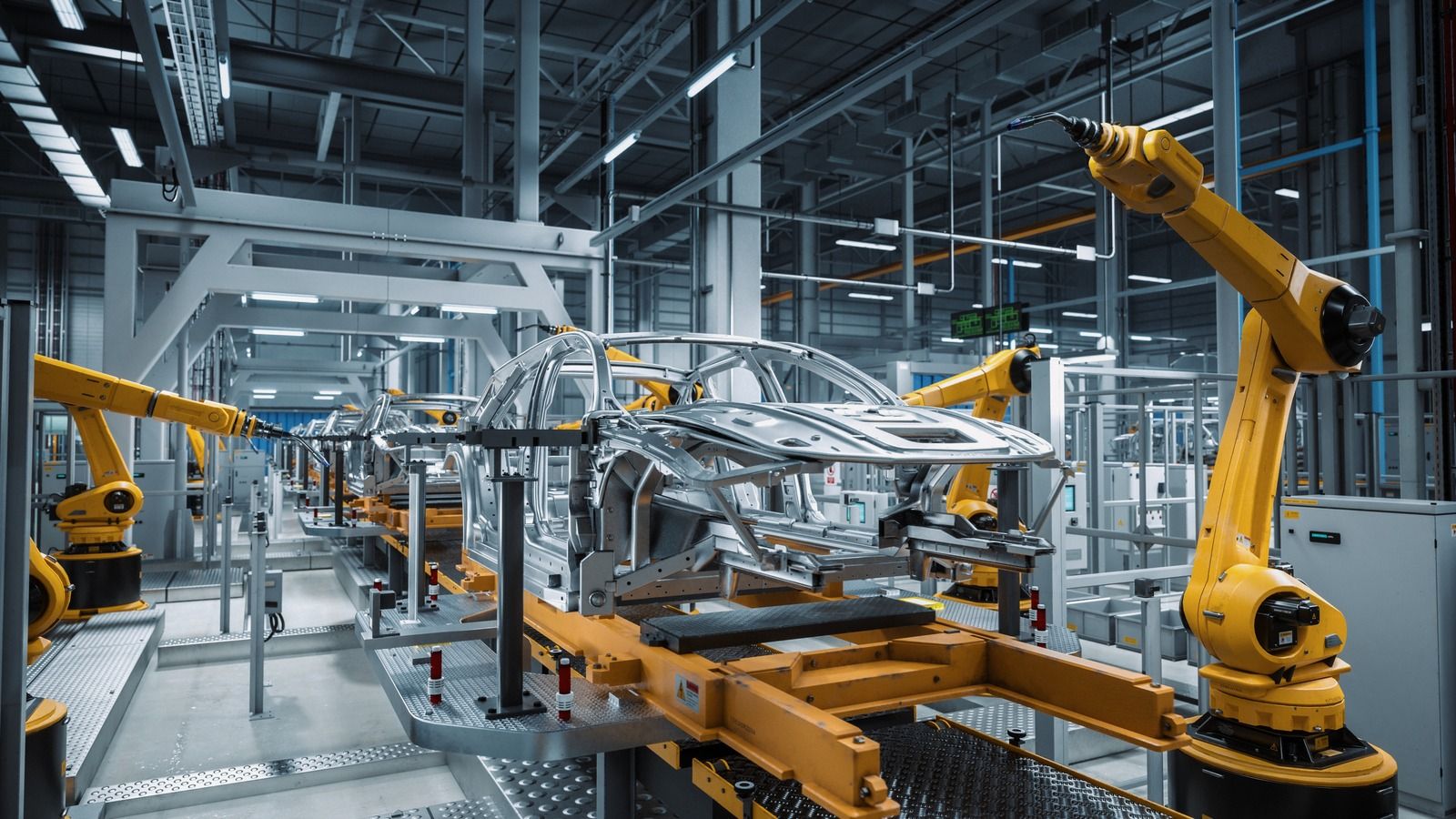
For an auto worker, a trade dispute becomes personal when a shift disappears or the next production assignment goes elsewhere. Canada’s Parliamentary Budget Office has now put a national figure on the employment risk.
In an assessment released October 20, 2026, the PBO estimates that permanent Canada–U.S. trade measures could leave employment up to 185,000 jobs below a scenario without those measures. Automotive manufacturing is among the industries it identifies as hardest hit. The warning is not a count of layoffs already announced. It describes how prolonged trade restrictions could weaken employment and investment, with consequences reaching from assembly lines and parts suppliers into household budgets.
The 185,000 Figure Measures an Employment Gap
The PBO’s estimate compares two economic paths: one with the trade measures in place as of October 1, 2026, and another retaining the pre-conflict trading relationship. Under its permanent-tariff scenario, the employment gap reaches approximately 0.9%, or 185,000 jobs, six quarters after the simulated tariff shock. That timing belongs to the model; it is not a prediction that a particular number of Canadians will receive layoff notices on a specific future date.
An employment shortfall can include positions eliminated and jobs that never materialize. Consider a hypothetical manufacturer that cancels 20 planned hires rather than dismissing 20 existing employees: either decision leaves fewer people working than otherwise expected, but the personal consequences differ. The estimate also covers the Canadian economy, not just automotive manufacturing. It should neither be read as 185,000 auto jobs nor added repeatedly across the projection’s five years. The crucial question is how much employment the country could forgo under a lasting deterioration in trade access.
Canada’s Auto Industry Is Built Around American Customers
The vulnerability begins with the industry’s customer base. Federal figures published in February put the share of Canadian-made vehicles exported to the United States above 90%, alongside 60% of Canadian-made auto parts. Ottawa estimated that automotive manufacturing supported approximately 125,000 direct jobs, with more than 500,000 workers supported across the sector’s wider economic footprint. Those are measures of the industry’s scale, not forecasts that every associated position will disappear.
The contrast helps explain why a border tax can matter so much to an otherwise productive factory. A Canadian assembly operation may be building vehicles mainly for American buyers, while a nearby supplier depends on orders from plants on both sides of the border. Replacing that customer base requires more than persuading Canadians to purchase additional cars. The Bank of Canada identifies automotive manufacturing, steel, aluminum and lumber among the sectors hit hard by U.S. trade actions. For automotive communities, the exposure runs through both finished vehicles and the materials and components used to build them.
The 25% Auto Tariff Has Important Qualifications
Automotive tariffs are more complicated than simply adding 25% to every car’s sticker price. Canadian vehicles qualifying under the Canada–United States–Mexico Agreement face a U.S. tariff of 25% on their non-U.S. content, with qualifying American content exempt. The distinction can substantially change an automaker’s liability. It also means that a 25% duty should not be interpreted as a prediction that Canadian retail prices will rise by exactly that amount.
Canada’s response also distinguishes between vehicles. Its 25% counter-tariff covers non-compliant U.S. vehicles and, for qualifying U.S. vehicles, the value of content that is neither Canadian nor Mexican. Ottawa also operates a remission framework that provides tariff relief tied to Canadian production and investment commitments. These rules are intended to defend domestic operations, but do not restore unrestricted access to American customers. For a manufacturer considering a Canadian production program, the issue extends beyond today’s border bill: it includes whether selling those vehicles into the United States will remain commercially attractive throughout the program’s life.
Windsor’s Shutdown Schedule Makes the Risk Tangible
At Stellantis’s Windsor Assembly Plant, uncertainty already has dates attached. The company scheduled production downtime for the weeks beginning October 19, October 26 and November 2. Employees were told not to report unless instructed otherwise, with skilled-trades arrangements to be determined separately. Stellantis said it was adjusting operations to market conditions, including consumer demand and tariffs. That explanation matters: the stoppage should not be attributed exclusively to tariffs when the company itself named more than one factor.
For a household relying on steady factory income, a temporary shutdown can still mean difficult decisions about expenses and savings. Suppliers face their own version of the problem when scheduled parts orders shrink or stop. Yet temporary downtime, a permanent closure and a cancelled future investment are different events, with different consequences. Windsor’s interruption illustrates the immediate pressure facing the industry; it does not establish how many permanent jobs will ultimately disappear. The more revealing test will be whether production resumes reliably and whether the plant retains the vehicle programs needed to sustain its workforce.
Brampton’s Future Has Become a Bargaining Flashpoint
The fight over future production is especially visible at Stellantis’s Brampton Assembly Plant. In September, Unifor said negotiations had stalled over the plant’s future and accused the company of making an economic settlement conditional on Brampton’s closure. The union also said production plans for Windsor and the Etobicoke Casting Plant remained unresolved. These are the union’s descriptions of the bargaining dispute, rather than findings that every threatened job has already been permanently eliminated.
On October 19, Unifor announced that 97.3% of members voting at Stellantis had supported a strike mandate. It also emphasized that the union was not yet in a legal strike position at the time of that announcement. Authorization therefore did not mean a walkout had begun. The result nevertheless shows how strongly employment security has entered contract discussions. For an experienced assembly worker, a wage agreement offers limited reassurance without work to perform. A funded production assignment, a credible restart schedule and a commitment to keep manufacturing in Canada can matter as much as the hourly rate.
The Economy Can Grow While Still Losing Ground
The PBO’s broader October outlook projects real economic growth of 0.9% in 2026 and 1.5% in 2027, down from June forecasts of 1.1% and 1.6%. It also incorporates an estimated medium-term output loss of approximately 1.4% from permanent bilateral trade measures, compared with an economy without them. These are different comparisons: annual growth describes movement from one year to the next, while the tariff estimate measures the distance from a less restricted economic path.
That distinction explains how national growth can coexist with serious industrial damage. A country can produce more than it did last year while producing less than it otherwise could have. Some businesses may expand even as another community loses a factory or an anticipated investment. The PBO expects subdued growth before a gradual recovery as companies adjust, rather than an uninterrupted contraction. For workers, however, improvement in a national average does not guarantee that the same employer, occupation or community will share equally in the recovery. The location and quality of replacement opportunities remain important.
Household Spending Can Weaken Before Layoffs Begin
The pressure on families can start before an employer announces job cuts. In its consumer expectations report released October 19, the Bank of Canada found that spending intentions had weakened even as perceptions of financial health improved. High prices and economic uncertainty continued to weigh on purchasing plans. Consumers also identified trade tensions and energy costs as sources of inflation, while expectations for future price increases rose after Canada–U.S. trade talks broke down.
The timing requires care: the online responses were collected from August 5 to 27, with roughly three-quarters submitted before the August 21 breakdown. The results are not an October headcount of financially distressed households. They do, however, illustrate how confidence and spending can move differently. A family may still have two incomes and decide that replacing its car is too risky while future shifts remain uncertain. That hypothetical decision protects its savings, but also means one less purchase for businesses. When repeated across many households, such caution can spread an industrial slowdown beyond the factories directly exposed to tariffs.
Hiring Can Stay Weak Even When Companies Invest
The Bank of Canada’s latest business outlook provides another reason to distinguish jobs from investment totals. Investment intentions remained relatively strong, but hiring plans were subdued and most firms expected to keep staffing unchanged. Some businesses anticipated that automation and efficiency improvements would allow them to handle additional sales without adding employees. Those findings, gathered largely before the late-August deterioration in trade relations, suggest that stronger activity does not necessarily translate into a proportional increase in hiring.
Separate consultations highlighted a more direct threat to manufacturing: some firms were reducing Canadian investment or moving it abroad, particularly in steel and autos, where tariffs were making American expansion more attractive. For a supplier, postponing new equipment could mean losing an opportunity to compete for future contracts, even if current production continues. This is why investment decisions deserve attention alongside layoff announcements. A plant can survive an immediate disruption yet become more vulnerable over time if its equipment, products and customer relationships receive less investment than competing facilities.
Government Support Can Buy Time, but Cannot Replace Orders
Ottawa’s response includes a $7.5-billion package announced in August for tariff-affected workers and businesses. It provides $1.5 billion in additional regional assistance, a new $500-million business liquidity stream and $2 billion for a diversification fund. Another $3.5 billion is directed toward rapid-response supports for workers and employers, including extensions of temporary Employment Insurance measures and a planned program combining work-sharing with retention and retraining assistance. The measures address both immediate income pressures and companies’ ability to adjust.
The practical objective is to prevent a temporary disruption from becoming permanent damage. Financing can help a viable supplier cover expenses while it seeks customers, while employment support can give families more room to manage an interruption. But announced funding is not the same as money already delivered, and neither establishes how many jobs have been saved. Assistance works best when a business has a credible route back to sustainable orders. Keeping a company operating buys time; lasting employment still depends on products that customers want and markets the company can serve competitively.
Recovery Will Depend on Lasting Canadian Production
Not every manufacturer is pulling back. On October 13, CTV Windsor reported that four Windsor-Essex companies were investing a combined $38.3 million, supported by approximately $4.8 million from Ontario. The projects span food production and industrial manufacturing. Among them, Unique Tool and Gauge planned a $5.34-million investment in machining equipment to bring injection-mould production in-house and reduce reliance on Chinese subcontractors. Such projects do not cancel out threatened automotive employment, but they demonstrate that businesses can still find reasons to expand locally during a trade dispute.
Finding new customers is another route forward, although the Bank of Canada cautions that manufacturers often face greater difficulty diversifying than exporters of commodities wanted worldwide. Competition is intense, and building commercial relationships takes time. That leaves Canadian auto communities watching several practical indicators: whether factories receive new models, suppliers secure contracts and temporary shutdowns give way to dependable schedules. The PBO’s warning is a conditional estimate, not a predetermined outcome. For the families behind the employment figures, success will mean more than a better national forecast. It will mean being able to plan around reliable work.