

























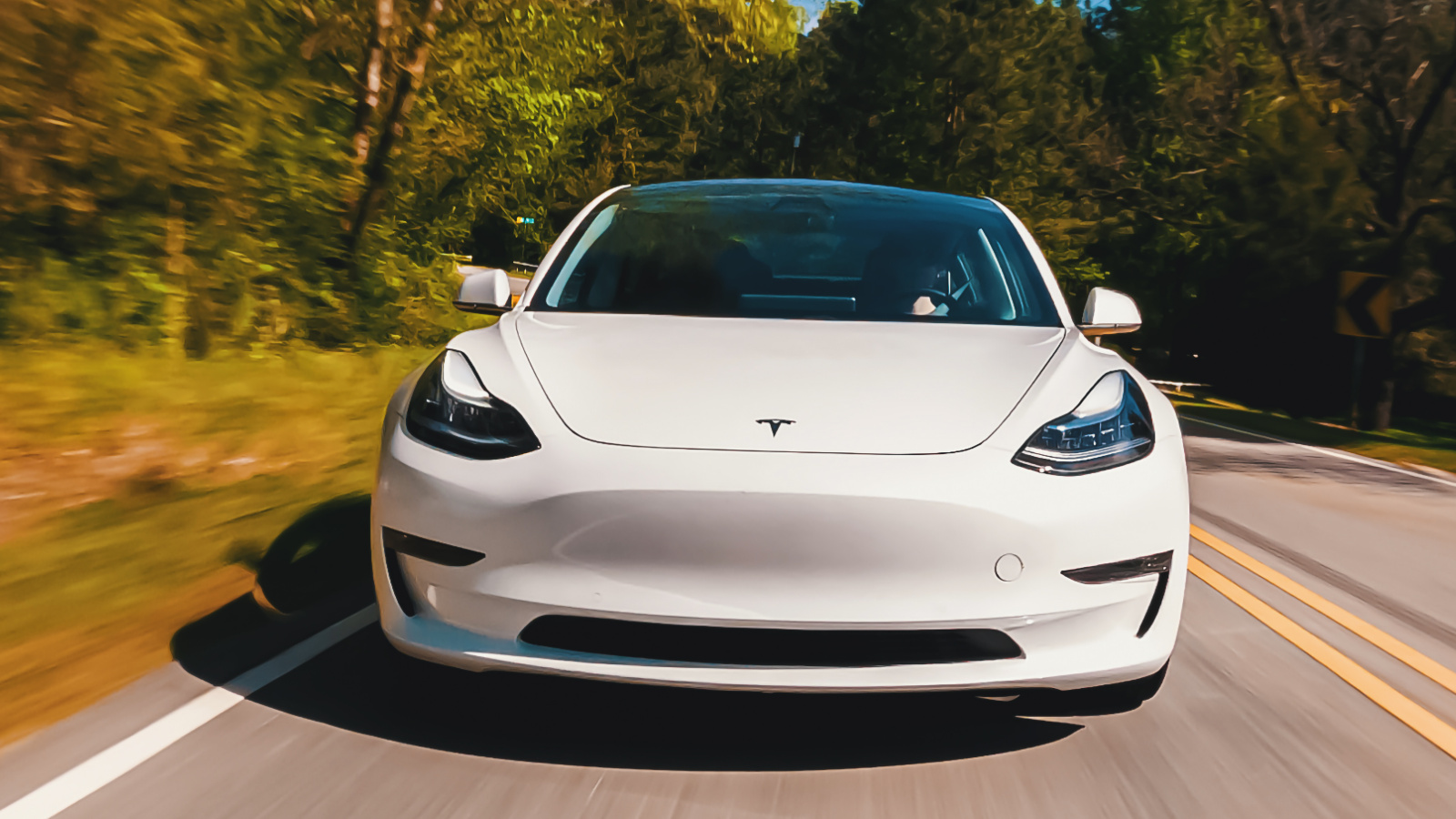
Tesla’s Model 3 is making an impressive comeback in Canada, with new sales estimates showing a sharp increase as more affordable vehicles manufactured in China reach Canadian customers.
According to automotive market data published October 19, 2026, an estimated 5,665 Tesla Model 3 sedans were sold in Canada during the third quarter, representing an 88.8% increase compared with the same period last year. The growth coincides with Tesla’s return to importing Shanghai-built vehicles following major changes to Canada’s electric vehicle tariffs.
However, the recovery comes with an unexpected complication. Tesla has suspended new Canadian orders for its lower-priced China-built Model 3 variants, citing an exhausted import allocation even though federal records show considerable unused capacity under the national quota.
The developments highlight how vehicle pricing, international manufacturing, and Canadian trade policy are reshaping the electric vehicle market.
Tesla Model 3 Sales Nearly Double During the Third Quarter
Tesla’s Model 3 recorded one of the more notable increases in Canada’s automotive market during the third quarter of 2026. According to figures compiled by Best Selling Cars Blog, an estimated 5,665 Model 3 sedans were sold between July and September, representing an 88.8% increase over approximately 3,000 vehicles during the equivalent period in 2025. The Model 3 ranked 21st among Canada’s best-selling vehicle models during the quarter, putting it ahead of several established gasoline-powered vehicles. The increase is especially significant considering the difficult market conditions Tesla faced earlier in the year.
The longer-term figures suggest the improvement extends beyond a single strong quarter. During the first nine months of 2026, estimated Canadian Model 3 sales reached 10,195 vehicles, representing growth of 46.2% compared with the previous year. These are third-party market estimates rather than official Canadian model-level sales figures published by Tesla. That distinction is important when interpreting such precise percentages. Nevertheless, the reported growth suggests the Model 3 benefited from improved availability and more competitive pricing after Tesla resumed importing vehicles from its Shanghai manufacturing operations.
Tesla Outperforms Canada’s Broader Automotive Market
The Model 3’s estimated growth looks particularly strong when compared with the overall Canadian automotive market. DesRosiers Automotive Consultants estimated that approximately 168,000 new vehicles were sold across Canada in September, an increase of 3.4% over the same month in 2025. That marked the fourth consecutive month of year-over-year growth. However, total Canadian vehicle sales remained slightly below the previous year’s pace through September, reflecting continued pressure from household expenses, elevated fuel prices, and uncertainty surrounding international trade.
Tesla’s estimated brand-wide performance was considerably stronger. Best Selling Cars Blog placed Canadian Tesla sales at approximately 10,430 vehicles during the third quarter, representing a 30.4% increase over the same period last year. For the first nine months, estimated sales reached 25,325 vehicles, up 40.7%. Those gains helped Tesla improve its position within Canada’s automotive brand rankings, although its overall volumes remained well below major manufacturers such as Toyota, Ford, and Hyundai. The contrast illustrates how a manufacturer can experience rapid growth in a particular market segment even when the broader industry is struggling to maintain momentum.
Canada’s Chinese EV Tariff Changes Helped Reopen the Market
One of the most important developments behind Tesla’s Canadian recovery was a major change in federal trade policy. In October 2024, Canada introduced a 100% surtax on electric vehicles manufactured in China, adding a substantial financial barrier to imported models. The measure was designed to protect Canadian automotive manufacturing and address concerns about Chinese industrial subsidies. For Tesla, which had previously supplied Canadian customers with Shanghai-built vehicles, the policy complicated its ability to offer competitively priced cars. The company subsequently relied more heavily on vehicles manufactured in the United States.
That situation changed in 2026. Following a new trade arrangement with China, Ottawa implemented an annual import quota of 49,000 eligible Chinese-built electric vehicles beginning March 1. Canada also removed the previous 100% EV surtax, allowing qualifying imports to enter under a 6.1% most-favoured-nation tariff rate with the required permits. This created an opportunity for Tesla to resume sourcing more affordable Model 3 vehicles from Shanghai. However, the quota does not provide unlimited access. Importers must follow federal permit procedures, and the number of vehicles entering under the arrangement is controlled.
Shanghai-Built Model 3s Bring Much Lower Prices to Canada
Tesla’s return to Chinese manufacturing for Canadian-market vehicles coincided with a significant reduction in Model 3 pricing. In May 2026, the company introduced the Model 3 Premium Rear-Wheel Drive at a starting price of C$39,490. The more expensive Premium All-Wheel Drive version was subsequently offered at C$49,990. These prices placed Tesla’s electric sedan closer to the territory occupied by conventional mainstream vehicles, potentially attracting buyers who previously considered the brand too expensive for their budgets.
The price changes were especially striking after some U.S.-built Model 3 configurations had carried Canadian prices approaching C$80,000 during the earlier tariff dispute. Those vehicles were not identical trims, so the difference should not be interpreted as a direct like-for-like price reduction. Nevertheless, the move substantially lowered the entry point for Canadians considering a new Tesla sedan. A family replacing an aging gasoline-powered vehicle, for example, could now compare a Model 3 against conventional midsize sedans without facing the same enormous initial price difference. Although vehicle cost is only one consideration, the combination of lower prices and restored supply appears consistent with the Model 3’s estimated sales recovery.
Tesla’s Shanghai Factory Becomes Increasingly Important to Canadian Supply
Tesla’s Gigafactory Shanghai plays a central role in its international vehicle supply network, manufacturing Model 3 sedans and Model Y crossovers for China and export markets. According to figures from the China Passenger Car Association, the factory recorded 95,366 Model 3 and Model Y wholesale sales during September 2026, up 5% from a year earlier. That figure includes vehicles sold domestically and vehicles intended for export, rather than representing Chinese consumer purchases alone. During the first nine months of the year, Shanghai wholesale volumes reached approximately 743,060 vehicles.
Exports have become an increasingly significant part of the factory’s operations. In September, Tesla exported approximately 30,529 Shanghai-built vehicles, an increase of 58.3% compared with the previous year. The vehicles were shipped to various international markets, including destinations in Europe and the Asia-Pacific region, as well as Canada. The figures do not reveal exactly how many September exports were destined for Canadian customers. However, they demonstrate the manufacturing scale supporting Tesla’s international business. For Canadian buyers, the Shanghai connection has brought access to more competitively priced vehicles, while simultaneously making supply dependent on overseas production, shipping arrangements, and federal import authorization.
Model 3 Growth Surpasses Tesla’s Model Y During the Quarter
The Model 3’s strong performance becomes even more interesting when compared with Tesla’s popular Model Y crossover. Best Selling Cars Blog estimated that approximately 4,055 Model Y vehicles were sold in Canada during the third quarter, representing growth of just 1.4% compared with the previous year. By contrast, the Model 3’s estimated 5,665 sales represented an 88.8% increase. Based on these estimates, the Model 3 accounted for more than half of Tesla’s Canadian vehicle sales during the quarter, suggesting the sedan played an especially important role in the brand’s recent growth.
However, the longer-term figures tell a somewhat different story. Through the first nine months of 2026, estimated Model Y sales reached 12,445 vehicles, up 62.4% from a year earlier. That exceeded the Model 3’s estimated 10,195 sales during the same period. The distinction shows why quarterly performance should not be confused with broader annual trends. The Model 3 experienced the stronger third-quarter rebound, while the Model Y remained ahead across the full nine-month period. Different pricing, vehicle availability, and customer requirements can all influence how the two models perform. The latest numbers reinforce the importance of considering each vehicle separately rather than treating Tesla’s entire lineup as one market.
Canada’s Wider Electric Vehicle Market Is Also Recovering
Tesla’s improving Canadian sales coincide with stronger demand across the country’s electric vehicle market. Statistics Canada reported that 22,716 new zero-emission vehicles were sold in August 2026, representing a 55.1% increase compared with August 2025. Zero-emission vehicles accounted for 13% of all new vehicle sales that month, up from 8.8% a year earlier. These government figures include battery-electric vehicles and plug-in hybrids, making them broader than Tesla’s exclusively battery-electric passenger vehicle sales. Nevertheless, they point toward renewed interest in electrified transportation.
Vehicle registration figures also show improvement. During the second quarter of 2026, Canadians registered 58,811 new zero-emission vehicles, a 26.7% year-over-year increase. Battery-electric registrations grew 37.4%, while plug-in hybrid registrations rose 8%. These figures suggest that Tesla’s recovery is occurring within a larger market shift rather than in complete isolation. Affordability remains a central issue, however. Canadian consumers must weigh purchase prices against charging access, electricity costs, financing rates, and winter driving requirements. Manufacturers able to offer competitively priced vehicles with practical everyday range may be better positioned to benefit as demand continues to recover.
Tesla Unexpectedly Pauses Orders for Its Cheapest Canadian Model 3s
Despite the Model 3’s estimated third-quarter success, Tesla introduced a significant obstacle for prospective Canadian customers in October. On October 12, the automaker stopped accepting new orders for its Shanghai-built Model 3 Premium Rear-Wheel Drive and Premium All-Wheel Drive configurations. Tesla informed customers that strong demand had exhausted what it described as its import quota for Chinese-manufactured vehicles. The company indicated that ordering could resume if the federal government provides additional quota, with March 2027 identified as the expected timeframe.
The suspension removed Tesla’s two most affordable Model 3 configurations from its Canadian ordering system. The Premium Rear-Wheel Drive had been priced from C$39,490, while the All-Wheel Drive version started at C$49,990. That left the U.S.-manufactured Model 3 Performance, priced from approximately C$74,990, as the only Model 3 configuration available for new orders. The difference is substantial: buyers previously considering the entry-level sedan would face an additional C$35,500 to move to the Performance model at those advertised prices. The suspension does not necessarily mean every previously ordered vehicle will be cancelled or that no remaining inventory exists, but it considerably limits new ordering options.
Federal Records Show More Than 33,000 Chinese EV Import Slots Remain Unused
Tesla’s explanation for its order suspension has raised questions because publicly available federal figures show that Canada’s overall Chinese electric vehicle quota has not been exhausted. Global Affairs Canada’s utilization report, updated October 9, indicated that 15,931 vehicles had been counted against the annual quota of 49,000 since March 1. That left 33,069 vehicles’ worth of unused national quota capacity, or approximately 67.5% of the annual total. During the second quota period beginning September 1, only 328 vehicles had been recorded against the available allocation by the reporting date.
These figures do not necessarily contradict Tesla’s statement about its own position. Canada’s published quota regulations provide for permits to be issued on a first-come, first-served basis but also allow the government to reserve capacity to ensure equitable access among manufacturers. Additionally, the public utilization report does not establish how many permits may have been issued for vehicles that have not yet arrived. Global Affairs Canada confirmed to Drive Tesla that it was consulting companies about the remaining quota while declining to disclose company-specific details. Consequently, there is insufficient public information to determine precisely why Tesla suspended orders while significant national import capacity remained available.
The Next Test Will Be Whether Tesla Can Sustain Its Canadian Momentum
Tesla’s estimated sales recovery demonstrates how quickly the competitive position of an electric vehicle can change when pricing and trade conditions improve. The Model 3’s third-quarter increase was substantial, but maintaining that momentum could prove more difficult if its affordable configurations remain unavailable for several months. A customer planning to purchase a vehicle before winter may not be willing to wait until March 2027 for ordering to potentially resume. Competing electric and hybrid vehicles could become more attractive, particularly if manufacturers offer immediate delivery or favourable financing arrangements.
Another consideration is Canada’s federal Electric Vehicle Affordability Program, which offers incentives of up to C$5,000 in 2026 for qualifying vehicles. The program generally requires eligible imported vehicles to originate in countries with Canadian free-trade agreements, meaning the Shanghai-built Model 3 does not qualify simply because its price falls within the program’s limits. For Tesla, the challenge is therefore about more than lowering sticker prices. Availability, government policy, incentives, and consumer confidence will all influence its next sales results. The estimated 88.8% increase shows how much ground the Model 3 regained during the summer, but the final months of 2026 will provide a more demanding test of whether that progress can continue.