














China’s automotive industry is no longer competing on price alone, and a senior Hyundai executive believes the transformation could threaten some of Europe’s most established carmakers. After attending the 2026 Paris Motor Show, Hyundai Motor and Kia executive vice-president Lee Jae-kyu expressed alarm at Chinese vehicles offering attractive designs and competitive technology at prices he estimated were approximately US$10,000 below European alternatives. Speaking at an internal innovation event in South Korea on October 19, Lee warned that European manufacturers could face serious financial difficulties if they fail to respond. His comments come as Chinese brands expand their European market share, introduce increasingly sophisticated electric vehicles, and challenge assumptions about manufacturing quality. For traditional automakers, the competition is becoming a test of whether decades of established brand recognition can withstand a new generation of lower-priced rivals.
Hyundai Executive Says the Paris Motor Show Revealed a Troubling Competitive Gap
Lee Jae-kyu, executive vice-president responsible for Vehicle Development 1 at Hyundai Motor and Kia, delivered his warning during the companies’ 2026 Idea Festival at their Namyang Research and Development Center in Hwaseong, South Korea. He had recently returned from the Paris Motor Show, held October 12–18, where Chinese manufacturers displayed vehicles alongside established European brands. Lee described being deeply troubled by the comparison, saying Chinese vehicles offered appealing designs at prices roughly US$10,000 lower than competing European offerings. He suggested that Europe’s automotive manufacturers could face severe financial consequences if the competitive imbalance continues.
The remarks were particularly striking because they came during an event intended to celebrate employee creativity rather than announce a corporate restructuring or financial forecast. Lee also acknowledged that Hyundai and Kia could face similar challenges from Chinese competitors. However, his warning was an executive’s assessment based on what he observed at the exhibition, not a formal industry-wide pricing study or a prediction that every European manufacturer would fail. His broader message was that even successful automotive companies must improve their products and operating efficiency to remain competitive.
Chinese Automakers Dominated Attention at the 2026 Paris Motor Show
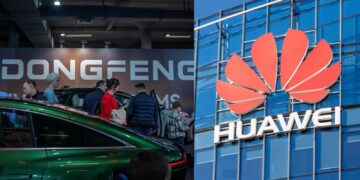
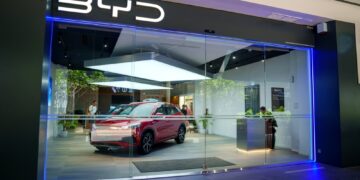
The scale of China’s automotive ambitions was unmistakable at the Paris Motor Show. A record 20 Chinese vehicle brands participated in the October exhibition, approximately twice the number represented in 2024. Established manufacturers such as BYD and Chery appeared alongside newer international contenders including Aito and Avatr. Their displays featured electric SUVs, plug-in hybrids, advanced driver-assistance technology, and increasingly sophisticated interiors. Several Chinese manufacturers were also targeting the premium market, traditionally dominated by German brands such as BMW, Mercedes-Benz, and Audi.
For industry executives attending the event, the significance extended beyond the number of Chinese exhibitors. Companies including BYD’s Denza division, Geely’s Zeekr brand, and Changan’s Avatr were emphasizing rapid charging, digital technology, and passenger comfort rather than relying exclusively on low prices. The displays challenged the traditional perception that Chinese manufacturers compete primarily by offering inexpensive vehicles with limited refinement. However, an impressive exhibition vehicle does not automatically establish long-term reliability, safety, or customer satisfaction. Those qualities must still be demonstrated through independent testing and ownership experience. Nevertheless, the Paris event showed why established manufacturers increasingly regard China’s automotive industry as a serious competitor across multiple price categories.
The US$10,000 Price Difference Is Significant, but Not Universal
Lee’s estimate that Chinese vehicles were approximately US$10,000 cheaper than European alternatives is among the most striking elements of his warning. On a vehicle selling for US$35,000, a US$10,000 difference would represent nearly 29% of the purchase price. That amount could influence a buyer’s decision as strongly as exterior styling, brand loyalty, or technological features. However, the executive did not publish a detailed list of the vehicles, equipment levels, or market-specific prices behind his comparison. The figure should therefore be understood as his assessment of the competitive gap he observed, rather than a verified average across the entire industry.
Actual European prices demonstrate why careful comparisons matter. In France, BYD advertises its Dolphin Surf electric city car from €19,990, while published pricing for Renault’s electric Twingo starts at approximately €19,490. The European model is therefore slightly less expensive at the entry level in this particular comparison. Equipment, battery capacity, driving range, charging performance, and purchase incentives also affect the overall value. These examples do not invalidate Lee’s warning; instead, they show that Chinese manufacturers have become especially competitive in particular vehicle categories without necessarily being cheaper than every European alternative.
China’s Battery Manufacturing Advantage Helps Explain Its Lower Prices
One reason Chinese automakers can offer competitive prices is the scale of their battery manufacturing industry. According to the International Energy Agency’s Global EV Outlook 2026, battery pack prices in China were approximately 35% lower than those in Europe during 2025. China also accounted for more than 80% of global battery cell production. Its manufacturers benefit from extensive domestic supply chains covering battery materials, components, manufacturing equipment, and vehicle assembly. These advantages can reduce transportation costs, shorten production timelines, and make it easier to coordinate changes between suppliers and automakers.
Battery chemistry also contributes to the difference. Lithium iron phosphate batteries, commonly known as LFP batteries, represented more than 55% of global electric vehicle battery deployment in 2025. They generally cost less than nickel-rich alternatives because they avoid expensive materials such as cobalt and nickel. Chinese companies have developed considerable expertise in producing these batteries efficiently. However, lower manufacturing expenses are only part of the explanation for cheaper vehicles. Intense domestic competition, factory utilization, government support, and manufacturer pricing strategies also influence retail prices. A cheaper battery does not automatically produce a US$10,000 vehicle-price advantage, but it gives manufacturers an important starting point.
Chinese Automakers Are Winning Market Share as European EV Demand Accelerates
The competitive threat described by Lee is already visible in European vehicle registrations. Schmidt Automotive Research reported that Chinese manufacturers captured 10.7% of new passenger-car sales across 18 Western European markets during the second quarter of 2026, compared with 5.7% a year earlier. That means their combined share nearly doubled within 12 months. The figures include Chinese manufacturers competing across different powertrains, not just fully electric vehicles. Brands such as BYD, MG, and Chery have expanded their offerings to include plug-in hybrids and conventional vehicles, providing alternatives for customers who are not ready to switch entirely to electric transportation.
At the same time, Europe’s electric vehicle market is expanding rapidly. Data released on October 19 showed that battery-electric registrations increased 70.3% year over year in September across 17 monitored European markets. Approximately 300,202 fully electric vehicles were registered during the month, representing 32.6% of new-car sales in those markets. The figures demonstrate substantial consumer interest in electric transportation, supported by higher fuel costs, government incentives, and a growing selection of affordable models. European manufacturers are benefiting from this demand as well, but Chinese brands are competing aggressively for the same customers. The result is a market where sales opportunities are expanding while the pressure to deliver better value becomes increasingly intense.
Hyundai’s Own Leadership Has Already Raised Similar Concerns
Lee’s comments reflect concerns that have been building within Hyundai’s senior management. In September 2026, Hyundai Motor president and chief executive José Muñoz warned that Chinese manufacturers were gaining ground in markets including Italy, Spain, and France. According to Muñoz, Chinese vehicles were selling for approximately 30% to 40% less than competing models in certain European markets. He also cautioned that the United States could eventually experience similar competitive pressures if restrictions on Chinese vehicle imports were significantly relaxed. Like Lee’s US$10,000 comparison, those percentage estimates describe particular competitive conditions rather than a universal discount applicable to every vehicle.
Hyundai is responding through a substantial investment and product-development strategy. At its August 2026 CEO Investor Day, the automaker reaffirmed its target of 5.55 million global vehicle sales by 2030, with electrified vehicles representing 60% of its sales mix. The company also aims to increase annual European EV sales from approximately 116,000 in 2025 to more than 420,000 by 2030. Its plans include introducing or refreshing more than 100 products globally and improving profitability through manufacturing efficiency, lower material costs, and regional production. The strategy suggests Hyundai recognizes that maintaining competitiveness will require both technological improvements and more efficient operations.
Hyundai Is Looking to Employee Innovation for Its Next Competitive Advantage
Despite his pessimistic assessment of European manufacturers, Lee found reasons for optimism during Hyundai and Kia’s Idea Festival. The event, now in its 17th year, encourages employees to develop practical innovations and turn them into functioning prototypes. Six teams reached the 2026 finals after spending approximately four months developing their concepts. The grand prize went to a team called MSV2, which created a tri-fold luggage board designed to make vehicle cargo spaces more flexible. The system allows sections of the trunk floor to fold against the rear seats, making it easier to accommodate bulky objects such as unfolded strollers or tall plants.
Other projects focused on everyday transportation challenges. One team developed adjustable seating intended to accommodate growing children, while another introduced technology that could reduce motion sickness by coordinating interior lighting with vehicle movement. Researchers also demonstrated assistance technology for people with visual impairments and an AI-based child-monitoring system. Hyundai has previously incorporated employee competition ideas into production vehicles, including a multifunctional console concept used in the Santa Fe. After reviewing the prototypes, Lee expressed renewed confidence in the company’s engineering talent. His reaction underscored an important point: competing with Chinese manufacturers will require useful innovations that improve ownership experiences, not simply more expensive technology.
European Automakers Are Fighting Back With Cheaper EVs and Familiar Designs
European manufacturers are responding to Chinese competition by focusing on affordability, quicker development, and familiar vehicle designs. Volkswagen introduced the electric ID. Polo in 2026, with German pricing starting at €24,995. Renault has revived the Twingo as a small electric city car, while Stellantis unveiled a modern interpretation of Citroën’s iconic 2CV at the Paris Motor Show. The Citroën concept is intended to lead to a European-built production model by 2028, with a target starting price of approximately €15,000. These developments suggest that European manufacturers recognize the importance of competing in lower-priced electric vehicle categories.
However, affordability is only part of the response. Automakers are also trying to improve production efficiency and reduce the time required to develop new vehicles. Renault has highlighted its ability to bring the electric Twingo from development to production in approximately 21 months, considerably faster than the development cycle of its predecessor. Meanwhile, Stellantis is working with Chinese manufacturer Leapmotor on technology and vehicle-development projects, including a planned midsize electric SUV for Opel. Such partnerships demonstrate that European manufacturers are increasingly willing to learn from Chinese engineering and manufacturing practices. The challenge will be turning those lessons into vehicles that remain profitable while maintaining the reliability, safety, and brand qualities customers expect.
European Tariffs May Slow Chinese Imports but Cannot Eliminate Competition
European policymakers are also trying to protect domestic manufacturers from the rapid increase in Chinese vehicle imports. In October 2024, the European Commission introduced additional duties on battery-electric vehicles manufactured in China after concluding that certain producers benefited from unfair subsidies. The definitive countervailing duties included 17% for BYD, 18.8% for Geely, and 35.3% for SAIC, on top of ordinary import tariffs. Chinese manufacturers subsequently increased their attention to plug-in hybrids, which were not covered by the same battery-electric vehicle duties. In October 2026, the EU and China reached a preliminary understanding intended to restrict Chinese hybrid imports to approximately 350,000 vehicles in 2027.
Yet Chinese manufacturers are increasingly responding by considering production facilities inside Europe itself. BYD is preparing to begin passenger-car manufacturing in Hungary and is examining opportunities for two additional European factories, with France among the potential locations. Producing vehicles locally could reduce exposure to certain import duties while creating European employment and supplier relationships. France and Germany also announced a joint automotive policy approach on October 16, emphasizing European manufacturing, investment, and regulatory flexibility. Those proposals still require broader European agreement. For Hyundai and other established manufacturers, the message is clear: tariffs may change competitive conditions, but they cannot permanently remove the need to develop attractive vehicles at sustainable prices.
Canada’s Changing EV Market Could Bring Similar Price Competition
The competitive developments in Europe are particularly relevant to Canada, where government policy has recently created new opportunities for Chinese electric vehicle manufacturers. On March 1, 2026, Ottawa replaced its previous 100% surtax on Chinese-made EVs with an annual import quota initially allowing 49,000 vehicles to enter at the regular 6.1% tariff rate. The arrangement is also intended to increase access to affordable vehicles, with a growing portion of the quota reserved for EVs carrying an import price of C$35,000 or less. Importantly, that threshold refers to the declared import value rather than the final price paid by Canadian consumers.
Manufacturers are already investigating opportunities to enter the Canadian market. BYD has been exploring dealership locations and vehicle certification requirements, while Geely has announced plans to begin selling vehicles in Canada in 2027. For established brands such as Hyundai, Kia, Toyota, and Volkswagen, the arrival of additional competitors could place greater pressure on vehicle pricing, standard equipment, and financing offers. Canadian consumers may eventually benefit from more choices, but affordability will depend on actual dealership prices, transportation costs, import rules, and available incentives. Buyers will also need to consider winter performance, service networks, replacement parts, and long-term reliability. Lee’s US$10,000 warning does not establish that Chinese cars will be that much cheaper in Canada. It does, however, illustrate why automakers increasingly recognize that brand reputation alone may no longer justify a substantial price premium.