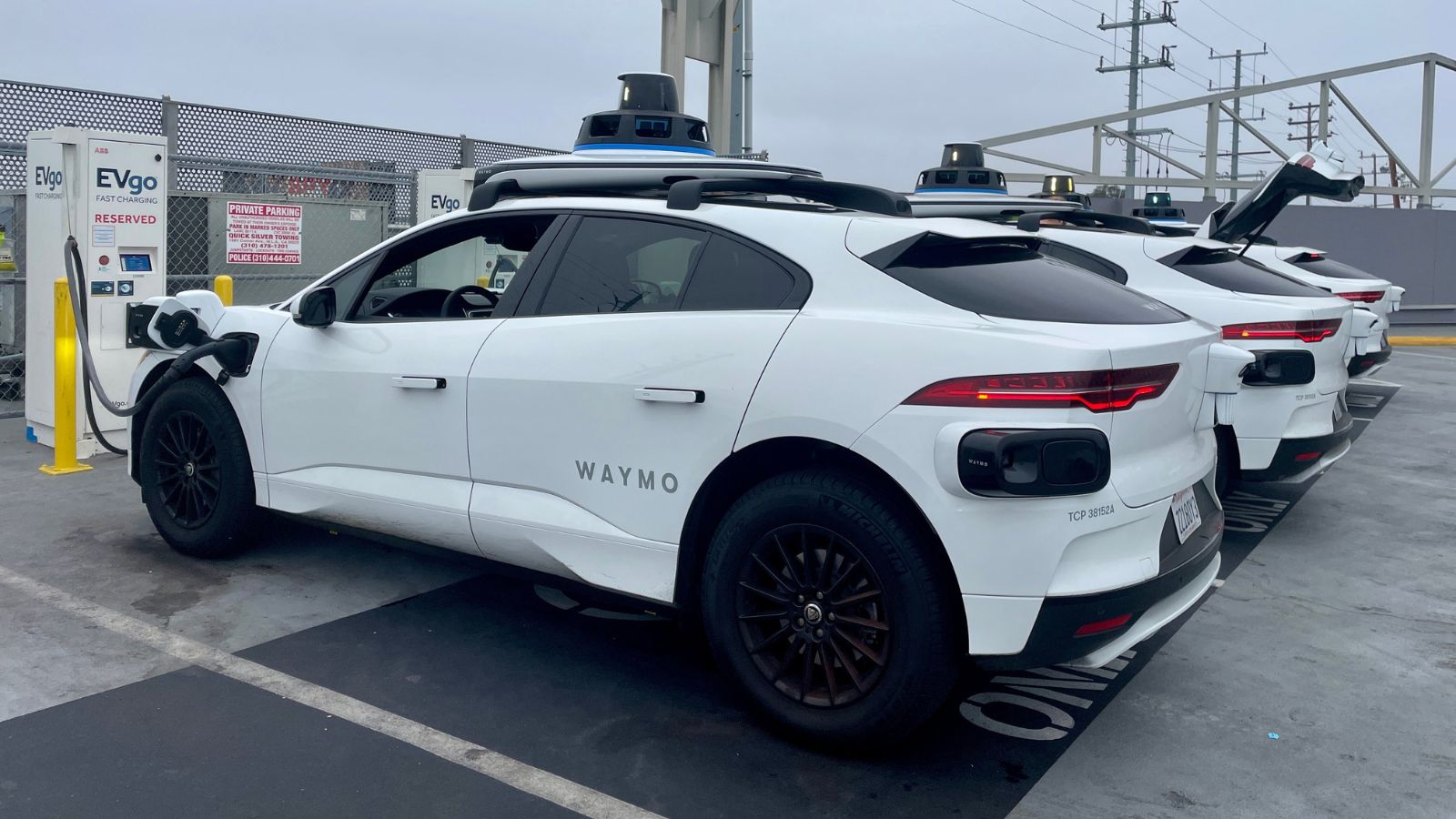
Toronto’s snowy streets could become one of the biggest challenges yet for the rapidly expanding robotaxi industry. Waymo, the autonomous driving company owned by Alphabet, confirmed on October 16, 2026, that it plans to introduce driverless ride-hailing services in Canada’s largest city by 2028.
But before passengers can climb into a vehicle without a human driver, the technology must prove itself in conditions that routinely challenge experienced Canadian motorists.
Snow-covered lane markings, icy intersections, freezing rain, and reduced visibility can interfere with the sophisticated sensors that autonomous vehicles use to navigate.
Researchers at the University of Toronto have already identified significant gaps in winter-driving technology, while Waymo says it has spent years preparing its systems for harsher conditions.
The company’s arrival could reshape urban transportation, but Toronto’s winters will provide a particularly demanding test of whether robotaxis can operate safely throughout the year.
Waymo Confirms Toronto Expansion With a Target of 2028 for Driverless Rides
Waymo officially announced its Canadian expansion on October 16, confirming plans to establish a fully autonomous ride-hailing service in Toronto by 2028. The company, which already operates commercial robotaxis in several major American cities, described Canada as an important next step in its international growth. Its initial operations will look considerably different from the driverless journeys already available in places such as Phoenix, San Francisco, and Los Angeles. Waymo intends to begin with a limited number of fully electric Jaguar I-PACE vehicles driven manually by trained specialists. These vehicles will collect information about Toronto’s streets and help establish detailed digital maps before more advanced autonomous testing begins.
The company’s approach involves several stages, each requiring safety validation and the appropriate regulatory permissions. Human drivers will initially operate the vehicles while systems gather information about intersections, traffic movements, and local road conditions. Autonomous testing with trained specialists behind the wheel will follow as the technology demonstrates its capabilities. Only after additional approvals would Waymo be able to remove the human driver and eventually introduce paying passengers. The distinction is important because approval to conduct early testing is not equivalent to permission to operate a commercial driverless taxi service. Waymo has received authorization to participate in Ontario’s Automated Vehicle Pilot Program, but its proposed 2028 passenger launch remains a target rather than a guaranteed opening date.
Toronto’s Snowstorms Create Challenges That Go Beyond Cold Temperatures
Toronto may not experience the prolonged extreme cold associated with some northern Canadian communities, but its winter weather still presents substantial transportation challenges. Environment and Climate Change Canada’s 1991–2020 climate normals place the city’s average January temperature at approximately -3.5°C, with colder conditions at Toronto Pearson Airport. Snowfall can also arrive in concentrated bursts. During February 2025, Toronto received approximately 53 centimetres of snow across multiple storms within just ten days. The accumulation forced the city to undertake extensive clearing and removal operations, with crews transporting snow to designated storage facilities. Such events can alter the physical appearance of streets and intersections within hours.
Those changes matter enormously to autonomous vehicles. A street that appears straightforward on a clear October afternoon can become a complicated environment after heavy snowfall. Parked cars may be partially buried, lane markings can disappear, and snowbanks can obstruct views of pedestrians approaching intersections. Toronto’s winter maintenance system also treats different streets differently. Major roads and transit routes generally receive priority, while residential streets may remain snow-covered longer. The resulting conditions can vary dramatically across a short journey. For an autonomous vehicle, operating safely requires more than recognizing that snow is falling. It must continuously understand how winter weather changes the road itself and how surrounding drivers, cyclists, and pedestrians respond.
University of Toronto Researchers Warn That Snow Can Distort Critical Sensor Data
The scientific challenges are well documented by researchers studying autonomous vehicles in winter environments. Steven Waslander, a University of Toronto robotics researcher and principal investigator of the WinTOR project, has emphasized that snowfall can interfere with lidar, a technology that measures distances by transmitting laser pulses and analyzing their reflections. During heavy snow or dense fog, particles can scatter these signals, introducing misleading measurements or reducing the system’s ability to identify objects farther away. In a May 2026 interview with IT Brief Canada, Waslander explained that lidar data can become corrupted in difficult weather, forcing developers to modify perception algorithms and driving behaviour to account for changing conditions.
The issue is not limited to theoretical concerns. Research on automotive lidar performance in snowfall, published in 2025, examined how snowflakes weaken laser signals and create reflections that can interfere with object detection. Other studies have demonstrated that rain, fog, and moisture on sensor surfaces can reduce the reliability of cameras and lidar equipment. Radar often performs better in precipitation, but it generally provides different levels of detail than high-resolution lidar and cameras. Combining information from several sensor types can improve reliability, yet it does not eliminate every potential failure. The central challenge is determining when incoming information is sufficiently dependable for the vehicle to continue driving safely. Toronto’s WinTOR program is specifically investigating these problems through sensor filtering, localization, prediction, and control research.
Snow-Covered Lane Markings Could Confuse an Otherwise Accurate Navigation System
One of the most difficult winter-driving problems involves something human motorists often take for granted: knowing where a traffic lane begins and ends. Autonomous systems use a combination of camera observations, detailed maps, and information about surrounding objects to maintain their position on the road. When snow covers lane markings, however, the vehicle loses an important visual reference. University of Toronto researchers have specifically studied whether autonomous systems can identify usable driving paths when painted lines disappear and drivers begin following tire tracks through accumulated snow. Those tracks may not correspond perfectly with the original lane positions, particularly on narrow streets where snowbanks reduce the usable road width.
The challenge becomes even more complicated when other road users behave unpredictably. A delivery van may stop farther from the curb because accumulated snow blocks the usual loading area. Pedestrians may walk closer to moving traffic when sidewalks are difficult to navigate. Snowplows can temporarily occupy unusual positions, leaving ridges of snow that change how vehicles must approach intersections. Toronto’s official winter maintenance guidance acknowledges that snowbanks and windrows can restrict traffic flow and obstruct sightlines. For Waymo, this means detailed maps cannot be treated as permanently accurate representations of usable road space. The autonomous driving system must understand real-time conditions and determine whether the safest action is to proceed cautiously, choose another route, or stop.
Ice and Slush Introduce a Separate Challenge Even When Sensors Work Properly
Successfully identifying other vehicles and obstacles does not guarantee that a robotaxi can stop safely. Winter road conditions also affect the physical relationship between a vehicle’s tires and the pavement. Black ice, compacted snow, and slush can dramatically reduce traction, making acceleration, braking, and steering more difficult. Ontario’s Ministry of Transportation warns that slippery roads require longer stopping distances and that bridges, overpasses, and shaded areas may freeze sooner than surrounding pavement. The province also notes that suitable winter tires can shorten braking distances by as much as 25% under certain conditions. These physical limitations affect every vehicle, regardless of whether a human or computer controls it.
For Waymo, the challenge is translating awareness of road conditions into appropriate driving decisions. An autonomous system may correctly detect a pedestrian entering a crosswalk but still need additional stopping distance on an icy surface. It must account for reduced grip before beginning a manoeuvre, rather than simply reacting when traction is lost. Transport Canada recommends adjusting speed, increasing following distances, avoiding sudden steering movements, and using winter tires during cold conditions. These principles apply equally to automated driving. Waslander’s research has highlighted the need for control systems to adapt to changing wheel traction in snowy environments. No amount of computing power can overcome the basic limits of tire grip, which makes vehicle preparation and conservative driving behaviour essential.
Waymo Says Its New Sensors Are Designed to Handle Snow, Rain, and Road Spray
Waymo believes its latest technology can address many of the problems associated with winter driving. In February 2026, the company introduced details of its sixth-generation Waymo Driver, a system designed to expand autonomous operations into more demanding environments. The technology combines high-resolution cameras, lidar, and advanced imaging radar, allowing different sensors to compensate when one type of measurement becomes less reliable. Waymo says its newer camera system includes integrated cleaning equipment to reduce interference from road grime, ice, and precipitation. Its lidar technology has also been redesigned to improve performance in difficult weather, while enhanced radar and software are intended to provide more reliable information during rain and snow.
Those improvements build on years of cold-weather testing. Waymo has conducted winter trials in Upstate New York, Michigan’s Upper Peninsula, and the Sierra Nevada, collecting data from snowy and icy environments. The company also identifies Denver and Detroit as operating cities that experience annual snowfall. Its Toronto information page explains that the system can recognize snowy conditions, clean affected sensors, and adjust driving behaviour as road conditions change. However, the exact sensor-generation configuration of Toronto’s initial Jaguar I-PACE vehicles has not been publicly established in the launch details. Furthermore, testing in snowy American regions does not establish that every future Toronto weather scenario has already been validated. Waymo acknowledges that certain conditions may require operations to be reduced or suspended for safety reasons.
Toronto’s Neighbourhoods Will Become Real-World Testing Grounds
Waymo’s initial testing is expected to reach several different parts of Toronto, providing an opportunity to encounter a wide variety of road layouts and traffic conditions. The company has identified neighbourhoods including St. Lawrence Market, Harbourfront, Roncesvalles Village, Parkdale, Liberty Village, Don Mills, Yorkdale, Leaside, East York, and Etobicoke as areas where mapping and safety validation may take place. These locations encompass different combinations of residential streets, busy commercial corridors, transit routes, and major intersections. According to Waymo, testing generally operates across different hours of the day and night to capture changing traffic conditions, although those typical operating hours should not be confused with a confirmed schedule for every Toronto vehicle.
This approach is particularly valuable during winter because road conditions can change dramatically between neighbourhoods. A main street cleared early in the morning may present relatively straightforward driving conditions, while nearby side streets remain covered with compacted snow. Toronto also presents local challenges involving streetcars, cycling infrastructure, pedestrians, delivery vehicles, and complex intersections. Waymo plans to work with Toronto-based Element Fleet Management to support maintenance, vehicle operations, and other fleet services. The companies anticipate creating hundreds of roles over time as the operation develops. Reliable fleet maintenance will be especially important during winter, when road salt, slush, snow, and freezing temperatures can increase the burden on vehicles and sensors. Establishing a local support network is therefore a significant part of preparing for commercial operations.
Ontario’s Autonomous Vehicle Rules Require More Than a Successful Road Test
Waymo’s Toronto ambitions must also satisfy a regulatory framework designed to manage the risks associated with autonomous technology. Ontario launched its Automated Vehicle Pilot Program in 2016 and expanded its rules in 2019 to permit certain forms of driverless testing. Under the provincial framework, companies seeking permission to test Level 4 or Level 5 vehicles without a human in the driver’s seat face additional requirements. These include demonstrating that the technology is safe, defining the conditions in which it is designed to operate, accepting liability, and providing procedures for safely stopping vehicles when necessary. Applicants must also address interactions with emergency responders and construction zones.
These requirements become particularly relevant during Canadian winters. Provincial regulators need to understand whether an autonomous system can operate safely during snowfall, freezing rain, or rapidly deteriorating road conditions. The testing authorization Waymo has received allows its initial supervised activities, but it does not automatically authorize every subsequent stage of deployment. Ontario’s current passenger automated-vehicle pilot has been extended until October 13, 2027, meaning the regulatory framework will also require attention before a planned 2028 commercial launch. The broader issue is accountability. If a robotaxi encounters a road blocked by snow, becomes immobilized, or cannot safely complete its route, operators need clear procedures for protecting passengers and avoiding disruption to other road users. Those responsibilities remain important even when the technology performs as designed.
Waymo’s American Safety Record Is Encouraging but Does Not Guarantee Canadian Winter Performance
Waymo has accumulated substantial real-world experience operating without human drivers. In its October 16 Toronto announcement, the company reported more than 400 million kilometres of fully autonomous driving and said its vehicles experienced 95% fewer crashes involving serious injuries or worse than human-driver benchmarks in the American cities where it operates. The figures come from Waymo’s own safety analysis, which compares reported robotaxi collisions against estimated human-driving crash rates over comparable distances and locations. Earlier peer-reviewed research using Waymo collision data also found statistically significant reductions in several categories of reported crashes. These findings provide evidence that autonomous technology can deliver meaningful safety benefits under the conditions in which it has already been deployed.
However, transferring those results directly to Toronto would be misleading. Driving safely through clear streets in an American city does not necessarily demonstrate equivalent performance during a Canadian freezing-rain event or heavy snowstorm. The difficulty of autonomous driving depends on the environment, road design, weather, and behaviour of surrounding traffic. Researchers studying winter-ready vehicles emphasize the importance of collecting real-world data under difficult conditions rather than relying exclusively on simulations or clear-weather experience. Public confidence will also depend on how Waymo handles situations that do not involve collisions, such as vehicles blocking intersections or stopping unexpectedly. The goal is not simply to complete a large number of kilometres without serious incidents. It is to demonstrate predictable, reliable behaviour across the full range of conditions the service intends to handle.
Toronto’s Winter Test Could Help Determine the Future of Canadian Robotaxis
The potential benefits of autonomous ride-hailing extend beyond convenience. Waymo says its Toronto service is intended to complement public transit while offering another transportation option for residents and visitors. The company has also begun working with Canadian accessibility organizations, including CNIB, BALANCE for Blind Adults, Community Living Toronto, Connected Canadians, and Epilepsy Ontario. Reliable transportation without the need to drive could provide additional independence for some people with disabilities or mobility limitations. Those benefits, however, depend on a service being available when it is needed. A robotaxi network that operates reliably during mild weather but frequently suspends trips during winter storms would offer a more limited transportation option.
The next stages of testing will help establish what kind of service Waymo can realistically deliver in Canada. The company will need to demonstrate that its vehicles can navigate snow-covered roads, recognize vulnerable road users, respond to changing traction, and make conservative decisions when visibility deteriorates. It must also secure the required approvals before carrying passengers without a human driver. There is no evidence that Toronto’s winter conditions make autonomous transportation impossible, but the research shows why the task is substantially more complicated than reproducing a successful American deployment. For Waymo, the question is no longer whether a computer can drive through an ordinary city street. It is whether that same system can make the right decisions when snow, ice, and unpredictable Canadian weather transform the road around it.