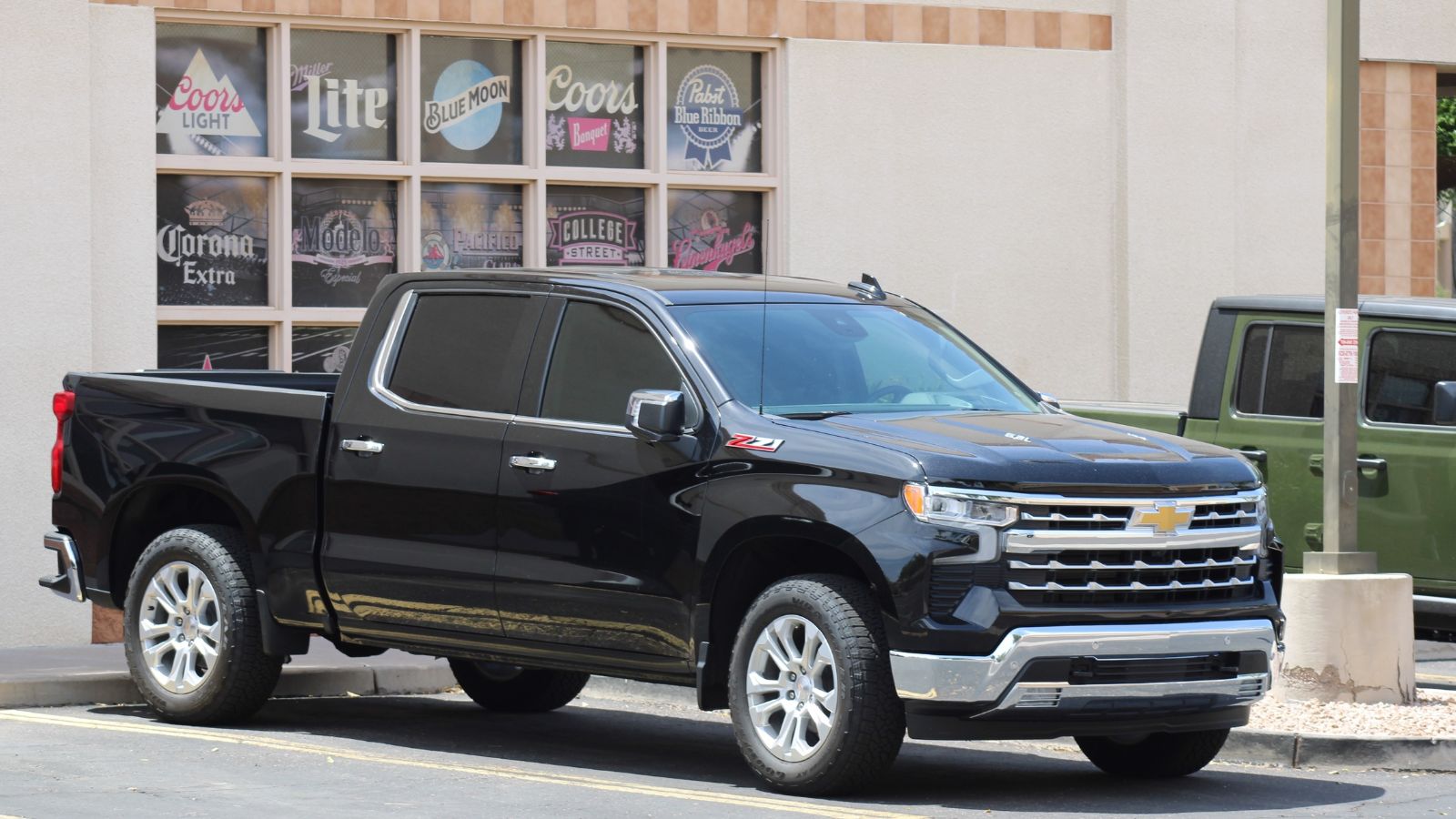
One of the pickups that helped revive General Motors’ Oshawa assembly plant is about to disappear from its production line. GM has confirmed that Chevrolet Silverado 1500 production in Oshawa, Ontario, will end in November 2026 as the automaker moves into its next generation of full-size trucks.
For a workforce that has already experienced a plant shutdown, a rapid reopening and another round of layoffs, the most important part of GM’s announcement may be what is not supposed to happen next: another immediate employment reduction. The company says employment levels are expected to remain unchanged as Oshawa increases Chevrolet Silverado HD production and prepares for future GMC Sierra HD assembly. The change still marks a major shift for one of Canada’s most closely watched auto plants.
November Is Now the Confirmed End of Oshawa’s Silverado 1500
GM spokesperson Jennifer Wright confirmed that production of the light-duty Chevrolet Silverado 1500 at Oshawa Assembly will stop in November. The announcement removes months of uncertainty around the model’s future in Ontario after industry forecasts had increasingly pointed toward Oshawa being left out of GM’s next light-duty truck cycle. Until now, the plant has held an unusual position in the company’s North American network because it has assembled both Silverado 1500 light-duty pickups and heavier Silverado HD trucks on the same production line.
The timing coincides with a major generational transition for Chevrolet’s most important pickup. The redesigned 2027 Silverado 1500 is arriving as GM winds down production of the outgoing truck. Chevrolet has introduced the new model with next-generation 5.7-litre and 6.6-litre V8 engines, an updated TurboMax four-cylinder and significant technology and interior changes. For Oshawa, however, the new generation represents a dividing line: light-duty Silverado production ends while the factory’s future becomes increasingly centred on heavy-duty trucks.
GM Says the Product Loss Will Not Mean Another Immediate Job Cut
Losing a major vehicle program would ordinarily raise immediate fears about layoffs, but GM says that is not its plan for the November transition. The company expects employment levels at Oshawa to remain unchanged as Silverado HD output rises. Unifor Local 222 president Jeff Gray has also said he has not been informed of another coming round of job losses. The goal is to maintain enough heavy-duty production to keep the plant operating with its current two-shift structure even after the Silverado 1500 disappears.
That assurance carries extra weight because Oshawa workers have already absorbed a significant reduction this year. Beginning February 2, GM returned the plant from three shifts to two and said approximately 500 employees would be placed on layoff. The third shift had been added during a period of unusually strong pickup demand and tight post-pandemic inventories. That earlier reduction remains in effect. In other words, GM’s current statement means the November product change is not expected to trigger an additional workforce cut; it does not reverse the roughly 500 layoffs announced earlier in 2026.
Oshawa Is Giving Up a Truck That Represents a Large Share of Its Volume
The scale of the change becomes clearer when estimated production numbers are considered. AutoForecast Solutions vice-president Sam Fiorani expects Oshawa to build roughly 114,000 trucks in 2026, with production divided approximately evenly between the Silverado 1500 and Silverado HD. Those figures are independent industry forecasts rather than GM production guidance, but they suggest the light-duty pickup accounts for tens of thousands of vehicles moving through the plant every year.
Replacing that volume is therefore essential if GM intends to preserve two shifts over the longer term. Fiorani has estimated that Oshawa could eventually produce about 40,000 Sierra HD pickups during that model’s first year at the plant. Unifor, meanwhile, said when bargaining began in August that it represented approximately 2,750 members associated with the Oshawa operation. Local union leaders have made clear that product volume matters as much as simply having a vehicle assigned to the factory. A low-volume program can keep an assembly line operating, but it may not provide enough work to sustain the staffing levels employees have come to depend on.
The GMC Sierra HD Has Become Central to Oshawa’s Employment Strategy
The most important new piece of Oshawa’s future arrived during GM’s recent contract negotiations with Unifor. GM committed an additional C$144 million to bring next-generation GMC Sierra HD production to the Ontario plant. That program will eventually sit beside the Chevrolet Silverado HD, giving Oshawa two heavy-duty nameplates instead of relying solely on Chevrolet once light-duty Silverado assembly ends. Unifor members ratified the broader GM agreements at the end of August, with the deal covering thousands of employees across the company’s Ontario operations.
The C$144 million is only part of GM’s recent spending commitment in Oshawa. It builds on C$343 million previously announced for next-generation truck production and manufacturing improvements, bringing planned investment associated with those programs to nearly C$500 million. GM said in June that approximately C$1.5 billion had been invested in Oshawa since 2020. The money does not make employment immune from future market changes, but it gives the factory new tooling, programs and a more clearly defined role in GM’s heavy-duty pickup network.
The Change Comes Only Five Years After Oshawa’s Remarkable Comeback
Oshawa’s recent history explains why any major production change receives so much attention. Vehicle assembly ended at the historic factory in 2019, leaving thousands of workers facing an uncertain future. GM then reversed course, retooled the facility and restarted truck production in November 2021. The company initially said the reopened operation would create about 1,800 jobs across two shifts while supporting additional work throughout the Canadian supplier network.
Growth came quickly. In 2022, GM added light-duty pickup production and announced a third shift, saying the reopened plant had generated more than 2,600 new jobs. Four years later, in June 2026, Oshawa celebrated another milestone: more than 500,000 Chevrolet Silverado trucks had been produced since the reopening, along with more than one million aftermarket parts. One particularly fitting detail was the identity of the 500,000th truck — a Silverado HD. As Oshawa moves away from the 1500, the heavier version of the pickup is once again becoming the product around which the plant’s future is being built.
The Next-Generation Silverado 1500 Will Be Built Elsewhere
Oshawa’s exit from Silverado 1500 production does not mean Chevrolet is reducing its commitment to the model. Instead, manufacturing is being reorganized as the next generation launches. Industry reporting has placed the redesigned light-duty Silverado at GM’s Fort Wayne Assembly plant in Indiana and Silao plant in Mexico. Both facilities already build light-duty GM pickups, while the outgoing Silverado 1500 has also been produced in Oshawa.
GM Authority has reported that the first next-generation trucks are scheduled to begin emerging from Silao during the October launch period, with Fort Wayne joining the rollout as production expands. GM’s own public launch materials confirm that the redesigned Silverado 1500 is due to go on sale toward the end of 2026, although the automaker has generally described its assembly footprint more broadly as its North American full-size truck plants. That distinction matters: GM itself has now confirmed that Oshawa’s 1500 program ends in November, while some of the detailed plant-by-plant scheduling for the replacement model comes from industry reporting rather than a specific GM production-location announcement.
Tariffs Have Turned Every Canadian Auto Allocation Into a Political Issue
The Oshawa transition is unfolding during one of the most uncertain periods for cross-border vehicle manufacturing in decades. Unifor has repeatedly argued that U.S. tariffs on Canadian-built vehicles are encouraging automakers to move production south of the border. When GM announced its reduction from three Oshawa shifts to two earlier this year, the union blamed the tariff environment and accused the company of shifting production to the United States. GM disputed a direct connection, saying the third shift had been temporary and was being removed as pickup inventories normalized.
Ottawa has also used trade policy to pressure automakers to maintain Canadian production. Canada’s automotive tariff-remission system allowed qualifying companies to import certain U.S.-assembled vehicles without Canadian counter-tariffs when domestic production and investment requirements were met. The federal government cut GM’s annual remission quota by 24.2 per cent in 2025 after citing reduced production in Oshawa and Ingersoll, and the framework was subsequently extended into the 2026-27 period. Meanwhile, Washington’s tariff policy remains another major uncertainty, with President Donald Trump threatening significantly higher duties on Canadian vehicles beginning in 2027.
The Biggest Question Is What Happens Between November and the Sierra HD Launch
GM has committed to bringing the next-generation GMC Sierra HD to Oshawa, but one important detail remains unsettled publicly: exactly when regular production begins. Local 222 president Jeff Gray has indicated that the union expects the new GMC trucks to start rolling out of Oshawa by late 2028. GM has confirmed the investment and future product allocation but has not publicly committed to that specific start date. That leaves a transition period in which greater Silverado HD production will carry much of the responsibility for maintaining plant volume.
There is already evidence that Oshawa remains firmly inside GM’s heavy-duty strategy. In September, GM confirmed that the updated 2027 Chevrolet Silverado HD would continue to be assembled in Oshawa as well as Flint, Michigan, while current Sierra HD production remains in Flint. The longer-term plan ultimately gives Oshawa both Chevrolet and GMC heavy-duty models. For workers, that makes the November announcement more complicated than a straightforward loss. Canada is losing Silverado 1500 assembly, but Oshawa is not closing. The plant is being reshaped around fewer light-duty trucks, more heavy-duty production and a future GMC program that could determine how secure its current workforce really is.