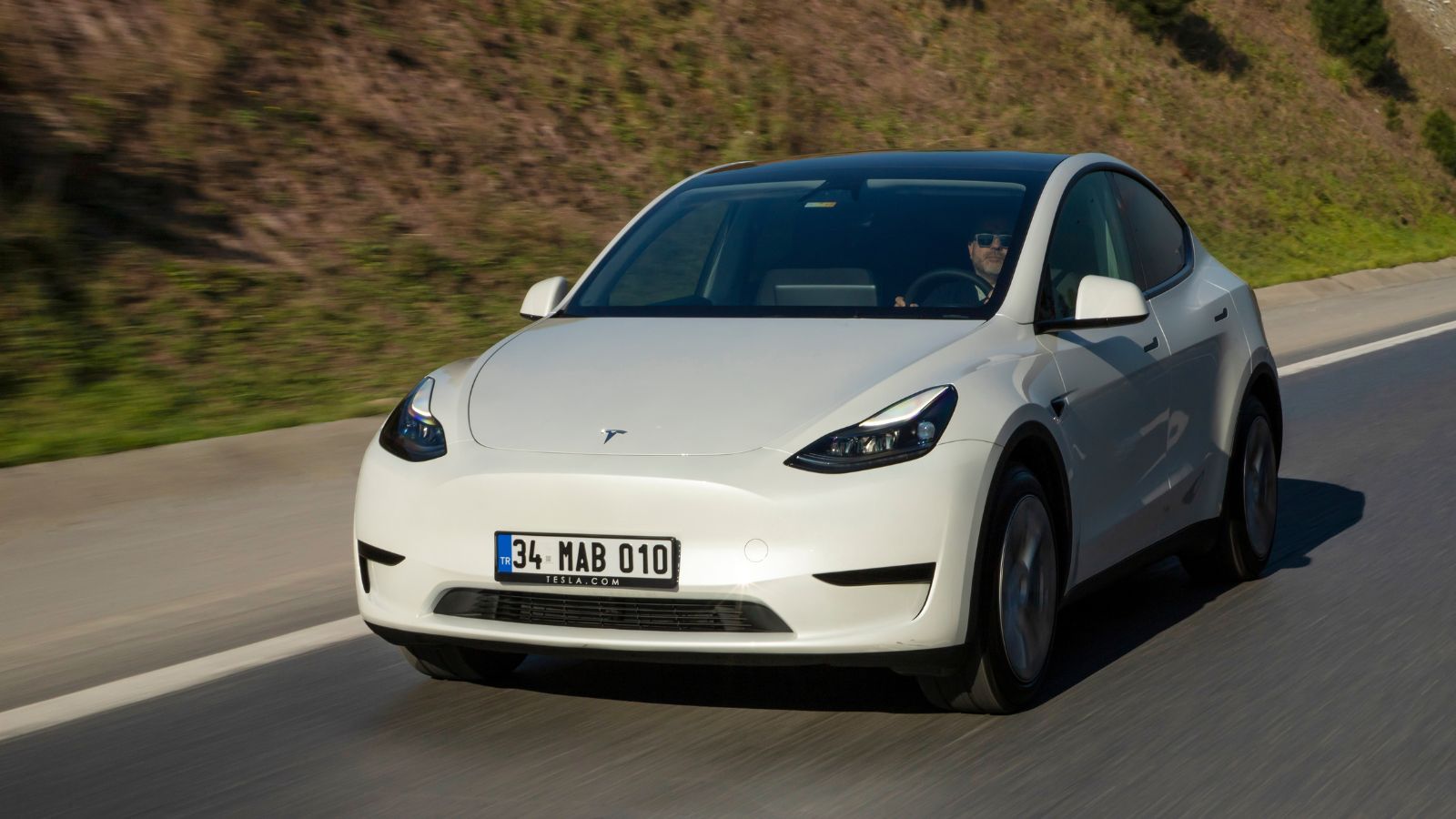
For a brief moment, Canadian Tesla buyers appeared to be getting a useful capability already spreading through the company’s lineup elsewhere. Tesla’s Canadian website listed Vehicle-to-Load functionality for the Model Y Premium All-Wheel Drive and Model Y Performance, allowing electricity from the vehicle’s battery to be sent through its charge port to external devices. Less than 24 hours later, that specification disappeared. The reversal is especially unusual because the advertised capability was precise—120 volts and 20 amps through Tesla’s Outlet Adapter—rather than a vague promise of a future feature. Tesla has not publicly explained why the listing appeared or why it was removed, leaving Canadian buyers with another round of questions about exactly which Model Y vehicles are equipped for bidirectional power features.
A Feature That Appeared—and Then Vanished
The change happened unusually quickly. Screenshots captured by Drive Tesla Canada on Thursday evening showed Tesla’s Canadian Model Y specifications listing “Vehicle to load (120V 20A AC) with charge port and Outlet Adapter.” The wording appeared for both the Model Y Premium All-Wheel Drive and the Model Y Performance. By Friday afternoon, the specification had disappeared from Tesla’s Canadian website. Drive Tesla reported the entire cycle—from the feature appearing to its removal—as taking less than 24 hours.
What makes the reversal noteworthy is that Tesla did not simply alter a piece of descriptive marketing language. The removed specification described a concrete electrical capability, including voltage, amperage and the accessory required to use it. As of the latest available information, Tesla has not publicly explained whether the Canadian listing was published accidentally, appeared ahead of a planned rollout, or reflected a capability that is technically present but not yet supported in Canada. Those possibilities remain speculation. What can be established is simpler: Tesla displayed the feature and then removed it.
What Tesla Had Actually Promised Canadian Buyers
Vehicle-to-Load, commonly shortened to V2L, allows an electric vehicle’s large traction battery to supply electricity to equipment outside the car. Tesla’s brief Canadian specification described a 120-volt, 20-amp AC output delivered through the Model Y’s charge port with the company’s Outlet Adapter. At those stated limits, the maximum theoretical output is 2.4 kilowatts. That is substantially more useful than an ordinary USB port or low-power accessory socket and turns a parked EV into a potentially valuable portable electricity source.
Tesla’s current Model Y documentation describes the Outlet Adapter as an accessory for powering small-to-medium appliances and tools from the charge port. The vehicle itself can also indicate whether the necessary capability exists: Tesla instructs owners to open Controls, Software and Additional Vehicle Information and look for Powershare support. If support is enabled, the vehicle has the functionality Tesla’s software recognizes as necessary for power output. That makes the brief Canadian configurator listing particularly significant because it appeared to turn an underlying technical capability into an advertised feature for buyers.
The Required Adapter Remains a Major Canadian Problem
Even while the Model Y specification briefly advertised V2L, the Canadian accessory store told a different story. Tesla’s Canadian Outlet Adapter page currently lists the accessory at C$110, but it is marked out of stock. More importantly, the page states that the adapter is currently available only with Cybertruck. Tesla also says the accessory works with its Gen 3 Mobile Connector. That means Canadian Model Y shoppers were briefly being shown a vehicle feature without a straightforward official Canadian path to obtain the hardware needed to use it.
For someone buying an EV partly because it could provide portable power while camping, during a blackout or at a job site, that discrepancy is more than a technical footnote. The feature depends on the complete chain working together: compatible vehicle hardware, appropriate software, the Mobile Connector where required and the Outlet Adapter itself. Advertising only one part of that chain can create expectations that the actual ownership experience cannot meet. Tesla may eventually expand Canadian accessory compatibility, but its current shop does not establish that such an expansion has happened for the Model Y.
What 2.4 Kilowatts of Output Could Actually Do
A 120-volt connection limited to 20 amps works out to a maximum of 2,400 watts. Tesla markets its Outlet Adapter as a way to run equipment such as lights, laptops, refrigerators and power tools using energy stored in a compatible vehicle. That can be surprisingly useful. A Model Y parked beside a campsite could supply lighting and electronics without a conventional generator, while a homeowner dealing with an outage could potentially keep selected essential devices operating as long as their combined demand remained within the system’s limits.
There are important boundaries, however. Tesla’s Model Y manual says the Outlet Adapter is intended for relatively modest external loads and warns about appliances with demanding heating elements or heavy-duty motors. More critically, Tesla explicitly says the adapter cannot be used to power an electrical panel and is not itself a bidirectional inverter for a home. In other words, the removed Canadian feature should not be confused with a full whole-house backup system. V2L is essentially portable AC power from the vehicle; supplying a building through its electrical system requires a different level of hardware and integration.
The U.S. Rollout Makes Canada’s Reversal More Noticeable
South of the border, Tesla’s documentation is considerably clearer. Its U.S. Outlet Adapter page lists the accessory for Cybertruck and compatible Model Y variants, including Model Y Premium and Model Y Performance vehicles meeting Tesla’s production requirements. The American accessory is listed at US$80. Tesla’s broader U.S. Powershare documentation also says Model 3 and Model Y vehicles ordered in the United States and Puerto Rico after October 1, 2026 are Powershare-capable by default, while some earlier vehicles can qualify as well.
That contrast is what makes the Canadian episode harder to dismiss as a routine website change. Tesla already has the technology operating within the Model Y family, and it has created official support documentation for those vehicles in the United States. Canada, meanwhile, has an Outlet Adapter page that remains limited to Cybertruck even after the Model Y briefly gained an explicit V2L specification. Regional differences in hardware, certification, manufacturing batches or rollout timing could explain the gap, but Tesla has not publicly identified which factor is responsible for the Canadian situation.
Tesla’s Canadian Documentation Is Not Fully Aligned
The picture becomes even more complicated when Tesla’s own Canadian pages are compared. The current Canadian Model Y owner’s manual includes an entire section describing how to power devices through the charge port. It tells owners that availability depends on the region and vehicle configuration and instructs them to check Additional Vehicle Information for an enabled Powershare-support indicator. The manual also describes the Outlet Adapter’s 2.4-kW maximum output and explains how the battery is depleted while external devices are operating.
Tesla’s Canadian Powershare support page, however, remains much more Cybertruck-focused. It describes Cybertruck as the vehicle capable of Powershare in Canada and says all Cybertruck trims are capable by default. Its Canadian Outlet Adapter instructions also continue to specify Cybertruck software requirements. Those pages are not necessarily addressing exactly the same configurations, but they do not give Canadian Model Y owners the clean, consistent answer found in the U.S. documentation. Until Tesla synchronizes the configurator, shop, manuals and support pages, customers are left interpreting several pieces of information that do not fit neatly together.
Canada Has Already Seen Model Y V2L Confusion Before
This is not the first time Canadian Model Y owners have encountered uncertainty over the feature. In April 2026, Drive Tesla Canada reported that Canadian Model Y Performance vehicles were not delivering the V2L functionality buyers expected even though Tesla’s Canadian Outlet Adapter listing had previously mentioned Model Y Performance compatibility. According to that reporting, some owners encountered incompatibility after purchasing related hardware, while Tesla representatives reportedly gave differing explanations about whether the issue involved Canadian approval or the equipment installed in particular vehicles.
Tesla subsequently removed Model Y Performance compatibility from the Canadian Outlet Adapter listing, leaving Cybertruck as the supported vehicle. That history gives the latest website reversal additional significance. If this were the first Canadian documentation mismatch, a temporary publishing mistake would be relatively easy to understand. Instead, it follows months of uncertainty about whether Canadian Model Y vehicles contain the required hardware and whether the feature can be enabled through software. The repeat occurrence increases the importance of an explicit model-year and VIN-based compatibility statement from Tesla rather than another short-lived website specification.
V2L Is Different From Tesla’s New Home-Backup Capability
The terminology surrounding EV power export can easily become confusing. Vehicle-to-Load generally means sending electricity to an external device or appliance. Vehicle-to-Home and Vehicle-to-Building involve connecting an EV to a building’s electrical system, while Vehicle-to-Grid can allow power to flow back into the wider electricity network. The U.S. Department of Energy groups these technologies under the broader concept of bidirectional charging and notes that compatible EVs can function as mobile energy-storage resources when matched with appropriate infrastructure.
Tesla is now expanding some of those broader capabilities in the United States. Its U.S. Powershare documentation says compatible Model 3 and Model Y vehicles can work with Powerwall and a suitable Wall Connector to extend home backup during an outage. The Canadian Powershare page does not currently offer the same Model 3 and Model Y support. That distinction matters for interpreting the removed specification. The Canadian listing concerned 120-volt V2L through an Outlet Adapter; it was not an announcement that Canadian Model Y vehicles could suddenly back up an entire house. Removing V2L also does not, by itself, reveal Tesla’s future Canadian plans for home backup.
What Canadian Model Y Buyers Can Reliably Check Right Now
For now, the safest approach is to treat the current Canadian documentation—not the short-lived specification—as the available feature set. Tesla’s Canadian Outlet Adapter page still identifies Cybertruck as the supported vehicle and the Model Y configurator no longer advertises V2L. Owners can also perform the check Tesla describes in the Model Y manual by opening Additional Vehicle Information and looking for Powershare support. That vehicle-specific indicator is more useful than assuming every Model Y with the same trim badge contains identical power-conversion hardware.
For buyers who saw the V2L specification before it disappeared, the episode is also a reminder to retain copies of the specifications displayed when an order is placed, particularly when a newly introduced feature influences a purchase decision. What remains unknown is whether Tesla removed the wording because the feature was listed prematurely or because Canadian vehicles will not receive it in their present configuration. Tesla has demonstrated that V2L works on Model Y vehicles in other markets. The unanswered question is not whether Tesla can offer it, but exactly when—and on which Canadian vehicles—the company intends to do so.