


























Canada’s progress on greenhouse gases moved in the wrong direction in 2025. A new early estimate from the Canadian Climate Institute’s 440 Megatonnes project puts national emissions at approximately 691 million tonnes of carbon-dioxide equivalent, about six million tonnes higher than in 2024. The increase was relatively small at 0.9%, but its timing is significant: Canada is approaching its 2030 climate deadline having cut emissions only 9.5% from 2005 levels, far short of its 40% to 45% target. The Institute argues that reversing course requires much faster clean electrification, including following through on Ottawa’s commitment to achieve emissions reductions equivalent to 75% electric-vehicle sales by 2035. Cars are only one part of the problem, however. Higher natural-gas consumption in buildings and electricity generation accounted for much of the latest increase, showing why electrifying vehicles without simultaneously cleaning and expanding the power grid will not be enough.
The Six-Million-Tonne Increase Reverses Recent Progress
The Canadian Climate Institute estimates that national greenhouse-gas emissions reached 690.9 megatonnes of carbon-dioxide equivalent in 2025, compared with roughly 684.7 megatonnes in 2024. Rounded, that is an increase of about six million tonnes, or 0.9%. It represents a reversal after official Environment and Climate Change Canada data showed emissions declining slightly in 2024. Canada is still emitting less than it did before the pandemic and substantially less than at its 2007 peak, but the latest movement is upward rather than toward the increasingly steep reductions required this decade.
The numbers also reveal how difficult the remaining task has become. The Institute calculates that 2025 emissions were only 9.5% below the 2005 level. Canada’s legally established 2030 objective is 40% to 45% below 2005 emissions, followed by a 45% to 50% reduction by 2035 and net zero by 2050. Five years before the 2030 deadline, the country therefore remains far from the promised reduction range. A one-year increase does not determine the long-term trend, but it leaves even less room for gradual progress.
The New Estimate Is Early—and Should Not Be Confused With Ottawa’s Inventory
The 691-megatonne figure is not yet Canada’s official greenhouse-gas inventory for 2025. It comes from the Early Estimate of National Emissions, developed by 440 Megatonnes in collaboration with Stiebert Consulting. The project exists because Canada’s official National Inventory Report arrives with a substantial time lag. The early estimate uses current economic information combined with historical relationships involving energy consumption, emissions intensity, efficiency and decarbonization to provide a faster picture of where emissions are heading.
That distinction matters when interpreting precise numbers. Environment and Climate Change Canada can subsequently revise historical emissions when methodologies or underlying datasets improve, and the Institute itself notes that its two most recent years are estimates. Its database currently places 2024 emissions at 684.7 megatonnes, very close to the federal government’s latest official figure of approximately 685 megatonnes. The official 2025 inventory will provide the definitive accounting later. For policy decisions being made now, however, waiting many additional months would mean acting without an up-to-date national indicator. The early estimate is intended to fill that gap rather than replace federal reporting.
Buildings Were the Biggest Source of the New Increase
Buildings stand out in the 2025 data. Emissions from the sector rose from approximately 81.4 megatonnes in 2024 to 86.3 megatonnes in 2025, an increase of about 5.9%. The Climate Institute attributes much of the change to a colder winter that increased demand for natural-gas heating. Residential emissions rose about 5.4%, while emissions associated with commercial and institutional buildings increased more than 6%. Weather therefore played a meaningful role in the national increase.
That makes the result more nuanced than simply saying climate policy suddenly stopped working. Heating emissions naturally move from year to year as winters become warmer or colder. The structural issue is how sensitive Canadian buildings remain to cold weather because so many still rely on fossil fuels. Heat pumps and other electric heating technologies can reduce that exposure when supplied by low-emission electricity. Canada has already seen rapid heat-pump growth in parts of Atlantic Canada, but adoption remains uneven nationally. A cold winter becoming a major contributor to an increase in national emissions illustrates why building electrification is central to the Institute’s broader argument.
Electricity Emissions Rose as Natural Gas Filled More of the Gap
Canada’s electricity sector produced approximately 51.9 megatonnes of emissions in 2025, about 4.6% more than the previous year. That increase is striking because electricity has historically delivered some of Canada’s largest emissions reductions. Coal phase-outs, particularly in Ontario and Alberta, helped drive electricity-sector emissions dramatically lower than they were in 2005. More recently, however, increasing reliance on natural-gas generation has begun offsetting part of those gains.
The Climate Institute estimates that approximately 80% of Canadian electricity came from non-emitting sources in 2025. That is better than the roughly 75% recorded in 2005 but below the 84% reached in 2020. Growing wind, solar and hydro capacity has not prevented the decline in the clean share because droughts have weakened hydroelectric generation in some periods, nuclear refurbishments have temporarily removed generation and natural gas has increasingly filled supply needs. That creates an important complication for electrification: replacing gasoline cars and gas furnaces with electric alternatives produces the strongest emissions benefits when the additional electricity itself comes from increasingly clean sources.
Oil and Gas Stayed Almost Flat While Remaining the Largest Sector
The latest estimate does not show oil and gas driving the six-million-tonne annual increase. Economic-sector emissions from oil and gas edged down approximately 0.2%, from about 207.6 megatonnes in 2024 to 207.1 megatonnes in 2025. The sector nevertheless remained Canada’s largest source of greenhouse gases. Within it, oil-sands emissions increased slightly to approximately 91.9 megatonnes, while estimated emissions from conventional oil and natural-gas production and processing declined.
The distinction between annual change and overall scale is important. A sector can post little or no increase in a particular year while still accounting for a large share of the country’s climate footprint. The Institute’s longer-term modelling argues that Canada will struggle to reach net zero if new carbon-intensive development outpaces reductions elsewhere. At the same time, its 2025 estimate demonstrates why explaining the national increase exclusively through oil production would be inaccurate. This year’s rise was concentrated elsewhere, especially buildings and power generation. Effective climate policy consequently has to work across multiple sectors rather than relying on reductions from one industry to compensate for increases in another.
Transportation Barely Improved, Which Is Where the EV Target Matters
Transportation emissions were effectively stuck in place. The Climate Institute estimates that the sector emitted about 151.9 megatonnes in 2025, only 0.4% above 2024 and just 2.7% below its 2005 level. Passenger transportation accounted for roughly 93.2 megatonnes, while cars, light trucks and motorcycles were responsible for approximately 80.9 megatonnes. Emissions from light-duty gasoline cars have fallen substantially since 2005, but emissions from gasoline-powered light trucks have risen as SUVs and pickups have taken a larger role in the Canadian vehicle fleet.
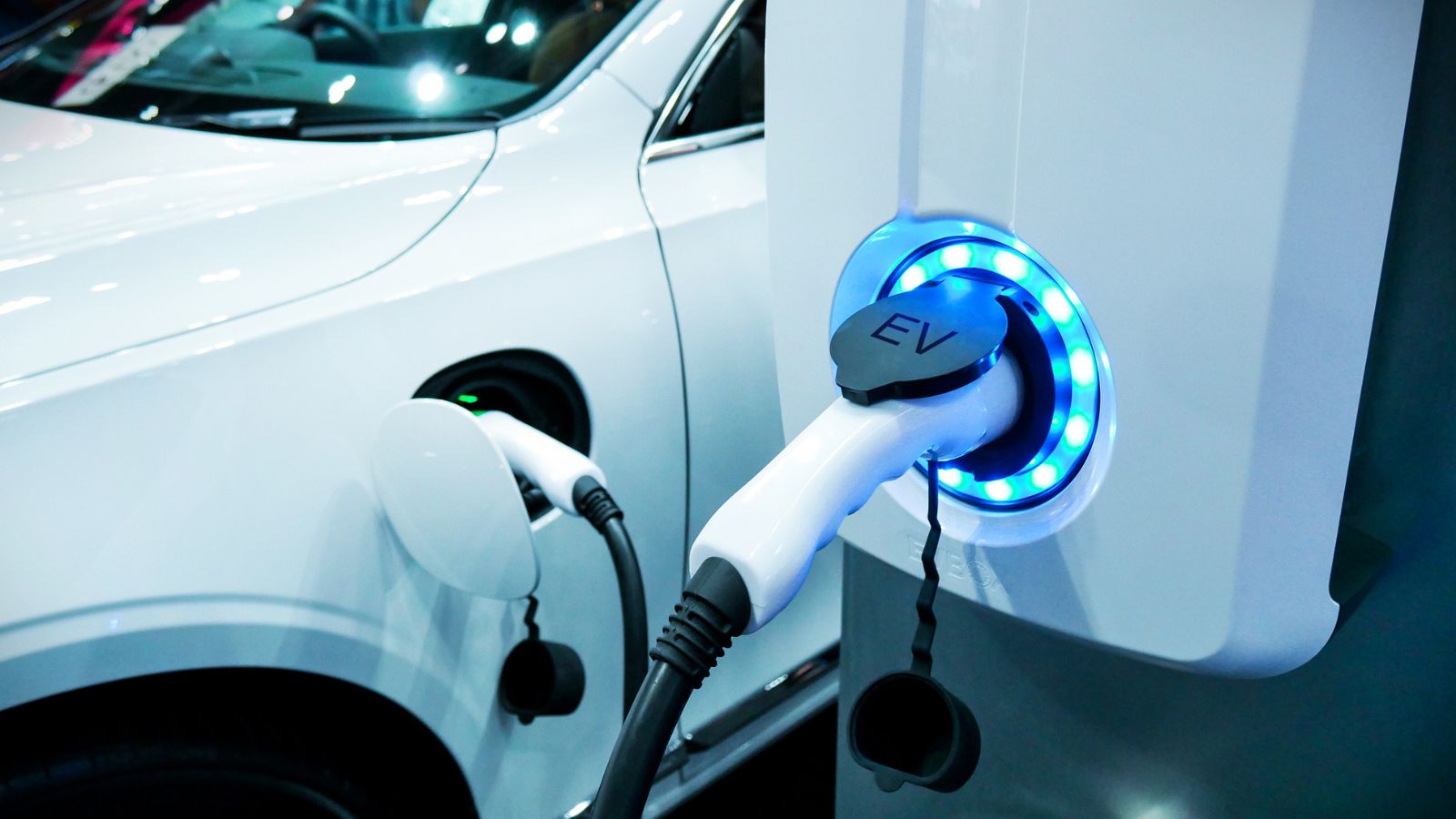
That is the direct connection to the 75% EV goal. Increasing the share of newly purchased vehicles that can operate without gasoline gradually replaces one of transportation’s major emissions sources. It is gradual because cars stay on Canadian roads for many years. A 75% electric share of new sales in 2035 would not mean three-quarters of every vehicle already on the road suddenly becomes electric. It would accelerate turnover toward a cleaner fleet, with the emissions effect accumulating as older gasoline vehicles are retired.
The 75% Figure Is Ottawa’s Commitment as Much as the Institute’s Recommendation
The Canadian Climate Institute is urging the federal government to deliver emissions reductions equivalent to a 75% electric-vehicle adoption rate by 2035, but the number did not originate as an independent Institute target. Prime Minister Mark Carney’s automotive strategy announced in February committed Canada to stronger light-duty-vehicle greenhouse-gas standards designed to produce the equivalent emissions reductions of 75% EV sales by 2035 and 90% by 2040. The Institute is essentially calling on Ottawa to follow through on its own promise.
That distinction has become more important because federal automotive policy changed significantly during 2026. The previous Electric Vehicle Availability Standard called for ZEVs to reach 100% of new light-duty vehicle sales by 2035. Ottawa has committed to replacing that system with technology-neutral vehicle-emissions standards. Proposed regulations published in August would repeal the old ZEV requirements, while the new framework is intended to drive emissions down through increasingly stringent fleet standards. As of October 8, the regulatory transition is still unfolding, leaving the final strength and design of the replacement rules particularly important.
Canada Is Starting Far Below 75%—But EV Sales Have Rebounded
Reaching a 75% new-sales share would require a substantial acceleration from today’s market. Statistics Canada says zero-emission vehicles represented 8.7% of new vehicle sales during 2025, down sharply from 13.8% in 2024. The agency linked much of that decline to changing incentive programs, including the January 2025 suspension of the former federal iZEV rebate and reductions in provincial assistance. The decline showed how quickly consumer demand could react when purchase economics changed.
The market has begun recovering in 2026. During the second quarter, Canadians registered 58,811 new zero-emission vehicles, 26.7% more than a year earlier. ZEVs represented 10.7% of all new registrations, marking the third consecutive quarter above one in 10. Ottawa also relaunched consumer support through the Electric Vehicle Affordability Program in February, offering qualifying buyers as much as $5,000 toward a battery-electric vehicle and $2,500 toward an eligible plug-in hybrid in 2026. The rebound is encouraging, but moving from roughly one in 10 registrations to three in four sales remains a large transformation.
EVs Will Not Deliver Their Full Benefit Without a Bigger, Cleaner Grid
The Climate Institute’s message goes beyond putting more battery-powered cars in driveways. Its analysis says Canada has made surprisingly little progress expanding electricity’s overall role in the economy. Electricity generation has increased only about 3% since 2005, while electricity’s share of final energy consumption has actually declined slightly. Natural gas, meanwhile, has supplied much of the additional energy demand. Excluding gas used to generate electricity, natural-gas consumption has increased approximately 48% since 2005.
That is why the Institute is pairing EV adoption with a much larger electrification strategy. Ottawa’s Powering Canada Strong plan says the country will need to generate and deliver roughly twice as much electricity by 2050 as demand grows from vehicles, heating, industry, data centres and advanced manufacturing. Federal analysis suggests between 140 and 190 gigawatts of additional clean generating capacity could be required. More EVs therefore create both an emissions opportunity and an infrastructure obligation. Charging millions of additional vehicles requires new generation, transmission, distribution and storage—and the climate advantage becomes larger when that new electricity is non-emitting.
The Six-Million-Tonne Rise Is Small, but the Remaining Gap Is Not
A 0.9% annual increase can appear modest when compared with the much larger swings Canada experienced during the pandemic and subsequent economic recovery. The concern is the direction of travel. At roughly 691 megatonnes, emissions remain only 9.5% below their 2005 level, while the 2030 commitment requires a reduction of at least 40%. The Climate Institute’s separate modelling concludes that currently contemplated policies could leave Canada more than two decades behind its near-term emissions goals unless governments strengthen their approach.
The 2025 results also show why no single technology provides a complete answer. EVs can address a substantial portion of passenger-transport emissions, but they do little directly about gas furnaces, oil-sands facilities or industrial processes. Heat pumps can lower building emissions, but their advantage grows with cleaner electricity. Expanding clean power helps both, yet major new generating and transmission projects take years to build. The six-million-tonne increase is therefore less important as an isolated number than as a warning about pace. Canada already knows many of the technologies required to reduce emissions. The difficult part is deploying them quickly enough across several sectors at the same time.