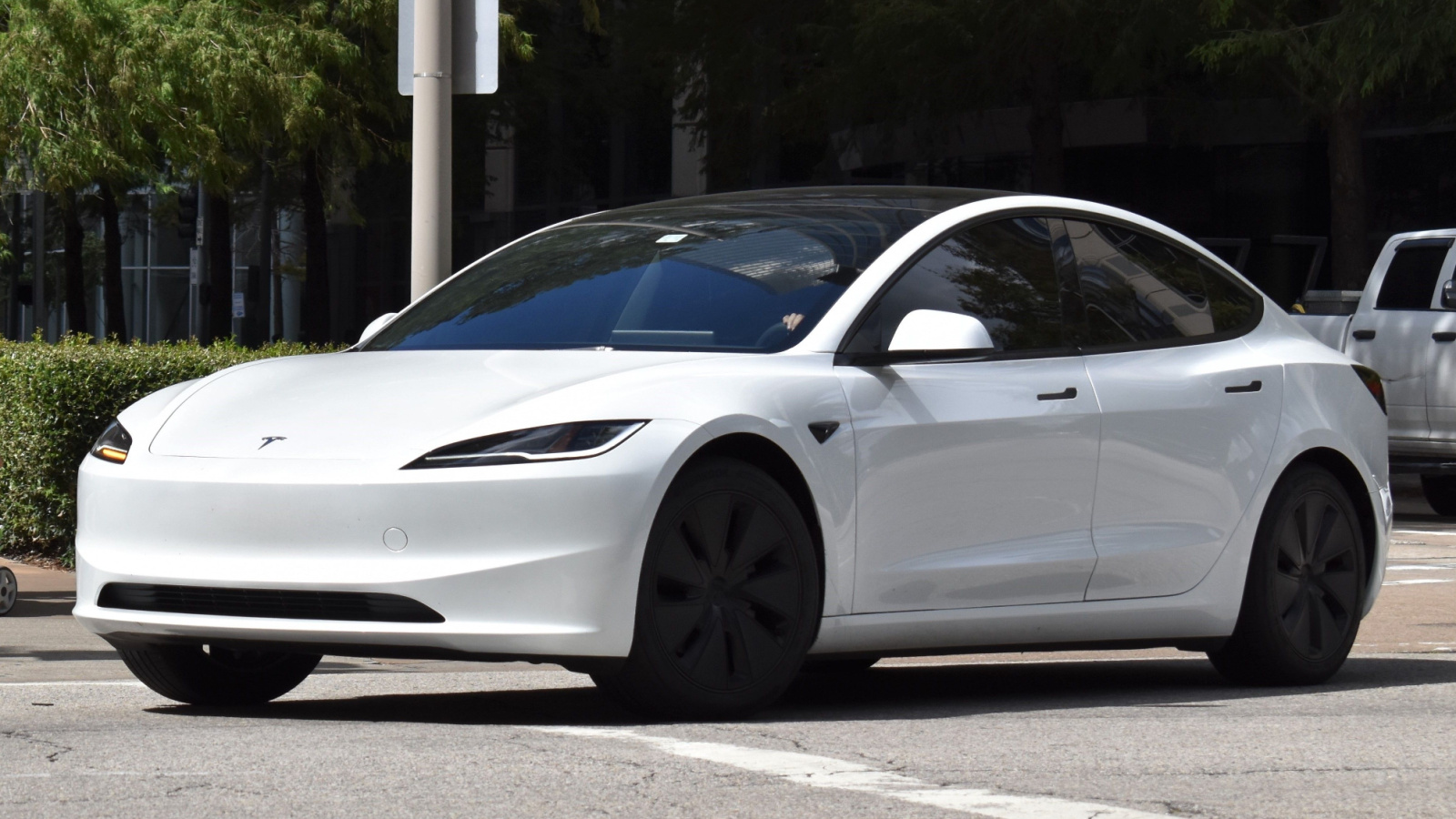
A Tesla Model 3 for less than the price of many used compact cars is no longer difficult to find in Canada. An October 5 dealer-inventory snapshot contained 144 active Model 3 listing records, with several advertised below $25,000. Among them were 2019, 2021 and even 2022 examples.
The low prices reveal how dramatically the used-EV market has changed, but they also come with important qualifications. The cheapest cars tend to have higher kilometres, asking prices are not completed transaction prices, and an online listing record is not guaranteed to represent a unique physical vehicle. Battery warranty, winter performance, repair history and charging habits can matter as much as the number on the windshield. Still, the Model 3 has moved into a price range that would have looked remarkable only a few years ago.
The 144 Listings Show How Much Choice Buyers Now Have
AutoDeal Canada’s October 5 snapshot contained 144 active Model 3 listing records associated with Canadian dealers. The sample stretched from older 2019 vehicles into much newer examples, giving shoppers considerably more choice than simply deciding between one or two used Teslas at a local store. A 2026 Model 3 Premium with 8,017 kilometres was advertised at $44,999, while older examples appeared for less than $25,000. That range shows just how broad the Model 3 used market has become.
There is an important statistical qualification. AutoDeal defines its basic unit as an active listing record rather than a registered vehicle, completed transaction or confirmed unique physical car. Separate source records can overlap, so “144 listings” should not automatically be interpreted as exactly 144 different Model 3s sitting on Canadian lots. Prices are also advertised asking prices. Dealers can adjust them, listings can disappear, and the eventual transaction may differ. The snapshot is best understood as a real-time view of advertised inventory rather than a sales census.
Some Model 3s Really Have Dropped Below $25,000
The sub-$25,000 examples are not theoretical. The October 5 inventory included a 2022 Model 3 Standard Range with 123,250 kilometres advertised at $24,990. A 2019 Model 3 with 102,828 kilometres appeared at $24,995, while a 2021 Standard Range Plus showing 123,136 kilometres was listed for $23,999. Earlier September snapshots contained other Model 3s around or below the same threshold, including examples dipping under $20,000.
Mileage helps explain much of the story. The inexpensive vehicles are generally not lightly used three-year-old cars that somehow lost half their value overnight. Many have already travelled more than 100,000 kilometres, meaning a prospective owner is buying deeper into the vehicle’s life. That does not automatically make one a poor purchase. Electric motors have fewer traditional drivetrain service items than combustion engines, and EV batteries do not simply stop working at a predetermined mileage. It does mean that the condition, remaining warranty, battery health and previous use deserve more attention than the enticing asking price alone.
The Model 3 Has Entered Mainstream Used-Car Territory
Broader Canadian transaction data show that the low listings are part of a larger pricing shift rather than isolated dealer specials. Clutch reported that the average used Tesla Model 3 sold for $28,897 in August 2026, down 9.5 per cent from a year earlier. Canada’s overall average used-vehicle transaction price during the same month was $33,752. The Model 3 was therefore selling, on average, for less than the typical used vehicle moving through Clutch’s national dataset.
That would have been an unusual position for Tesla’s compact electric sedan earlier in its life. In May, Clutch had already measured an average Model 3 price of $28,122, down 13.2 per cent year over year. By August, prices had recovered somewhat, and Clutch noted that a Model 3 of the same age was priced roughly in line with the equivalent vehicle a year earlier. In other words, the dramatic correction appears to have slowed. Buyers can still find inexpensive cars, but the data do not guarantee that waiting another six months will produce another equally dramatic drop.
New-Car Pricing Still Puts Pressure on Used Values
Used vehicles do not exist in a separate pricing universe. Tesla currently advertises the Model 3 in Canada from $42,132, using an Ontario starting-price calculation that includes freight, pre-delivery inspection and certain fees while excluding HST and licensing. That advertised figure is not directly comparable with every dealer’s used asking price, but it gives shoppers an obvious reference point. Once used vehicles climb far enough into the $30,000s, the gap to a brand-new car can become much harder to ignore.
Government incentives complicate comparisons across the wider EV market. Canada’s Electric Vehicle Affordability Program can provide up to $5,000 toward an eligible new battery-electric vehicle in 2026, but pre-owned vehicles do not qualify. That means a $24,990 used Model 3 does not become another $5,000 cheaper through the federal program. Buyers should compare actual after-tax, after-incentive costs rather than simply lining up online prices. A competing new EV eligible for government assistance can sometimes be closer to a late-model used EV than the original sticker prices suggest.
Battery Warranty Becomes Critical on Higher-Mileage Cars
A Model 3 with 120,000 kilometres raises a different set of questions than one with 30,000. Tesla’s current Canadian warranty structure provides four years or 80,000 kilometres of basic vehicle coverage. Current rear-drive Model 3 battery and drive-unit coverage runs eight years or 160,000 kilometres, while certain all-wheel-drive and Performance versions receive eight years or 192,000 kilometres. Tesla specifies a minimum 70 per cent battery-capacity retention threshold during the applicable battery warranty period.
Those current figures should not simply be pasted onto every older vehicle. Tesla specifically advises owners to check the warranty that applied when their individual vehicle was purchased, and coverage depends on configuration and original delivery date. The distinction also matters when choosing a seller. Tesla provides an additional pre-owned limited warranty on qualifying vehicles purchased directly from Tesla. A Model 3 bought from an unrelated used-car dealer does not automatically receive that additional Tesla pre-owned coverage. A shopper should therefore confirm the VIN’s remaining factory coverage rather than accepting a generic statement that the “battery has an eight-year warranty.”
Battery Degradation Does Not Automatically Mean Battery Failure
Battery deterioration is one of the biggest concerns surrounding inexpensive used EVs, but normal capacity loss should not be confused with imminent pack failure. Geotab’s 2026 battery-health analysis examined more than 22,700 electric vehicles across 21 models and found average battery degradation of approximately 2.3 per cent per year. The research was industry-wide rather than specific to the Model 3, so it cannot predict how much capacity remains in a particular Tesla sitting at a Canadian dealership.
Charging behaviour also mattered. Geotab found that vehicles relying heavily on DC fast charging above 100 kW could experience average degradation of up to 3.0 per cent annually, compared with roughly 1.5 per cent for vehicles primarily using AC or lower-powered charging. That makes a car’s history relevant even when its odometer looks reasonable. Two Model 3s showing 100,000 kilometres could have experienced very different usage. A prospective purchaser should therefore evaluate actual battery condition and usable range rather than estimating health solely from age or kilometres.
Canadian Winter Range Still Needs to Be Part of the Calculation
An inexpensive EV can be excellent transportation in July and still require more planning in January. CAA’s large Canadian winter EV test demonstrated why. The Model 3 used in that test travelled 410 kilometres in sub-zero conditions against an official range figure of 584 kilometres, a reduction of roughly 30 per cent. Despite the range loss, it performed particularly well in CAA’s charging exercise, adding 205 kilometres of displayed range during a 15-minute charging session.
Those numbers should not be applied directly to every $24,000 Model 3. The used listings include vehicles from several model years, battery configurations and drivetrains, while CAA tested a particular vehicle under specific weather, road and charging conditions. Older cars can also have some battery degradation before winter losses are considered. That is especially important for someone commuting long distances in northern Ontario, Quebec or the Prairies. A buyer whose daily travel is 40 kilometres faces a very different winter-range calculation from someone regularly driving 300 kilometres between cities.
Recall History Is Worth Checking Before Signing Anything
Used Model 3 buyers should also look beyond the battery. Transport Canada has published multiple recalls affecting different Model 3 model years. A 2022 recall covered certain 2021 and 2022 vehicles because a software issue could cause cabin heating to be lost in cold temperatures, potentially reducing windshield defrosting performance. Another recall covered certain 2018 through 2022 Model 3s where a rear seat-belt anchorage bolt may have been incorrectly reassembled after earlier service.
More recently, Transport Canada issued a May 2026 recall affecting certain 2021, 2022 and 2023 Model 3s because the rearview-camera image could be delayed after shifting into reverse. Tesla addressed that issue through an over-the-air software update. Many Tesla recalls can therefore be corrected remotely, but not every campaign is software-only. Tesla states that recall repairs are provided free regardless of the vehicle’s age or mileage. The sensible step is to check the individual VIN and confirm that all applicable corrective work or software updates have actually been completed.
Below $25,000 Can Be a Bargain—but the Cheapest Car Is Not Automatically the Best
The striking part of today’s market is not merely that an old high-mileage Tesla can be found cheaply. A 2022 Model 3 appearing under $25,000 puts a relatively modern electric sedan into a shopping range occupied by used Corollas, Civics, crossovers and other mainstream vehicles. That gives Canadian buyers an option that previously required a substantially larger budget. The combination of nationwide charging access, strong EV efficiency and falling used prices can make the Model 3 compelling for the right household.
The buying decision still needs to move beyond the headline figure. Model year, kilometres, accident history, tires, winter range, remaining battery coverage and actual battery condition can separate a genuinely attractive purchase from one that merely looks cheap online. Buyers should also determine whether home charging is practical before calculating operating savings. Canada’s used Model 3 market has clearly become more affordable, and 144 active listing records provide plenty of opportunities to compare. The best value may not be the $23,999 car—it may be the slightly more expensive example with lower kilometres, stronger remaining warranty and a cleaner history.