


























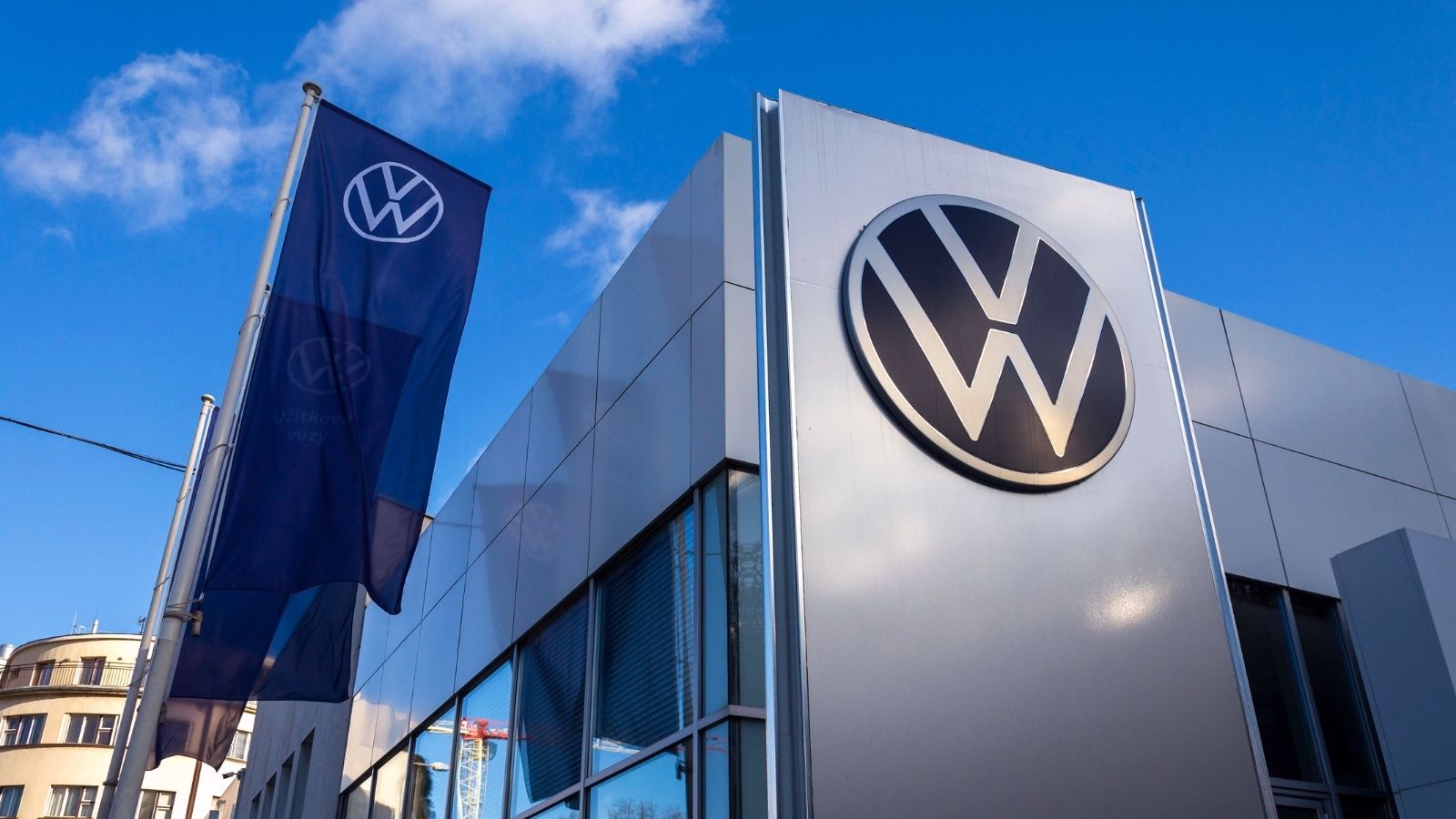
A two-year delay for one of Ontario’s biggest industrial projects would normally be difficult to frame as positive news. The Ford government is making that case anyway.
Volkswagen battery subsidiary PowerCo Canada now expects its $7-billion St. Thomas battery plant to begin operations in 2029 rather than the original 2027 target. Ontario Economic Development Minister Vic Fedeli has emphasized that construction is continuing, a general contractor has been selected and billions of dollars of physical infrastructure are still planned. Premier Doug Ford has similarly said the delay does not worry him because the factory is still being built. The distinction between a delayed project and a cancelled one matters. But after several other electric-vehicle investments in Ontario have been postponed, reworked or abandoned, the new timeline is putting greater attention on how much of the province’s battery strategy will ultimately reach full-scale production.
Queen’s Park Is Focusing on What Has Not Changed
Fedeli’s argument rests largely on a straightforward point: PowerCo has not walked away from St. Thomas. After the revised timeline became public, the minister described the latest developments as “nothing but good news,” pointing to construction activity and the awarding of major contracts. Ford also said he would be concerned if Volkswagen announced it was no longer building the factory, but that continued construction gave him confidence. PowerCo’s appointment of EllisDon as general contractor provides the government with tangible evidence for that position.
The political disagreement is over how much reassurance that should provide. Ontario NDP Leader Marit Stiles has called for greater transparency around the conditions attached to public support, while Liberal MPP Stephanie Smyth has pointed to previous automotive projects whose plans changed after earlier delays. Those concerns do not mean the Volkswagen plant is headed for cancellation; PowerCo continues to describe St. Thomas as important to its North American strategy. They do, however, explain why a revised opening date attracts more scrutiny now than it might have when the project was first announced in 2023.
The Factory Is Still Moving Forward, but the Timeline Has Changed Substantially
PowerCo says operations are now expected to begin in 2029 so the company can better align production with market demand, advances in battery technology and Volkswagen’s longer-term product strategy. The company specifically says the additional time will allow St. Thomas to incorporate next-generation battery technology while retaining flexibility to increase production as demand develops. EllisDon’s work will include the production-building shell, mechanical and electrical systems, utilities and other site infrastructure. Roughly 60 EllisDon workers were reported on site when the contract was announced, with that workforce expected to reach approximately 1,300 at peak construction.
That remains a large industrial undertaking by almost any measure. Volkswagen originally planned as much as $7 billion in investment through 2030, and described St. Thomas as its largest PowerCo cell factory, eventually capable of producing up to 90 gigawatt-hours annually. Early government projections associated the project with as many as 3,000 direct jobs, while federal funding documents said its cells could support batteries for as many as one million EVs annually. The important change is therefore not whether a substantial facility is being constructed, but when full commercial battery production begins and how large the first production phase ultimately becomes.
Billions in Public Support Make the Production Date Especially Important
The financial structure behind St. Thomas helps explain why governments are emphasizing the difference between construction spending and production incentives. Ottawa committed a $700-million non-repayable contribution toward the factory, while Ontario committed $500 million in direct support when the deal was unveiled. Separately, Volkswagen could receive up to $13 billion in performance incentives under the federal-provincial auto pact. Ottawa agreed to fund two-thirds of those production incentives and Ontario one-third, with payments tied to batteries actually being produced and sold rather than simply to the existence of the factory.
That structure reduces some taxpayer exposure if expected production never materializes, but the 2029 timing introduces another complication. The incentives were developed partly in response to the United States’ Section 45X advanced-manufacturing credit, which provides a benchmark of US$35 per kilowatt-hour for qualifying battery cells. Current U.S. law begins phasing down that credit after 2029: eligible components receive 75 per cent of the normal amount in 2030, 50 per cent in 2031 and 25 per cent in 2032. Because Canada’s agreement was designed to move with the American incentive, beginning production in 2029 compresses the period available before that scheduled phase-down. The exact financial effect will depend on PowerCo’s production ramp and the terms governing actual payments.
Canada’s EV Market Has Been Weak — but the Latest Data Show a Recovery
PowerCo’s caution comes after an unusually volatile period for electric-vehicle demand. Statistics Canada reported that new zero-emission vehicle registrations fell 34.7 per cent in 2025 compared with 2024. ZEVs accounted for 9.5 per cent of new registrations for the year, down sharply from 14.6 per cent in 2024. Ontario recorded a 17.2-per-cent decline. That kind of change matters to companies planning factories years ahead because battery plants require enormous upfront investment and work best when they can operate at high utilization rates.
The more recent numbers complicate the picture, however. In the second quarter of 2026, Canada recorded 58,811 new ZEV registrations, up 26.7 per cent from the same quarter of 2025. ZEVs represented 10.7 per cent of all new registrations, while Ontario registrations jumped 46.6 per cent year over year. July sales data showed the national ZEV share remaining at 10.7 per cent and unit sales rising 36 per cent from July 2025. In other words, the Canadian EV market has not simply continued falling. It went through a steep correction and is now showing signs of recovery, leaving manufacturers to decide how quickly that rebound can justify new production capacity.
Volkswagen’s Delay Is Part of a Much Broader Reset
St. Thomas is not the first Ontario electrification project to encounter a very different market from the one companies anticipated several years ago. Honda announced in May 2026 that it was indefinitely suspending plans for a comprehensive EV value chain in Ontario after previously delaying the project by roughly two years. The original proposal had envisioned vehicle assembly, batteries and battery materials as part of a major new Canadian manufacturing network. Honda said it would continue reassessing its North American battery procurement strategy instead.
Other changes have taken different forms. General Motors ended production of its BrightDrop electric delivery vans at CAMI Assembly in Ingersoll in October 2025, saying the commercial electric-van market had developed much more slowly than expected. Umicore had already paused construction of its battery-materials facility in Loyalist, Ontario, while Ford redirected its Oakville complex toward F-Series Super Duty pickup production after an earlier EV manufacturing plan. None of those decisions is identical to PowerCo’s situation, but together they show why governments and manufacturers are becoming more cautious about matching factory capacity to EV demand several years in advance.
Ontario’s Battery Strategy Has Not Stopped Everywhere
The setbacks also need to be viewed alongside projects that have advanced into production. NextStar Energy’s Windsor battery factory held its grand opening in March 2026 after beginning mass production in late 2025. The 4.23-million-square-foot operation reported more than one million cells produced by the time of its opening and more than 1,300 direct employees. In June, NextStar added battery-pack manufacturing aimed partly at growing energy-storage-system demand, giving the facility a market beyond batteries destined solely for passenger EVs.
Ontario’s 2026 budget also highlighted other projects still being developed, including Asahi Kasei’s planned $1.6-billion battery-separator facility in Port Colborne and Vianode’s proposed $3.2-billion synthetic-graphite plant in St. Thomas. The province says the auto sector employed nearly 100,000 people in 2025. Those investments suggest the emerging battery industry is becoming more diversified, with cells, separators, graphite and stationary energy storage all part of the picture. That does not erase the significance of delays at Volkswagen or Honda. It does mean the outcome of Ontario’s strategy cannot be measured by a single factory alone; some projects have retreated, some have changed products and others have moved into commercial operation.
For St. Thomas, a Two-Year Delay Has Consequences Beyond the Factory Gates
St. Thomas has already been preparing for industrial growth around PowerCo. Municipal records show that city council approved an estimated $847,500 rail-spur connection at the Yarmouth Yards industrial park in 2025, specifically identifying preparation for PowerCo and surrounding development as part of the rationale. The city and province have also undertaken broader servicing work around the industrial lands. When a factory capable of employing thousands of people shifts its production date, the timing can ripple into housing plans, suppliers, local hiring and infrastructure designed around an expected influx of workers.
At the same time, a delayed production start does not mean two years of inactivity. EllisDon’s construction workforce is expected to climb from roughly 60 people to about 1,300 at peak as structural, utility, mechanical and electrical work progresses. For tradespeople and contractors in southwestern Ontario, those construction jobs arrive well before battery cells begin moving off a production line. The bigger local uncertainty concerns what happens afterward: when production hiring accelerates, how rapidly the plant scales and whether the employment levels envisioned when Volkswagen first chose St. Thomas are ultimately reached. Those milestones will have a more lasting effect on the local economy than the construction phase by itself.
The Bigger Test Will Come Before the First Battery Leaves the Line
PowerCo’s explanation for waiting is commercially understandable. Battery technology is evolving quickly, and Volkswagen has built its strategy around standardized cells that can accommodate different chemistries and applications. Committing billions of dollars to production equipment designed around an earlier technology generation can create its own risks. PowerCo says the 2029 schedule gives St. Thomas more room to incorporate next-generation technology and allows the company to scale capacity according to demand rather than immediately building for the most optimistic market forecast.
The revised timeline nevertheless creates a longer period in which assumptions can change. The most revealing indicators between now and 2029 will be continued construction, major equipment orders, production hiring, Volkswagen’s North American vehicle plans and the eventual pace at which St. Thomas capacity comes online. Public incentive payments will also become easier to assess once actual battery production begins, since much of the largest support package is performance-based. For the Ford government, continued construction supports its argument that Volkswagen remains committed. For critics asking whether Ontario’s EV strategy is delivering what taxpayers were promised, commercial production will provide the stronger test. Both questions can ultimately be answered by the same evidence: what gets built, how much is produced and how many permanent jobs materialize.