


























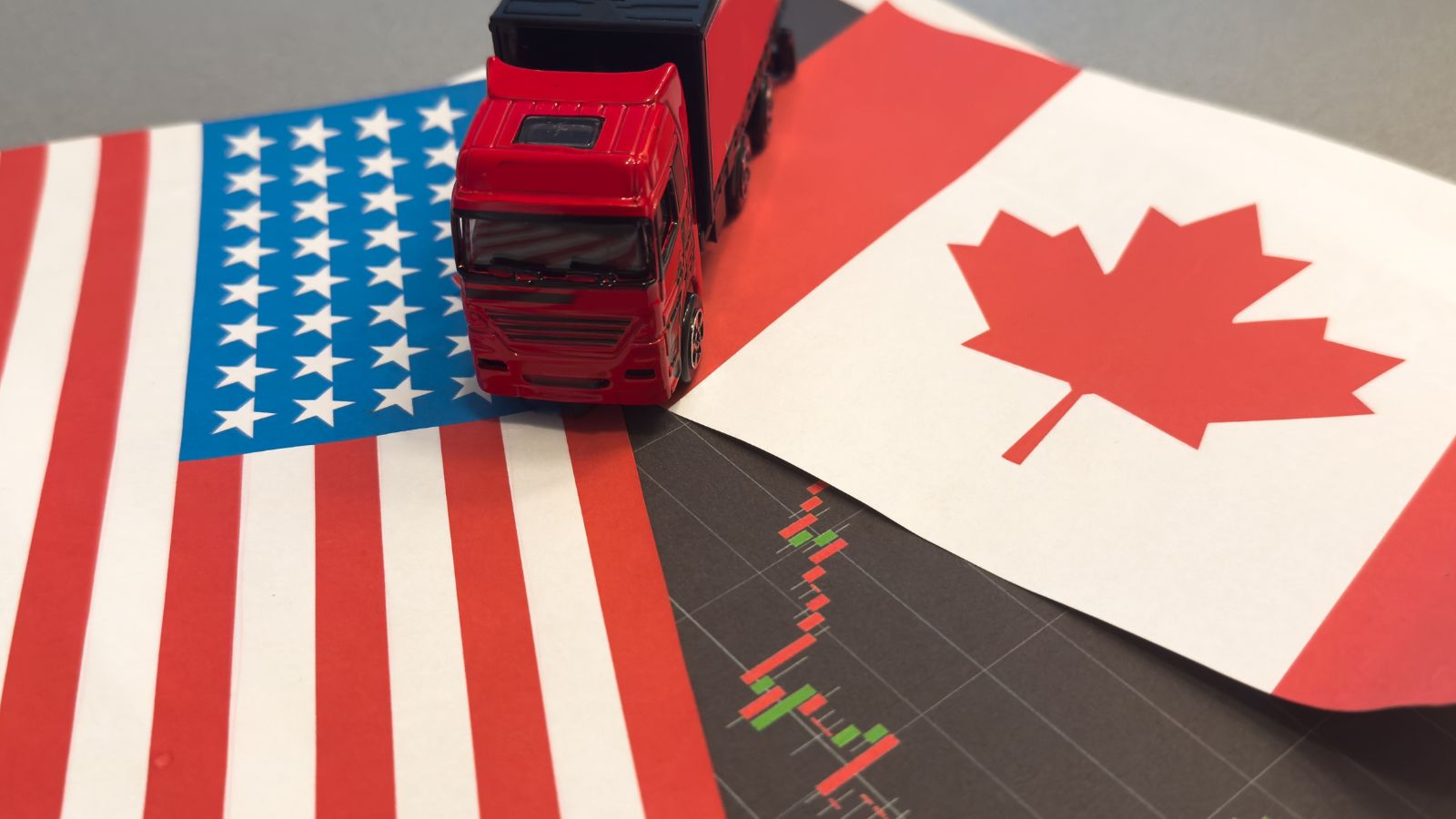
Canada’s trade confrontation with the United States is entering a more uncertain phase, with Washington openly signalling that it does not feel pressed to reach a settlement. U.S. Trade Representative Jamieson Greer said on September 25 that President Donald Trump is comfortable with the current state of the relationship and that there is “no urgency” on the American side to secure a deal with Canada. The message comes while substantial bilateral commerce continues, but tariffs and new import restrictions remain layered across strategically important sectors. Autos are particularly exposed. Canada’s vehicle industry depends heavily on the U.S. market, while measures imposed by both governments have made cross-border production more complicated and expensive. For businesses accustomed to treating North America as a deeply integrated manufacturing platform, the absence of a clear negotiating timetable may matter almost as much as the tariffs themselves.
Washington Is Signalling It Can Live With the Standoff
Greer’s comments were notable because he did not describe the current situation as something Washington urgently needs to fix. He told CNBC that significant trade continues despite the dispute, specifically pointing to oil, natural gas, potash and agricultural products moving across the border. He also said Canadian officials periodically contact their American counterparts and that conversations about possible agreements continue. His description, however, stopped well short of suggesting that the two governments are close to restarting the intensive negotiations that broke down in August. Canada-U.S. Trade Minister Dominic LeBlanc’s office has similarly confirmed that communications with U.S. officials continue.
That distinction is important. Canada and the United States can remain major trading partners even while individual industries face much tougher conditions. Greer’s argument is effectively that essential commerce is still taking place despite the tariffs. That reduces one obvious source of pressure on Washington to reach an immediate compromise. The United States continues to receive Canadian resources that are difficult to replace quickly, while Canada continues to have access to much of the American market under existing rules. What has changed is the cost and uncertainty attached to sensitive sectors such as automobiles, steel and aluminum. Greer’s remarks therefore point to a situation in which trade continues at enormous scale even as the political effort to resolve the dispute moves more slowly.
Auto Tariffs Remain One of the Most Complicated Parts of the Dispute
The automotive measures are no longer a single tariff that can be summarized with one percentage. Canadian-made vehicles have faced a U.S. tariff of 25% on their non-U.S. content since April 2025, with U.S. content in qualifying CUSMA vehicles exempt from that particular charge. The Trump administration added another layer in 2026. A July proclamation invoked Section 338 of the Tariff Act of 1930 to establish additional 50% duties on certain Canadian products tied to the motor-vehicle dispute. Those duties took effect on August 22 after a brief suspension, and Washington modified their scope again in September. From September 15, the revised Section 338 duties can apply in addition to Section 232 duties for products covered by the proclamation.
The two governments also fundamentally disagree over how the dispute should be characterized. The White House says Canada’s treatment of American vehicles disadvantages U.S. commerce and has used that finding to justify its Section 338 actions. Ottawa says its automotive tariffs are countermeasures introduced in response to earlier U.S. tariffs. Canada continues to impose 25% tariffs on non-CUSMA-compliant U.S. vehicles and on the non-Canadian and non-Mexican content of qualifying U.S.-made vehicles. Those Canadian auto counter-tariffs remain in place alongside the newer retaliatory measures announced in September. That leaves automakers navigating not only higher costs but a shifting collection of exemptions, origin rules, remission programs and overlapping tariff authorities.
Canada’s Auto Industry Has Very Little Room to Ignore the U.S. Market
Few Canadian industries demonstrate the depth of cross-border integration better than automotive manufacturing. Federal government figures say more than 90% of vehicles made in Canada and roughly 60% of Canadian-made auto parts are exported to the United States. Canada produced more than 1.2 million passenger vehicles in 2025, while the automotive manufacturing industry supports roughly 125,000 direct jobs. Those numbers help explain why relatively small changes in U.S. market access can affect assembly plants, parts suppliers, trucking companies and communities far beyond the immediate border region.
Trade data were already showing strain before the newest measures were announced. Global Affairs Canada reported that Canadian motor-vehicle and parts exports to the United States fell by $4.6 billion, or 5.9%, in 2025. Canadian imports of U.S. motor vehicles and parts dropped by $5.2 billion, or 6.3%, over the same period. That two-way decline matters because vehicles assembled in Ontario can contain components that have crossed the border several times before a finished vehicle reaches a dealership. The industry was designed around continental specialization rather than two independent national supply chains. Diversifying Canadian auto exports may reduce exposure over the longer term, but redirecting an industry in which more than nine out of every 10 Canadian-built vehicles traditionally head south is considerably more difficult than simply finding another buyer for a commodity shipment.
Ottawa and Washington Still Give Very Different Accounts of Why Talks Failed
One reason a quick restart cannot be assumed is that the governments continue to disagree over what happened during the final days of the August negotiations. Greer and the U.S. Trade Representative’s office have said Canada walked away from what Washington considered a near-final agreement and subsequently pursued retaliation. That account underpins the administration’s argument that tougher Section 338 measures were justified. The U.S. position is therefore not simply that negotiations happened to stall; American officials maintain that Canada rejected an agreement they regarded as favourable.
Prime Minister Mark Carney has provided a sharply different account. He said U.S. negotiators introduced last-minute terms Canada considered uneconomic and unacceptable, including demands Ottawa believed would compromise Canadian sovereignty and protections involving French language and culture. Carney also said Canada had been prepared to remove remaining retaliatory measures in strategic sectors such as autos, steel and aluminum if Washington substantially lowered its corresponding tariffs. Instead, Canada suspended the talks and subsequently matched new U.S. measures. Effective September 8, Ottawa imposed tariffs of 15%, 25% and 50% on $27.6 billion worth of U.S. imports, while existing auto counter-tariffs continued. The federal government also announced a new $7.5-billion support package for affected workers and businesses, building on earlier assistance.
The Unresolved CUSMA Review Makes This Bigger Than One Tariff Negotiation
The bilateral dispute is unfolding at the same time as an unresolved decision over the longer-term future of CUSMA. At the agreement’s mandatory joint review on July 1, 2026, the United States declined to confirm an extension of CUSMA in its current form. That did not terminate the agreement. USTR explicitly said CUSMA remains in force, while the agreement’s own Article 34.7 sets out what happens when all three countries do not immediately agree to extend it.
Under those provisions, the countries move into annual reviews for the remainder of the existing term. Canada, the United States and Mexico can still agree at a later review to extend CUSMA for another 16 years. Without such an agreement, the current term runs until 2036. That creates a much longer negotiating horizon than the immediate tariff dispute and helps explain why individual trade talks now overlap with arguments about automotive content, steel, agriculture and economic security. Washington has also been negotiating separately with Mexico on several of those issues, including automobiles and rules of origin. The result is an unusual environment in which CUSMA continues to govern vast amounts of North American commerce while fundamental parts of its future structure remain unsettled. For companies making multibillion-dollar investment decisions, that distinction between an agreement being legally in force and being politically unresolved is significant.
Canada Is Diversifying Trade, but the Numbers Show How Large the U.S. Relationship Remains
Canada has made measurable progress in selling more goods outside the United States. Statistics Canada reported that the U.S. share of Canadian merchandise exports fell from 75.9% in 2024 to 71.7% in 2025. Exports to countries other than the United States increased 17.2% during 2025, while Canadian exports to the U.S. declined 5.8%. Those figures support Ottawa’s argument that businesses are finding additional markets, although they also demonstrate just how dominant the U.S. remains. More than seven dollars out of every 10 in Canadian merchandise exports were still headed south of the border last year.
The diversification effort has accelerated in 2026. Canada has pursued expanded economic ties with Europe and Asia while advancing negotiations with India, the Philippines and ASEAN. International Trade Minister Maninder Sidhu said this week that negotiations with the Philippines and ASEAN were more than 90% complete, with Ottawa targeting completion around November. Such deals could gradually give Canadian producers more options, particularly in agriculture, energy and resource industries. Autos present a tougher challenge because the existing North American production system is unusually integrated and Canada’s vehicle exports are so heavily concentrated in the United States. New overseas agreements may strengthen Canada’s overall bargaining position and reduce economy-wide dependence over time, but they do not immediately provide an alternative market capable of absorbing the volume of Canadian vehicles currently destined for American dealerships.
The Next Deadlines Are Clear Even Though a Deal Deadline Is Not
The most immediate developments are already scheduled whether negotiations accelerate or not. U.S. proclamations issued September 8 established import bans on certain Canadian products beginning September 29, replacing 50% duties on some goods covered by the Section 338 actions. Separate measures affect products tied to disputes over automobiles, dairy and alcoholic beverages. Reuters reported that the restrictions include categories such as Canadian alcoholic beverages, motorcycles and dairy products. Washington has therefore created additional pressure points that will arrive without requiring another round of negotiations or another announcement from Greer.
There is also a larger automotive threat on the calendar. Trump said in August that he intended to impose a 50% tariff on all Canadian cars, trucks and automotive parts beginning January 1, 2027. That proposal should be distinguished from the tariffs already in force: it was announced as a future measure and its eventual implementation details remain important. For now, Greer’s September 25 comments provide the clearest indication of Washington’s negotiating timetable — there effectively is not one publicly. Communications continue, but the administration says it does not feel compelled to settle quickly. That leaves Canadian companies facing an unusual planning problem: firm dates exist for additional trade restrictions, while there is no comparable date for an agreement that could remove them.