






















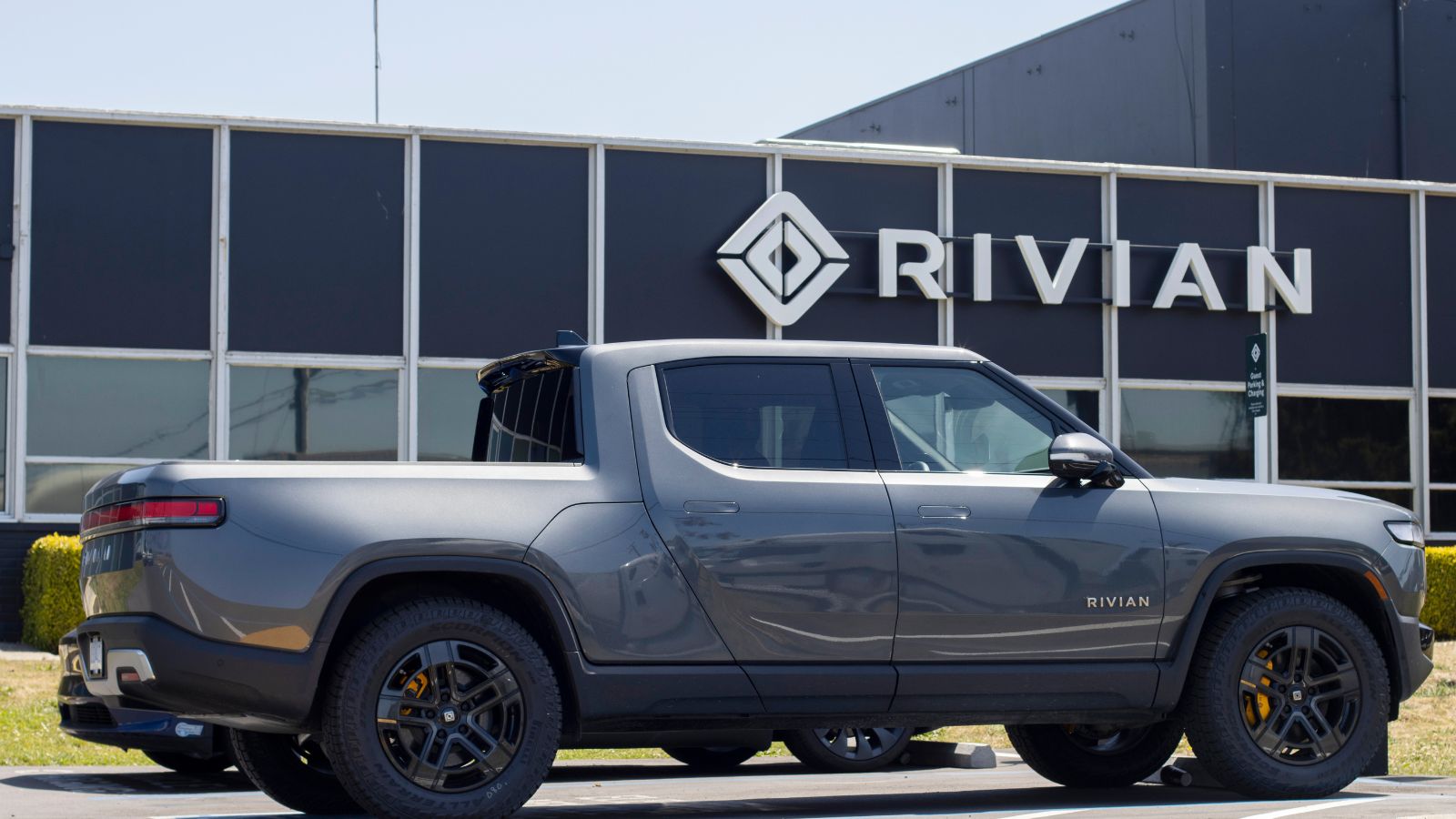
A problem that sounds more like an annoying pop-up notification than an automotive defect has triggered one of Rivian’s biggest recalls yet. The electric-vehicle maker is recalling tens of thousands of R1T pickups, R1S SUVs and newer R2 SUVs because software can allow a safety message to cover part of the rearview-camera image at precisely the moment a driver shifts into reverse.
The defect is unusual because the camera itself does not necessarily fail. Instead, the way information is presented on the centre screen can interfere with a safety system that is regulated in both Canada and the United States. Rivian has already developed an over-the-air fix, and most affected vehicles had received corrected software before many owners were even aware a formal recall was coming.
The Recall Reaches Across Almost Rivian’s Entire Consumer Lineup
The U.S. National Highway Traffic Safety Administration recall covers 98,828 vehicles, making this a substantial campaign for a relatively young automaker. The affected population includes certain 2022 through 2026 R1T electric pickups, 2022 through 2027 R1S SUVs and 2027 R2 SUVs. Rivian’s broader figure for the recall, including vehicles covered by the related Canadian action, is approximately 100,700. That distinction matters: the nearly 100,000 figure frequently appearing in reports is primarily the U.S. NHTSA population rather than the number of Rivians affected in Canada alone.
The U.S. total consists of 34,088 R1T pickups, 62,259 R1S SUVs and 2,481 R2 SUVs, according to the recall filing. That gives the campaign an unusually wide production footprint, stretching from some of Rivian’s earliest consumer vehicles to its newest mass-market model. Vehicles in the affected U.S. population were produced over a period beginning in August 2021 and extending into August 2026. Rivian told Reuters the broader campaign represents a majority of the vehicles it has produced to date, highlighting how one piece of software can quickly reach a large share of a connected vehicle fleet.
A Safety Warning Can Cover the Very Image Drivers Need to See
The defect requires a fairly specific sequence of events. Rivian says it can occur when stability control has been switched off under certain circumstances. After the driver leaves the vehicle and later returns, the centre display can present a safety message reminding the driver that stability control is disabled and asking whether it should be re-enabled. If the driver shifts into reverse without responding to that prompt, the message can overlap the rearview-camera image.
That creates an unusual situation in which one safety feature interferes with another. The rear camera is operating, but the software layer controlling what appears on the display can prevent the driver from seeing the full image before the vehicle begins moving. According to recall information, the image becomes available once the vehicle starts moving, and the driver can also bring up the camera view manually. Rivian described the scenario as rare and said, as of the recall filing, that it was not aware of customer reports, crashes, injuries or deaths associated with the specific condition.
Why a Screen Notification Can Become a Canadian Safety Violation
Rearview cameras have moved far beyond being optional parking conveniences. Canadian Motor Vehicle Safety Standard 111 regulates mirrors and rear-visibility systems, and federal rules require applicable passenger vehicles, SUVs and light trucks to provide a compliant view behind the vehicle. Transport Canada specifically identifies backup cameras as required equipment for passenger cars, SUVs, light pickup trucks and minivans covered by the regulation.
Canada’s requirements are closely connected with the U.S. Federal Motor Vehicle Safety Standard 111. The Canadian regulations incorporate substantial portions of the American rear-visibility requirements for vehicles with gross vehicle weight ratings of 4,536 kilograms or less. That means the issue is not simply whether a Rivian technically has a working camera. The required rearview image must actually be available in the manner contemplated by the safety standard. If another software element can override or obstruct that image when a backing event begins, Rivian cannot rule out regulatory noncompliance. The company’s recall information identifies the matter as involving both FMVSS 111 in the United States and CMVSS 111 in Canada.
The Fix May Already Be Installed on Most Affected Rivians
Unlike a recall involving a suspension bolt, seat belt or faulty piece of electrical hardware, this repair does not normally require a vehicle to enter a service centre. Rivian has released corrected software through its over-the-air update system at no cost to owners. Recall documentation identifies R1 software versions before 2026.23 and R2 versions before 2026.31.40 as part of the potentially affected population. Installing the appropriate newer software corrects the display behaviour behind the recall.
Rivian said more than 95% of affected vehicles had already received the software remedy when it discussed the campaign on September 23. Filing-derived figures indicate approximately 95% of the affected R1 population and 96% of affected R2 vehicles had updated software. Rivian also said vehicles produced after August 10 already contain the corrected software. That creates an odd modern-recall scenario: thousands of owners may receive formal notification of a problem their vehicle quietly repaired through a software download weeks earlier. U.S. owner letters are expected by November 9, with NHTSA VIN information scheduled to become available at that time.
Canadian Owners Should Still Confirm Their Vehicle Is Updated
The high installation rate does not mean owners should automatically assume their individual Rivian has been repaired. A vehicle that has missed software updates, spent long periods disconnected or otherwise remained on an older release could still contain the affected code. Rivian is encouraging owners to install the latest available software, while Canadians can also use Transport Canada’s vehicle-recall resources and Rivian’s support system to check whether a specific VIN requires attention. The related Canadian campaign has been identified as Transport Canada recall 2026-443 in Rivian recall information circulated to owners.
Drivers should also remember that a camera remains only one part of safely reversing a vehicle. Transport Canada advises motorists to use the camera together with mirrors and direct visual checks, while reversing slowly enough to react to obstacles. Rain, darkness, glare and dirt can also reduce camera effectiveness even when the software is functioning normally. In practical terms, an owner waiting for the update should be especially cautious if stability control has been disabled and a warning remains on the centre screen when reverse is selected. The safest response is to restore an unobstructed view before beginning to back up.
Rivian Is Not Alone in Dealing With Software-Based Camera Recalls
The Rivian campaign is part of a much broader shift in automotive recalls. As dashboards, cameras and vehicle controls become increasingly dependent on software, a defect no longer needs to involve a physically broken component. Earlier in 2026, Transport Canada issued a Tesla recall because software could delay the rearview-camera image after the vehicle was shifted into reverse shortly after startup. Tesla addressed that problem through an over-the-air software update.
Other manufacturers have faced similar issues without being exclusively electric brands. Transport Canada announced recalls involving 2025 and 2026 Ram 1500 trucks after software could prevent the camera image from appearing, while Mitsubishi recalled certain Outlander models because infotainment software could cause the rearview image to freeze or disappear. Stellantis has also used over-the-air updates for eligible vehicles affected by camera-display software problems. These cases demonstrate an important point: the regulatory concern is not unique to EV propulsion. Digital dashboards have effectively turned software into part of the vehicle’s safety equipment, and a coding or interface problem can therefore trigger the same formal recall process as defective hardware.
The Recall Shows How Small Software Decisions Can Become Major Safety Campaigns
For Rivian, there is a striking contrast between the size of the recall and the apparent simplicity of the fix. Nearly 99,000 vehicles appear in the U.S. campaign, yet owners do not need a replacement camera, display or wiring harness. The problem comes down to which visual element receives priority on the screen when several systems want the driver’s attention at once. A warning about stability control was important enough to display prominently, but not if doing so obscured another safety feature required when the vehicle is backing up.
That is becoming an important challenge for automakers building software-defined vehicles. Modern cars may receive new functions, revised menus and changed behaviour long after leaving the assembly plant. Over-the-air updating can make repairs dramatically faster, as Rivian’s high remedy rate demonstrates, but it also means one software decision can simultaneously affect tens of thousands of vehicles. The Rivian recall therefore amounts to more than a camera glitch. It is an example of automotive safety increasingly depending on interface design, software testing and deciding exactly what a driver should see during the few seconds when that information matters most.