





















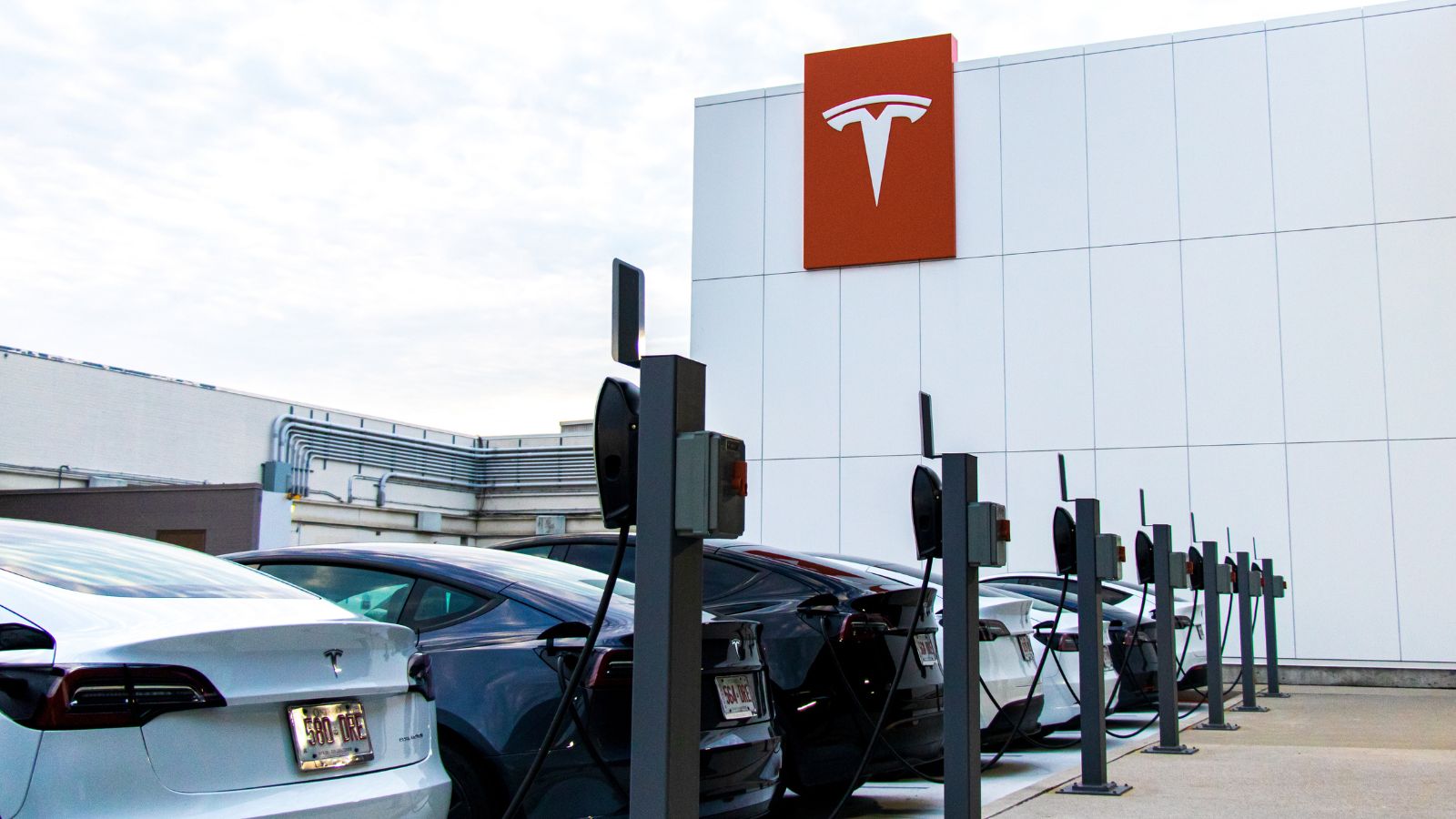
Tesla has added a major piece of physical infrastructure to its Canadian network just as the country’s electric-vehicle market begins another period of change. The automaker’s new Vancouver-Raymur operation combines sales, service and delivery functions in a roughly 120,000-square-foot facility that Tesla has described as its largest such location in North America.
The opening carries significance beyond its considerable size. British Columbia remains one of Canada’s strongest electric-vehicle markets, national EV registrations have begun recovering after a difficult 2025, and new competitors are preparing to challenge established brands. For Tesla, the Vancouver investment makes the less glamorous side of EV ownership — repairs, deliveries, vehicle preparation and customer support — a bigger part of the competitive fight.
A 120,000-Square-Foot Bet on Vancouver
Tesla’s new Vancouver-Raymur centre represents a very different type of automotive presence from the compact urban showrooms that helped introduce the company to Canadian buyers. The approximately 120,000-square-foot complex brings vehicle servicing, preparation, deliveries and retail functions together at a purpose-built operation in Vancouver’s Strathcona area. Tesla’s current locator lists the facility at 908 Raymur Avenue and identifies sales, service and delivery operations at the same site.
The project has been years in the making. Plans announced in late 2023 described a facility developed with Vancouver-based Beedie and positioned as Tesla’s largest purpose-built service centre in North America. A grand-opening event was scheduled for August 29, 2026, giving local owners an opportunity to tour the operation. The size matters because servicing thousands of increasingly complex electric vehicles requires substantially more space than selling them through a minimalist showroom.
Tesla Is Consolidating More of the Ownership Experience
The Vancouver centre is intended to do more than repair cars. Tesla has combined customer-facing retail activity with service, vehicle preparation and delivery functions, allowing several stages of the ownership process to happen within one large operation. Its official listing shows the Raymur location functioning as a gallery, service centre and delivery centre, with dedicated service hours extending through Saturday.
The expansion also coincides with the winding down of Tesla’s long-running West 4th Avenue operation in Vancouver, whose functions are being folded into the newer centre. For customers, consolidation potentially means fewer handoffs between separate locations when purchasing, receiving or servicing a vehicle. That can become an important competitive advantage as the Canadian EV market matures. Buyers comparing electric vehicles are increasingly assessing not just range and charging speed but also repair access, parts availability and how easily a problem can be resolved after the sale.
British Columbia Gives Tesla a Large EV Customer Base
Vancouver is a logical place for Tesla to make such a large service investment. British Columbia had more than 238,000 registered light-duty zero-emission vehicles as of April 1, 2026, compared with only about 3,000 in 2015. Transport Canada data similarly counted roughly 238,077 battery-electric and plug-in hybrid vehicles operating in the province, making B.C. one of the country’s most developed electrified vehicle markets.
New-vehicle data show that appetite remains unusually strong by Canadian standards. Zero-emission vehicles represented about 19.1% of new B.C. registrations during the first quarter of 2026, even after the province’s share declined from the previous quarter. That installed base creates a continuing need for repairs, collision-related work, diagnostics and routine maintenance regardless of whether new EV sales accelerate every quarter. Tesla is therefore servicing an increasingly mature fleet, not simply preparing for future demand that may or may not arrive.
Canada’s EV Market Is Recovering From a Difficult 2025
The larger centre opens during a complicated recovery for Canadian electric vehicles. Statistics Canada reported 43,113 new zero-emission vehicle registrations in the first quarter of 2026, equal to 10.8% of all new vehicles registered. That represented a 15.8% increase from the same period of 2025 and the first year-over-year increase in ZEV registrations since the fourth quarter of 2024.
Those numbers look more encouraging when compared with last year’s setback. Canada sold 169,972 new ZEVs in 2025, down 35.7% from 2024, while their share of total new-vehicle sales fell from 13.8% to 8.7%. Changes to federal and provincial incentives contributed to the decline. The rebound does not mean Canada has returned to its previous growth trajectory, but it provides a healthier backdrop for manufacturers making long-term investments in service networks and customer infrastructure.
Physical Service Capacity Still Matters in Tesla’s Digital Model
Tesla built much of its reputation around direct sales, software updates and an ownership experience that minimized the traditional dealership model. Yet cars remain physical machines. Tires wear out, suspension components need attention, glass gets damaged, batteries require diagnosis and collisions create repair work that cannot be solved through an over-the-air update. As Tesla’s installed fleet grows older, workshop capacity becomes increasingly important.
That makes the Vancouver investment notable even as Tesla focuses globally on artificial intelligence, autonomous driving and robotaxis. Tesla delivered 480,126 vehicles worldwide in the second quarter of 2026, a quarterly record and a 25% increase from the same period a year earlier. Its global fleet is consequently becoming larger and more diverse. A company can sell advanced software remotely, but customer confidence after a mechanical failure still depends heavily on technicians, service bays, parts logistics and appointments available close to home.
New Chinese Competition Raises the Stakes
Tesla’s Canadian position is also being challenged from a direction that looked far less likely two years ago. Canada replaced its 100% surtax on Chinese-made electric vehicles with a managed import quota in March 2026. The initial quota allows as many as 49,000 Chinese EVs annually to enter at the normal 6.1% most-favoured-nation tariff rate, with the quota scheduled to increase over time.
BYD is among the manufacturers preparing for that opening. The Chinese automaker has launched a Canadian website carrying a “coming soon” message, while reporting indicates it has been exploring a dealer network that could eventually include Vancouver after an initial push in Ontario. Nothing guarantees that emerging Chinese brands will immediately win substantial Canadian market share, but their arrival expands the competitive field. Established companies will increasingly compete on service footprint, parts support and ownership convenience as well as sticker price, range and technology.
Canada’s Charging Network Is Growing Alongside the Vehicle Fleet
Service infrastructure is only one side of EV ownership. Transport Canada counted more than 39,000 public charging ports nationally by March 2026, including more than 30,700 Level 2 chargers and roughly 8,500 faster Level 3 ports. British Columbia separately reported more than 8,900 public charging ports as of April, underscoring how much charging infrastructure has expanded alongside the province’s EV population.
Tesla has continued expanding its own global Supercharger system as well. Company disclosures showed 8,704 Supercharger stations and 82,357 connectors worldwide at the end of the second quarter of 2026, increases of 18% and 17% respectively from a year earlier. Charging access and service capacity solve different problems, but together they affect how practical an EV feels over years of ownership. A fast charger helps a driver continue a trip; a well-equipped service operation helps put a damaged or malfunctioning vehicle back on the road.
The Tesla Semi Gives the Opening a Commercial-Vehicle Angle
Tesla used the Vancouver opening to showcase more than passenger cars. The company’s Semi was scheduled to appear at the grand-opening event, marking its first public appearance on Canada’s West Coast after an earlier Canadian showing in Ontario. Full Self-Driving demonstrations were also promoted as part of the event, turning the facility launch into a broader presentation of Tesla’s technology ambitions.
Commercial electrification remains far less developed than the passenger-EV market. Transport Canada reported that medium- and heavy-duty zero-emission vehicles represented only about 1.4% of new registrations in 2024, illustrating how much room remains for growth. Tesla has not indicated that Raymur will become a dedicated Semi service hub, so the truck’s appearance should not be interpreted that way. Still, putting it beside Tesla’s largest North American service operation offers a glimpse of the company’s ambition to extend electrification beyond private cars.
The Next EV Battle May Be Won After the Sale
For years, the EV competition was framed mainly around battery range, acceleration, charging speed and purchase price. Those factors remain important, but Canada’s growing electric fleet is forcing manufacturers to compete on something more ordinary: what happens after a vehicle has been delivered. Mature automotive brands already operate extensive dealer and repair networks, while new entrants must convince buyers that parts, technicians and warranty support will remain available years into ownership.
Tesla’s Vancouver-Raymur centre makes that challenge tangible. The company now has a 120,000-square-foot operation in one of Canada’s most EV-heavy provinces at the same time national ZEV demand is recovering and new foreign competitors are preparing to enter. The building will not determine Tesla’s Canadian fortunes by itself. It does, however, show that even a company synonymous with software and disruption increasingly needs conventional automotive infrastructure to defend its position.