






















• About
  • Contact
AutoIgloo
  • News & Trends
    22 Vehicles That Are Great New… But a Money Pit After 5 Years (Canada Edition)

    Tesla Opens North America’s Largest Service Centre in Vancouver as Canadian EV Battle Intensifies

    GM Reveals How Super Cruise Keeps Road Maps Updated as Hands-Free Driving Expands Across Canada and the U.S.

    GM’s 4,600 Canadian Workers Start Voting on New Deal as Trump Tariff Threat Hangs Over Ontario Plants

    BYD’s Canadian Website Goes Live With ‘Coming Soon’—But Still No Prices, Orders or Reservations

    ⁠BYD Reveals Flagship Sealion 08 Cabin Days Before Launch as Canadian Buyers Wait to See Which Models Arrive

    BYD Opens 10,000th Ultra-Fast Charging Station, Doubling Network in Under Five Months

    Chinese Regulator Flags BYD Plug-In Hybrid Over Fuel-Economy Claim as Brand Prepares Canadian Push

    Geely Auto’s Core Profit Jumps 46% as Chinese EV Expansion Accelerates — With Canada Now Opening to Geely-Owned Lotus

    ⁠Geely’s New 800-Volt EV Tops 20,000 Pre-Orders Before It Even Launches

    Nio’s Onvo L60 Sales Triple July’s Total in 28 Days After Price Cut

    Nio’s Onvo L60 Sales Triple July’s Total in 28 Days After Price Cut

  • Car Reviews
    18 Things That Can Make a Car Unsafe for Winter Road Trips

    Why Some Drivers Are Avoiding Vehicles With Complex Infotainment Systems

    21 Cars Canadians Are Starting to Regret Buying

    Why Some Drivers Regret Buying Big Wheels and Low-Profile Tires

    17 Vehicles That Are Quietly Getting Crushed by Insurance Costs in Canada

    Why So Many Drivers Are Nervous About Chinese-Made EV Batteries

    20 Used SUVs Canadians Should Think Twice About Buying

    20 Used SUVs Canadians Should Think Twice About Buying

    15 Vehicles That Are Starting to Feel Like a Bad Deal Around May Long Weekend

    15 Vehicles That Are Starting to Feel Like a Bad Deal Around May Long Weekend

    15 Vehicles That Are Starting to Scare Off Canadian Buyers

    15 Vehicles That Are Starting to Scare Off Canadian Buyers

  • Buying Guides
    17 Things That Make Car Leasing in Canada Feel More Expensive Than It Looks

    20 Reasons a Cheap Monthly Payment Can Still Be a Bad Deal

    27 Things Canadian Drivers Should Do Before Pothole Season Destroys Their Suspension

    The Bad Habit That Makes Your Engine Work Harder Than It Should

    19 Signs a Used SUV That Looks Like a Deal Probably Isn’t

    17 Things Drivers Should Check Before Buying a Car at Auction

    25 EV Charging Mistakes Canadians Make in March (That Wreck Range)

    Why Some Canadians Are Choosing Hybrids Over Full EVs Again

    22 Signs a Car Has Been in a Serious Crash Even if the Report Looks Clean

    21 Things That Make a Used Car Listing Seem Suspicious

    23 Features That Are Making New Cars Harder (and Pricier) to Repair in Canada

    Why Some Buyers Regret Choosing the Cheapest Trim Level

  • Comparisons
    25 EV Charging Mistakes Canadians Make in March (That Wreck Range)

    Why Some Canadians Are Choosing Hybrids Over Full EVs Again

    21 Used Car Features That Can Become Expensive Problems Later

    Why Some Canadians Are Choosing Front-Wheel Drive Over All-Wheel Drive

    Canada’s Auto Fight Gets Uglier as BYD Threatens to Sue Trump Administration

    Tesla Vs. BYD: Are Chinese EV’s Actually Better for Canadians?

    17 Vehicles That Are Quietly Getting Crushed by Insurance Costs in Canada

    Why So Many Drivers Are Nervous About Chinese-Made EV Batteries

    20 Used SUVs Canadians Should Think Twice About Buying

    20 Used SUVs Canadians Should Think Twice About Buying

    16 Cars That Are a Nightmare to Repair Because Parts Are Backordered

    23 Cars Canadians Love That Have One Deal-Breaker Flaw

  • EVs & Hybrids
    20 Signs Your Car Battery Is About to Leave You Stranded

    Canadian Auto Jobs Become a Central Fault Line as Ottawa Reveals Why It Rejected U.S. Vehicle Terms

    25 EV Charging Mistakes Canadians Make in March (That Wreck Range)

    Why Some Canadians Are Choosing Hybrids Over Full EVs Again

    The EV Charging Habit That Can Annoy Everyone Around You

    Canada Is Missing an EV-Battery Export Opening as EU Lithium Demand Heads for a 9-to-12-Fold Jump: Report

    16 Used-EV Surprises Canadians Don’t See Coming Until After They Buy

    The EV Charging Habit That Can Annoy Everyone Around You

    17 SUVs That Are Losing Their Appeal Fast in Canada

    GM Canada Says EV Sales Jumped More Than 30% as CUSMA Uncertainty Hangs Over Showrooms

    9 Auto Brands Canadians Are Watching Much More Closely Right Now

    Toyota Canada Says Electrified Vehicles Are Now Nearly 70% of Its Q2 Sales

  • More
    • Pricing & Deals
    • Winter Driving
    • Ownership & Maintenance
No Result
View All Result
AutoIgloo
  • News & Trends
    22 Vehicles That Are Great New… But a Money Pit After 5 Years (Canada Edition)

    Tesla Opens North America’s Largest Service Centre in Vancouver as Canadian EV Battle Intensifies

    GM Reveals How Super Cruise Keeps Road Maps Updated as Hands-Free Driving Expands Across Canada and the U.S.

    GM’s 4,600 Canadian Workers Start Voting on New Deal as Trump Tariff Threat Hangs Over Ontario Plants

    BYD’s Canadian Website Goes Live With ‘Coming Soon’—But Still No Prices, Orders or Reservations

    ⁠BYD Reveals Flagship Sealion 08 Cabin Days Before Launch as Canadian Buyers Wait to See Which Models Arrive

    BYD Opens 10,000th Ultra-Fast Charging Station, Doubling Network in Under Five Months

    Chinese Regulator Flags BYD Plug-In Hybrid Over Fuel-Economy Claim as Brand Prepares Canadian Push

    Geely Auto’s Core Profit Jumps 46% as Chinese EV Expansion Accelerates — With Canada Now Opening to Geely-Owned Lotus

    ⁠Geely’s New 800-Volt EV Tops 20,000 Pre-Orders Before It Even Launches

    Nio’s Onvo L60 Sales Triple July’s Total in 28 Days After Price Cut

    Nio’s Onvo L60 Sales Triple July’s Total in 28 Days After Price Cut

  • Car Reviews
    18 Things That Can Make a Car Unsafe for Winter Road Trips

    Why Some Drivers Are Avoiding Vehicles With Complex Infotainment Systems

    21 Cars Canadians Are Starting to Regret Buying

    Why Some Drivers Regret Buying Big Wheels and Low-Profile Tires

    17 Vehicles That Are Quietly Getting Crushed by Insurance Costs in Canada

    Why So Many Drivers Are Nervous About Chinese-Made EV Batteries

    20 Used SUVs Canadians Should Think Twice About Buying

    20 Used SUVs Canadians Should Think Twice About Buying

    15 Vehicles That Are Starting to Feel Like a Bad Deal Around May Long Weekend

    15 Vehicles That Are Starting to Feel Like a Bad Deal Around May Long Weekend

    15 Vehicles That Are Starting to Scare Off Canadian Buyers

    15 Vehicles That Are Starting to Scare Off Canadian Buyers

  • Buying Guides
    17 Things That Make Car Leasing in Canada Feel More Expensive Than It Looks

    20 Reasons a Cheap Monthly Payment Can Still Be a Bad Deal

    27 Things Canadian Drivers Should Do Before Pothole Season Destroys Their Suspension

    The Bad Habit That Makes Your Engine Work Harder Than It Should

    19 Signs a Used SUV That Looks Like a Deal Probably Isn’t

    17 Things Drivers Should Check Before Buying a Car at Auction

    25 EV Charging Mistakes Canadians Make in March (That Wreck Range)

    Why Some Canadians Are Choosing Hybrids Over Full EVs Again

    22 Signs a Car Has Been in a Serious Crash Even if the Report Looks Clean

    21 Things That Make a Used Car Listing Seem Suspicious

    23 Features That Are Making New Cars Harder (and Pricier) to Repair in Canada

    Why Some Buyers Regret Choosing the Cheapest Trim Level

  • Comparisons
    25 EV Charging Mistakes Canadians Make in March (That Wreck Range)

    Why Some Canadians Are Choosing Hybrids Over Full EVs Again

    21 Used Car Features That Can Become Expensive Problems Later

    Why Some Canadians Are Choosing Front-Wheel Drive Over All-Wheel Drive

    Canada’s Auto Fight Gets Uglier as BYD Threatens to Sue Trump Administration

    Tesla Vs. BYD: Are Chinese EV’s Actually Better for Canadians?

    17 Vehicles That Are Quietly Getting Crushed by Insurance Costs in Canada

    Why So Many Drivers Are Nervous About Chinese-Made EV Batteries

    20 Used SUVs Canadians Should Think Twice About Buying

    20 Used SUVs Canadians Should Think Twice About Buying

    16 Cars That Are a Nightmare to Repair Because Parts Are Backordered

    23 Cars Canadians Love That Have One Deal-Breaker Flaw

  • EVs & Hybrids
    20 Signs Your Car Battery Is About to Leave You Stranded

    Canadian Auto Jobs Become a Central Fault Line as Ottawa Reveals Why It Rejected U.S. Vehicle Terms

    25 EV Charging Mistakes Canadians Make in March (That Wreck Range)

    Why Some Canadians Are Choosing Hybrids Over Full EVs Again

    The EV Charging Habit That Can Annoy Everyone Around You

    Canada Is Missing an EV-Battery Export Opening as EU Lithium Demand Heads for a 9-to-12-Fold Jump: Report

    16 Used-EV Surprises Canadians Don’t See Coming Until After They Buy

    The EV Charging Habit That Can Annoy Everyone Around You

    17 SUVs That Are Losing Their Appeal Fast in Canada

    GM Canada Says EV Sales Jumped More Than 30% as CUSMA Uncertainty Hangs Over Showrooms

    9 Auto Brands Canadians Are Watching Much More Closely Right Now

    Toyota Canada Says Electrified Vehicles Are Now Nearly 70% of Its Q2 Sales

  • More
    • Pricing & Deals
    • Winter Driving
    • Ownership & Maintenance
No Result
View All Result
AutoIgloo
No Result
View All Result

Home » News & Trends

GM’s 4,600 Canadian Workers Start Voting on New Deal as Trump Tariff Threat Hangs Over Ontario Plants

Nate Brewer by Nate Brewer
August 29, 2026
Reading Time: 5 mins read
A A
Image Credit: Shutterstock

Image Credit: Shutterstock

465
SHARES
1.5k
VIEWS
Share on FacebookShare on Twitter

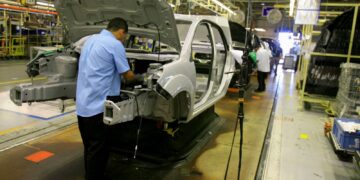
A contract vote would normally be a closely watched moment inside an automaker. This time, the stakes stretch well beyond the factory gates. More than 4,600 Unifor members at General Motors operations across Ontario are beginning ratification meetings on tentative agreements reached with the company, with voting taking place August 29 and 30.

Workers are weighing promised improvements to wages, benefits and job security while the economic environment around their plants is becoming markedly less predictable. GM has invested billions of dollars in Canadian manufacturing, including major commitments in Oshawa and St. Catharines, but renewed U.S. tariff threats have placed those investments inside a much larger Canada-U.S. trade confrontation. For employees deciding whether to approve the new agreements, the question is therefore not simply what the contract delivers today. It is how much security any contract can provide when trade rules themselves are shifting.

Workers Across Four Ontario Operations Get Their Say

The tentative agreements cover employees at Oshawa Assembly, the St. Catharines Propulsion Plant, the Woodstock Parts Distribution Centre and CAMI Assembly in Ingersoll. Unifor represents more than 4,600 workers across those facilities, making the vote one of the most consequential Canadian automotive labour decisions of 2026. Union local leaders unanimously endorsed the agreements on August 28 after receiving a presentation on the terms in Toronto.

Members are receiving fuller briefings during ratification meetings on August 29 and 30 before casting their ballots. Unifor has said results will be released after the final votes are tabulated. That sequencing matters because the union and GM have deliberately kept many details out of the public domain while members review them first. GM has confirmed that the tentative settlements contain increases in wages and benefits along with job-security provisions. Unifor has described the agreements as delivering strong income and benefit gains while securing the bargaining pattern established earlier with Ford.

The Bargaining Table Was Surrounded by Trade Uncertainty

Formal GM negotiations began August 10, but the talks were never taking place in a conventional business environment. Unifor entered bargaining after repeatedly warning that U.S. trade actions were threatening Canadian automotive production, investment and employment. The union’s GM bargaining leadership specifically pointed to tariff uncertainty and what it described as continuing U.S. trade aggression when announcing the tentative settlement.

That backdrop helps explain why job and income security carried unusual importance in this round. When negotiations opened, Unifor said approximately 30% of its GM members in Canada were on layoff. That is a remarkable number for a bargaining unit simultaneously negotiating wage improvements and trying to secure the future of multiple facilities. Workers were effectively being asked to consider two timelines at once: their compensation over the next contract and the longer-term question of where GM will build vehicles, engines and components if cross-border trade becomes substantially more expensive. Those concerns are especially acute because automotive investment decisions can shape communities for decades.

The Ford Pattern Gave GM Workers a Starting Point

Unifor deliberately negotiated with Ford first in the 2026 Detroit Three bargaining round, creating a pattern it intended to carry into GM and eventually Stellantis. Ford workers ratified a three-year agreement in July providing general wage increases of 3% in each year, along with stronger job and income-security measures, investment commitments, pension improvements and enhanced benefits for roughly 5,150 Canadian employees.

Unifor says the tentative GM agreements secure that Ford pattern, an important signal for members assessing whether the settlement meets the union’s broader bargaining objectives. Still, the exact GM-specific package matters. Automotive pattern bargaining does not mean every plant has identical circumstances or every local issue disappears into one national template. GM and Unifor have therefore avoided publicly detailing every provision before workers receive their ratification materials. That distinction is particularly significant in 2026 because an operating truck plant in Oshawa and an idled assembly operation in Ingersoll face dramatically different versions of what “job security” can mean.

Oshawa and CAMI Show Two Sides of GM’s Canadian Footprint

The contrast between GM’s Ontario plants is difficult to miss. Oshawa Assembly accounts for about 2,750 Unifor members and remains a major production centre for Chevrolet Silverado pickups. GM said in June that Oshawa had built more than 500,000 Silverado trucks since production restarted in November 2021. The plant operates as GM’s only North American facility capable of producing both light-duty and heavy-duty Silverado pickups on the same line.

CAMI Assembly in Ingersoll tells a more uncertain story. Unifor counted roughly 1,050 members there when bargaining began and described the facility as idled. GM says it continues to assess CAMI for future opportunities, leaving workers waiting for clarity on what comes next. St. Catharines has around 700 Unifor members, while Woodstock has roughly 110. Those different realities mean workers may judge the tentative agreements through different lenses: immediate compensation in an active plant, future product commitments, income protection during layoffs, or the possibility of bringing an idled facility back into meaningful production.

GM Is Still Putting Serious Money Into Ontario

Despite the uncertainty, GM has continued making substantial Canadian manufacturing commitments. The automaker says it has invested about C$3.3 billion in its Canadian manufacturing operations since 2020. Oshawa alone has received roughly C$1.5 billion over that period, including investments supporting preparations for GM’s next generation of gas-powered full-size pickup trucks.

St. Catharines received another major vote of confidence in April when GM announced a C$691 million investment to prepare the plant to build its sixth-generation V-8 engine. The facility will become one of three GM plants producing that engine generation, alongside operations in Buffalo, New York, and Flint, Michigan. That cross-border structure illustrates both the strength and vulnerability of the Canadian industry. Ontario factories are not isolated production islands; they are nodes inside a North American manufacturing network. Engines, components and completed vehicles routinely move across borders. Large investments strengthen the case for keeping work in Canada, but they cannot fully insulate plants if tariffs make those movements substantially more expensive.

Trump’s Latest Auto Threat Changes the Calculation

The largest external risk now comes from Washington. Canadian-built automobiles have already faced U.S. tariffs since April 2025, with a 25% duty applying to the non-U.S. content of qualifying Canadian vehicles under the existing American measures. In late August 2026, President Donald Trump escalated the threat further, saying tariffs on Canadian cars, trucks and automotive parts would rise to 50% beginning January 1, 2027 if the dispute remains unresolved.

That is an especially serious threat for Ontario because Canada’s auto industry remains overwhelmingly oriented toward the American market. The federal government says more than 90% of Canadian-made vehicles and about 60% of Canadian-made automotive parts are exported to the United States. Canada produced more than 1.2 million passenger vehicles in 2025, and the sector directly supports about 125,000 jobs nationally. A tariff increase therefore would not be a distant trade-policy development. It would affect the economics used by automakers when deciding production volumes, model allocations, shifts and future capital spending.

A Strong Contract Cannot Eliminate a Weak Trade Environment

The GM vote captures an uncomfortable reality for organized labour: collective bargaining can improve wages and employment protections, but it cannot rewrite international trade policy. Even a contract with meaningful income-security provisions has limits if production is reduced for an extended period or an automaker decides future investment is more economical somewhere else. That is why Unifor has increasingly linked contract bargaining with industrial and trade policy.

GM faces its own balancing act. The company has billions invested in Ontario, established supply networks, specialized facilities and experienced workforces. Moving complex production is neither immediate nor cost-free. At the same time, automakers plan years ahead and constantly compare the economics of competing plants. A persistent 25% tariff is already significant; a threatened 50% rate introduces another level of uncertainty. For a worker in Oshawa or St. Catharines, the numbers on a wage grid matter greatly, but so does the probability that the product being built today will remain competitive when shipped across the border tomorrow.

The Vote Could Set Up the Next Detroit Three Battle

If members approve the tentative agreements, GM will become the second Detroit Three automaker to complete Unifor’s 2026 bargaining process after Ford. Attention would then increasingly shift toward Stellantis, where Canadian employment and plant-allocation questions are also prominent. Unifor’s pattern-bargaining strategy is designed to prevent individual automakers from using different wage and benefit structures to compete against one another inside the Canadian workforce.

For GM employees, however, the immediate decision is more personal. Members must decide whether the economic gains and security measures negotiated by their representatives are strong enough for the next contract period. Union leadership is unanimously recommending approval, while GM says the settlement recognizes employee contributions and builds on its Canadian investments. The eventual result will settle one major source of uncertainty. It cannot settle the larger one. Until Ottawa and Washington establish a more durable trading framework, Ontario autoworkers will continue working under contracts whose real value is partly determined by decisions being made far outside their plants.


Recommended.

Canada-U.S. Auto Tariff Talks Go Down to the Wire With 50% Duties Three Days Away

⁠Canada Vows Dollar-for-Dollar Retaliation as Auto Trade Deal Collapses

August 22, 2026
18 Auto Repairs Canadians Keep Putting Off Until the Bill Gets Ugly

18 Auto Repairs Canadians Keep Putting Off Until the Bill Gets Ugly

May 8, 2026

Trending.

⁠$28 Billion in Canadian Goods Face 50% Trump Tariffs at Midnight as Deal Still Isn’t Final

Canada-U.S. Trade Deal Fell Apart After Washington Left Ontario-Built Ford and GM Trucks Out of Auto Tariff Relief

August 23, 2026
Quebec’s BRP Prepares 2027 Vehicle Reveal Tonight as Canadian Manufacturer Pushes New Can-Am Lineup

Quebec’s BRP Prepares 2027 Vehicle Reveal Tonight as Canadian Manufacturer Pushes New Can-Am Lineup

August 17, 2026
Doug Ford Says U.S. ‘Wasn’t Budging’ on 25% Auto Tariffs as Ontario Puts ‘Every Single Tool’ on the Table

Doug Ford Says U.S. ‘Wasn’t Budging’ on 25% Auto Tariffs as Ontario Puts ‘Every Single Tool’ on the Table

August 23, 2026
Mexico Pushes U.S. to Cut Auto Tariff From 25% to 5%–10% — and Give Canadian Parts More Room

Ottawa’s Chinese-EV Quota Opens Canada to 6.1% Tariffs Instead of the Former 100% Surtax

August 22, 2026
19 Things That Can Make Your Car Insurance Claim Get Denied

Foreign Insurer Can Apply to Enter Canada’s Auto-Insurance Market Starting Today

August 17, 2026
  • About
  • Contact
  • Privacy Policy
  • Disclaimer
  • Editorial Policies
  • Terms and Conditions
A Revir Media Group Website

2026 Autoigloo - © All rights reserved

No Result
View All Result
  • News & Trends
  • Car Reviews
  • Buying Guides
  • Comparisons
  • EVs & Hybrids
  • More
    • Pricing & Deals
    • Winter Driving
    • Ownership & Maintenance

2026 Autoigloo - © All rights reserved

This website uses cookies. By continuing to use this website you are giving consent to cookies being used. Visit our Privacy and Cookie Policy.


