





















• About
  • Contact
AutoIgloo
  • News & Trends
    Canada-U.S. Auto Tariff Talks Go Down to the Wire With 50% Duties Three Days Away

    Canadian Auto Suppliers Face a New Trade-War Morning as Markets Price in a Longer U.S. Standoff

    Former GM Critical-Materials Executive Takes Over Canadian Scandium Company as Auto Supply Chains Shift

    Former GM Critical-Materials Executive Takes Over Canadian Scandium Company as Auto Supply Chains Shift

    Canada-U.S. Auto Tariff Talks Go Down to the Wire With 50% Duties Three Days Away

    Canada’s Auto Industry Lost Its 15% U.S. Tariff Escape Route When Trade Deal Collapsed

    Trump Trade Fight Puts Ford and GM’s Canadian-Built Trucks Back in the Crosshairs

    Trump Trade Fight Puts Ford and GM’s Canadian-Built Trucks Back in the Crosshairs

    Lucid Launches 1,070-HP Gravity GT-S in U.S. — Canadian Buyers Are Left Out

    Stellantis Shares Drop About 3% as Canada-U.S. Tariff Fight Reopens Fears Over Canadian Plants

    Canada-U.S. Auto Tariff Talks Go Down to the Wire With 50% Duties Three Days Away

    Canadian Auto Tariff Deal Fell Apart After Written U.S. Terms Didn’t Match What Ottawa Thought It Had Agreed To

  • Car Reviews
    18 Things That Can Make a Car Unsafe for Winter Road Trips

    Why Some Drivers Are Avoiding Vehicles With Complex Infotainment Systems

    21 Cars Canadians Are Starting to Regret Buying

    Why Some Drivers Regret Buying Big Wheels and Low-Profile Tires

    17 Vehicles That Are Quietly Getting Crushed by Insurance Costs in Canada

    Why So Many Drivers Are Nervous About Chinese-Made EV Batteries

    20 Used SUVs Canadians Should Think Twice About Buying

    20 Used SUVs Canadians Should Think Twice About Buying

    15 Vehicles That Are Starting to Feel Like a Bad Deal Around May Long Weekend

    15 Vehicles That Are Starting to Feel Like a Bad Deal Around May Long Weekend

    15 Vehicles That Are Starting to Scare Off Canadian Buyers

    15 Vehicles That Are Starting to Scare Off Canadian Buyers

  • Buying Guides
    25 EV Charging Mistakes Canadians Make in March (That Wreck Range)

    Why Some Canadians Are Choosing Hybrids Over Full EVs Again

    22 Signs a Car Has Been in a Serious Crash Even if the Report Looks Clean

    21 Things That Make a Used Car Listing Seem Suspicious

    23 Features That Are Making New Cars Harder (and Pricier) to Repair in Canada

    Why Some Buyers Regret Choosing the Cheapest Trim Level

    18 Things That Can Make a Car Unsafe for Winter Road Trips

    Why Some Drivers Are Avoiding Vehicles With Complex Infotainment Systems

    22 Things Canadians Should Know Before Buying a Diesel Vehicle

    22 Things Canadians Should Know Before Buying a Diesel Vehicle

    15 Ways a Low Monthly Payment Can Fool Canadian Car Buyers

    The Car Buying Mistake That Gives Dealers More Control

  • Comparisons
    25 EV Charging Mistakes Canadians Make in March (That Wreck Range)

    Why Some Canadians Are Choosing Hybrids Over Full EVs Again

    21 Used Car Features That Can Become Expensive Problems Later

    Why Some Canadians Are Choosing Front-Wheel Drive Over All-Wheel Drive

    Canada’s Auto Fight Gets Uglier as BYD Threatens to Sue Trump Administration

    Tesla Vs. BYD: Are Chinese EV’s Actually Better for Canadians?

    17 Vehicles That Are Quietly Getting Crushed by Insurance Costs in Canada

    Why So Many Drivers Are Nervous About Chinese-Made EV Batteries

    20 Used SUVs Canadians Should Think Twice About Buying

    20 Used SUVs Canadians Should Think Twice About Buying

    16 Cars That Are a Nightmare to Repair Because Parts Are Backordered

    23 Cars Canadians Love That Have One Deal-Breaker Flaw

  • EVs & Hybrids
    20 Signs Your Car Battery Is About to Leave You Stranded

    Canadian Auto Jobs Become a Central Fault Line as Ottawa Reveals Why It Rejected U.S. Vehicle Terms

    25 EV Charging Mistakes Canadians Make in March (That Wreck Range)

    Why Some Canadians Are Choosing Hybrids Over Full EVs Again

    The EV Charging Habit That Can Annoy Everyone Around You

    Canada Is Missing an EV-Battery Export Opening as EU Lithium Demand Heads for a 9-to-12-Fold Jump: Report

    16 Used-EV Surprises Canadians Don’t See Coming Until After They Buy

    The EV Charging Habit That Can Annoy Everyone Around You

    17 SUVs That Are Losing Their Appeal Fast in Canada

    GM Canada Says EV Sales Jumped More Than 30% as CUSMA Uncertainty Hangs Over Showrooms

    9 Auto Brands Canadians Are Watching Much More Closely Right Now

    Toyota Canada Says Electrified Vehicles Are Now Nearly 70% of Its Q2 Sales

  • More
    • Pricing & Deals
    • Winter Driving
    • Ownership & Maintenance
No Result
View All Result
AutoIgloo
  • News & Trends
    Canada-U.S. Auto Tariff Talks Go Down to the Wire With 50% Duties Three Days Away

    Canadian Auto Suppliers Face a New Trade-War Morning as Markets Price in a Longer U.S. Standoff

    Former GM Critical-Materials Executive Takes Over Canadian Scandium Company as Auto Supply Chains Shift

    Former GM Critical-Materials Executive Takes Over Canadian Scandium Company as Auto Supply Chains Shift

    Canada-U.S. Auto Tariff Talks Go Down to the Wire With 50% Duties Three Days Away

    Canada’s Auto Industry Lost Its 15% U.S. Tariff Escape Route When Trade Deal Collapsed

    Trump Trade Fight Puts Ford and GM’s Canadian-Built Trucks Back in the Crosshairs

    Trump Trade Fight Puts Ford and GM’s Canadian-Built Trucks Back in the Crosshairs

    Lucid Launches 1,070-HP Gravity GT-S in U.S. — Canadian Buyers Are Left Out

    Stellantis Shares Drop About 3% as Canada-U.S. Tariff Fight Reopens Fears Over Canadian Plants

    Canada-U.S. Auto Tariff Talks Go Down to the Wire With 50% Duties Three Days Away

    Canadian Auto Tariff Deal Fell Apart After Written U.S. Terms Didn’t Match What Ottawa Thought It Had Agreed To

  • Car Reviews
    18 Things That Can Make a Car Unsafe for Winter Road Trips

    Why Some Drivers Are Avoiding Vehicles With Complex Infotainment Systems

    21 Cars Canadians Are Starting to Regret Buying

    Why Some Drivers Regret Buying Big Wheels and Low-Profile Tires

    17 Vehicles That Are Quietly Getting Crushed by Insurance Costs in Canada

    Why So Many Drivers Are Nervous About Chinese-Made EV Batteries

    20 Used SUVs Canadians Should Think Twice About Buying

    20 Used SUVs Canadians Should Think Twice About Buying

    15 Vehicles That Are Starting to Feel Like a Bad Deal Around May Long Weekend

    15 Vehicles That Are Starting to Feel Like a Bad Deal Around May Long Weekend

    15 Vehicles That Are Starting to Scare Off Canadian Buyers

    15 Vehicles That Are Starting to Scare Off Canadian Buyers

  • Buying Guides
    25 EV Charging Mistakes Canadians Make in March (That Wreck Range)

    Why Some Canadians Are Choosing Hybrids Over Full EVs Again

    22 Signs a Car Has Been in a Serious Crash Even if the Report Looks Clean

    21 Things That Make a Used Car Listing Seem Suspicious

    23 Features That Are Making New Cars Harder (and Pricier) to Repair in Canada

    Why Some Buyers Regret Choosing the Cheapest Trim Level

    18 Things That Can Make a Car Unsafe for Winter Road Trips

    Why Some Drivers Are Avoiding Vehicles With Complex Infotainment Systems

    22 Things Canadians Should Know Before Buying a Diesel Vehicle

    22 Things Canadians Should Know Before Buying a Diesel Vehicle

    15 Ways a Low Monthly Payment Can Fool Canadian Car Buyers

    The Car Buying Mistake That Gives Dealers More Control

  • Comparisons
    25 EV Charging Mistakes Canadians Make in March (That Wreck Range)

    Why Some Canadians Are Choosing Hybrids Over Full EVs Again

    21 Used Car Features That Can Become Expensive Problems Later

    Why Some Canadians Are Choosing Front-Wheel Drive Over All-Wheel Drive

    Canada’s Auto Fight Gets Uglier as BYD Threatens to Sue Trump Administration

    Tesla Vs. BYD: Are Chinese EV’s Actually Better for Canadians?

    17 Vehicles That Are Quietly Getting Crushed by Insurance Costs in Canada

    Why So Many Drivers Are Nervous About Chinese-Made EV Batteries

    20 Used SUVs Canadians Should Think Twice About Buying

    20 Used SUVs Canadians Should Think Twice About Buying

    16 Cars That Are a Nightmare to Repair Because Parts Are Backordered

    23 Cars Canadians Love That Have One Deal-Breaker Flaw

  • EVs & Hybrids
    20 Signs Your Car Battery Is About to Leave You Stranded

    Canadian Auto Jobs Become a Central Fault Line as Ottawa Reveals Why It Rejected U.S. Vehicle Terms

    25 EV Charging Mistakes Canadians Make in March (That Wreck Range)

    Why Some Canadians Are Choosing Hybrids Over Full EVs Again

    The EV Charging Habit That Can Annoy Everyone Around You

    Canada Is Missing an EV-Battery Export Opening as EU Lithium Demand Heads for a 9-to-12-Fold Jump: Report

    16 Used-EV Surprises Canadians Don’t See Coming Until After They Buy

    The EV Charging Habit That Can Annoy Everyone Around You

    17 SUVs That Are Losing Their Appeal Fast in Canada

    GM Canada Says EV Sales Jumped More Than 30% as CUSMA Uncertainty Hangs Over Showrooms

    9 Auto Brands Canadians Are Watching Much More Closely Right Now

    Toyota Canada Says Electrified Vehicles Are Now Nearly 70% of Its Q2 Sales

  • More
    • Pricing & Deals
    • Winter Driving
    • Ownership & Maintenance
No Result
View All Result
AutoIgloo
No Result
View All Result

Home » News & Trends

Canadian Auto Suppliers Face a New Trade-War Morning as Markets Price in a Longer U.S. Standoff

Nate Brewer by Nate Brewer
August 25, 2026
Reading Time: 5 mins read
A A
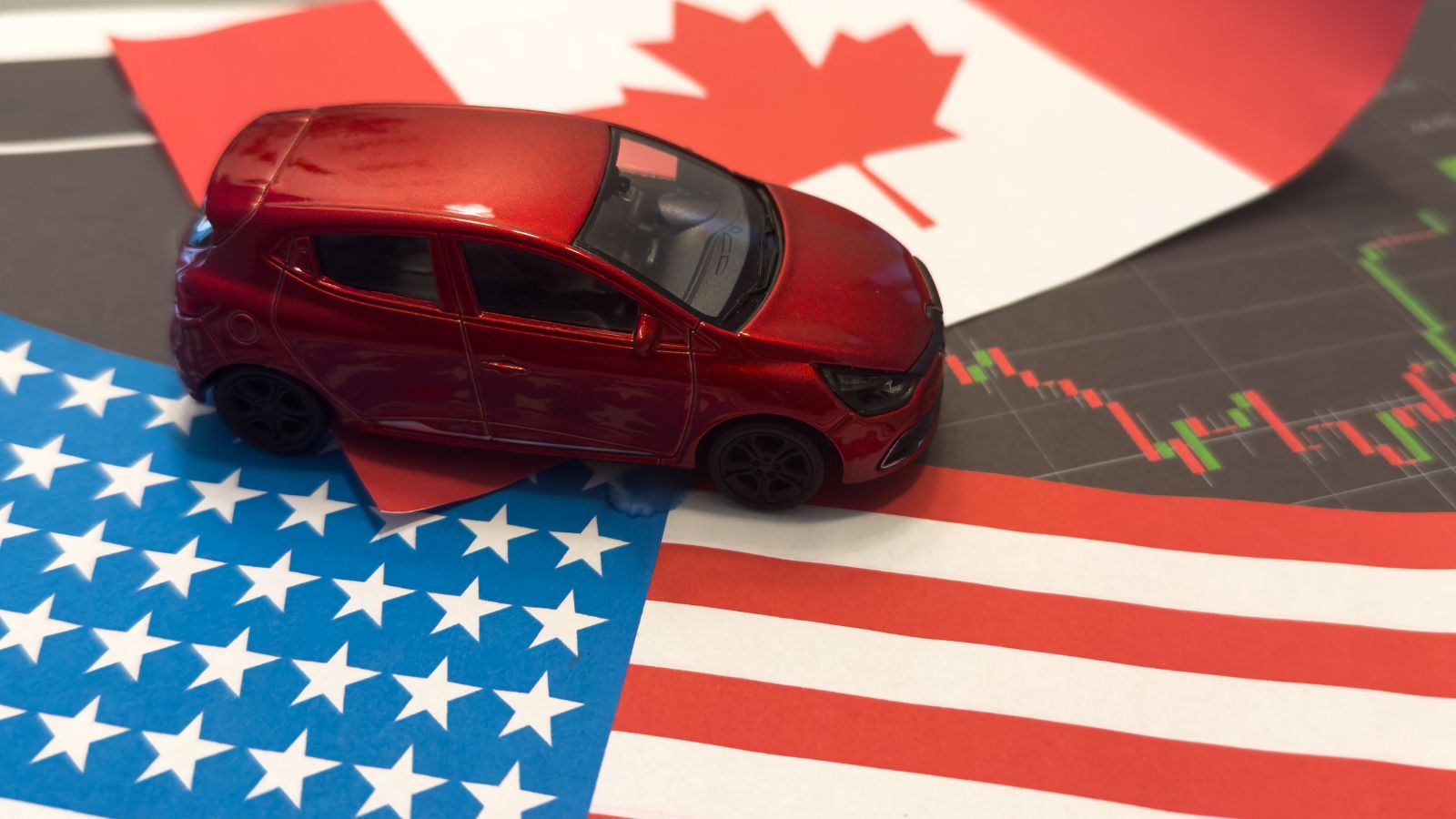
Photo Credit: Shutterstock

Photo Credit: Shutterstock

465
SHARES
1.5k
VIEWS
Share on FacebookShare on Twitter

Before the first shift begins at an Ontario parts plant, the trade war is already moving through currency screens, stock prices and purchasing plans. Canada’s auto sector is entering another uneasy morning after U.S. President Donald Trump threatened a 50% tariff on Canadian-made vehicles and auto parts beginning January 1, 2027, following the breakdown of the latest bilateral negotiations.

The tariff has not yet been formally imposed, and months remain for diplomacy to change the outcome. Yet markets are treating the threat as more than political theatre. Canadian suppliers sit inside one of the world’s most integrated manufacturing systems, where parts can cross the border several times before a completed vehicle reaches a dealership. The immediate question is therefore not simply what Washington does next, but how long companies will have to operate without knowing the rules.

A Monday Selloff Becomes Tuesday’s Starting Point

The latest market reaction offered an early measure of how investors are interpreting the breakdown. The Canadian dollar weakened sharply after Trump announced the prospective 50% auto and parts tariff, falling roughly 0.6% against the U.S. dollar in Monday trading. Canadian auto suppliers also came under pressure. A Wall Street Journal market roundup reported declines of roughly 4% for Magna International, 4.9% for Linamar and 6.3% for Martinrea International as investors reassessed the possibility that the dispute could stretch into 2027.

Those moves matter because the underlying businesses did not suddenly lose factories, customers or engineering capabilities overnight. What changed was the perceived probability of a longer period of uncertainty. Before negotiations collapsed, Canada and the United States had been discussing a framework that could have reduced the headline U.S. automotive tariff from 25% to 15%. Trump’s subsequent threat instead points in the opposite direction. For shareholders, lenders and executives setting capital budgets, that wider range of possible outcomes makes future earnings harder to price and new investment more difficult to justify.

The Border Is Part of the Factory Floor

Canada’s automotive industry is especially sensitive to trade disruptions because the border functions less like the edge of a market than a connection between different stages of the same factory system. Federal industry data show that Ford, General Motors, Honda, Stellantis and Toyota assembled more than 1.31 million light-duty vehicles in Canada in 2024. The wider industry directly employed more than 125,000 people and indirectly supported roughly 427,000 jobs, while a network of nearly 700 parts suppliers stretches well beyond the major assembly plants.

Dependence on U.S. demand is even more striking when measured at the plant level. Statistics Canada estimated that U.S. demand accounted for 76.4% of the output and payroll employment generated by Canadian motor-vehicle assembly in 2024. More than 93% of Canadian motor-vehicle exports were destined for the United States. Components can also cross the border repeatedly before final assembly, meaning a tariff imposed at one stage can affect costs farther along the chain. A steering component made in Ontario may be incorporated into an American subassembly before ultimately returning inside a finished vehicle.

The New Threat Targets a Crucial Tariff Shield

One reason the proposed 50% rate has attracted so much attention is that many Canadian suppliers have spent the existing trade dispute working to preserve tariff-free treatment wherever North American content rules allow it. The United States introduced 25% Section 232 tariffs on imported automobiles in April 2025 and subsequently extended measures to automotive parts, but CUSMA compliance and specific treatment of qualifying content have remained central to how much individual companies actually pay. The result has been a complicated system in which headline tariff rates do not necessarily describe every shipment.

Linamar illustrated the importance of those protections in its second-quarter reporting, saying more than 90% of its sales were tariff-free before the latest threat and noting that the majority of its automotive-parts sales qualified for tariff-free treatment under existing North American rules. A blanket 50% tariff on Canadian auto parts, if ultimately implemented without comparable exemptions, would therefore represent a substantially different commercial problem. For now, however, crucial details remain unknown. Trump announced the January threat politically; companies still need to see the legal mechanism, product coverage, exemptions and treatment of CUSMA-compliant goods before calculating the actual bill.

Strong Earnings Do Not Make Suppliers Immune

The paradox facing investors is that several major Canadian suppliers entered this confrontation with respectable operating results. Magna reported second-quarter sales of about US$11 billion, adjusted earnings before interest and taxes of US$677 million and free cash flow of US$617 million. The company also raised its 2026 outlook. Linamar reported record quarterly sales of approximately C$3.14 billion, including C$2.36 billion from its Mobility segment, while normalized operating earnings in that business increased nearly 29% from a year earlier.

Martinrea also reported more than C$1.2 billion in quarterly sales and adjusted EBITDA of roughly C$147 million. Those figures help explain why the market reaction should not automatically be read as evidence of immediate financial distress. The concern is what sustained tariff uncertainty might do to future vehicle programs, sourcing decisions and capital spending. Auto suppliers often commit money years before a new model reaches showrooms, purchasing specialized equipment and engineering production lines around expected volumes. A business can be profitable today while becoming more cautious about a plant expansion whose economics depend on cross-border shipments three years from now.

Labour-Market Damage Can Appear Before a Final Deal

For workers, uncertainty can arrive in quieter forms than a plant closure. Statistics Canada found that employment in motor-vehicle parts manufacturing fell 9.3% during 2025, a period in which the broader manufacturing sector shed nearly 36,000 jobs between December 2024 and December 2025. Vehicle-manufacturing employment itself declined by a smaller 1.3%. Those changes had multiple causes, but they occurred as manufacturers were already dealing with tariffs, slower production and uncertainty about future North American trade rules.

The regional concentration magnifies the consequences. In the Windsor-Sarnia economic region, industries dependent on U.S. demand accounted for about 16.4% of employment in 2024. The region’s unemployment rate reached 10% in the third quarter of 2025, 1.7 percentage points higher than a year earlier. For a family whose income depends on an assembly plant, tool-and-die operation or logistics contractor, the important signal may not be a tariff announcement itself. It may be an overtime shift that disappears, a replacement machine that is postponed or a new production contract that goes somewhere else while executives wait for trade rules to stabilize.

The United States Is Exposed to the Same Supply Chain

The economic pressure does not run in only one direction. Canadian suppliers sell into U.S. assembly plants that have been designed around tightly synchronized North American sourcing. Industry representatives have repeatedly warned that disrupting parts flows can raise production costs for American manufacturers as well as Canadian exporters. Tariffs collected at the border are generally paid initially by the U.S. importer, leaving companies to decide whether to absorb the additional cost, negotiate with suppliers, change sourcing or ultimately pass some of it through the value chain.

That interdependence is one reason the dispute remains negotiable despite increasingly confrontational language. Replacing a specialized automotive component is not equivalent to changing brands at a retail store. Suppliers undergo qualification, tooling and quality-control processes, and a component must fit into production schedules measured in hours rather than months. Washington may see tariffs as leverage to draw more manufacturing into the United States, while Canadian policymakers see the same measures as a threat to a continental industrial system developed over decades. Both propositions can influence corporate decisions, but shifting an entire supply network is expensive and rarely immediate.

The Next Test Is Whether Uncertainty Becomes Policy

Several dates now matter more than another day of stock-market volatility. Canada has said new retaliatory measures will begin September 8 after the latest negotiating round failed. Ottawa has also scheduled announcements on additional measures to protect Canadian workers and businesses. On the American side, the central question is whether Trump’s January 1 automotive threat becomes a formal policy with clearly defined tariff lines, exemptions and rules for North American content—or whether renewed negotiations prevent it from reaching that stage.

The Bank of Canada had already warned before the latest breakdown that prolonged trade uncertainty could restrain business investment and household spending. That mechanism is particularly relevant to automotive manufacturing because companies make large, long-lived investments that depend on predictable access to markets. The next few months will therefore be watched for more than a diplomatic breakthrough. Suppliers will be looking for production commitments, customer sourcing decisions and evidence that governments can restore a planning horizon. Until then, every new model allocation and capital project carries an extra variable: not simply the tariff rate, but the possibility that the rules will change again.


Recommended.

Trump Pushes New Canada Auto Duties to Aug. 22 as Three-Day Tariff Pause Takes Effect

Canada-U.S. Trade Talks Collapse, Leaving 25% Auto Tariff Relief Dead for Now

August 22, 2026
27 Things Canadian Drivers Should Do Before Pothole Season Destroys Their Suspension

15 Signs Your Vehicle Is Becoming Too Expensive to Keep

July 9, 2026

Trending.

⁠$28 Billion in Canadian Goods Face 50% Trump Tariffs at Midnight as Deal Still Isn’t Final

Canada-U.S. Trade Deal Fell Apart After Washington Left Ontario-Built Ford and GM Trucks Out of Auto Tariff Relief

August 23, 2026
Quebec’s BRP Prepares 2027 Vehicle Reveal Tonight as Canadian Manufacturer Pushes New Can-Am Lineup

Quebec’s BRP Prepares 2027 Vehicle Reveal Tonight as Canadian Manufacturer Pushes New Can-Am Lineup

August 17, 2026
Mexico Pushes U.S. to Cut Auto Tariff From 25% to 5%–10% — and Give Canadian Parts More Room

Ottawa’s Chinese-EV Quota Opens Canada to 6.1% Tariffs Instead of the Former 100% Surtax

August 22, 2026
Doug Ford Says U.S. ‘Wasn’t Budging’ on 25% Auto Tariffs as Ontario Puts ‘Every Single Tool’ on the Table

Doug Ford Says U.S. ‘Wasn’t Budging’ on 25% Auto Tariffs as Ontario Puts ‘Every Single Tool’ on the Table

August 23, 2026
19 Things That Can Make Your Car Insurance Claim Get Denied

Foreign Insurer Can Apply to Enter Canada’s Auto-Insurance Market Starting Today

August 17, 2026
  • About
  • Contact
  • Privacy Policy
  • Disclaimer
  • Editorial Policies
  • Terms and Conditions
A Revir Media Group Website

2026 Autoigloo - © All rights reserved

No Result
View All Result
  • News & Trends
  • Car Reviews
  • Buying Guides
  • Comparisons
  • EVs & Hybrids
  • More
    • Pricing & Deals
    • Winter Driving
    • Ownership & Maintenance

2026 Autoigloo - © All rights reserved

This website uses cookies. By continuing to use this website you are giving consent to cookies being used. Visit our Privacy and Cookie Policy.


