





















• About
  • Contact
AutoIgloo
  • News & Trends
    Doug Ford Says U.S. ‘Wasn’t Budging’ on 25% Auto Tariffs as Ontario Puts ‘Every Single Tool’ on the Table

    Doug Ford Says U.S. ‘Wasn’t Budging’ on 25% Auto Tariffs as Ontario Puts ‘Every Single Tool’ on the Table

    ⁠$28 Billion in Canadian Goods Face 50% Trump Tariffs at Midnight as Deal Still Isn’t Final

    Canada-U.S. Trade Deal Fell Apart After Washington Left Ontario-Built Ford and GM Trucks Out of Auto Tariff Relief

    23 Things That Make Canadian Commutes More Expensive Than People Realize

    Canada’s Car-Theft Drop Is Real — But Nearly 21,000 Vehicles Were Still Stolen in Six Months

    18 Auto Repairs Canadians Keep Putting Off Until the Bill Gets Ugly

    GM and Unifor Reach Deal Covering 4,600 Ontario Auto Workers at Four Sites

    GMC Adds Blacked-Out Denali Dark Package to 2027 Sierra EV

    GM Plans to Put the Most Expensive 2027 Silverado and Sierra Trims Into Production First

    Rivian Tells Some R2 Owners to Stop DC Fast Charging Until Their Vehicles Are Inspected

    Rivian Tells Some R2 Owners to Stop DC Fast Charging Until Their Vehicles Are Inspected

  • Car Reviews
    18 Things That Can Make a Car Unsafe for Winter Road Trips

    Why Some Drivers Are Avoiding Vehicles With Complex Infotainment Systems

    21 Cars Canadians Are Starting to Regret Buying

    Why Some Drivers Regret Buying Big Wheels and Low-Profile Tires

    17 Vehicles That Are Quietly Getting Crushed by Insurance Costs in Canada

    Why So Many Drivers Are Nervous About Chinese-Made EV Batteries

    20 Used SUVs Canadians Should Think Twice About Buying

    20 Used SUVs Canadians Should Think Twice About Buying

    15 Vehicles That Are Starting to Feel Like a Bad Deal Around May Long Weekend

    15 Vehicles That Are Starting to Feel Like a Bad Deal Around May Long Weekend

    15 Vehicles That Are Starting to Scare Off Canadian Buyers

    15 Vehicles That Are Starting to Scare Off Canadian Buyers

  • Buying Guides
    25 EV Charging Mistakes Canadians Make in March (That Wreck Range)

    Why Some Canadians Are Choosing Hybrids Over Full EVs Again

    22 Signs a Car Has Been in a Serious Crash Even if the Report Looks Clean

    21 Things That Make a Used Car Listing Seem Suspicious

    23 Features That Are Making New Cars Harder (and Pricier) to Repair in Canada

    Why Some Buyers Regret Choosing the Cheapest Trim Level

    18 Things That Can Make a Car Unsafe for Winter Road Trips

    Why Some Drivers Are Avoiding Vehicles With Complex Infotainment Systems

    22 Things Canadians Should Know Before Buying a Diesel Vehicle

    22 Things Canadians Should Know Before Buying a Diesel Vehicle

    15 Ways a Low Monthly Payment Can Fool Canadian Car Buyers

    The Car Buying Mistake That Gives Dealers More Control

  • Comparisons
    25 EV Charging Mistakes Canadians Make in March (That Wreck Range)

    Why Some Canadians Are Choosing Hybrids Over Full EVs Again

    21 Used Car Features That Can Become Expensive Problems Later

    Why Some Canadians Are Choosing Front-Wheel Drive Over All-Wheel Drive

    Canada’s Auto Fight Gets Uglier as BYD Threatens to Sue Trump Administration

    Tesla Vs. BYD: Are Chinese EV’s Actually Better for Canadians?

    17 Vehicles That Are Quietly Getting Crushed by Insurance Costs in Canada

    Why So Many Drivers Are Nervous About Chinese-Made EV Batteries

    20 Used SUVs Canadians Should Think Twice About Buying

    20 Used SUVs Canadians Should Think Twice About Buying

    16 Cars That Are a Nightmare to Repair Because Parts Are Backordered

    23 Cars Canadians Love That Have One Deal-Breaker Flaw

  • EVs & Hybrids
    25 EV Charging Mistakes Canadians Make in March (That Wreck Range)

    Why Some Canadians Are Choosing Hybrids Over Full EVs Again

    The EV Charging Habit That Can Annoy Everyone Around You

    Canada Is Missing an EV-Battery Export Opening as EU Lithium Demand Heads for a 9-to-12-Fold Jump: Report

    16 Used-EV Surprises Canadians Don’t See Coming Until After They Buy

    The EV Charging Habit That Can Annoy Everyone Around You

    17 SUVs That Are Losing Their Appeal Fast in Canada

    GM Canada Says EV Sales Jumped More Than 30% as CUSMA Uncertainty Hangs Over Showrooms

    9 Auto Brands Canadians Are Watching Much More Closely Right Now

    Toyota Canada Says Electrified Vehicles Are Now Nearly 70% of Its Q2 Sales

    25 EV Charging Mistakes Canadians Make in March (That Wreck Range)

    Ottawa Orders New Study on Whether Canada’s EV Grid Can Handle the Next Wave of Chargers

  • More
    • Pricing & Deals
    • Winter Driving
    • Ownership & Maintenance
No Result
View All Result
AutoIgloo
  • News & Trends
    Doug Ford Says U.S. ‘Wasn’t Budging’ on 25% Auto Tariffs as Ontario Puts ‘Every Single Tool’ on the Table

    Doug Ford Says U.S. ‘Wasn’t Budging’ on 25% Auto Tariffs as Ontario Puts ‘Every Single Tool’ on the Table

    ⁠$28 Billion in Canadian Goods Face 50% Trump Tariffs at Midnight as Deal Still Isn’t Final

    Canada-U.S. Trade Deal Fell Apart After Washington Left Ontario-Built Ford and GM Trucks Out of Auto Tariff Relief

    23 Things That Make Canadian Commutes More Expensive Than People Realize

    Canada’s Car-Theft Drop Is Real — But Nearly 21,000 Vehicles Were Still Stolen in Six Months

    18 Auto Repairs Canadians Keep Putting Off Until the Bill Gets Ugly

    GM and Unifor Reach Deal Covering 4,600 Ontario Auto Workers at Four Sites

    GMC Adds Blacked-Out Denali Dark Package to 2027 Sierra EV

    GM Plans to Put the Most Expensive 2027 Silverado and Sierra Trims Into Production First

    Rivian Tells Some R2 Owners to Stop DC Fast Charging Until Their Vehicles Are Inspected

    Rivian Tells Some R2 Owners to Stop DC Fast Charging Until Their Vehicles Are Inspected

  • Car Reviews
    18 Things That Can Make a Car Unsafe for Winter Road Trips

    Why Some Drivers Are Avoiding Vehicles With Complex Infotainment Systems

    21 Cars Canadians Are Starting to Regret Buying

    Why Some Drivers Regret Buying Big Wheels and Low-Profile Tires

    17 Vehicles That Are Quietly Getting Crushed by Insurance Costs in Canada

    Why So Many Drivers Are Nervous About Chinese-Made EV Batteries

    20 Used SUVs Canadians Should Think Twice About Buying

    20 Used SUVs Canadians Should Think Twice About Buying

    15 Vehicles That Are Starting to Feel Like a Bad Deal Around May Long Weekend

    15 Vehicles That Are Starting to Feel Like a Bad Deal Around May Long Weekend

    15 Vehicles That Are Starting to Scare Off Canadian Buyers

    15 Vehicles That Are Starting to Scare Off Canadian Buyers

  • Buying Guides
    25 EV Charging Mistakes Canadians Make in March (That Wreck Range)

    Why Some Canadians Are Choosing Hybrids Over Full EVs Again

    22 Signs a Car Has Been in a Serious Crash Even if the Report Looks Clean

    21 Things That Make a Used Car Listing Seem Suspicious

    23 Features That Are Making New Cars Harder (and Pricier) to Repair in Canada

    Why Some Buyers Regret Choosing the Cheapest Trim Level

    18 Things That Can Make a Car Unsafe for Winter Road Trips

    Why Some Drivers Are Avoiding Vehicles With Complex Infotainment Systems

    22 Things Canadians Should Know Before Buying a Diesel Vehicle

    22 Things Canadians Should Know Before Buying a Diesel Vehicle

    15 Ways a Low Monthly Payment Can Fool Canadian Car Buyers

    The Car Buying Mistake That Gives Dealers More Control

  • Comparisons
    25 EV Charging Mistakes Canadians Make in March (That Wreck Range)

    Why Some Canadians Are Choosing Hybrids Over Full EVs Again

    21 Used Car Features That Can Become Expensive Problems Later

    Why Some Canadians Are Choosing Front-Wheel Drive Over All-Wheel Drive

    Canada’s Auto Fight Gets Uglier as BYD Threatens to Sue Trump Administration

    Tesla Vs. BYD: Are Chinese EV’s Actually Better for Canadians?

    17 Vehicles That Are Quietly Getting Crushed by Insurance Costs in Canada

    Why So Many Drivers Are Nervous About Chinese-Made EV Batteries

    20 Used SUVs Canadians Should Think Twice About Buying

    20 Used SUVs Canadians Should Think Twice About Buying

    16 Cars That Are a Nightmare to Repair Because Parts Are Backordered

    23 Cars Canadians Love That Have One Deal-Breaker Flaw

  • EVs & Hybrids
    25 EV Charging Mistakes Canadians Make in March (That Wreck Range)

    Why Some Canadians Are Choosing Hybrids Over Full EVs Again

    The EV Charging Habit That Can Annoy Everyone Around You

    Canada Is Missing an EV-Battery Export Opening as EU Lithium Demand Heads for a 9-to-12-Fold Jump: Report

    16 Used-EV Surprises Canadians Don’t See Coming Until After They Buy

    The EV Charging Habit That Can Annoy Everyone Around You

    17 SUVs That Are Losing Their Appeal Fast in Canada

    GM Canada Says EV Sales Jumped More Than 30% as CUSMA Uncertainty Hangs Over Showrooms

    9 Auto Brands Canadians Are Watching Much More Closely Right Now

    Toyota Canada Says Electrified Vehicles Are Now Nearly 70% of Its Q2 Sales

    25 EV Charging Mistakes Canadians Make in March (That Wreck Range)

    Ottawa Orders New Study on Whether Canada’s EV Grid Can Handle the Next Wave of Chargers

  • More
    • Pricing & Deals
    • Winter Driving
    • Ownership & Maintenance
No Result
View All Result
AutoIgloo
No Result
View All Result

Home » News & Trends

⁠Canada Vows Dollar-for-Dollar Retaliation as Auto Trade Deal Collapses

Nate Brewer by Nate Brewer
August 22, 2026
Reading Time: 5 mins read
A A
Photo Credit: Shutterstock

Photo Credit: Shutterstock

465
SHARES
1.5k
VIEWS
Share on FacebookShare on Twitter

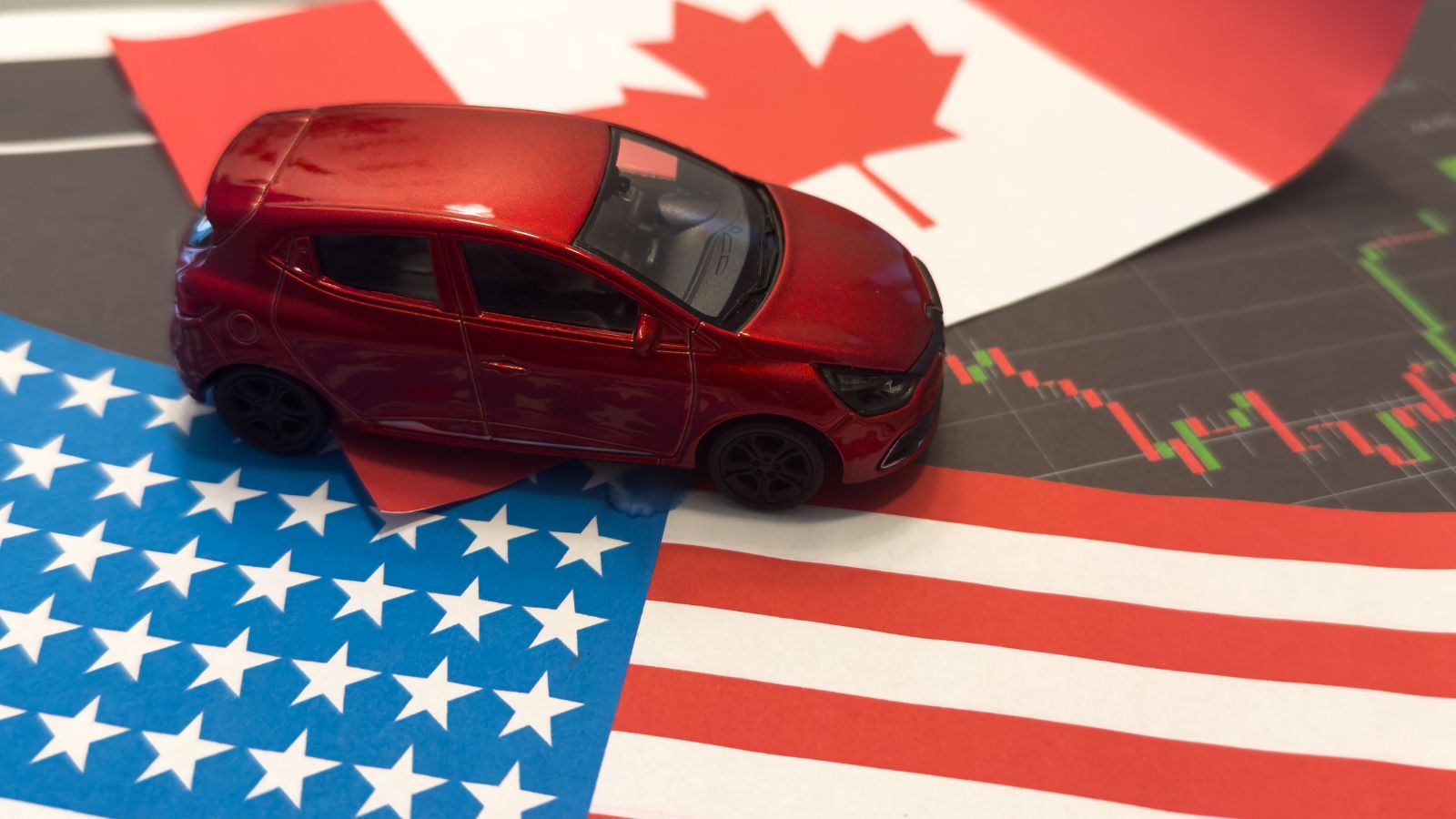
A Canada-U.S. trade agreement that appeared close enough to justify a last-minute tariff delay unraveled before the deadline, pushing the two countries into another round of retaliation. Prime Minister Mark Carney suspended negotiations after accusing Washington of changing key terms at the eleventh hour, while the United States moved ahead with 50% tariffs on roughly C$28 billion, or US$20 billion, worth of Canadian goods.

The failed negotiations covered more than automobiles, but relief for Canada’s heavily integrated auto sector was one of the major unresolved issues. Ottawa has now promised to match the new U.S. tariffs dollar for dollar, turning what had briefly looked like a path toward stability into a fresh test for manufacturers, exporters and the wider North American economy.

A Three-Day Reprieve Ended With No Deal

Only days earlier, the atmosphere surrounding the negotiations looked considerably more hopeful. On August 18, Ottawa confirmed that Washington had postponed its planned 50% tariffs until the end of August 21 because negotiators had made what the Canadian government described as “substantial progress.” The delay was significant because the duties had been scheduled to hit a wide assortment of Canadian goods under Section 338 of the U.S. Tariff Act of 1930. Businesses suddenly had three more days to hope that negotiators could convert preliminary understandings into something permanent.

That window closed without an agreement. Carney said Canada suspended negotiations after receiving last-minute U.S. terms that his government considered unfair and economically unacceptable. The tariffs consequently took effect after midnight on August 22. The United States estimates that approximately US$20 billion in imports are covered, representing roughly 5% of Canada’s annual exports to its southern neighbour. That percentage can sound modest nationally, but for companies whose specific products appear on the tariff list, the change is immediate and potentially severe.

Autos Were Already Carrying a Heavy Tariff Burden

The automotive dispute is especially sensitive because cars were already operating under a separate tariff regime before the latest 50% duties arrived. Since April 2025, Canadian-made vehicles entering the United States have faced a 25% tariff on their non-U.S. content, while qualifying U.S. content in CUSMA-compliant vehicles remains exempt. Canada responded with its own 25% tariffs on non-CUSMA-compliant U.S.-made vehicles and on certain non-Canadian and non-Mexican content in compliant U.S. vehicles.

That distinction matters: the new 50% Section 338 tariffs should not simply be described as a new 50% tariff slapped on every Canadian-built automobile. Products already covered by certain U.S. sectoral tariff actions are excluded from the new measure. The larger problem for automakers is that the negotiations had represented an opportunity to reduce the existing sectoral burden. More than 90% of Canadian-made vehicles and around 60% of Canadian-made auto parts are exported to the United States, and Ottawa says the industry supports roughly 125,000 direct Canadian jobs. Even partial tariff relief therefore carried enormous economic weight.

Ottawa and Washington Give Very Different Accounts of the Breakdown

The two governments agree that substantial negotiations took place, but their descriptions of why the deal failed are sharply different. Carney said the United States altered its position at the last minute in ways that Canada regarded as unfair and uneconomic. His government had entered the talks seeking to preserve tariff-free access for most Canadian businesses while substantially reducing U.S. tariffs affecting strategic sectors. Once Ottawa concluded the final terms did not accomplish those objectives, Canadian negotiators were recalled and the talks were suspended.

Washington presents the episode differently. U.S. officials have said Canada declined to finalize an agreement despite an American offer that would have included significant tariff reductions affecting automobiles, steel, aluminum and lumber alongside cooperation in other areas. Those competing accounts leave an important gap: the complete draft terms have not been publicly released. That makes sweeping claims about exactly what either government “walked away from” difficult to verify. What is clear is that vehicles, metals, forestry products and other longstanding irritants remained central to the bargaining right up to the collapse.

Dollar-for-Dollar Retaliation Is Ottawa’s Next Move

Carney’s immediate response was unusually explicit: Canada would match the U.S. tariffs dollar for dollar. Because Washington says the new duties cover approximately C$28 billion in Canadian products, the pledge points toward Canadian countermeasures of a comparable value. Ottawa also said additional assistance for workers and businesses would be announced, building on nearly C$25 billion in support that the federal government says it has provided during the previous 18 months of trade disruption.

The exact composition of the new retaliation is crucial. As of the initial announcement, Ottawa had not publicly laid out a complete final product-by-product schedule showing which additional U.S. exports would face Canadian tariffs. That prevents responsible estimates of precisely which American industries will bear the greatest impact. Canada also entered this dispute with some countermeasures already in force, including tariffs on certain U.S.-made vehicles. For importers and retailers, the practical difference between a political promise and an implemented customs list is enormous: purchasing decisions, contracts and prices ultimately depend on the products actually designated, not merely the headline dollar value.

The New 50% Tariffs Are Broad but Far From Universal

The latest U.S. measure is striking partly because it reaches products that can qualify for preferential treatment under CUSMA. Washington used Section 338, a rarely invoked provision of the Tariff Act of 1930, to impose the 50% rate on a designated group of Canadian imports. Reported examples range from hockey sticks and cement to other manufactured and consumer goods. The measure therefore reaches well beyond the heavy industrial sectors that have dominated much of the Canada-U.S. tariff fight.

At the same time, several economically important categories are excluded. U.S. measures have carved out products such as energy, potash, fish and designated critical minerals, while goods already subjected to certain Section 232 tariffs are also handled separately. That helps explain how Washington can impose an unusually high 50% rate while the affected goods still represent only about 5% of Canada’s annual exports to the United States. The economic shock is therefore concentrated rather than universal. A small manufacturer caught directly on the list could face a much harsher reality than an exporter whose products remain exempt.

Canada’s Auto Supply Chain Makes Tariff Friction Especially Costly

Canada’s automotive industry was built around the assumption that vehicles and components could move repeatedly across the border with relatively little friction. A transmission, stamped body panel or electronic module can be produced in one country, incorporated into a larger component in the other and eventually return across the border inside a completed vehicle. Canadian government data show the scale of that integration: more than nine in 10 Canadian-built vehicles are destined for the United States, while approximately six in 10 Canadian-made auto parts are exported there.

That structure means tariffs can influence decisions long before a factory closes or a shift disappears. Automakers decide years ahead where to allocate future models, tooling and investment. Parts manufacturers make similarly long-lived decisions about equipment and capacity. When managers cannot predict what a cross-border vehicle will cost after tariffs, the uncertainty itself becomes a competitive disadvantage. Canada produced more than 1.2 million passenger vehicles in 2025, making the stakes far larger than a handful of assembly plants. Suppliers, logistics companies and communities throughout Ontario and elsewhere are tied to the same production network.

Canada Is Diversifying, but the U.S. Market Is Still Difficult to Replace

Ottawa increasingly presents trade diversification as the long-term answer to American unpredictability, and recent statistics show measurable movement in that direction. Statistics Canada reported that the United States accounted for 71.7% of Canadian merchandise exports in 2025, down from 75.9% in 2024. Canadian exports to non-U.S. destinations increased 17.2% during the same year. Those figures suggest exporters have already begun adjusting to a less predictable continental trading environment.

Yet they also demonstrate why replacing the United States is not a near-term solution. A market receiving more than seven dollars of every ten in Canadian merchandise exports cannot quickly be replicated elsewhere, especially for industries designed around continental supply chains. The collapse of the latest negotiations therefore creates two simultaneous pressures: Ottawa must protect companies exposed to immediate tariffs while accelerating infrastructure and trade relationships that provide alternatives over time. The next decisive developments will be Canada’s detailed retaliation list, the promised business and worker support measures, and whether either government eventually decides the economic cost is high enough to reopen negotiations.


Recommended.

21 Vehicles Insurance Companies Are Quietly Flagging as “High Risk” in Canada (2026 Update)

20 Best-Selling Vehicles in Canada That Still Deserve the Hype

April 6, 2026
Hankook Launches Canada-Exclusive All-Terrain Tire Through Canadian Tire as Drivers Look for One Tire for Highway, Snow and Trails

Hankook Launches Canada-Exclusive All-Terrain Tire Through Canadian Tire as Drivers Look for One Tire for Highway, Snow and Trails

August 17, 2026

Trending.

⁠$28 Billion in Canadian Goods Face 50% Trump Tariffs at Midnight as Deal Still Isn’t Final

Canada-U.S. Trade Deal Fell Apart After Washington Left Ontario-Built Ford and GM Trucks Out of Auto Tariff Relief

August 23, 2026
Quebec’s BRP Prepares 2027 Vehicle Reveal Tonight as Canadian Manufacturer Pushes New Can-Am Lineup

Quebec’s BRP Prepares 2027 Vehicle Reveal Tonight as Canadian Manufacturer Pushes New Can-Am Lineup

August 17, 2026
Mexico Pushes U.S. to Cut Auto Tariff From 25% to 5%–10% — and Give Canadian Parts More Room

Ottawa’s Chinese-EV Quota Opens Canada to 6.1% Tariffs Instead of the Former 100% Surtax

August 22, 2026
19 Things That Can Make Your Car Insurance Claim Get Denied

Foreign Insurer Can Apply to Enter Canada’s Auto-Insurance Market Starting Today

August 17, 2026
Doug Ford Says U.S. ‘Wasn’t Budging’ on 25% Auto Tariffs as Ontario Puts ‘Every Single Tool’ on the Table

Doug Ford Says U.S. ‘Wasn’t Budging’ on 25% Auto Tariffs as Ontario Puts ‘Every Single Tool’ on the Table

August 23, 2026
  • About
  • Contact
  • Privacy Policy
  • Disclaimer
  • Editorial Policies
  • Terms and Conditions
A Revir Media Group Website

2026 Autoigloo - © All rights reserved

No Result
View All Result
  • News & Trends
  • Car Reviews
  • Buying Guides
  • Comparisons
  • EVs & Hybrids
  • More
    • Pricing & Deals
    • Winter Driving
    • Ownership & Maintenance

2026 Autoigloo - © All rights reserved

This website uses cookies. By continuing to use this website you are giving consent to cookies being used. Visit our Privacy and Cookie Policy.


