

























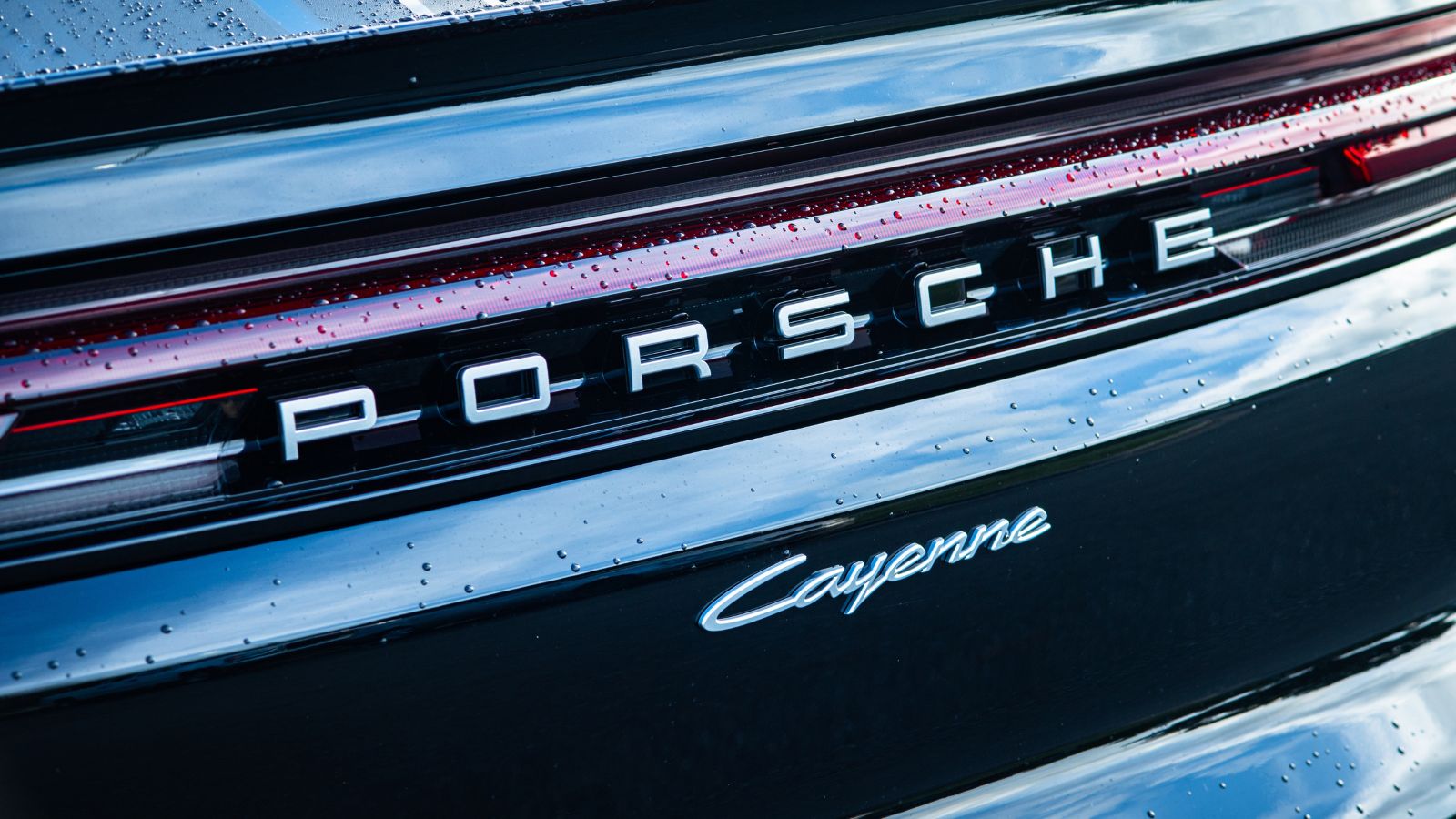
Porsche’s first fully electric Cayenne is putting an unusually demanding component in the spotlight: its tires. Pirelli has developed six tailor-made fitments for the high-performance SUV, spanning summer, winter and all-season use, with each specification designed around the characteristics of an electric vehicle carrying substantial mass and delivering enormous torque almost instantly.
The program shows how electrification is changing more than batteries and charging. Tires increasingly have to balance range, durability, noise, wet-weather control and sports-car levels of grip at the same time. With the Cayenne Turbo Electric capable of producing up to 1,156 PS and 1,500 Nm under Launch Control, Porsche and Pirelli are demonstrating why the replacement-tire market for powerful EVs is becoming considerably more specialized.
Six Fitments Show How Specialized EV Tires Are Becoming
Pirelli’s Cayenne Electric program consists of six tailor-made fitments: three summer specifications, two winter specifications and one all-season option. Rather than treating the electric Cayenne as another heavy SUV that simply needs tires of the correct dimensions and load rating, Pirelli worked with Porsche to tune compounds, sizes and axle-specific characteristics around the vehicle. The summer range includes the fifth-generation P Zero in 21- and 22-inch applications and a more performance-focused 22-inch P Zero R. Winter duty is covered by dedicated Scorpion Winter 2 fitments in 20- and 22-inch sizes, while a 20-inch Scorpion MS provides an all-season choice.
One of the more unusual parts of the program is how those tires were created. Pirelli says development was conducted entirely in a virtual environment before physical prototypes were produced. Engineers could model different compounds, sizes and front-to-rear characteristics against the Cayenne Electric’s chassis and all-wheel-drive system before committing to hardware. That matters because Porsche’s electronic control systems can distribute and adjust drive forces extraordinarily quickly. A tire that works well on an ordinary luxury SUV is not automatically optimized for a vehicle capable of combining EV torque with Porsche-level cornering expectations.
EV Weight and Instant Torque Change the Tire Engineering Brief
Electric vehicles place a different combination of demands on their tires. Batteries can increase vehicle mass, while electric motors are capable of delivering substantial torque from very low speeds. Those factors do not guarantee that every EV will consume tires unusually quickly—driving style, alignment, tire construction, inflation pressure and vehicle design remain important—but they can increase the forces a tire must handle. Academic work examining EV tire emissions has similarly identified higher vehicle mass and strong traction forces as factors that can contribute to greater tire wear.
The Cayenne Turbo Electric demonstrates the extreme end of that engineering challenge. Porsche rates it at up to 850 kW, or 1,156 PS, with Launch Control and as much as 1,500 Nm of torque. It can accelerate from zero to 100 km/h in 2.5 seconds. Moving an SUV with that level of force means the contact patches have to transmit tremendous longitudinal loads without surrendering stability or steering precision. Pirelli specifically says the P Zero R compound was adapted for the Cayenne Electric’s greater weight and wear demands. The implication is important for replacement buyers: horsepower figures that once belonged to exotic supercars are now appearing in large electric SUVs, forcing tire technology to catch up.
The Regular P Zero Has to Protect Range Without Giving Up Grip
Not every Cayenne Electric owner will spend weekends exploiting maximum acceleration, so the standard P Zero has a broader assignment. Pirelli developed dedicated 21- and 22-inch versions with different specifications for the front and rear axles. Its development targets include low rolling resistance, wet-weather performance and the handling stability expected of a Porsche. Those requirements can work against one another, which makes the engineering challenge more complicated than simply producing the grippiest possible rubber compound.
Rolling resistance has particular importance on an EV because energy lost through the tires ultimately comes from the battery. Pirelli says its Elect technology uses low-rolling-resistance solutions intended to help maximize range and reduce energy consumption, while dedicated structures and compounds address torque, vehicle weight, wear and cabin noise. The latter is increasingly noticeable because electric powertrains remove much of the engine noise that traditionally masks tire sound. The Cayenne therefore illustrates the new balancing act facing premium tire companies: a replacement tire may need to preserve efficiency and refinement while still coping with aggressive lane changes, rain and the dynamic standards expected from a performance brand.
P Zero R Brings 911-Derived Technology to a Heavy Electric SUV
For the Cayenne Turbo Electric, Pirelli went further with a dedicated 22-inch P Zero R. The tire uses front- and rear-specific configurations and an ultra-high-performance compound derived from Pirelli’s motorsport experience. Most strikingly, Pirelli says it uses the same compound developed for the Porsche 911, but modified to cope with the Cayenne Electric’s greater weight and increased wear requirements. That crossover is significant: technology associated with a low-slung sports car is being reworked for an electric SUV capable of producing more than 1,100 PS.
Pirelli also altered the front and rear compounds and optimized the tire’s contact patch so that the Cayenne’s immediate electric torque can be turned into forward traction while maintaining stability. The manufacturer describes the P Zero R’s performance as approaching that of its road-legal, semi-slick P Zero Trofeo RS. That does not make the two products interchangeable; rather, it illustrates how high the performance target has become. Porsche says the Turbo can reach 200 km/h in 7.4 seconds as well as 100 km/h in 2.5 seconds. At those outputs, tires stop being a background consumable and become a fundamental part of the vehicle’s performance system.
Winter and All-Season Choices Add Another Layer to Replacement Decisions
The six-fitment strategy is not confined to dry-road performance. Pirelli developed the Scorpion Winter 2 as an approved winter solution in both 20- and 22-inch sizes, alongside a 20-inch Scorpion MS All Season. That seasonal spread is notable because an electric performance SUV does not shed its weight or torque when temperatures fall. A winter specification still has to handle the basic demands created by the powertrain while providing the cold-weather characteristics expected from its particular tire category.
For owners, the result is a replacement decision involving more than simply identifying the diameter printed on the original sidewall. Wheel size, season, axle requirements, efficiency goals and intended performance all become relevant. The Cayenne Electric itself can be configured around multiple wheel diameters, and Pirelli’s program deliberately changes its offering according to those applications. The existence of separate 20-, 21- and 22-inch solutions also illustrates why the EV era can create additional inventory complexity for tire retailers. Two visually similar Cayenne Electrics arriving at a service counter may require quite different products depending on configuration and how their owners actually use them.
Replacement Tires Are Becoming a Bigger Part of the EV Ownership Story
The significance extends beyond one expensive Porsche. J.D. Power has already found evidence that tire wear is influencing replacement behaviour across the broader vehicle market. Its 2026 U.S. Original Equipment Tire Customer Satisfaction Study found overall tire-brand loyalty at 54%, but loyalty fell to 42% when owners replaced two or more tires. Tire wear was cited as the primary reason, while the organization said replacement decisions were increasingly being driven by practical considerations such as technical requirements, matching tires and obtaining longer wear.
Earlier J.D. Power aftermarket research also found EV owners receiving tire-related service at higher rates than the industry average for internal-combustion vehicles. In that study, tire replacement occurred among 34% of EV service cases compared with 21% for the broader ICE average, while tire maintenance and repair also occurred more frequently. Those figures should not be applied directly to every EV or predict how quickly a Cayenne Electric will consume a set of tires, but they illustrate the commercial opportunity. As powerful EVs become more common, retailers may increasingly compete on their ability to identify the right specification rather than simply stocking the right size. Porsche’s six-fitment Cayenne program offers a clear glimpse of that increasingly specialized replacement market.