

























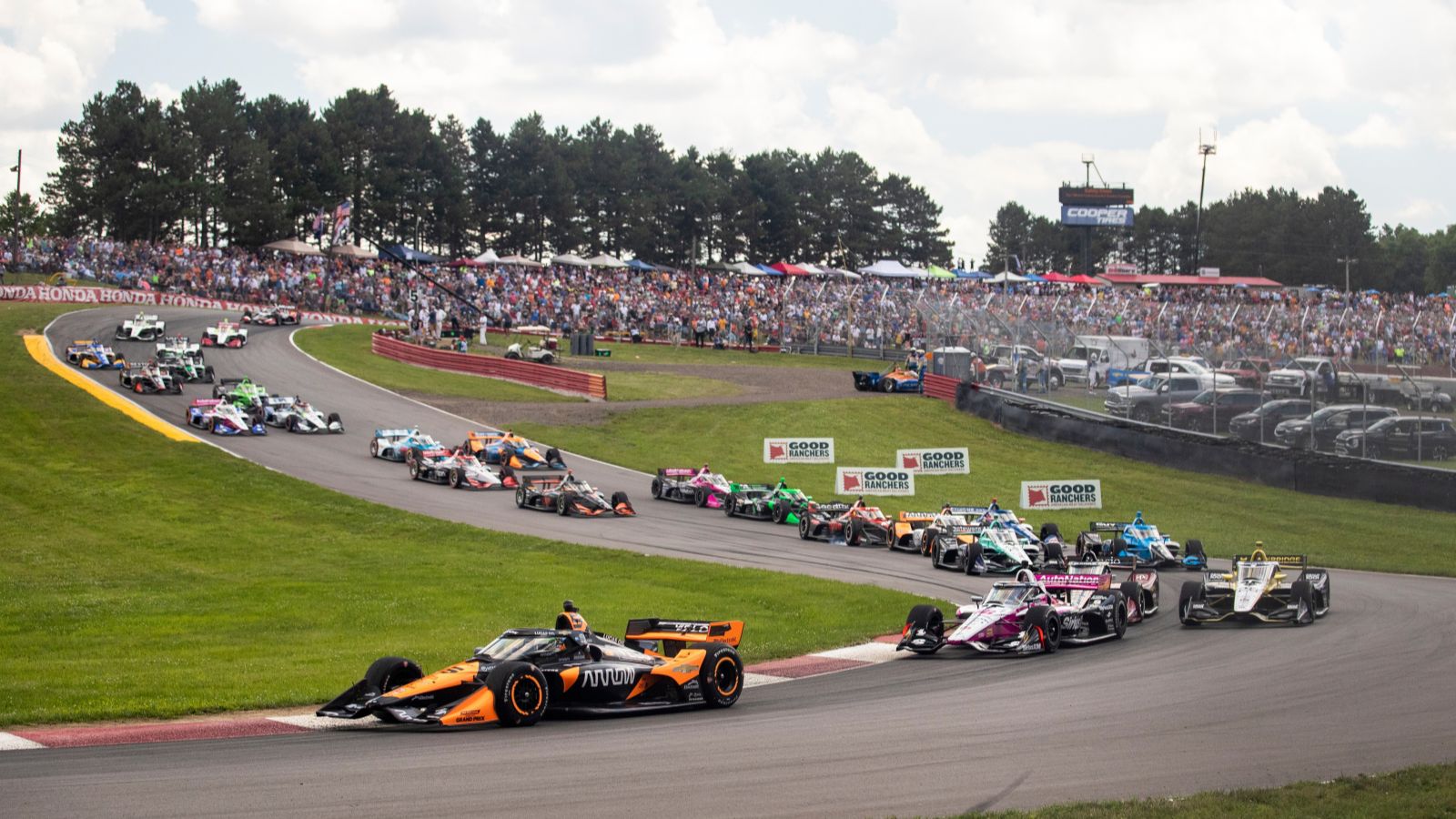
A nearly four-decade Ontario racing tradition begins a very different chapter today as the gates open for the inaugural Ontario Honda Dealers Indy at Markham. The three-day motorsports weekend brings IndyCar racing onto a newly constructed temporary circuit through Markham Centre, replacing the familiar Exhibition Place setting that hosted the event in Toronto for decades.
Friday, August 14, marks the first public day of a commitment that will keep the event in Markham for five years. Racing begins with development and support categories before IndyCar takes to the circuit for its first practice session. By Sunday, the same downtown streets normally carrying commuters around businesses, condominiums and Unionville GO Station will form a 3.52-kilometre racecourse for a 90-lap main event.
Markham’s First Race Weekend Begins With a Free Friday
The gates are scheduled to open at 8:30 a.m. Friday, giving Markham its first full day as the home of Ontario’s IndyCar weekend. Opening day is being run as Free Fan Friday, with general admission provided by the Ontario Honda Dealers Association and visitors encouraged to make a voluntary donation to Make-A-Wish Canada. The promotion carries over a charitable tradition from the race’s Toronto years. Organizers say the program has raised more than $1.1 million for the charity since 2010. That makes the opening day particularly accessible for families or curious residents who want to see what has been built through the middle of Markham Centre without immediately committing to a weekend ticket.
The track will not be quiet for long. USF2000 practice is scheduled to begin at 9 a.m., followed by USF Pro 2000 and Radical Cup Canada sessions. IndyCar drivers are due on track for their first practice from 3:05 p.m. until 4:30 p.m., providing the first meaningful test of how the unfamiliar circuit behaves at speed. NASCAR Canada follows with practice and qualifying from 5 p.m. to 6 p.m. The evening then takes a different turn, with a charity cycling event scheduled to place bicycles on the circuit. Saturday brings IndyCar qualifying and a NASCAR Canada race, while Sunday’s 90-lap IndyCar contest is scheduled to start at 12:22 p.m.
Nearly 40 Years of Toronto Racing Have Shifted North
Markham is not launching an entirely new Ontario motorsports tradition so much as inheriting one with deep roots. Indy-style racing began on Toronto’s Exhibition Place street circuit in 1986, and INDYCAR says 39 races were ultimately held there. Generations of fans came to associate the event with Lake Shore Boulevard, the Princes’ Gates and a midsummer weekend near the Canadian National Exhibition grounds. That long run makes this weekend unusual: competitors, teams and spectators are arriving at an Ontario street race where virtually every corner, braking point and viewing location is new. Even longtime attendees cannot fall back on decades of familiarity with the venue.
The move emerged as Toronto’s Exhibition Place faced major demands connected with the 2026 FIFA World Cup, including matches at BMO Field and extensive activity around the grounds. Rather than simply disappear from the IndyCar calendar for a season, the event secured a new home in Markham under a multi-year arrangement announced in September 2025. The change became more permanent than a one-year detour. Markham says it will host the race annually for five years beginning in 2026, carrying the agreement through 2030. For the city, that means the barriers, grandstands and racing infrastructure arriving this summer are intended to become a recurring part of the August calendar rather than a one-off spectacle.
A 12-Turn Circuit Gives Every Team the Same New Problem
The defining feature of the Markham event is the track itself. The temporary course measures 3.52 kilometres, or 2.19 miles, and contains 12 turns through the eastern portion of Markham Centre. It sits between Kennedy Road, Enterprise Boulevard, the Unionville GO rail corridor and Highway 407. Track designer Tony Cotman led the design process, which produced a circuit featuring straightaways, technical sections and an uncommon double-sided pit lane. Unlike an established circuit where teams arrive with years of setup notes and driver experience, Markham begins with a nearly blank notebook. Early practice therefore carries unusual importance as teams work out grip levels, braking zones, bumps and where passing opportunities might develop.
Sunday’s IndyCar race is scheduled for 90 laps, covering 197.1 miles. The timing adds another layer of significance because the event arrives late in the 2026 championship season. Alex Palou enters the Markham weekend closing in on what would be his fifth IndyCar championship and a fourth consecutive title. For rivals trying to extend the championship fight, a brand-new street course introduces an element of uncertainty that a familiar venue cannot provide. Street circuits also leave little room for error: concrete barriers sit close to the racing line, while changes in pavement and grip can punish small mistakes. Markham’s first race will therefore establish the baseline that future editions will spend years refining.
Governments Are Betting That the Race Will Pay Back Beyond the Track
The five-year commitment is backed by public investment as well as private promotion. The federal government announced $3.5 million through FedDev Ontario for Markham to undertake infrastructure and readiness work associated with its ability to host the Indy and other major international events. Ottawa said planned work includes improvements to municipal roads, transportation and track-related infrastructure as well as event facilities. Ontario separately announced $1.5 million in support for the 2026 event. Markham says its own financial support will come from Municipal Accommodation Tax revenue, commonly called the hotel tax, and that the arrangement will not add costs to property-tax bills. Race organizers remain responsible for installing and removing grandstands, barriers, fencing and other event infrastructure.
Officials are presenting those expenditures as economic-development spending, although the eventual return will only become clear after visitors actually arrive and businesses report their results. Markham estimates the event can generate roughly $50 million in regional economic activity, create demand for 18,885 hotel-room nights and support the equivalent of more than 450 full-time, year-round jobs across the GTA. Ontario has promoted an even larger projection, saying the weekend could attract more than 150,000 attendees and generate more than $85 million in local economic activity. The differing estimates are a reminder that these are forecasts rather than measured outcomes. Hotels, restaurants, retailers and tourism operators will provide a more concrete test of the economic case once the first weekend is complete.
The Five-Year Experiment Also Comes With a Major Disruption Test
Transforming functioning city streets into a professional race circuit means the impact is being felt well beyond ticket holders. Markham says major race-weekend closures began on August 12 and affect Kennedy Road, Enterprise Boulevard, University Boulevard, YMCA Boulevard, Main Street Unionville and other streets near the circuit, along with Highway 407 interchange ramps. Some closures and restrictions extend beyond the racing weekend, while track teardown is scheduled to continue as late as August 27. Access around Unionville GO Station has also been disrupted. For nearby residents, office workers and businesses, the first Indy weekend will consequently be judged partly on whether the city can manage traffic, transit access, noise and emergency movements while thousands of visitors enter the area.
Markham is strongly encouraging public transit and has arranged parking-and-shuttle options away from the immediate circuit. Shuttles from designated lots at the IBM property and Markham Civic Centre are scheduled roughly every 15 minutes, while York Region Transit has identified nearby Highway 7 and Main Street Unionville stops for spectators. The city has also warned residents that trackside sound can be comparable to an outdoor rock concert during racing hours. Those practical details may ultimately matter to the event’s long-term acceptance as much as the racing. A five-year agreement gives Markham time to improve operations after its first attempt, but it also means residents will judge this weekend as the beginning of a recurring relationship between international motorsport and an increasingly dense urban centre.