


























Trade fights often turn on technical rules that barely register outside customs offices and factory boardrooms. Canada’s automotive remission system is suddenly an exception. Canada-U.S. Trade Minister Dominic LeBlanc and chief negotiator Janice Charette remained in Washington on August 13 as negotiations intensified ahead of President Donald Trump’s August 19 tariff deadline. The White House has made Canada’s treatment of U.S.-made vehicles one of three grievances behind a new package of 50% duties, alongside provincial restrictions on American alcohol and Canada’s dairy system.
At issue is a Canadian program that lets eligible automakers bring specified volumes of CUSMA-compliant U.S.-assembled vehicles into Canada without paying Ottawa’s counter-tariffs, provided they maintain production and investment in Canada. Washington calls that arrangement discriminatory. Ottawa designed it as leverage to protect an industry whose factories and suppliers straddle the border.
Washington Is Racing the August 19 Clock
LeBlanc’s extended stay in Washington illustrates how little room remains between negotiation and escalation. He and Charette had been in the U.S. capital since Monday, with another meeting with U.S. Trade Representative Jamieson Greer scheduled for Thursday afternoon. It was their second meeting with Greer that week, while Canadian and American officials were conducting talks on an almost daily basis. The objective is not simply to produce a friendly statement: the two governments are trying to find enough common ground to prevent another tariff shock from landing in less than a week.
The threatened action is unusually significant because the covered products would not escape the new duties merely by qualifying under CUSMA. Trump’s three Section 338 proclamations impose additional 50% tariffs on selected Canadian goods, with the package covering nearly $20 billion in imports according to Reuters. The measures are scheduled to take effect at 12:01 a.m. Eastern time on August 19. That makes every meeting in Washington consequential. Negotiators are no longer discussing a distant trade review; they are working against a fixed date that can quickly translate political disagreements into costs for businesses moving goods across the border.
What Canada’s “Auto Quotas” Actually Do
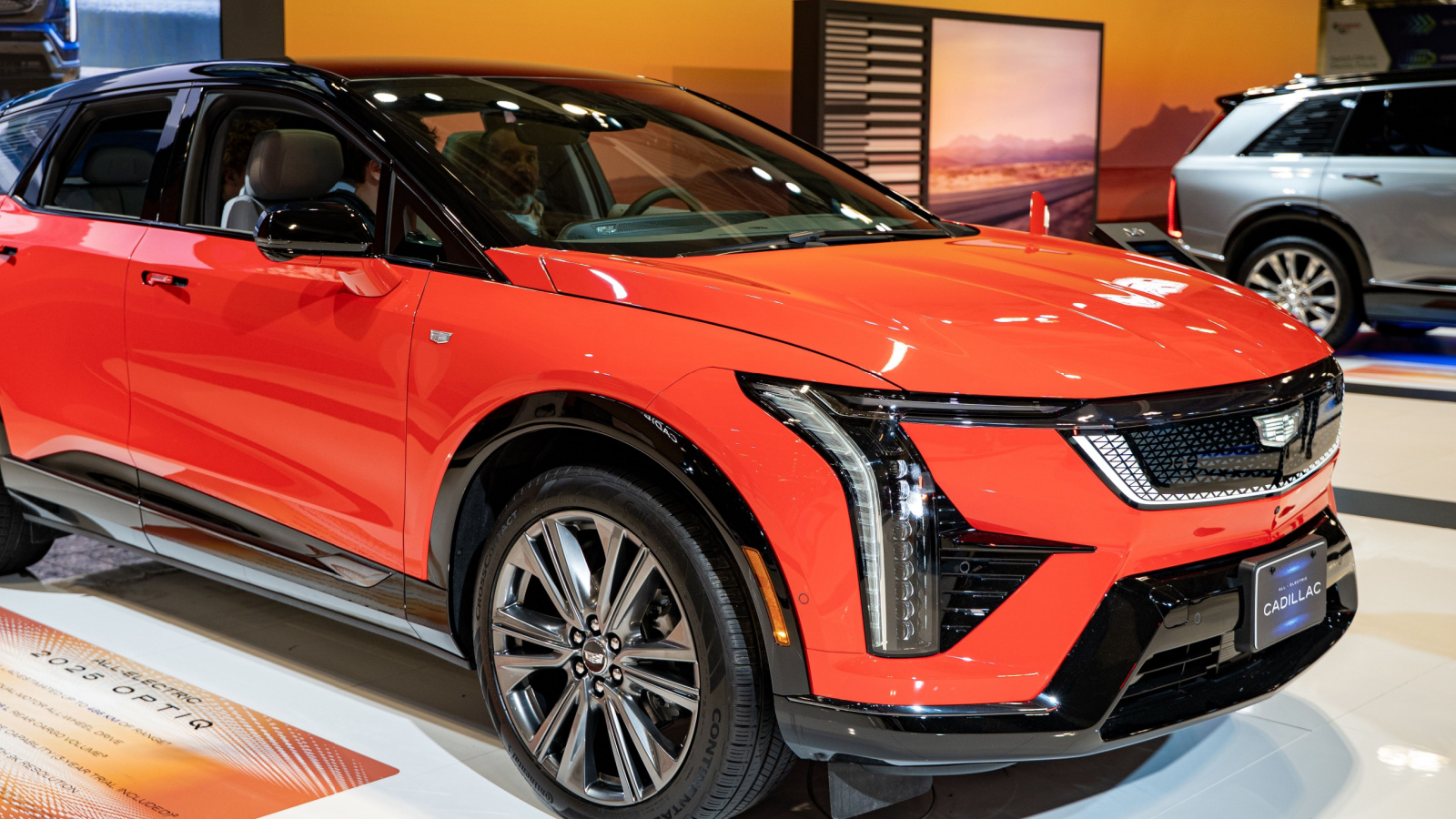
The term “quota” can make the Canadian policy sound like a straightforward numerical ceiling on U.S. cars. In practice, Ottawa calls it an automotive remission framework. Canada imposed 25% counter-tariffs on U.S. passenger vehicles and light trucks in April 2025 after Washington imposed its own automotive tariffs. Canada then created a system allowing eligible automakers to import a specified quantity of CUSMA-compliant U.S.-assembled vehicles without paying those Canadian counter-tariffs. The arrangement was renewed for a second year, covering eligible imports from April 9, 2026, through April 8, 2027.
There is an important catch. The amount of tariff-free relief is tied to what participating automakers do in Canada. Companies must meet production requirements, proceed with announced investments and, where factories were temporarily paused for retooling, restart manufacturing according to government requirements. The company-specific allowances are confidential, so neither shoppers nor competitors can see how many vehicles each manufacturer can bring across tariff-free. Washington describes that structure as a tariff-rate quota. Ottawa describes it as remission designed to preserve Canadian production while keeping U.S.-built vehicles available in a deeply integrated market. The difference in terminology reflects a much bigger disagreement about whether the policy is industrial protection or legitimate retaliation.
Why Trump’s Team Calls the System Discriminatory
The White House’s case focuses heavily on the fact that Canada’s counter-tariff system responds specifically to U.S. automotive trade. In its July 20 proclamation, the administration said Canadian imports of U.S. motor vehicles fell by approximately 22% between April 2025 and March 2026 compared with the equivalent year-earlier period, dropping from roughly $25.9 billion to $20.3 billion. Washington also pointed to rising Canadian purchases from other producing countries, arguing that American vehicles were losing ground while competitors benefited.
The administration cited especially sharp gains elsewhere. Its figures showed Canadian motor-vehicle imports from Mexico rising about 23.6% between April 2025 and February 2026, while imports from Japan, Korea and Germany increased by roughly 10.1% to 13.5%. Those numbers form an important part of Washington’s argument, but they do not settle the policy dispute by themselves. Canada’s measures did not emerge in isolation: Ottawa introduced its auto counter-tariffs after the United States imposed 25% automotive tariffs in April 2025. From the Canadian perspective, the remission system softens the impact of retaliation while rewarding companies that preserve Canadian plants. The same mechanism Washington portrays as coercive is precisely what Ottawa intended to make costly for manufacturers to abandon.
Ottawa Designed the Leverage Around Factory Jobs
The stakes become easier to understand away from tariff schedules and inside communities such as Windsor, Oshawa, Ingersoll and Brampton. Government figures show Canada exported $44.4 billion in finished vehicles to the United States in 2024 while importing $35.6 billion. The Canadian auto industry supports more than 125,000 direct jobs and another 425,000 indirect jobs under the federal government’s estimate. More than 40% of vehicles sold in Canada are assembled in the United States, underscoring why Ottawa wanted retaliation that could be adjusted rather than simply shutting American vehicles out.
Ottawa has also shown that the production conditions are more than theoretical. In October 2025, the federal government cut General Motors’ annual tariff-free remission allowance by 24.2% and Stellantis’ by 50% after production changes in Canada. Stellantis had moved planned Jeep Compass production away from Brampton to the United States, while GM had scaled back Canadian operations and ended BrightDrop electric-van production. Those decisions turned an obscure customs mechanism into something tangible for workers. Under the framework, a corporate production decision in Ontario can directly affect how many U.S.-assembled vehicles the same company is permitted to import without Canadian counter-tariffs.
Cars Are Only One Piece of the Deal on the Table
The negotiations in Washington extend well beyond vehicle quotas. Reuters reported that a prospective compromise discussed by the two governments could involve Canada removing its tariffs on U.S. autos, addressing American complaints about the allocation of dairy quotas and seeking the return of U.S. alcoholic products to shelves in major Canadian provinces. In exchange, Washington could reduce existing U.S. tariffs affecting Canadian steel and aluminum. None of those elements was final when the discussions were reported, and subsequent reporting indicated Canadian officials considered the latest American tariff-relief offer insufficient.
Alcohol demonstrates why even a seemingly simple concession can become complicated. Ottawa controls international trade policy, but provincial governments and liquor agencies generally decide what is bought and sold through provincially controlled alcohol systems. The federal government therefore cannot simply guarantee that every province will restore American products because Washington demands it. The auto issue is different because the federal government directly controls the surtax and remission framework. That makes automotive concessions potentially easier to execute administratively, but politically harder in manufacturing regions if Canadian workers conclude tariff relief is being traded away without firm guarantees for their plants.
The Bigger Auto Fight Is About What Counts as “North American”
Even if Canada and the United States find a temporary solution to the remission dispute, a much larger fight over automotive trade is already developing. CUSMA currently requires roughly 75% North American regional content for vehicles to receive preferential treatment. The Trump administration has floated significantly tougher rules, including a requirement that at least 50% of a qualifying vehicle’s value be U.S.-made and proposals to raise the overall North American content requirement. Those ideas are being debated as Washington seeks to rewrite the economics of producing vehicles in Canada, Mexico and the United States.
Resistance is not coming only from Canada or Mexico. Reuters reported on August 13 that Detroit automakers are preparing to argue that the proposed changes could add billions of dollars to their costs. Estimates from two automakers put the potential additional expense at at least $2 billion annually for each Detroit manufacturer. General Motors expects $2.5 billion to $3.5 billion in gross tariff-related expenses this year, while Ford has estimated a roughly $1 billion net tariff hit. The numbers expose an awkward reality for Washington: policies intended to encourage more American production can also raise costs for American manufacturers whose factories depend on regional suppliers.
The Border Was Built for Parts to Cross Repeatedly
A Canadian or American vehicle is rarely as national as the badge on its paperwork suggests. The Canadian Vehicle Manufacturers’ Association says automotive parts and components can cross the borders between Canada, the United States and Mexico as many as eight times before reaching final assembly. The Ambassador Bridge between Windsor and Detroit alone handled more than 2.2 million truck crossings in 2024, with a significant portion tied to automotive manufacturing. A transmission component, seat assembly or engine part can therefore accumulate several border movements long before a completed vehicle reaches a dealership.
Federal Canadian data show the same interdependence from another angle. About 13% of vehicles imported into the United States are produced in Canada, and roughly half the value of those Canadian-made vehicles comes from U.S. parts. Meanwhile, more than 40% of vehicles sold in Canada are assembled in the United States. That circular trade explains why auto tariffs can behave differently from tariffs on products manufactured entirely in one country. A barrier aimed at protecting a plant in Michigan can raise costs for a supplier feeding an Ontario assembly line that ultimately buys American components and ships the finished vehicle back to the United States.
August 19 Could Escalate the Dispute Without Putting a 50% Tariff on Canadian Cars
One distinction matters as the deadline approaches: Trump’s new Section 338 action was triggered partly by Canada’s treatment of American vehicles, but it does not simply impose an additional 50% tariff on Canadian autos already covered by existing U.S. automotive measures. The new proclamations target separate lists of Canadian goods, ranging from wine and other consumer products to industrial items. Goods already subject to Section 232 tariffs are excluded from the Section 338 package, as are energy, potash and certain other products such as some fish and critical minerals. Covered goods, however, receive no special escape simply because they qualify under CUSMA.
The deadline is therefore both real and negotiable. The proclamation says the 50% duties take effect at 12:01 a.m. Eastern time on August 19, but the president retains authority to suspend, amend or revoke the action. Economically, Canada has reason to avoid another layer of uncertainty. The Bank of Canada’s July outlook projected only 0.7% GDP growth in 2026 and said exports remain below the trajectory expected before U.S. tariffs were imposed. Strategically, the dispute is even larger: Washington has declined to extend CUSMA in its current form, placing the agreement into annual review. Whether Canada’s auto quotas survive may therefore become an early test of how much national production policy can remain inside an increasingly contested North American trade system.