





















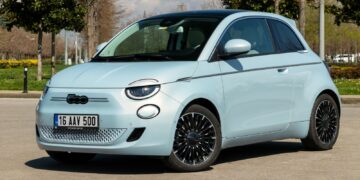




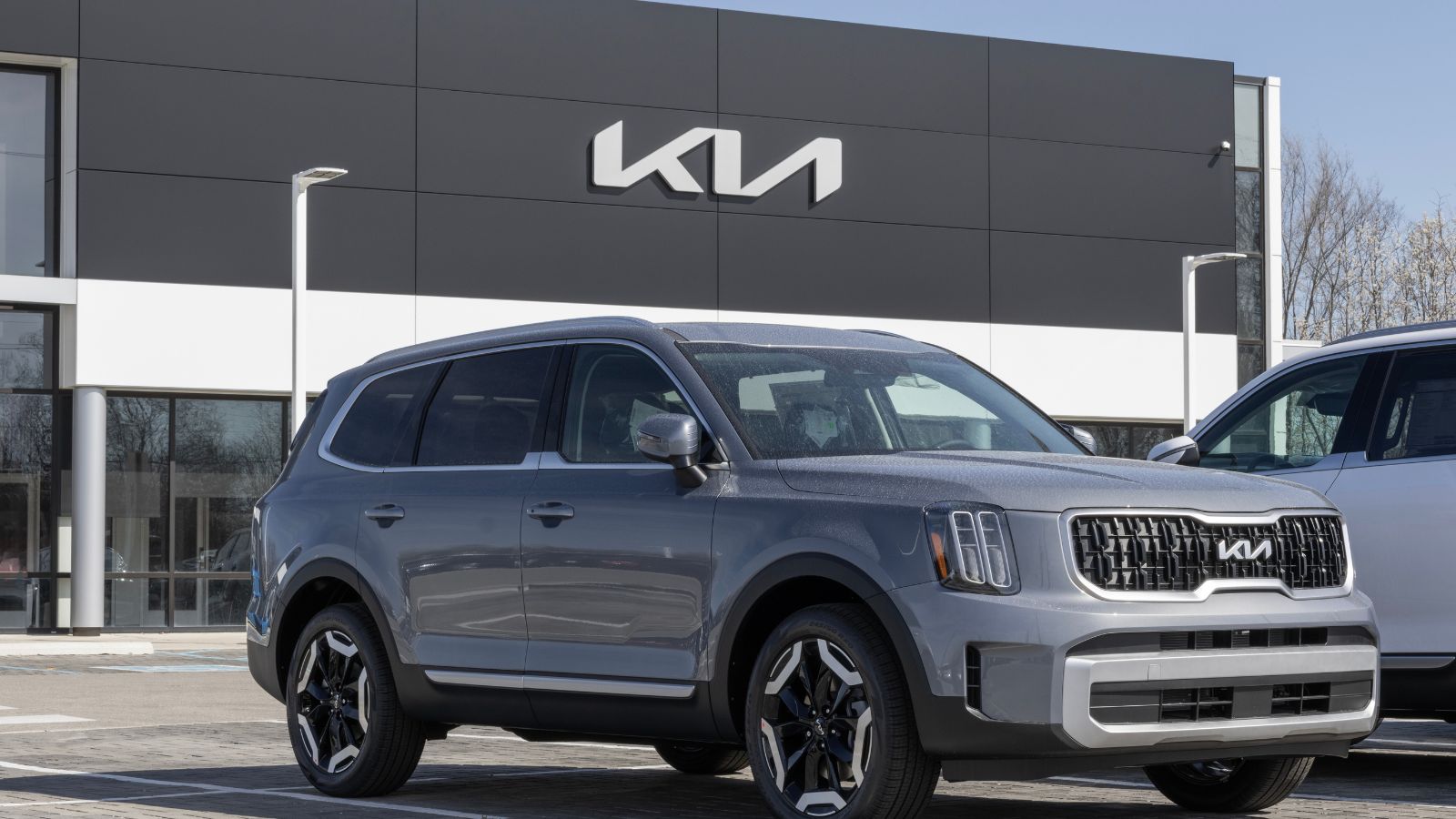
Kia has put a surprisingly low U.S. number on one of the most closely watched small electric SUVs heading to North America. The 2027 EV3 will start at US$29,890 before destination charges, placing it below the US$30,000 mark that has long been difficult for mainstream battery-electric vehicles to reach without incentives.
For Canadians, however, the most important number is still missing. Kia Canada says the EV3 is coming this fall, but it has not yet published a local MSRP. That leaves buyers watching not only the price gap between the two countries, but also trim availability, range, freight charges and whether the Canadian version can land under the federal C$50,000 transaction-value ceiling tied to the country’s current EV purchase incentive.
The US$29,890 Price Changes the Affordability Conversation
Kia’s U.S. announcement matters because the headline price is not simply a discount on an existing electric SUV. The EV3 is a new subcompact model designed to sit at the entry end of the brand’s dedicated EV lineup, and its Light front-wheel-drive trim starts at US$29,890. Kia charges another US$1,495 for destination, bringing the base vehicle to US$31,385 before taxes, registration and other applicable charges.
That distinction is important, but the sub-US$30,000 MSRP still carries considerable marketing weight. Electric vehicles have spent much of the past decade fighting a perception that battery power requires a large upfront premium. A mainstream crossover opening below that threshold gives Kia a clearer answer to buyers waiting for smaller and less expensive EVs rather than upscale models loaded with costly equipment. It changes the tone of the affordability debate before Canadian pricing even arrives.
The Trim Ladder Gets Expensive Quickly
The base price is only one part of the EV3 story. Kia’s U.S. ladder moves quickly upward: the Wind FWD starts at US$34,990, Wind AWD at US$38,690, Land FWD at US$38,490 and Land AWD at US$41,690. The GT-Line comes with all-wheel drive at US$43,490, while the performance-focused GT tops the range at US$45,890. All those figures exclude Kia’s US$1,495 destination charge.
That spread shows how differently two EV3 buyers could experience the same vehicle. Someone choosing the Light is buying primarily on price and everyday practicality; a GT customer is paying US$16,000 more in base MSRP for a substantially different package. Kia says the GT produces 288 horsepower, while other dual-motor AWD versions produce 261 horsepower. For Canadians, the mix of trims Kia chooses to offer may therefore matter almost as much as the eventual starting price, particularly in a market where AWD remains attractive for winter driving.
Range Makes the EV3 More Than a Budget Runabout
The EV3’s strongest argument may be that its lower price does not automatically mean short-range transportation. The U.S.-spec Light uses a 58.3-kWh battery and carries a 221-mile range figure. Wind and Land front-wheel-drive versions use the larger 81.4-kWh battery and can reach as much as 321 miles, giving the long-range EV3 enough advertised capability to handle far more than a short daily commute.
That is a meaningful split for households deciding whether a single EV can cover weekday errands and longer highway trips. The larger battery can also be paired with all-wheel drive, although AWD versions trade some efficiency for additional traction and performance. Kia is effectively separating the EV3 into two value propositions: a lower-cost standard-range vehicle and a more road-trip-friendly long-range model costing several thousand dollars more. Canadian pricing will reveal whether buyers can make that jump without pushing the EV3 into a much more expensive category.
North American Charging Gets a Native NACS Port
Kia has also designed the North American EV3 around the charging hardware buyers are increasingly likely to encounter. The model receives a native NACS charging port with Plug and Charge capability. Kia says the smaller 58.3-kWh battery can move from 10% to 80% charge in about 29 minutes under suitable DC fast-charging conditions, while the larger 81.4-kWh pack requires roughly 31 minutes.
The EV3 uses a 400-volt version of Kia’s E-GMP architecture rather than the higher-voltage system associated with some of the company’s larger EVs. Even so, a roughly half-hour highway charging stop is a practical figure for a small electric crossover competing heavily on price. Available Vehicle-to-Load technology can also draw energy from the traction battery to run compatible external devices. Kia has additionally announced Vehicle-to-Home functionality using appropriate bidirectional charging equipment, giving the EV3 a potential role as an energy source beyond simply moving passengers.
The U.S. Sticker Cannot Simply Be Converted Into a Canadian Price
Canadian shoppers should resist treating the U.S. MSRP as a number that can simply be translated through the currency market. Automakers set vehicle prices country by country, and Canadian stickers can incorporate different standard equipment, freight and pre-delivery charges, regulatory requirements and competitive positioning. Kia has so far provided Canadian customers with a launch window rather than a dollar figure: its Canadian EV3 page currently describes the vehicle as “Coming this Fall.”
That creates an unusual waiting game because the U.S. announcement is now concrete enough to shape expectations. A Canadian starting price that preserves the EV3’s value positioning could turn it into one of the more closely watched lower-cost EV launches of the year. A higher sticker, particularly if Canadian dealers receive fewer entry-level Light models, would change the calculation considerably. Until Kia Canada publishes complete pricing and trim details, US$29,890 is best regarded as a reference point rather than a forecast of the Canadian MSRP.
Canada’s C$50,000 Incentive Line Could Be Crucial
The Canadian sticker carries extra importance because federal support now has a firm affordability ceiling. Under Transport Canada’s Electric Vehicle Affordability Program, eligible battery-electric and hydrogen fuel-cell vehicles can receive an incentive of up to C$5,000 in 2026. For imported light-duty EVs covered by the program, the final transaction value generally must be C$50,000 or less, and vehicles must satisfy manufacturing-origin and other eligibility requirements.
That means a few thousand dollars of Canadian pricing could have an outsized effect on the EV3’s competitive position. A version priced comfortably below C$50,000 and accepted onto Transport Canada’s eligible-vehicle list could potentially benefit from the incentive, while a transaction crossing the threshold would not qualify under the same rule. The EV3 should not be assumed eligible before Transport Canada lists the applicable model. Still, the program makes Kia Canada’s eventual MSRP considerably more consequential than an ordinary cross-border price comparison.
Kia’s Larger EV5 Gives the EV3 an Interesting Canadian Benchmark
Kia’s own Canadian showroom provides another useful reference. The company advertises the 2027 EV5, its larger compact electric SUV, from C$43,495. That does not automatically mean the smaller EV3 must start below that figure; battery specifications, equipment levels, sourcing and product strategy can sometimes produce unexpected pricing relationships. It does, however, give Kia Canada a clear positioning puzzle to solve.
A strategically priced EV3 could allow Kia to cover several layers of the electric market without immediately pushing shoppers toward premium territory. An entry model could appeal to urban commuters and households replacing a small gasoline crossover, while long-range and AWD trims could serve buyers needing one vehicle for winter driving, longer trips and daily errands. If the EV3 arrives near or below the EV5’s opening price while maintaining meaningful range, Kia could end up with two distinctly sized electric SUVs competing within the portion of the market targeted by federal affordability policy.
Canada’s EV Market Is Trying to Regain Momentum
The EV3 is arriving while Canada’s electric-vehicle market tries to recover from a difficult 2025. Statistics Canada reported that new zero-emission vehicle registrations fell 34.7% in 2025 compared with 2024 and accounted for 9.5% of new registrations. Conditions improved in early 2026: Canadians registered 43,113 new ZEVs in the first quarter, representing 10.8% of all new motor-vehicle registrations and an increase of 15.8% from the first quarter of 2025.
The rebound occurred during the quarter in which the federal Electric Vehicle Affordability Program began on February 16, although the data do not establish that the incentive alone caused the increase. What the numbers do reinforce is the importance of bringing more affordable products to market. A recognizable-brand crossover combining a sub-US$30,000 starting MSRP with more than 300 miles of maximum U.S. range fits the type of vehicle manufacturers hope can push EV adoption beyond predominantly higher-income and early-adopter buyers.
Canadian Buyers Have Several Numbers to Watch Before Fall
Before EV3s reach Canadian showrooms, several details deserve at least as much attention as the eye-catching U.S. starting price. The first is the actual Canadian MSRP, followed closely by freight and pre-delivery charges. The second is trim availability: a low theoretical starting price offers limited help if dealer inventories are concentrated in more expensive long-range or AWD versions. Official Canadian range figures, battery combinations and standard equipment will also shape the value equation.
The other major checkpoint is federal incentive eligibility. Transport Canada’s current program can reduce the effective purchase cost of a qualifying battery-electric vehicle by as much as C$5,000 in 2026, but only when both the vehicle and transaction satisfy program rules. Kia Canada’s fall arrival window means these unanswered questions are increasingly important. For now, the new U.S. sticker has accomplished one thing: it has established a serious affordability benchmark. The Canadian price will determine whether Kia intends to make the same statement north of the border.