




















• About
  • Contact
AutoIgloo
  • News & Trends
    Debit Tap Processing Fees Rise 75% for Some Canadian Auto-Parts and Home-Supply Merchants

    Debit Tap Processing Fees Rise 75% for Some Canadian Auto-Parts and Home-Supply Merchants

    Top U.S. Senate Democrat Targets Trump’s Canada Tariffs, but Election Gains Offer No Guaranteed Relief for Auto Makers

    Top U.S. Senate Democrat Targets Trump’s Canada Tariffs, but Election Gains Offer No Guaranteed Relief for Auto Makers

    Ontario EV Owners Face a 10-to-1 Electricity Price Gap Under New November Rates

    Ontario EV Owners Face a 10-to-1 Electricity Price Gap Under New November Rates

    Nova Scotia CAA Auto Insurance Renewals Bring Credit-Score Discounts and a 30% Coverage Increase

    Nova Scotia CAA Auto Insurance Renewals Bring Credit-Score Discounts and a 30% Coverage Increase

    GM’s Chinese Joint-Venture Sales Collapse 51% as SAIC’s Own Brand Jumps 33%

    GM’s Chinese Joint-Venture Sales Collapse 51% as SAIC’s Own Brand Jumps 33%

    Toronto Battery Maker Lands $26-Million Deal to Convert Diesel Trucks to Electric Across Canada and U.S.

    Teamsters Say Some Canadian Trucking Firms Cut Driver Costs 20–30% by Misclassifying Workers

  • Car Reviews
    Mitsubishi Outlander Review: Is It Still the Underrated Family SUV?

    Mitsubishi Outlander Review: Is It Still the Underrated Family SUV?

    19 Cars With Windshields That Crack Constantly on Canadian Highways

    Subaru Forester vs Toyota RAV4: Which SUV Is Better for Canadian Winters?

    20 Cars Canadians Should Avoid If They Hate Expensive Windshield Replacements

    Hyundai Tucson vs Kia Sportage: Which Compact SUV Is the Better Everyday Buy?

    BYD, CATL and Xiaomi Are in the Mix for Xi’s Washington Trip as Canada and U.S. Split on Chinese EV Access

    Toyota RAV4 Plug-In Hybrid vs Regular Hybrid: Which One Should Canadians Buy?

    17 Vehicles That Are Quietly Getting Crushed by Insurance Costs in Canada

    Honda CR-V Hybrid Review: The Family SUV That Plays It Safe

    2026 Toyota RAV4 vs Honda CR-V: Which SUV Makes More Sense for Canadians?

    2026 Toyota RAV4 vs Honda CR-V: Which SUV Makes More Sense for Canadians?

  • Buying Guides
    Mitsubishi Outlander Review: Is It Still the Underrated Family SUV?

    Mitsubishi Outlander Review: Is It Still the Underrated Family SUV?

    16 Used SUVs That Suddenly Don’t Look Like Smart Buys in Canada

    Nissan Rogue vs Honda CR-V: Which SUV Feels Better After the Test Drive?

    19 Cars With Windshields That Crack Constantly on Canadian Highways

    Subaru Forester vs Toyota RAV4: Which SUV Is Better for Canadian Winters?

    Mazda CX-5 vs Mazda CX-50: Which One Feels More Premium for the Money?

    Mazda CX-5 vs Mazda CX-50: Which One Feels More Premium for the Money?

    17 Vehicles That Are Quietly Getting Crushed by Insurance Costs in Canada

    Honda CR-V Hybrid Review: The Family SUV That Plays It Safe

    18 Cars With Parts Prices So Wild They’re Becoming Hard to Own in Canada

    Is the New Toyota RAV4 Still the Safest Bet in Canada?

  • Comparisons
    19 Cars With Windshields That Crack Constantly on Canadian Highways

    Subaru Forester vs Toyota RAV4: Which SUV Is Better for Canadian Winters?

    21 Vehicles With the Best Real-World Fuel Economy in Canada (Not Just the Sticker)

    Toyota Corolla Cross vs Honda HR-V: Which Small SUV Is Less Compromised?

    20 Cars Canadians Should Avoid If They Hate Expensive Windshield Replacements

    Hyundai Tucson vs Kia Sportage: Which Compact SUV Is the Better Everyday Buy?

    BYD, CATL and Xiaomi Are in the Mix for Xi’s Washington Trip as Canada and U.S. Split on Chinese EV Access

    Toyota RAV4 Plug-In Hybrid vs Regular Hybrid: Which One Should Canadians Buy?

    Honda Asked Suppliers for 30% Parts Cost Cuts as $9.4-Billion Savings Drive Hits Global Supply Chain

    Why Some Buyers Are Choosing Older Hondas Over Newer SUVs

    25 EV Charging Mistakes Canadians Make in March (That Wreck Range)

    Why Some Canadians Are Choosing Hybrids Over Full EVs Again

  • EVs & Hybrids
    BYD, CATL and Xiaomi Are in the Mix for Xi’s Washington Trip as Canada and U.S. Split on Chinese EV Access

    Toyota RAV4 Plug-In Hybrid vs Regular Hybrid: Which One Should Canadians Buy?

    Geely Auto’s Core Profit Jumps 46% as Chinese EV Expansion Accelerates — With Canada Now Opening to Geely-Owned Lotus

    Geely Confirms Canadian Vehicle Sales for 2027 as Chinese Automakers Challenge Established Brands

    18 Cars That Will Feel Dated Fast as New Chinese EVs Arrive

    12 EVs Now Price Below $41,000 in Canada—Fiat 500e Falls Under $30,000 With Rebate

    The Used EV Question Canadians Should Ask Before Buying One

    The Used EV Question Canadians Should Ask Before Buying One

    Why Some EV Owners Are Getting Sticker Shock From Home Charging Setups

    Why Some EV Owners Are Getting Sticker Shock From Home Charging Setups

    20 Signs Your Car Battery Is About to Leave You Stranded

    Canadian Auto Jobs Become a Central Fault Line as Ottawa Reveals Why It Rejected U.S. Vehicle Terms

  • More
    • Pricing & Deals
    • Winter Driving
    • Ownership & Maintenance
No Result
View All Result
AutoIgloo
No Result
View All Result

Home » News & Trends

Polestar Abandons Fight Against Trump’s U.S. Ban, Leaving Canada as Its North American Lifeline

Henry Sheppard by Henry Sheppard
July 20, 2026
Reading Time: 6 mins read
A A
Image Credit: Shutterstock

Image Credit: Shutterstock

476
SHARES
1.5k
VIEWS
Share on FacebookShare on Twitter

Polestar’s American experiment is ending not with a courtroom showdown, but with a strategic retreat. After the U.S. Commerce Department refused to authorize the Swedish electric-vehicle brand to sell vehicles from the 2027 model year onward, Polestar confirmed it will not appeal. The restriction is being enforced by the Trump administration under a connected-vehicle rule finalized during Joe Biden’s presidency, making the exit both a security-policy story and a warning about how quickly automotive trade barriers are evolving.

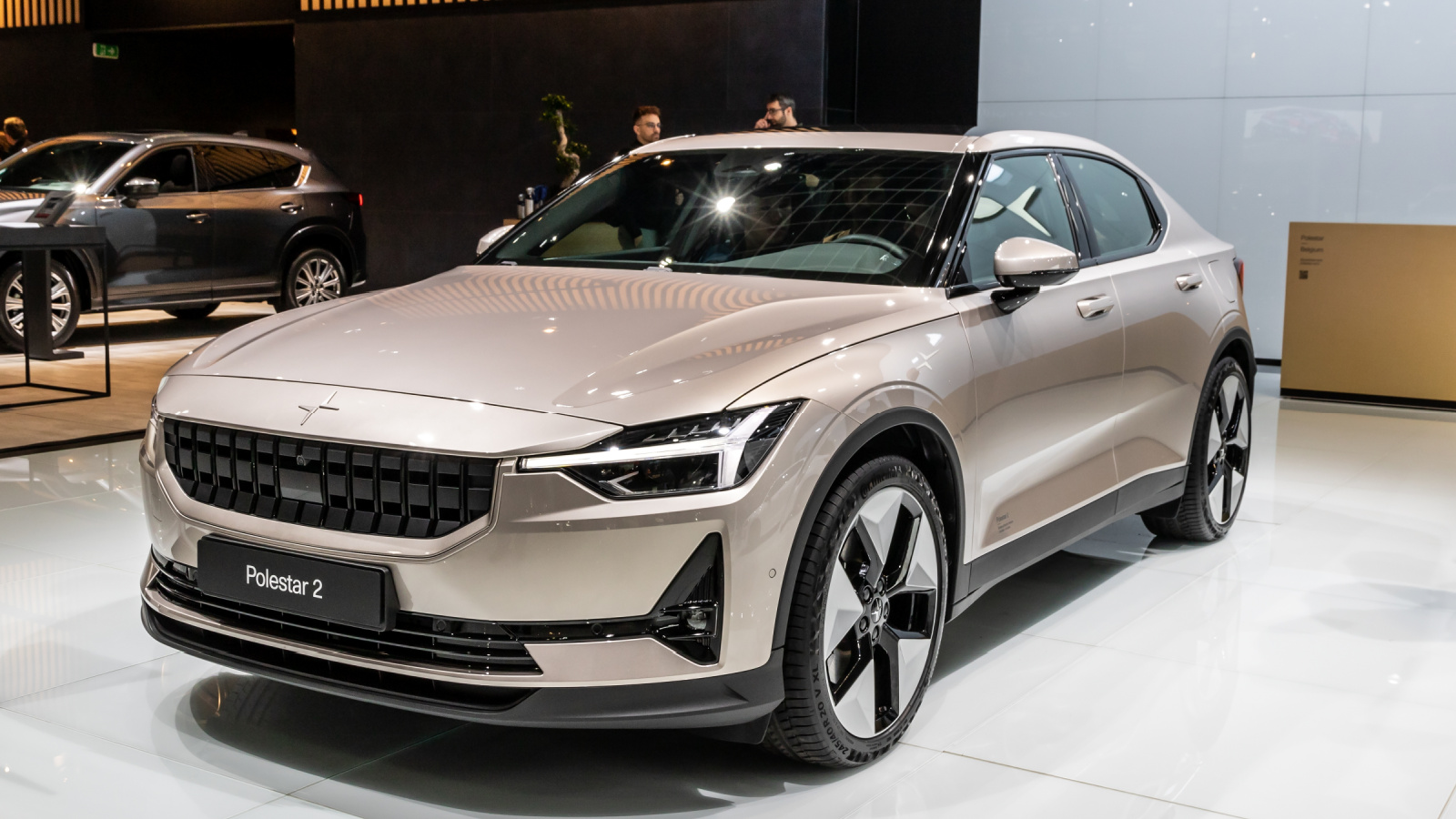
That leaves Canada as Polestar’s only continuing new-vehicle market in North America. Ottawa’s decision to reopen a limited channel for Chinese-built EV imports has already helped bring the Polestar 2 back to Canadian showrooms. Canada is not the company’s global saviour—Europe accounts for roughly four-fifths of its sales—but it has become the brand’s last practical bridge to North American buyers.

Polestar Chooses the Exit Ramp

Polestar had more than one possible route after the Commerce Department’s Bureau of Industry and Security denied its authorization. The company could have asked regulators to reconsider or eventually pursued a court challenge. Instead, a spokesperson confirmed on July 20 that Polestar would not appeal, saying the company had already held significant discussions with U.S. authorities and did not believe another fight would succeed. The decision turns what initially looked like a temporary regulatory dispute into an orderly withdrawal from future U.S. new-car sales.

The arithmetic helps explain the retreat. Only about 6% of Polestar’s first-quarter 2026 retail sales came from the United States, while roughly 78% came from Europe. Polestar says it will continue selling remaining U.S. inventory of the Polestar 3 and Polestar 4 and will keep supporting existing owners through its service network. Rather than spending heavily to defend a relatively small market, management is directing capital toward regions where the brand already has stronger recognition and a clearer path to growth.

The Ban Follows the Software, Not the Assembly Line

The U.S. restriction is broader than a conventional import tariff. The Connected Vehicle Rule targets vehicles and manufacturers with a sufficient connection to China or Russia when critical connectivity or automated-driving technology is involved. Covered systems include Bluetooth, cellular, satellite and Wi-Fi communications, along with software used for automated-driving functions. Software-related prohibitions begin with the 2027 model year, while restrictions involving certain hardware take effect later, beginning with the 2030 model year.

That structure is why moving assembly outside China was not enough to save Polestar. The Polestar 3 is produced at Volvo Cars’ plant in South Carolina, and the Polestar 4 has been assigned to production in South Korea, yet the rule can still bar a manufacturer with a prohibited corporate or technological nexus—even when a vehicle is assembled in the United States. The policy was finalized in January 2025 under the Biden administration and retained by President Donald Trump. Trump’s government did not create the rule, but it made the decisive enforcement call that shut Polestar out.

A Swedish Brand Meets a Chinese Ownership Test

Polestar presents itself as a Swedish performance-EV company, is headquartered in Gothenburg and traces its identity to Volvo’s performance division. U.S. regulators, however, were required to look beyond the badge on the hood. The company is majority-owned by China’s Geely Holding, and the connected-vehicle framework examines ownership, control, software and supply-chain relationships rather than relying only on a brand’s headquarters or the country stamped on a vehicle’s assembly record.

The result exposes a difficult divide between consumer identity and regulatory identity. A driver may see Scandinavian design, Google-based infotainment and a car assembled in South Carolina or South Korea. Washington may see a company whose ownership creates a sufficient nexus to China. The contrast became even sharper after Volvo Cars, another Geely-linked automaker, received U.S. authorization in May, although Volvo still has to meet the rule’s technical requirements. Public information does not establish that the two companies submitted identical compliance plans, but the different outcomes have understandably intensified questions from dealers and owners.

Dealers and Owners Face a Long Goodbye

Polestar’s decision lands hardest at street level. The company has 32 U.S. service centres connected to its retail network, many operated through Volvo dealerships that invested in facilities, equipment, employee training and premium showrooms built around the expectation of a growing product range. Those retailers can still sell remaining new inventory and used vehicles, but the absence of future model years changes the economics of every location. A showroom designed to introduce new technology risks becoming primarily a service centre once the final eligible vehicles are sold.

For shoppers, the wind-down has produced unusually aggressive bargains. Published offers have included discounts of as much as $25,000 on the Polestar 4 and roughly $23,000 on the Polestar 3. Those prices may tempt buyers who once considered the cars out of reach, but the discount is also compensation for uncertainty. Polestar says existing warranties will remain valid and owners will continue receiving service, software updates and customer support. Even so, drivers are reasonably asking how dense the service network will remain and whether resale values will suffer as the brand’s U.S. sales presence fades.

Canada Becomes the Last North American Showroom

Canada now carries a responsibility it never expected: preserving Polestar’s active retail presence on the continent. The company has specifically named Canada as one of the markets where it still sees room to invest and grow, alongside parts of Asia, Eastern Europe and Latin America. Once U.S. sales are limited to existing inventory, Canadian locations will be the only North American places where the brand can introduce future model years, take new factory orders and maintain the normal rhythm of launches, test drives and owner events.

There is a real audience for that strategy. Statistics Canada recorded 43,113 new zero-emission vehicle registrations in the first quarter of 2026, equal to 10.8% of all new registrations. In May alone, Canadians bought 18,308 new zero-emission vehicles, up 19.7% from a year earlier. Those numbers do not guarantee success for a premium niche brand, but they show that Canada remains a meaningful EV market. For Polestar, the value is larger than immediate volume: staying in Canada preserves brand visibility, customer relationships and a functioning North American retail and service ecosystem.

Ottawa’s Tariff Reversal Changed the Equation

Canada nearly closed the same door before reopening it. Ottawa imposed a 100% surtax on Chinese-made electric vehicles in October 2024, a measure that made the China-built Polestar 2 commercially difficult to sell. Under a new Canada-China arrangement, the federal government removed that surtax for an annual quota of 49,000 EVs beginning in 2026. Vehicles admitted within the quota face Canada’s normal 6.1% most-favoured-nation tariff, and the quota is scheduled to grow by 6.5% annually. The initial allotment represents less than 3% of Canada’s new-vehicle market.

Polestar moved quickly. The 2027 Polestar 2 returned to Canadian ordering in June with a starting MSRP of $69,900. The available Long Range Dual Motor version is rated at up to 447 kilometres of range, produces 421 horsepower and can accelerate from zero to 100 km/h in 4.5 seconds. It is not the low-cost Chinese EV many Canadians associate with the tariff debate, but its return demonstrates how directly trade policy can reshape a showroom. Washington’s rule closes Polestar out; Ottawa’s quota gives it another chance.

A Full Lineup Gives Canada More Strategic Weight

Canada matters because Polestar can offer more than leftover stock. Its Canadian site currently markets the Polestar 2, Polestar 3 and Polestar 4, while the company is preparing customer deliveries of the Polestar 5 and additional products. Polestar has also outlined a new Polestar 4 variant for late 2026, a next-generation Polestar 2 for 2027 and the Polestar 7 compact SUV for 2028. That pipeline gives Canadian retailers a continuing story to tell instead of asking customers to buy into a brand with no visible future.

The challenge is that this remains a premium lineup in a price-sensitive market. The returning Polestar 2 starts at $69,900 before freight and taxes, while representative Canadian offers place the Polestar 4 near $79,850 and the Polestar 3 above $108,000. Those prices put Polestar against established luxury brands with larger dealer networks and stronger resale histories. Canada can therefore provide continuity, but not automatic scale. The company will need competitive leasing, reliable service and confidence that parts and software support will remain stable for years, not merely through the current sales cycle.

Canada Is a Lifeline, Not a Rescue Plan

Polestar enters this retreat with genuine commercial momentum but heavy financial pressure. The company delivered 60,119 vehicles globally in 2025, a 34% increase, and generated more than US$3 billion in revenue. Yet it also reported a US$2.36-billion net loss, much of it connected to impairment charges, and ended the year with about US$1.16 billion in cash. Its record 30,423 retail sales in the first half of 2026 show that demand has not disappeared, but growth alone has not solved the profitability problem.

That is why Canada should be understood as a lifeline rather than a replacement for the United States. It keeps Polestar present in North America, supports future launches and gives the company access to a growing EV customer base under a more permissive trade regime. It cannot match the size of the U.S. market, and Polestar itself says Europe—already close to 80% of sales—will remain the main growth engine. Still, survival in the auto industry often depends on keeping strategic doors open. For Polestar, Canada is now the only North American door that has not been shut.


Recommended.

Audi Deepens China Alliance With Four New Models as Canada Debates How Far to Open Its EV Market

Audi Cuts the Phone Out of Spotify With First Fully Native In-Car App

October 22, 2026
21 Vehicles That Are Way Worse in Snow Than Their Marketing Claims

21 Cars That Are Surprisingly Bad for Car Seats and Strollers

April 13, 2026

Trending.

Canada’s Ballard Puts a 250,000-Mile Performance Guarantee Behind Hydrogen Buses

Canada’s Ballard Puts a 250,000-Mile Performance Guarantee Behind Hydrogen Buses

October 2, 2026
10 Reasons the Canadian Car Market Feels Different Heading Into Summer

Canadian Auto Sales Rise 3.4% for a Fourth Straight Month—but 2026 Still Trails Last Year

October 3, 2026
PBO Warns U.S. Tariff War Threatens Up to 185,000 Canadian Jobs, With Auto Manufacturing Among Hardest Hit

PBO Warns U.S. Tariff War Threatens Up to 185,000 Canadian Jobs, With Auto Manufacturing Among Hardest Hit

October 21, 2026
22 Ways Canadians Accidentally Void Their Vehicle Warranty

B.C. Drivers Vote Today on the Future of ICBC Insurance as Parties Clash Over Private Competition and No-Fault Coverage

October 24, 2026
15 Vehicles Canadians May Want to Avoid Before May Long Weekend

Tesla Buyers in Canada Are Reporting Fresh Model Y Delivery Delays as Some Orders Slip Into October and November 2.

September 27, 2026
  • About
  • Contact
  • Privacy Policy
  • Disclaimer
  • Editorial Policies
  • Terms and Conditions
A Revir Media Group Website

2026 Autoigloo - © All rights reserved

No Result
View All Result
  • News & Trends
  • Car Reviews
  • Buying Guides
  • Comparisons
  • EVs & Hybrids
  • More
    • Pricing & Deals
    • Winter Driving
    • Ownership & Maintenance

2026 Autoigloo - © All rights reserved

This website uses cookies. By continuing to use this website you are giving consent to cookies being used. Visit our Privacy and Cookie Policy.




