















Volkswagen is moving into a far more severe phase of restructuring. Europe’s largest automaker has cut its 2026 operating-return-on-sales outlook to no more than 1%, down from an earlier range of 4% to 5.5%, while approving a plan that could eliminate roughly 50,000 additional positions across the group. Those cuts would come on top of about 50,000 jobs already being reduced under earlier agreements.
The new warning is not being driven by a single problem. Volkswagen is absorbing weaker conditions in China, rising competition from Asian manufacturers, U.S. tariff pressure, expensive restructuring measures and a major writedown tied to Porsche. For workers, investors and suppliers, the message is unusually stark: the company believes the cost base and organizational structure that supported its global expansion are no longer sustainable in today’s auto market.
A 1% Margin Changes the Financial Picture
Volkswagen’s latest forecast marks a dramatic change from the position it held only weeks earlier. In July, the group was still guiding investors toward an operating return on sales of 4% to 5.5% for 2026. By September 18, management had reduced that expectation to no more than 1%. The company still expects about €315 billion in annual sales, but the amount of operating profit generated from that enormous revenue base is now projected to be much thinner.
The size of the downgrade matters because automakers must fund factories, software, batteries, new vehicle programs and regulatory compliance years before those investments generate returns. Volkswagen said roughly €10 billion in special effects will weigh on operating profit this year, with most of that impact landing in the second half. Even after excluding those exceptional items, management estimates operating return on sales would be about 4%—roughly the bottom of the company’s previous guidance range and, by its own assessment, still too low to comfortably finance the transformation ahead.
Another 50,000 Positions Could Disappear
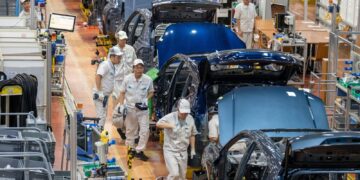
The employment plan is equally significant. Volkswagen’s supervisory board approved a group-wide adjustment of about 50,000 additional positions, including management roles, as part of its Future Plan 2030. That comes on top of roughly 50,000 jobs already scheduled to disappear at Volkswagen, Audi, Porsche and software unit CARIAD, largely through voluntary departures and early-retirement programs. Taken together, the restructuring could affect around 100,000 positions across the group.
For employees, that turns a corporate efficiency program into a long-term workforce reset. Volkswagen had already secured tens of thousands of signed departure agreements before the newest plan was approved. Management argues that staffing and overhead costs remain too high compared with rivals and that simpler structures are necessary to protect the business that remains. The company has not yet detailed exactly how the latest 50,000 reductions will be divided by country, brand or function, leaving many workers with more uncertainty than clarity about where the next cuts will fall.
China Has Become a Much Harder Market
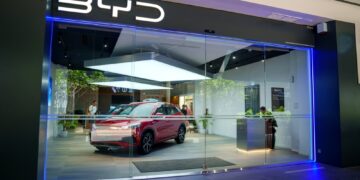
China is one of the biggest reasons Volkswagen says the old cost structure no longer works. The company has pointed to a roughly 20% contraction in the Chinese market relevant to its operations while local manufacturers continue expanding aggressively. Volkswagen once depended on China as one of its most important earnings engines, but domestic brands now compete with fast product cycles, aggressive pricing and increasingly sophisticated electric vehicles. That combination has put pressure on both volumes and pricing power.
The challenge no longer stops at China’s borders. Volkswagen executives say Chinese manufacturers are also expanding exports into Europe, intensifying competition in the group’s home region. That creates a two-sided problem: weaker conditions in China at the same time as lower-cost rivals challenge Volkswagen in Europe. The company’s response includes more locally developed vehicles under its “In China for China” strategy and a broader effort to simplify products and platforms. Management has acknowledged, however, that its Chinese strategy will require more time before its full financial benefits become visible.
EV Growth Is Creating a Profitability Problem
Electric vehicles are creating an unusual tension inside Volkswagen. Demand for battery-electric models has been growing in parts of Europe, with the company reporting that European orders for all-electric vehicles rose by more than 50% in the second quarter. Yet finance chief Arno Antlitz has acknowledged that Volkswagen currently earns significantly less on battery-electric vehicles than it does on internal-combustion models. Faster EV adoption can therefore support the company’s long-term strategy while simultaneously squeezing near-term earnings.
That gap explains why cost reduction has become inseparable from Volkswagen’s electrification plan. Building competitive EVs requires heavy investment in batteries, electronics, software architectures and new vehicle platforms while buyers remain highly sensitive to price. Volkswagen says it needs lower vehicle costs, reduced overhead, more efficient factories and faster technology development. The company is not abandoning electrification; it is trying to improve its economics. The difficulty is that this transition is accelerating while traditional combustion-engine earnings face their own pressures and Asian manufacturers continue expanding aggressively into the European EV market.
Porsche Is Behind a Major Part of the €10 Billion Hit
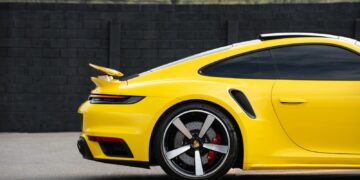
Porsche has become one of the biggest financial drags behind Volkswagen’s revised outlook. Volkswagen said it will take a roughly €6 billion non-cash impairment on goodwill associated with the Porsche business after changing assumptions about the sports-car brand’s medium- and long-term performance. The writedown represents the largest single portion of the approximately €10 billion in special effects expected to reduce Volkswagen’s 2026 operating result.
The deterioration is especially striking because Porsche has historically been one of the group’s most important premium businesses. The brand has faced weaker demand in China, U.S. tariff pressure and costly adjustments to its product strategy. Reuters reported that Porsche posted a margin of only 1.1% last year. Porsche is already implementing thousands of agreed job reductions, although chief executive Michael Leiters told employees on September 21 that there were no plans for another roughly 4,000 cuts beyond the existing restructuring program. Volkswagen’s broader problem is that weakness inside a premium division can rapidly reshape the finances of the entire group.
Volkswagen Wants a Much Simpler Company
The restructuring extends well beyond payroll. Volkswagen’s Future Plan calls for a leaner product portfolio, simpler governance and a more selective approach to businesses that do not clearly strengthen its automotive operations. The company previously said its model lineup could eventually be streamlined by as much as 50%, while the complexity of available configurations and equipment could be reduced by as much as 75%. Production capacity and technology platforms are also being reassessed.
That matters because Volkswagen has grown into one of the world’s most complicated automotive groups, stretching from mass-market Volkswagen, Škoda and SEAT/Cupra to Audi, Porsche, Bentley and Lamborghini, alongside trucks, software and mobility operations. That breadth can produce valuable scale, but overlapping platforms, approval layers and product combinations can also increase costs and slow decisions. Management now wants clearer responsibility and faster development. Its strategy reflects a fundamental change in thinking: selling millions of vehicles is no longer enough if the organization required to develop and manufacture those vehicles consumes too much of the resulting profit.
German Factories Face Difficult Decisions
Factory utilization is another major pressure point. Volkswagen’s September restructuring agreement opened discussions about the long-term future of four German manufacturing locations—Emden, Zwickau, Neckarsulm and Hannover—as existing vehicle programs are phased out during the next decade. Volkswagen has not simply announced that all four will close. Instead, management and stakeholders are examining alternatives for sites that could eventually be left without enough assigned production.
Osnabrück demonstrates how complicated those decisions can become. Volkswagen has reached an agreement involving the State of Lower Saxony and Aurelius Capital covering a possible sale of Volkswagen Osnabrück GmbH, with the stated goal of preserving the location over the longer term. Expenses associated with the planned transaction are also part of the restructuring pressures affecting Volkswagen’s 2026 results. For manufacturing communities, these decisions reach far beyond assembly lines. Suppliers, logistics firms, technical training and local economies depend on predictable production volumes, leaving Volkswagen to balance lower capacity with the need to retain an industrial network capable of building future vehicles.
Labour Unrest Is Becoming Part of the Story
The latest cuts are also testing Volkswagen’s distinctive relationship with organized labour. Employee representatives wield substantial influence through Germany’s co-determination system, while the state of Lower Saxony is another important shareholder. Earlier discussions over Volkswagen’s restructuring raised the prospect of a much more serious confrontation between management and stakeholders, but the September agreement established a negotiated route toward deeper changes rather than allowing that conflict to escalate immediately.
That compromise has not ended worker anxiety. On September 21, employees at Volkswagen and other major German automotive companies participated in nationwide protests over job cuts, possible production relocations and factory closures. Volkswagen works-council leaders and IG Metall have called for measures including lower industrial electricity costs, stronger protection against what they describe as unfair Chinese competition, more effective European subsidy policy and continued phased-retirement programs. Management, meanwhile, argues that structural labour and overhead costs have to decline. Implementing the restructuring without triggering a prolonged industrial conflict may become almost as important as deciding where the savings will come from.
Volkswagen Still Has Billions in Cash Flow
Despite the severity of the warning, Volkswagen is not portraying itself as a company facing an immediate liquidity crisis. The group continues to forecast automotive net cash flow of €3 billion to €6 billion for 2026 and automotive net liquidity of roughly €32 billion to €34 billion. It also expects approximately €315 billion in revenue, compared with €321.9 billion in 2025. Those figures explain why management is framing the problem principally around competitiveness and profitability rather than its ability to fund day-to-day operations.
The distinction matters. A company can remain enormous and financially substantial while still producing too little return on every euro of revenue to support future investment comfortably. Volkswagen generated €5.9 billion in operating profit during the first half of 2026, down 11.6% from a year earlier, on €158.1 billion of sales. Its first-half operating return on sales was 3.8%. Management argues that profitability around that level still leaves too little room for the expensive shift toward software, electrification, new architectures and more competitive factories.
October’s Results Will Show How Deep the Damage Runs
The next major test will be whether Volkswagen can turn restructuring announcements into measurable financial improvement. The company is scheduled to publish its financial results for the first nine months of 2026 on October 29. That should provide a clearer picture of how much of the expected special charges has been booked and whether underlying performance at Volkswagen Passenger Cars, Audi, Porsche and the group’s Chinese operations has stabilized or weakened further.
Employees will be watching a different set of numbers: where the additional workforce reductions will occur and how quickly management converts a group-wide target into specific decisions involving brands, offices and factories. Volkswagen says the Future Plan is intended to lower complexity, reduce structural costs and direct capital toward technologies and regions capable of producing stronger returns. The company has also warned that its current forecast assumes the existing international tariff environment persists and cannot incorporate every potential geopolitical shock. With operating return on sales now expected to reach no more than 1%, there is considerably less financial room for another major setback.