























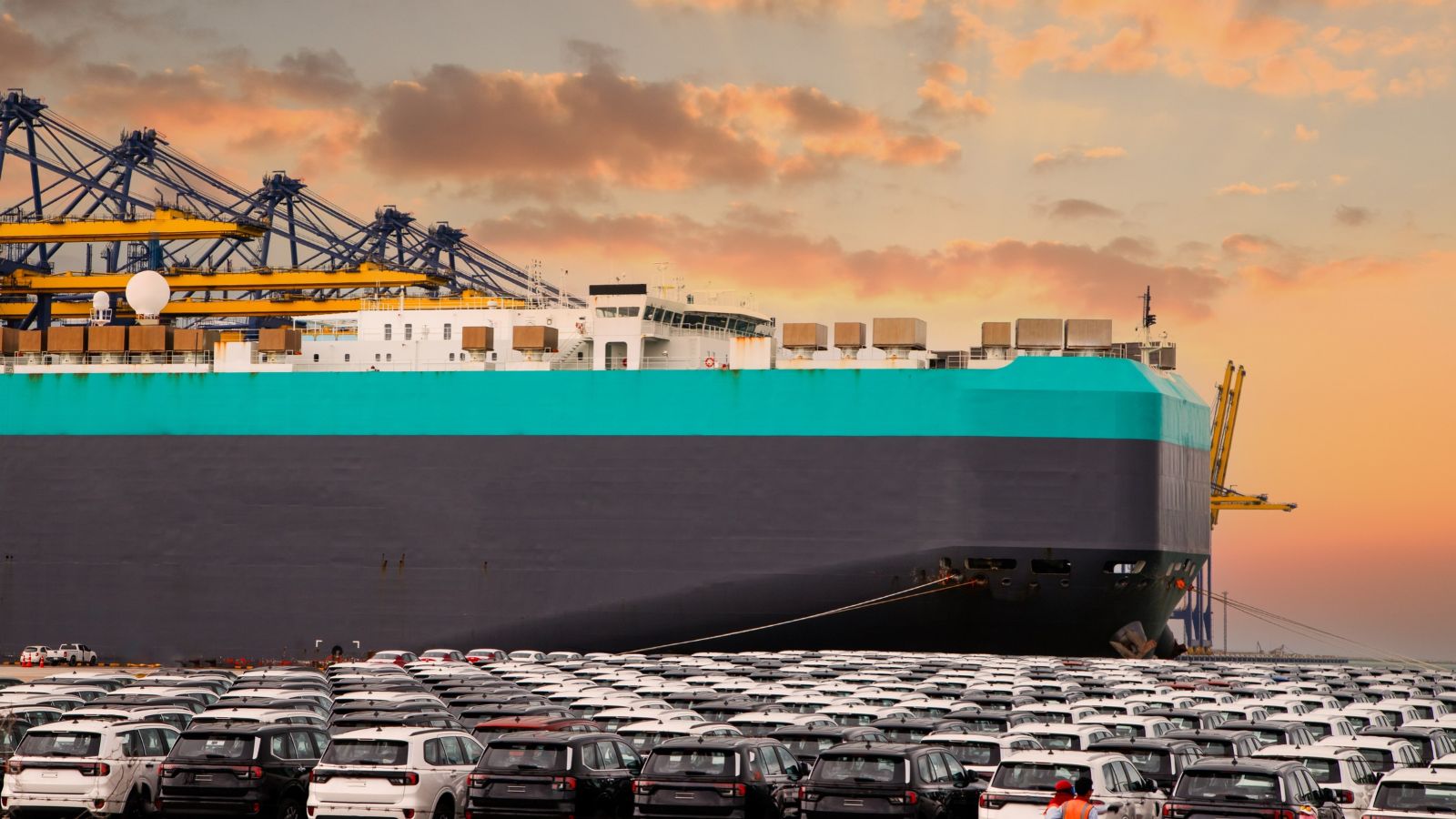
The journey to a Canadian dealership is increasingly likely to begin outside the United States. A new analysis from DesRosiers Automotive Consultants shows that U.S.-sourced light vehicles accounted for 40% of the value of Canada’s light-vehicle imports so far in 2026, down from 49.1% in 2024. Mexico, Japan, South Korea and Europe have gained ground as automakers navigate tariffs and reconsider which factories should supply Canadian buyers.
Behind the percentages are practical decisions about production lines, dealer inventories and affordability. The shift also exposes a difficult contradiction: Canada is becoming less reliant on American factories for the vehicles it imports, while Canadian assembly plants remain heavily dependent on selling their own vehicles south of the border.
A 9.1-Point Shift That Needs Context
The drop from 49.1% to 40% amounts to 9.1 percentage points, but it does not mean that the number of American-built vehicles entering Canada fell by that exact percentage. DesRosiers measured the dollar value of imported light vehicles, not the number of cars and SUVs. An increase in expensive imports from one country, for example, can change its value share even if the number of vehicles changes less dramatically. The comparison also places the full year of 2024 beside a year-to-date figure for 2026, which could still move before December ends.
A separate study from Mobility Global offers another way to see the change. It found approximately 98,000 fewer U.S.-origin vehicle registrations in Canada from January through August 2026 than during the same months in 2025. Total Canadian light-vehicle registrations declined by about 27,100, or 2%, over that period. Those are different measurements, but they point in the same direction: American plants remain important suppliers, just noticeably less dominant than before.
Mexico Is Filling a Growing Share of Canadian Showrooms
Mexico recorded the largest gain among the major individual source countries in the DesRosiers comparison. Its share of Canada’s light-vehicle imports by value rose from 16.7% in 2024 to 20.5% so far in 2026, a gain of 3.8 percentage points. Mobility Global separately counted approximately 32,400 more registrations of Mexico-built vehicles through August 2026 than in the same period a year earlier. Not all of that change reflects factories suddenly being moved: many vehicles were already being assembled in Mexico for North American customers.
Consider the Kia K4 Hatchback. Kia Canada has confirmed that vehicles built for this market come from its plant in Mexico, even though the badge belongs to a South Korean manufacturer. Volkswagen likewise produces models such as the Jetta, Taos and Tiguan in Puebla. For a Canadian buyer, the country where the vehicle is assembled can now matter as much to pricing and availability as the country where its brand is headquartered.
Japan Gains Ground, but Not Every Model Can Change Factories
Japan’s portion of Canadian light-vehicle import value rose from 10.7% in 2024 to 12.9% in 2026 to date, an increase of 2.2 percentage points. Mobility Global also found roughly 28,000 additional registrations of Japan-built vehicles during the first eight months of 2026 compared with the same period in 2025. Toyota, Lexus, Mazda, Mitsubishi and Subaru all contributed to the broader Japanese-made vehicle market. That is not the same as saying every Japanese-branded vehicle sold in Canada was shipped from Japan.
Subaru illustrates how source flexibility can help. Its Forester and Crosstrek have had production in both Japan and the United States, and Canadian registrations in the first half of 2026 came largely from Japan after a stronger U.S. contribution a year earlier. But plenty of models are tied to a single plant or region. An automaker cannot simply redirect orders to Japan if the vehicle has never been built there. Some of Japan’s gains therefore reflect demand and model mix, not just tariff avoidance.
South Korea’s Rise Reveals a Flexible Supply Strategy
South Korea increased its share of Canadian light-vehicle import value from 10.4% in 2024 to 12.5% so far in 2026. The 2.1-percentage-point gain reflects an industry with more than one possible production route into Canada. According to Mobility Global, Hyundai Motor Group adjusted Canadian sourcing of the Tucson, increasing reliance on vehicles produced outside the United States, including South Korea and Mexico. That sort of change is possible when the same model or a related production program has factories in multiple countries.
Kia’s EV5 provides another concrete example of South Korea’s role. Kia Canada announced that the electric SUV for Canadian buyers would be produced at its Gwangju plant, with a 2026 market launch. Yet a Korean badge does not automatically mean Korean assembly: the Kia K4 is Mexican-built for Canada. For manufacturers juggling tariffs, the advantage is not simply national identity. It is having several production locations and enough flexibility to decide which vehicles make commercial sense to send north.
Europe Gains While China Tells a Different Story
The combined European markets also expanded their share, moving from 9.8% of Canadian light-vehicle import value in 2024 to 11.1% so far in 2026. That is a smaller increase than Mexico’s, but it reinforces the broader pattern of Canada sourcing more of its imported vehicles outside the United States. Europe is counted as a group in these figures, so its 11.1% should not be mistaken for the share of any one European country.
China moved in the opposite direction in this particular comparison: its share slipped from 2.9% to 2.6%. That may sound surprising given Canada’s decision to allow an initial annual quota of 49,000 Chinese electric vehicles at a 6.1% tariff beginning in March 2026. Ottawa reported in November that more than 16,000 EVs had entered under the arrangement since March. There is no contradiction. An increase in a particular category of imported vehicles can coexist with a lower share of total vehicle-import value across the wider market.
Tariffs Are Changing the Economics of Every Sourcing Decision
Canada’s counter-tariffs explain much of the urgency. Since April 9, 2025, Ottawa has imposed a 25% tariff on vehicles imported from the United States that do not meet CUSMA requirements. It also applies a 25% tariff to the non-Canadian and non-Mexican content of qualifying U.S.-assembled vehicles. Across the border, Canadian-made vehicles have faced a U.S. tariff on the value added outside the United States. The treatment is more complicated than a simple tax on everything crossing the border.
For an automaker, that complexity becomes a question of landed cost: factory expense, transport, customs treatment and any available relief all affect whether a model can be sold competitively in Canada. A company might absorb part of a tariff, adjust incentives or source a comparable vehicle from another plant. None of those choices is painless. When a model already has production available in Mexico, Japan or South Korea, sending those vehicles to Canada may be less disruptive than trying to preserve an American supply route at any cost.
CUSMA Exemptions Mean the Rules Are Not the Same for Everyone
Canada’s tariff measures contain important exceptions, especially for manufacturers with assembly operations inside the country. Ottawa’s automotive remission framework allows qualifying companies to bring in a limited number of eligible U.S.-made vehicles without paying the Canadian counter-tariff. The allowance is connected to maintaining domestic production and following through on investment commitments. This was designed to recognize that companies selling imported models in Canada may also be employing Canadians to build other vehicles.
That helps explain an unusual feature of the DesRosiers findings: the shift away from U.S. imports is visible even though some major manufacturers have access to tariff relief. A company with substantial Canadian production may have different choices from an importer with no local assembly plant. Both still have to consider what customers want, which factories build their models and how much uncertainty they can afford. The figures show an industry adapting to uneven incentives, not every automaker abandoning U.S. production at once.
Mazda’s CX-50 Shows What a Sourcing Shift Looks Like in Practice
The Mazda CX-50 offers one of the clearest examples of trade policy reaching an actual vehicle lineup. In April 2025, Mazda said it would temporarily suspend production of CX-50 SUVs destined for Canada at its Alabama joint-venture plant beginning May 12. The company planned to maintain overall production volume by building more vehicles for the U.S. market instead. The assembly line did not have to close for Canadian shoppers to lose their normal supply of a familiar SUV.
The effect can be seen in registration data. Mobility Global reported fewer than 200 Canadian registrations of U.S.-built CX-50s through August 2026, compared with roughly 7,500 over the corresponding period in 2025. Not every automaker has a comparable solution, because some models have no alternative assembly site. For dealers, these decisions show up as missing trims or discontinued allocations rather than as an abstract argument over tariffs. For buyers, they can change which vehicle is actually available when a replacement is needed.
A More Diverse Import Mix Does Not Automatically Mean Cheaper Cars
For Canadian households, the most immediate question is whether a different supply route makes a vehicle more affordable. The answer is not automatic. AutoTrader’s third-quarter 2026 Price Index put average new-vehicle prices at $62,176, down 1.7% from a year earlier. It also reported that new-vehicle inventory had increased by approximately 20% on a same-store basis. More supply and manufacturer incentives were putting some downward pressure on prices, but those market-wide changes cannot be attributed solely to vehicles arriving from different countries.
Daniel Ross of Canadian Black Book told The Canadian Press that manufacturers were seeking alternative sources in part to keep prices from rising. That is different from promising broad price cuts. In an AutoTrader poll of 1,167 Canadian shoppers, nearly half of prospective buyers reported delaying a purchase, illustrating how sensitive households remain to affordability and uncertainty. A customer comparing two similarly equipped SUVs might never see the tariff calculations, but those calculations can influence the models, discounts and delivery dates available at a dealership.
Canada’s Manufacturing Jobs Remain Tied to the American Market
There is an important distinction between diversifying the vehicles Canadians buy and protecting the vehicles Canadians build. According to the federal government, Canada’s auto sector supports more than 500,000 jobs and contributes over $16 billion annually to national GDP. Canadian plants produced more than 1.2 million passenger vehicles in 2025. More than 90% of Canadian-made vehicles are exported to the United States, meaning the country’s assembly plants still depend enormously on access to American customers.
That dependence affects much more than the people working directly on assembly lines. Parts manufacturers, logistics firms and communities surrounding major Ontario plants all have a stake in keeping cross-border production viable. An importer can sometimes swap an American-built model for one from Mexico or Asia; a Canadian factory cannot replace its U.S. export market with equal ease. Ottawa’s automotive strategy and tariff-relief incentives are therefore aimed at sustaining Canadian production, not merely changing which countries supply local dealerships. The two goals overlap, but they are not interchangeable.
What Happens Next Depends on Washington and Ottawa
The shift is unlikely to erase the United States from Canada’s auto market. Mobility Global expects American factories to remain the largest source of Canadian vehicle sales through 2031 under its forecast assumptions. At the same time, negotiations leave manufacturers facing a major uncertainty: President Donald Trump threatened to raise U.S. tariffs on Canadian vehicles and automotive parts to 50% starting January 1, 2027. That was a threatened future increase, not the tariff already in force when the DesRosiers report appeared.
The broader CUSMA relationship remains unresolved as well. At the July 2026 joint review, the United States declined to extend the agreement in its existing form, although the pact remains in force. Prime Minister Mark Carney has said Canada will not accept a trade deal that leaves its automotive industry unviable. If the dispute eases, some sourcing decisions may be revisited. If it worsens, Mexico, Japan, South Korea and Europe could retain or expand their gains. Either way, Canada’s auto map is no longer as U.S.-centred as it was in 2024.