























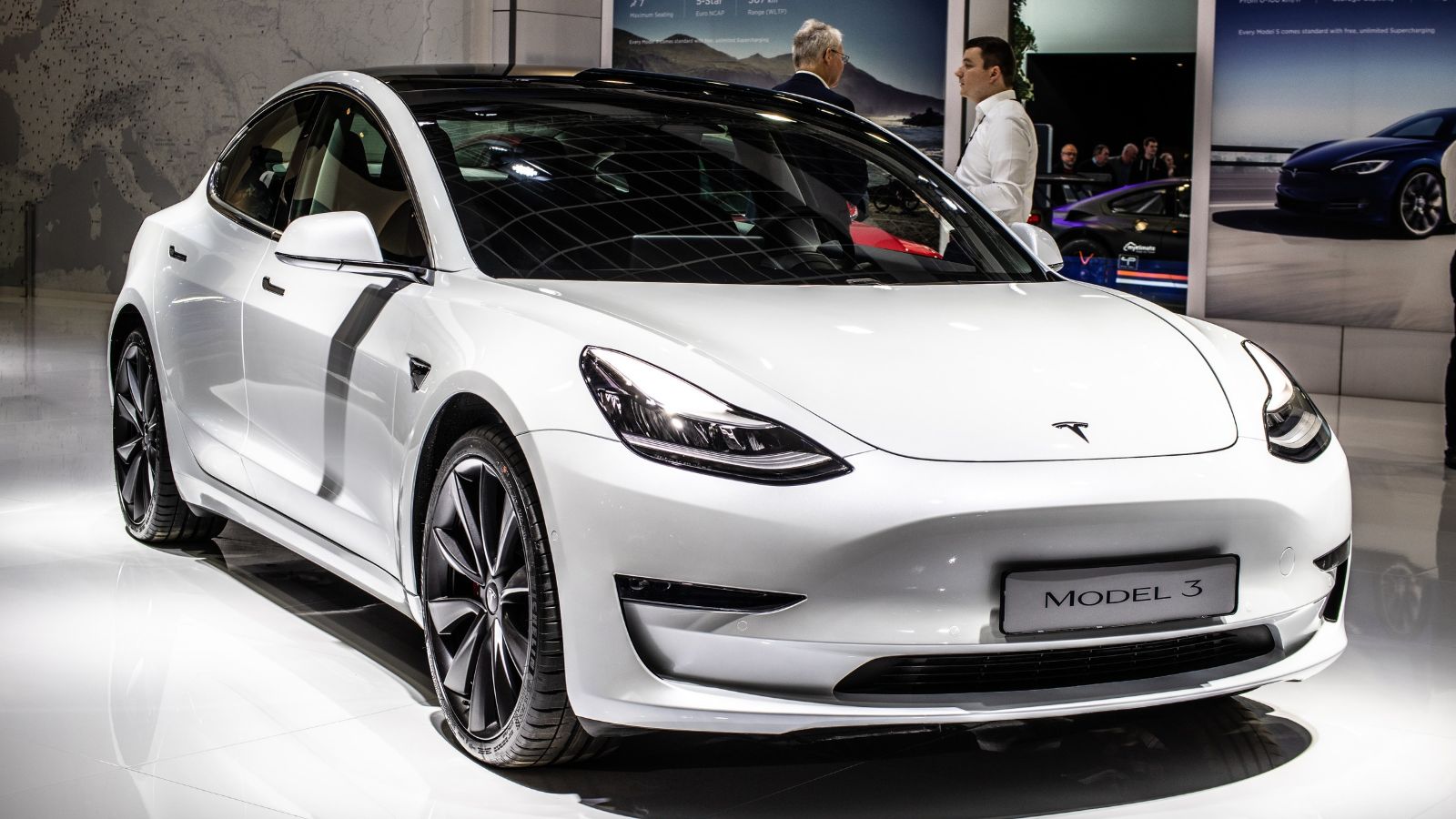
Tesla’s most affordable Model 3 has reappeared in Canada’s online vehicle configurator, giving prospective buyers another glimpse of the $39,490 electric sedan. However, the return comes with a significant catch: customers can select the vehicle, but they still cannot place an order.
The change, reported on October 30, 2026, follows Tesla’s decision to suspend Canadian orders for its China-built Model 3 Premium variants earlier in the month. The company has blamed restrictions under Canada’s electric vehicle import quota, even as federal figures show substantial unused capacity nationwide. For Canadians hoping to purchase an affordable electric sedan, the situation has created an unusual contradiction between what appears available online and what can actually be purchased.
The Configurator Has Reopened a Door, but Not Checkout
On Friday, October 30, Tesla’s Canadian Model 3 configurator changed in a way that could easily be mistaken for a sales restart. The Premium Rear-Wheel Drive and Premium All-Wheel Drive versions, previously greyed out after an ordering suspension, became selectable again. Customers can explore the available configurations and examine the vehicles they might want to purchase. However, according to Canadian automotive publication Drive Tesla, the usual ordering option has been replaced with a “Get updates” button. That allows potential customers to register their interest without actually purchasing a vehicle.
The distinction matters because Tesla relies heavily on its online sales experience, allowing shoppers to select equipment, review pricing and proceed toward a purchase without visiting a conventional dealership. For someone planning to replace an older gasoline vehicle, seeing a previously unavailable model return to the configurator could appear encouraging. However, Tesla has not confirmed that Canadian orders for either Premium trim have reopened. The website adjustment currently provides greater visibility into the vehicles rather than restoring their availability for purchase.
The $39,490 Starting Price Still Comes With Additional Costs
The headline price of $39,490 remains one of the Model 3’s strongest attractions in Canada. The figure applies to the Premium Rear-Wheel Drive version, while the Premium All-Wheel Drive model carries a listed manufacturer’s suggested retail price of $49,990. The lower starting price places the rear-wheel-drive sedan in a more accessible position than many Canadians might associate with Tesla. However, the advertised vehicle price does not represent the full amount a customer would pay before receiving the keys.
Tesla’s previously displayed Ontario pricing example included $2,500 for freight and pre-delivery inspection, a $100 federal air-conditioning tax, a $22 Ontario Motor Vehicle Industry Council fee and a $24 tire fee. Together, those additions brought the estimated purchase price to $42,136 before applicable sales taxes. Optional equipment, financing charges and other location-dependent costs can increase the final amount further. For households comparing electric vehicles against similarly priced gasoline cars, the difference between advertised MSRP and the actual purchase cost is an important part of the calculation.
Tesla Suspended Canadian Model 3 Premium Orders on October 12
The current situation began on October 12, when Tesla stopped accepting new Canadian orders for the China-built Model 3 Premium variants. The company attributed the suspension to strong demand that had exhausted the import quota available to Tesla under Canada’s system for Chinese-manufactured electric vehicles. Both the entry-level rear-wheel-drive model and the more expensive all-wheel-drive version were affected, removing the two less expensive Model 3 configurations from the normal ordering process.
Tesla’s notice also indicated that ordering could resume if the Canadian government issued additional quota, with March 2027 identified as the expected timeframe. This explanation suggested an import restriction rather than a decision to discontinue the vehicles permanently. Nevertheless, it created uncertainty for prospective buyers who had been watching prices and delivery estimates. A customer who had budgeted around the $39,490 sedan suddenly faced a choice between waiting for the ordering system to reopen or considering a significantly more expensive alternative. The October 30 configurator change has not resolved that underlying problem.
Federal Figures Show Thousands of Unused Import Slots
One of the most confusing aspects of the situation is the difference between Tesla’s explanation and Canada’s published import figures. According to Global Affairs Canada’s utilization report, updated October 30, 2026, the country had recorded 16,206 vehicles against its annual quota of 49,000 Chinese-made electric vehicles. That left 32,794 unused spaces, representing approximately two-thirds of the national allocation. The report also showed that 15,603 vehicles had been recorded during the first six-month period, with another 603 during the second period.
Those numbers make the suspension worth examining, but they do not establish that Tesla can immediately import another 32,794 vehicles. The public report covers the national quota rather than Tesla’s individual access, and it does not identify how much capacity might be reserved or anticipated for different manufacturers. Import utilization figures also do not provide a complete picture of future permit commitments. Consequently, the available government data supports the conclusion that Canada’s overall quota is far from exhausted, but it cannot independently confirm whether Tesla has access to additional permits.
Import Rules Explain Why Tesla May Face Separate Restrictions
Global Affairs Canada’s official rules describe the Chinese EV import system as operating on a first-come, first-served basis, but that description does not tell the entire story. Notice to Importers No. 1168 requires shipment-specific permits for covered vehicles and allows the government to manage availability to provide equitable access. Section 3.4.6 explicitly permits portions of the quota to be set aside for automakers, including new market entrants. Consequently, the national annual limit does not necessarily represent the number of vehicles every individual manufacturer can expect to import.
On October 14, Tesla Canada public policy executive Iain Myrans was reported as saying that Global Affairs Canada communicates anticipated import limits to manufacturers in advance. Department spokesperson Rachael Dolan also confirmed that officials were consulting interested companies about distributing the remaining quota, while declining to disclose individual manufacturers’ information for commercial confidentiality reasons. These explanations offer important context for Tesla’s suspension. However, neither the government nor Tesla has publicly identified the precise company-specific quantity responsible for the interruption, leaving an important part of the situation unresolved.
Canada’s Trade Agreement With China Made the Lower Price Possible
The $39,490 Model 3 became possible partly because Canada’s treatment of Chinese-manufactured electric vehicles changed dramatically. In October 2024, Ottawa introduced a 100% surtax on electric vehicles produced in China, creating a substantial barrier for manufacturers importing vehicles from Chinese factories. That policy changed after Canada and China reached a preliminary trade arrangement in January 2026. Effective March 1, Canada removed the additional 100% surtax and introduced an initial annual import quota of 49,000 Chinese-made electric vehicles at the standard 6.1% most-favoured-nation tariff rate.
The new arrangement reopened a supply route Tesla already knew well. Its Shanghai manufacturing operation could again provide Model 3 vehicles for Canadian customers without the enormous additional import duty imposed under the previous policy. Tesla introduced its $39,490 Premium Rear-Wheel Drive version in May 2026, bringing the sedan to a historically low Canadian starting price. Yet the trade arrangement also created a new dependency. While lower tariffs made the vehicle more affordable, the quota system determines how many eligible vehicles can enter under those terms. That helps explain why pricing and availability have moved in opposite directions.
Returning to American Production Could Create Another Pricing Problem
One potential solution would involve Tesla supplying Canadian customers with Model 3 vehicles manufactured at its Fremont factory in California. Tesla already produces the sedan at that location, and American-built vehicles previously served the Canadian market when Chinese imports faced higher tariffs. Moving production sourcing back to the United States could avoid the China-specific import quota. However, such a decision would introduce another complication because Canada’s retaliatory automotive tariffs against American imports remain in force.
Since April 9, 2025, Canada has imposed 25% counter-tariffs on non-CUSMA-compliant vehicles imported from the United States and on the non-Canadian, non-Mexican content of compliant vehicles. These measures contributed to earlier increases in the prices of U.S.-sourced Model 3 variants. Returning to American production could therefore mean a higher Canadian selling price, depending on the vehicle’s content and the applicable tariff treatment. Tesla has not announced a new American-sourced Premium model for Canada or confirmed what it would cost. Consequently, a return to U.S. manufacturing would not automatically guarantee the continuation of the $39,490 price.
A Brief Website Specification Change Added to the Speculation
The latest configurator development follows another unusual change to Tesla’s Canadian website. On October 26, the company’s Model 3 Premium Rear-Wheel Drive specifications briefly showed an estimated driving range of 584 kilometres and acceleration from zero to 100 km/h in 5.2 seconds. Those numbers differed substantially from the Shanghai-built version’s previously published 463-kilometre range and 6.2-second acceleration time. The temporary figures closely matched specifications associated with a longer-range, American-built Model 3 previously sold in Canada.
The apparent upgrade immediately raised questions about whether Tesla was preparing to replace its Chinese-manufactured Premium model with an American alternative. However, by October 27, Tesla had restored the previous Canadian figures of 463 kilometres and 6.2 seconds. The company did not publicly confirm that the temporary specifications represented a forthcoming vehicle. The reversal illustrates why changes to Tesla’s website require careful interpretation. A revised specification page or newly selectable configuration may indicate internal preparations, but neither establishes that a new model has been approved for Canadian sales. For now, the shorter-range specifications remain the relevant published figures for the affected Premium Rear-Wheel Drive model.
The $74,990 Performance Model Remains the Only Orderable Model 3
For Canadians who cannot afford to wait, the Model 3 Performance remains the only version available through Tesla’s regular ordering process, according to the latest reports. Its starting MSRP of $74,990 places it in a substantially different price category from the $39,490 Premium Rear-Wheel Drive. The Performance version offers dual-motor all-wheel drive, enhanced handling equipment and acceleration from zero to 100 km/h in as little as 3.1 seconds. Those capabilities may appeal to driving enthusiasts, but they do not necessarily address the needs of customers searching for affordable transportation.
The price difference is particularly significant for households managing strict monthly budgets. At the advertised starting prices, the Performance costs $35,500 more than the entry-level Premium, before additional charges and taxes. The $49,990 Premium All-Wheel Drive, which previously offered a more affordable middle option, is also unavailable for new orders. Customers may investigate existing inventory, used vehicles or competing electric sedans, but those alternatives carry different prices, specifications and warranty considerations. For budget-conscious buyers, the return of the Premium trims to the configurator has therefore not restored the practical choice that existed before October 12.
Federal EV Rebates Do Not Automatically Apply to the Affordable Model 3
Another important consideration involves Canada’s Electric Vehicle Affordability Program. Under the federal rules, qualifying battery-electric vehicles can receive incentives of up to $5,000 during 2026, subject to several conditions. Eligible vehicles generally must have a final transaction value of $50,000 or less, unless manufactured in Canada, and must be produced in Canada or a country with which Canada has a free-trade agreement. This means an electric vehicle can fall below the advertised price threshold without necessarily qualifying for federal financial assistance.
Tesla’s Shanghai-built Model 3 Premium versions do not qualify for the federal incentive because China does not meet the program’s free-trade-agreement requirement. Provincial incentives may still be available depending on the jurisdiction and applicable rules. The federal program also reduces its maximum battery-electric incentive to $4,000 in 2027 for eligible transactions, with the amount determined by the year the seller submits the eligibility assessment rather than the vehicle’s delivery date. These details matter when comparing the total cost of ownership. A lower-priced Tesla without a federal incentive may not always be less expensive than an eligible competing vehicle after applicable rebates.
March 2027 Is a Possible Restart Date, Not a Guaranteed Delivery Date
Tesla’s stated expectation of March 2027 aligns with the beginning of the next annual period under Canada’s Chinese EV import quota. The current quota year runs from March 1, 2026, through February 28, 2027, meaning a new allocation period begins on March 1. However, Tesla’s original notice linked the resumption of orders to the government issuing additional import quota. That condition is important because it makes the proposed timeline dependent on regulatory arrangements rather than a firm commitment to reopen sales on a specific date.
For Canadian customers, the most practical immediate option is to register for Tesla’s availability notifications while monitoring official pricing and ordering information. Those who need a vehicle sooner can compare available inventory, other electric models and used-car alternatives using actual purchase prices rather than advertised starting figures alone. Even if Premium orders reopen, production schedules, transportation and delivery capacity will determine when vehicles reach customers. The $39,490 Model 3 remains an attractive proposition, but its latest website appearance illustrates a fundamental distinction in today’s automotive market: a vehicle can have a competitive price, compelling specifications and strong consumer interest without being available to purchase.