

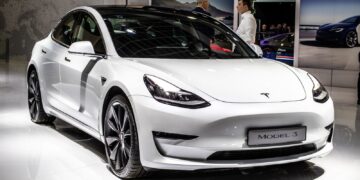






















Canada and the European Union are promising a closer economic partnership, but an unexpected disagreement over expensive electric vehicles has emerged as a sticking point.
During the October 29–30, 2026, Canada–EU summit in Montréal, European officials identified Canada’s luxury tax on certain electric vehicles as a priority trade concern. Brussels argues that the policy disproportionately affects European automakers and potentially undermines efforts to encourage cleaner transportation.
Prime Minister Mark Carney’s government maintains that the tax is fair, applies regardless of where vehicles are manufactured, and serves a legitimate public policy purpose.
The disagreement comes as Canada seeks to strengthen European trade relationships, diversify its economy, and expand cooperation on clean technologies. What appears to be a relatively narrow tax dispute now highlights a broader question about how two major trading partners balance climate goals, industrial competitiveness, and government revenue.
A Luxury-Vehicle Tax Becomes a Summit-Level Trade Issue
The dispute gained renewed prominence during the 21st Canada–European Union summit, hosted by Prime Minister Mark Carney in Montréal on October 29 and 30, 2026. European Commission President Ursula von der Leyen and European Council President António Costa joined Carney for discussions aimed at strengthening economic cooperation. Although the summit produced an ambitious Alliance for the Future, it also brought several unresolved trade disagreements into sharper focus.
In an October 30 backgrounder, the Canadian government confirmed that the EU had identified three priority trade concerns: Canada’s steel tariff-rate quota regime, its luxury tax on certain electric vehicles, and its Buy Canadian policy. Both sides reported constructive discussions and progress ahead of the summit, but no agreement to eliminate the vehicle tax was announced. The distinction matters because the EU’s objection is now part of an accelerated bilateral negotiating agenda, rather than a newly announced formal trade lawsuit. For automakers, importers, and consumers, the outcome could eventually influence how expensive European EVs compete in Canadian showrooms.
How Canada’s Luxury Tax Works on Electric Vehicles
Canada introduced its federal luxury tax on September 1, 2022, targeting certain high-value vehicles priced above $100,000. Under the Select Luxury Items Tax Act, the charge generally applies to qualifying passenger vehicles, including sedans, SUVs, coupes, and light-duty pickup trucks. Eligible vehicles must meet specific criteria relating to manufacture date, seating capacity, and weight. Electric powertrains do not automatically qualify for an exemption, meaning a premium battery-electric vehicle can face the same tax calculation as a comparable gasoline-powered model.
The formula is straightforward but can produce substantial charges. The government collects the lesser of 10% of the taxable vehicle value or 20% of the amount exceeding $100,000. For example, a qualifying vehicle with a taxable value of $120,000 incurs $4,000 in luxury tax. At $150,000, the charge becomes $10,000, while a $250,000 vehicle attracts $25,000. These amounts exclude additional applicable sales taxes. Although registered dealers generally remit the tax, its cost can ultimately appear in the amount paid by customers, making the final showroom price considerably higher than the advertised base price.
Why European Automakers Say the Policy Is Unfair
European officials argue that Canada’s luxury tax creates an unequal commercial impact even though its wording does not distinguish between domestic and imported vehicles. The concern centres on the concentration of European manufacturers in premium vehicle segments, where selling prices frequently exceed the $100,000 threshold. Higher-priced electric models can be especially exposed, placing additional financial pressure on manufacturers attempting to expand their Canadian customer bases.
The disagreement is not new. During Canada–EU trade discussions in April 2024, European representatives referenced an EU-commissioned study that they said demonstrated a disproportionate impact on European vehicles. They also reported that some automakers had experienced reductions of up to 60% in orders for certain vehicles after the tax was introduced. That figure was an industry-reported observation, not proof that the tax alone caused the decline. In subsequent discussions held in October 2025, the EU repeated its position that the measure represented a barrier to European automotive exports. The summit’s latest designation therefore reflects a continuing disagreement that earlier negotiations had failed to resolve.
Ottawa Maintains the Tax Is Fair and Non-Discriminatory
The Canadian government’s position is that the luxury tax targets expensive purchases, not vehicles manufactured in particular countries. During trade discussions in October 2025, Canadian representatives described the policy as progressive because it places an additional burden on consumers able to afford higher-priced products. Ottawa also challenged aspects of the European impact assessment, arguing that its methodology did not adequately represent certain segments of Canada’s automotive market. Canadian officials previously pointed to strong European vehicle imports in 2023 as evidence that the tax had not prevented European automakers from selling successfully in Canada.
The disagreement exposes two different interpretations of fairness. Canada’s argument focuses on equal treatment under the law, while Europe’s concerns focus on unequal economic consequences. Interestingly, Ottawa has already narrowed the luxury tax’s scope. Legislation receiving royal assent in March 2026 eliminated the tax on qualifying aircraft and vessels, effective November 5, 2025. However, vehicles above the $100,000 threshold remain covered. The government justified the aircraft and vessel changes partly through industry pressures and administrative costs, without extending the same relief to expensive automobiles.
The EU Wants an Exemption for Zero-Emission Vehicles
European officials have proposed a specific compromise rather than simply demanding the elimination of Canada’s entire luxury tax system. During the October 2025 CETA Committee on Trade in Goods meeting, the EU suggested that exempting zero-emission vehicles could be an initial step toward resolving its objections. European representatives argued that encouraging clean automotive technology should take precedence over applying an additional luxury charge to qualifying electric cars. Canada acknowledged the request and indicated that it would forward the proposal for consideration, but did not commit to changing the legislation.
The proposal also exposes an important distinction within Canada’s electric-vehicle policy. Under the federal Electric Vehicle Affordability Program launched in February 2026, eligible imported vehicles generally face a $50,000 final transaction value cap to receive incentives of up to $5,000 in 2026. Canadian-made EVs are exempt from that price cap. Most imported luxury EVs costing more than $100,000 therefore cannot access the purchase incentive. Removing their luxury tax would reduce their cost, but would not automatically make them eligible for federal rebates.
Additional Sales Taxes Can Make the Final Cost Even Higher
The luxury tax’s impact can extend beyond its initial calculation because Canada’s Goods and Services Tax or Harmonized Sales Tax is generally calculated on the price including the federal luxury tax. Consider a hypothetical qualifying electric vehicle sold in Ontario for $150,000 before taxes and without additional charges. Its $10,000 luxury tax raises the amount subject to Ontario’s 13% HST to $160,000. That produces $20,800 in HST and a total of $180,800. Without the luxury tax, the same vehicle would cost $169,500 including HST, creating an $11,300 difference.
Additional details can further complicate the purchase. The Canada Revenue Agency explains that certain accessories, improvements, freight charges, and incidental services can contribute to the taxable vehicle value. A buyer selecting an expensive technology package or cosmetic upgrades could therefore face a higher taxable amount than the original advertised price suggests. Some provincial tax systems also impose additional vehicle-related charges. European representatives specifically raised concerns about overlapping taxes during earlier negotiations, arguing that their combined impact can make premium electric vehicles less competitive with alternatives priced below the federal threshold.
CETA’s Rules of Origin Create Another Challenge for Electric Cars
Canada and the EU already benefit from the Comprehensive Economic and Trade Agreement, commonly called CETA, which began provisional application in September 2017. The agreement eliminated most tariffs between the two markets, but preferential tariff treatment is not automatic for every vehicle manufactured in Europe. Products must satisfy specific rules of origin, which establish how much qualifying production or material content is required. For electric cars with globally sourced batteries and components, meeting those conditions can be more complicated than simply assembling the vehicle at a European factory.
The European Commission’s November 2025 evaluation of CETA identified this as an important issue. Its assessment found that the combination of automotive rules of origin and Canada’s luxury tax disadvantaged electric vehicles relative to conventional gasoline-powered cars. Battery supply chains, component costs, and vehicle prices can all influence that result. Not every European EV faces the same problem, but the findings demonstrate why Brussels considers the dispute broader than a tax on wealthy buyers. The EU argues that trade rules and taxation should support cleaner transportation rather than unintentionally making it less competitive.
European Complaints Also Target Canadian Steel and Procurement Policies
The luxury tax is only one part of Europe’s broader trade concerns. At the Montréal summit, European officials also highlighted Canada’s steel tariff-rate quota regime. Under Canadian rules effective since December 26, 2025, specified steel imports from eligible free-trade-agreement partners are subject to quotas set at 75% of their 2024 import levels. Imports exceeding those limits can face a 50% surtax. Ottawa argues that these protections are necessary to address global overcapacity, prevent trade diversion caused by American tariffs, and support Canadian steelworkers. European exporters, however, see potential restrictions on access to an important North American market.
The EU’s third major objection concerns Canada’s Buy Canadian procurement policy. Introduced in December 2025 and expanded in June 2026, the policy prioritizes Canadian businesses and domestic content in certain federal purchases, including strategic contracts valued at $5 million or more. Additional rules favour Canadian-produced steel, aluminum, and wood in qualifying large projects. While Canadian officials describe the measures as essential for economic resilience, European companies are concerned about potential disadvantages when competing for government contracts. Together, these complaints demonstrate that the summit’s disagreements extend well beyond luxury automobiles.
Canada Has Three Major Trade Complaints of Its Own
Canada also brought significant concerns to the summit, identifying three European regulatory measures for accelerated discussions. The first is the EU’s Carbon Border Adjustment Mechanism, which entered its definitive phase on January 1, 2026. The system places carbon-related obligations on imports of certain products, including steel, aluminum, cement, and fertilizers. Ottawa wants to ensure that Canadian exporters can compete fairly without unnecessary regulatory burdens. The second concern involves Europe’s Deforestation Regulation, which requires businesses to demonstrate that covered commodities do not contribute to deforestation or forest degradation.
Canadian forestry exporters have previously expressed concerns about compliance requirements despite Canada’s low-risk classification under the EU framework. The regulation is scheduled to begin applying to most large and medium-sized operators on December 30, 2026. Canada’s third concern involves proposed EU measures on pesticides and their potential implications for agricultural trade. These issues create a complicated negotiating environment because both governments defend domestic rules intended to protect their economies, citizens, or environment. The challenge is determining when a legitimate policy objective becomes an unnecessary trade obstacle. Any successful compromise will likely require reciprocal adjustments rather than concessions from only one side.
Canada’s Growing EV Market Raises the Stakes for Future Negotiations
The disagreement is unfolding as electric vehicles become an increasingly important part of Canada’s automotive market. Statistics Canada reported 58,811 new zero-emission vehicle registrations in the second quarter of 2026, representing 10.7% of all new vehicle registrations. Of those zero-emission vehicles, 18.1% were assembled in Europe. More recent sales figures showed 22,716 new zero-emission vehicles sold in August, an increase of 55.1% compared with August 2025. These figures include both battery-electric and plug-in hybrid models, but they demonstrate the growing commercial importance of electrified transportation.
The wider economic relationship makes the dispute particularly significant. According to the European Council, bilateral trade in goods and services reached approximately €130 billion in 2025, more than 80% higher than in 2016. Canada and the EU have now committed to expanding industrial cooperation, reducing regulatory barriers, and defining a closer relationship by their 2027 summit. No luxury-tax exemption emerged from the October 2026 meetings, leaving the existing rules in place. The next phase will determine whether both sides can translate their shared commitment to clean technology and open trade into practical changes. For Canadian consumers and European manufacturers, that outcome could ultimately matter more than the diplomatic promises made in Montréal.