
























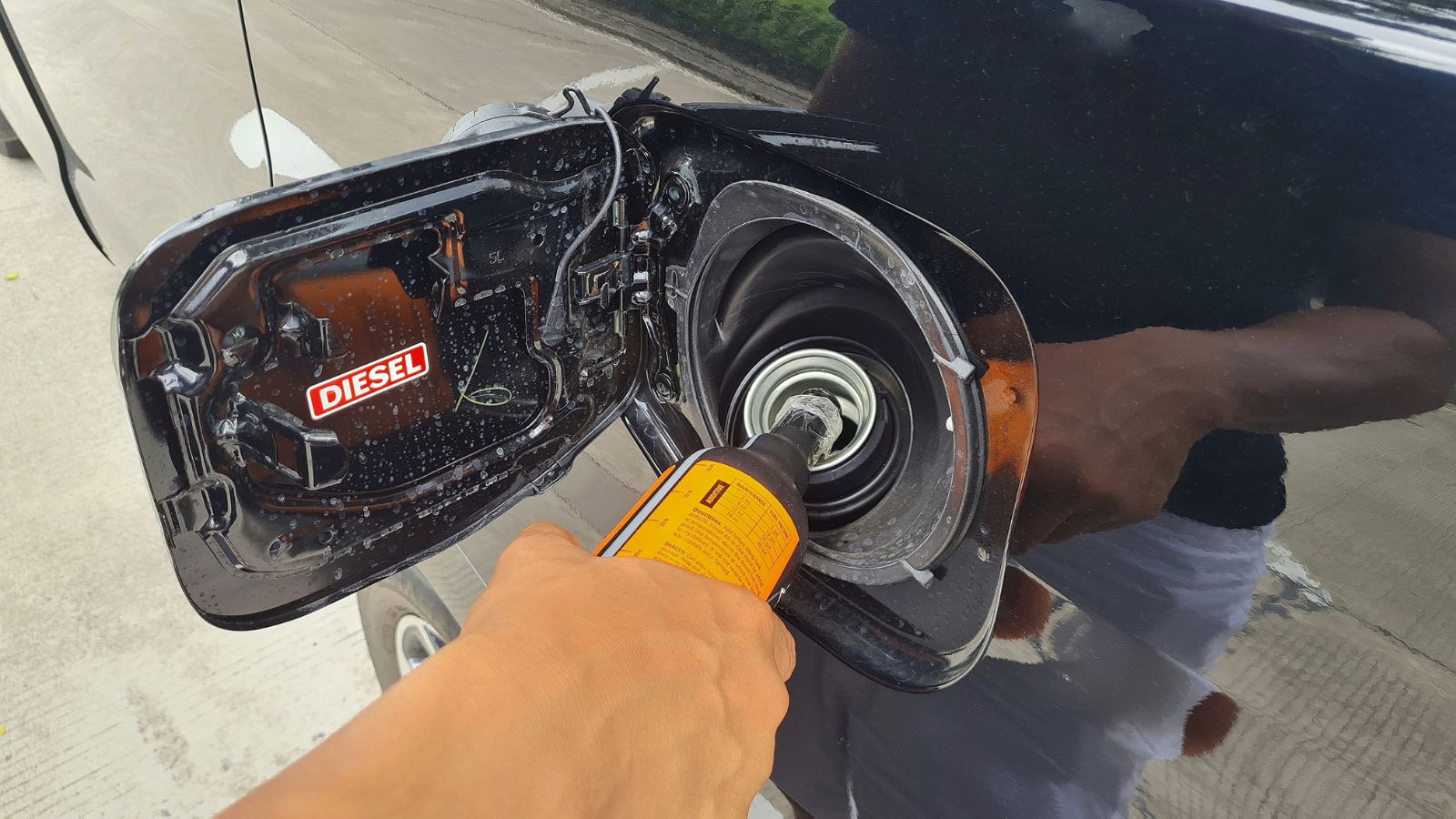
The price of diesel rarely stays at the pump. It travels with grocery deliveries, construction materials and the goods that fill store shelves. With Canada’s next federal budget days away, Conservative Leader Pierre Poilievre is renewing his demand that Prime Minister Mark Carney remove federal taxes on diesel and change the rules governing fuel production.
The timing comes with an important distinction: Ottawa has already suspended the federal diesel excise tax, and Parliament has just extended that relief. The new political fight is over how long the suspension should last, whether the GST should also disappear from fuel purchases, and how much regulatory reform could achieve. Behind the competing promises is a practical question for businesses and households: which measures would actually lower costs, and when?
Poilievre Turns Diesel Relief Into a Budget Demand
At a November 1 news conference and in a letter to Carney, Poilievre renewed his call to eliminate federal taxes on diesel until Canada Day 2027. The proposal reaches beyond the existing excise-tax holiday. It would also suspend the GST on fuel purchases until the summer and permanently eliminate the Clean Fuel Regulations, which Conservatives frequently describe as a fuel-standard tax. Poilievre has also called for ending industrial carbon pricing. These are different measures with different legal and economic effects, but he presents them as one affordability package. His argument is that diesel affects the cost of nearly everything moved by truck, so reducing its price should help households as well as drivers.
The renewed appeal is part of a broader Conservative challenge ahead of the November 5 budget. Poilievre wants Ottawa to restrain spending, reduce what he calls unnecessary bureaucracy and foreign aid, and abandon the proposed ALTO high-speed rail project between Toronto and Quebec City. He has also asked the government to meet its fiscal commitments on deficits and debt relative to the economy. The diesel plan is not a newly enacted federal policy: its central elements were outlined in September, then brought back into the spotlight as budget day approached. That distinction matters because a political demand can influence debate without automatically changing what a retailer charges at the pump.
Ottawa Has Already Suspended the Diesel Excise Tax
A crucial piece of context is easy to miss in the political argument. The regular federal excise tax on diesel is four cents per litre, but its current rate is zero. Ottawa suspended that tax on April 20, 2026, along with the regular 10-cent-per-litre federal excise tax on gasoline. On October 29, Bill C-38, the Canadian Fuel Affordability Act, received royal assent, extending the suspension through January 31, 2027. The measure was introduced to cushion Canadians against global fuel-price pressures and has already changed the amount of federal excise tax embedded in fuel prices. As a result, another promise to eliminate that same tax would not generate an additional four-cent reduction today.
The dates after January are where the Conservative proposal makes a clearer difference. Under the law now in place, the federal diesel excise tax returns at two cents per litre from February 1 through March 31, 2027, then resumes its full four-cent rate on April 1. The gasoline rate follows a similar pattern, rising to five cents and then 10 cents per litre. Poilievre wants the full diesel excise-tax suspension extended until July 1, 2027, postponing those scheduled increases. For a business purchasing 1,000 litres of diesel, four cents per litre represents $40 in excise tax before any interaction with sales taxes. The proposal would therefore mainly extend protection against a future increase rather than undo a tax currently being collected.
The GST Proposal Is More Complicated Than It Sounds
Unlike the suspended excise tax, the federal Goods and Services Tax still applies to fuel. The GST component is five per cent, although the bill at the pump also reflects provincial fuel taxes and, in participating provinces, harmonized sales tax arrangements. Suspending the federal portion could lower the cost of a fill-up, provided the reduction reaches consumers. It would not automatically abolish provincial levies, nor would it erase the wholesale cost of diesel, refining margins or transportation costs. This is why the promise of removing all federal taxes is not the same as making diesel tax-free everywhere in Canada. The final price would still differ substantially from province to province.
There is another complication for the trucking businesses at the centre of Poilievre’s pitch. GST/HST-registered freight carriers can generally claim input tax credits for sales taxes paid on eligible business purchases, including fuel. Removing GST from those purchases could improve the amount paid upfront, but for a carrier already recovering the tax, it would not necessarily reduce the final after-tax operating expense by the full five per cent. A family purchasing diesel for a personal vehicle is in a different position because it cannot normally recover the GST. Any policy assessment needs to distinguish between immediate pump savings, businesses’ tax treatment and whether reductions ultimately appear in the prices charged to customers.
Why Diesel Prices Reach Far Beyond Truck Stops
Diesel is a business cost that can pass through several hands before a product reaches a household. Consider produce shipped from a farm to a packing facility, then to a distribution centre and finally to a grocery store. Every diesel-powered trip creates a transportation expense, even though fuel is only one component of the final price. Statistics Canada reported that prices charged for truck transportation were 9.5 per cent higher in the second quarter of 2026 than a year earlier. Its industrial price data also showed diesel prices paid to producers rising between 40.3 and 58.8 per cent across regions from July 2025 to July 2026. Those figures help explain why freight costs have become politically sensitive.
The pressure extends beyond a single shipping contract. In Statistics Canada’s third-quarter 2026 business survey, 22.4 per cent of transportation and warehousing businesses expected to raise their service prices over the next three months. Among businesses in the sector identifying input costs as an obstacle, energy was the most frequently cited concern, at 68.1 per cent. Lower diesel costs could ease some of that pressure, particularly for firms operating long routes or equipment that consumes substantial amounts of fuel. But there is no guarantee that a tax reduction will translate immediately into cheaper groceries. Fuel surcharges, contracts, competitive conditions and other expenses all affect the amount passed along, and the size of the benefit may vary widely.
Fuel Regulations Are a Different Fight From Pump Taxes
The Conservatives also want to abolish the Clean Fuel Regulations and industrial carbon pricing, but neither works like the flat four-cent diesel excise tax. The Clean Fuel Regulations require major suppliers of gasoline and diesel to reduce the lifecycle carbon intensity of their products or obtain compliance credits. The requirement increases over time, reaching a 14-gram reduction in carbon dioxide equivalent per megajoule by 2030. These rules can create compliance costs that businesses may pass along, which is why Poilievre argues they make fuel more expensive. Still, describing them as an ordinary sales tax would obscure how the system operates and make it harder to estimate savings from repeal.
The federal consumer carbon charge was already eliminated effective April 1, 2025, while industrial emissions-pricing systems remained. Industrial pricing generally targets emissions above performance standards rather than adding a uniform charge to every litre sold. Supporters consider these rules incentives to invest in cleaner processes; critics question the effect on affordability and refinery competitiveness. In a 2023 analysis, the Parliamentary Budget Officer projected that Clean Fuel Regulations costs in 2030 would represent a larger share of income for lower-income households, although those were forecasts rather than measured current bills. On October 27, the Carney government proposed amendments intended to make compliance cheaper and strengthen Canadian low-carbon fuel producers, demonstrating that Ottawa favours modification rather than elimination.
Canada’s Refining Network Is Part of the Argument
Poilievre’s proposal also concerns where diesel comes from, not just what it costs. Canada produces large volumes of crude oil, yet crude production is not interchangeable with finished diesel available in the region where a truck needs to refuel. The Canada Energy Regulator reports that Canada’s 16 refineries can process approximately 1.9 million barrels of crude per day and have been operating at high utilization rates. Nevertheless, Canada both imports and exports refined petroleum products because refinery configurations, transport links and regional demand differ. The country imported an average of 485,000 barrels per day of refined petroleum products in 2025, with nearly 80 per cent arriving from the United States. That broad category includes products other than diesel, so it should not be mistaken for a diesel-only import figure.
The Conservatives argue that Canada could reduce its exposure to cross-border supply disruptions by expanding refining, storage and distribution. Their September plan proposed faster permitting for facilities, accelerated tax deductions for qualifying investments and a strategic reserve of refined fuel. It also set a five-year ambition to increase domestic production of diesel and other refined products to one million barrels per day. Those measures speak to long-term resilience more than an immediate discount on a receipt. New capacity requires financing, engineering, connections to crude supplies and markets, and compliance with environmental and safety rules. A larger domestic refining industry might improve some supply options, but it would not insulate Canadian pump prices completely from global oil markets.
The Budget Will Test the Cost of More Relief
The trade-off is that tax relief reduces public revenue at a time when federal finances are under strain. Finance Canada estimates its existing excise-tax measures will provide $5.3 billion in relief during 2026–27. The Parliamentary Budget Officer’s independent estimate for the combined suspension and reduced-rate period is $4.9 billion, equal to an average of $276 per family. That analysis also estimated benefits of $132 for families in the lowest income quintile and $468 in the highest, partly because higher-income households tend to consume more fuel. Crucially, the PBO assumed all tax savings would reach families; actual outcomes could differ if businesses retain part of the savings. Those numbers describe Ottawa’s existing measures, not a full costing of Poilievre’s additional proposals.
The PBO’s October outlook projects a $63.3-billion federal deficit in 2026–27, rising to $70.2 billion the following year. It also expects federal borrowing to increase by $732.9 billion over five years, a figure distinct from cumulative budget deficits because borrowing also finances financial assets and other transactions. Carney’s government says the November 5 budget will focus on affordability, investment, jobs and economic resilience, while Poilievre is demanding deeper restraint alongside further fuel-tax relief. For Canadians watching diesel prices, the key questions are now straightforward: will the budget offer anything beyond the relief already enacted, will changes reach consumers, and how will Ottawa pay for them? Until the plan is tabled, the Conservative demands remain proposals rather than promised budget measures.