





















Canada’s effort to build more of its critical-minerals supply chain at home is moving deeper into the ground. The federally created Canada Growth Fund has committed roughly $140 million to Generation Mining, helping push the Marathon Copper-Palladium Project in Northwestern Ontario closer to construction.
The investment is significant because Marathon is no longer simply an undeveloped mineral deposit waiting for permits. It is fully permitted for construction, Generation Mining says it has assembled an approximately $1.3-billion financing package, and a deal is in place for much of the mine’s concentrate to be processed in Canada. Copper has an increasingly important role in electrified vehicles and charging infrastructure, while palladium remains essential to emissions-control systems in gasoline and hybrid vehicles. Together, the metals give Marathon a place in Canada’s broader effort to keep more automotive and industrial value within North America.
A $140 Million Investment Unlocks a Much Larger Financing Package
The Canada Growth Fund’s commitment is structured as approximately $90 million in Generation Mining shares and another $50 million through a convertible note. The Growth Fund describes itself as an anchor investor rather than the sole financier, an important distinction when looking at the scale of the Marathon development. Its capital is intended to help bring other investors and lenders into a project that would be difficult for a relatively small mining company to finance by itself.
Generation Mining announced $340 million in final funding alongside the Growth Fund commitment. That package includes a $200-million bought-deal equity financing, a $40-million private placement with the Growth Fund and $100 million of convertible notes split between the Growth Fund and the Canada Infrastructure Bank. When combined with previously arranged senior debt, subordinated financing, equipment leasing and a precious-metals streaming agreement, Generation says the complete construction financing package is worth about $1.3 billion. The board still has to make its final investment decision after the required financings close, but a major financial obstacle has now been addressed.
Marathon Would Add a Large New Canadian Source of Copper and Palladium
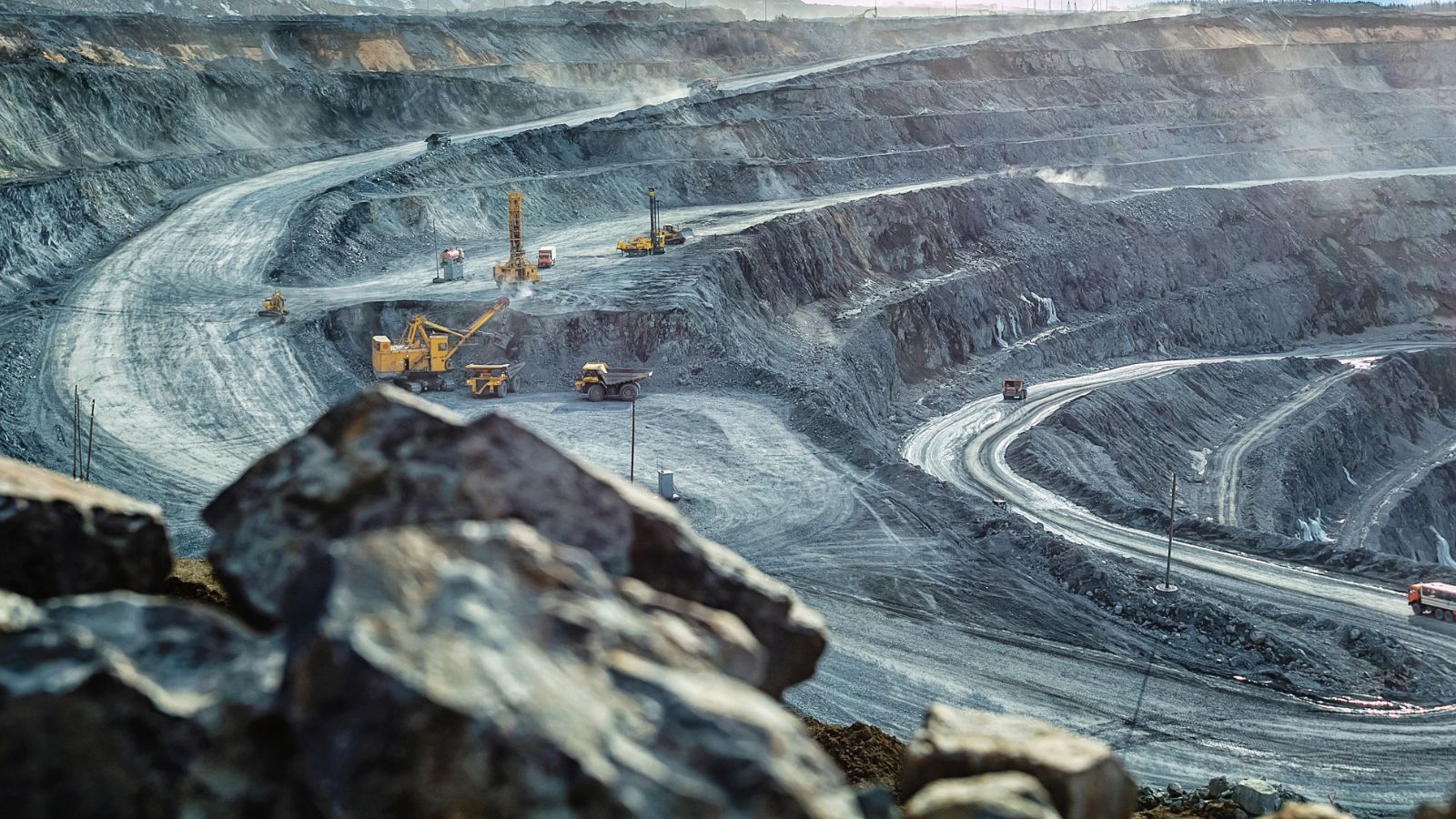
The Marathon deposit sits roughly 10 kilometres north of the Town of Marathon on the north shore of Lake Superior. The proposed operation is designed around three open pits and an onsite processing facility, with the mine expected to operate for approximately 13 years. It is not a single-metal project: copper and palladium are the headline commodities, but platinum, gold and silver are also expected to be recovered.
Generation Mining’s latest feasibility figures project approximately 2.16 million ounces of payable palladium and 532 million pounds of copper over the anticipated mine life. The same study estimates another 488,000 ounces of platinum, 160,000 ounces of gold and just over three million ounces of silver. Using the metal-price assumptions described in the study, the company calculated an after-tax net present value of about $1.07 billion, a 28% internal rate of return and a 1.9-year payback period. Those figures are forecasts rather than guarantees and remain sensitive to commodity prices, construction costs, exchange rates and operating performance.
The Automotive Connection Goes Beyond EV Batteries
Calling Marathon part of an automotive supply chain does not mean its minerals are all destined for battery cells. Copper is the more direct link to vehicle electrification. Canada’s Critical Minerals Strategy identifies copper as an important material for vehicle wiring and electrical systems, while federal regulators have specifically pointed to its role in electric vehicles, charging infrastructure and renewable-energy networks. Electric vehicles generally depend on extensive electrical architecture, meaning electrification adds another source of demand for a metal already widely used throughout conventional vehicles.
Palladium has a different automotive role. It is a platinum-group metal heavily associated with catalytic converters, where it helps reduce harmful emissions from gasoline-powered vehicles. That makes Marathon relevant to the conventional and hybrid side of the auto industry as well as to the electrification story through copper. The distinction matters because Canada’s automotive sector is likely to require several propulsion technologies during the transition. Marathon would therefore supply upstream materials useful across a changing vehicle market rather than serving only one type of drivetrain.
A Glencore Deal Could Keep More Processing Inside Canada
Mining ore in Ontario is only one part of the supply-chain equation. Canada has repeatedly faced the challenge of extracting raw materials only to see much of the downstream processing and manufacturing value captured elsewhere. Marathon’s financing announcement includes an offtake agreement with Glencore that creates a domestic processing route for a significant share of its polymetallic copper concentrate.
Under the announced terms, Glencore would purchase all of Marathon’s concentrate during the first two calendar years after commercial production begins, approximately half of annual production during much of the middle of the contract and all concentrate again from year 13 onward. The agreement has a minimum contractual term of 14 years beginning September 1, 2028. Generation says the material can support Glencore’s Horne Smelter in Rouyn-Noranda and CCR refinery in Montréal-Est. Glencore identifies Horne as Canada’s only copper smelter and CCR as its only copper refinery. Horne produces copper anodes, which CCR can refine into 99.99% copper cathodes, keeping another industrial step inside Canada before the metal enters downstream markets.
Ottawa Is Using the Growth Fund to Back More Critical-Mineral Projects
Marathon is part of a broader shift in how the federal government is trying to finance Canadian resource projects. The Canada Growth Fund is a $15-billion public investment vehicle, but it operates at arm’s length from government. Its investments are managed independently by Canada Growth Fund Investment Management, a subsidiary of PSP Investments. The mandate is built around using instruments such as equity, debt and hybrid financing to improve project economics and draw additional private money into strategically important Canadian investments.
Critical minerals have become an increasingly visible part of that portfolio. In 2026 alone, the Growth Fund announced an investment of up to $145 million supporting the expansion of North American Lithium in Quebec, approximately US$82 million for Nouveau Monde Graphite’s development plans and up to US$85 million connected with Manitoba’s Thompson nickel complex. By May, the federal government said the fund had announced 23 transactions representing more than $5 billion in commitments. Marathon extends that pattern into copper and palladium and shows how Ottawa’s strategy is moving beyond battery minerals such as lithium and graphite toward a broader industrial-materials base.
Local Jobs and Indigenous Participation Are Central to the Project
For communities around Marathon, the project is more tangible than a national discussion about supply-chain security. During the federal environmental review, the proponent estimated that construction could support between 430 and 550 full-time jobs, followed by approximately 430 jobs during operations. The project is particularly significant for nearby Biigtigong Nishnaabeg, whose territory is closely connected to the development area.
Biigtigong Nishnaabeg and Generation Mining’s subsidiary reached a Community Benefits Agreement that was ratified through a community membership vote in November 2022. Commitments cover areas including environmental management, jobs, training, education, business opportunities, cultural support and financial participation. Federal officials said the proponent committed to targeting roughly 25% of the project workforce, about 100 positions, from Biigtigong Nishnaabeg and to providing certain contracting opportunities to community-owned businesses. The relationship moved another step forward in February 2026 when Biigtigong Nishnaabeg invested approximately $750,000 directly in Generation Mining. That does not eliminate the need for continuing environmental oversight, but it gives the local partnership an economic dimension beyond consultation alone.
The Mine Is Permitted, but Several Important Steps Still Remain
Marathon has already passed regulatory milestones that frequently delay Canadian mining developments. Federal and Ontario authorities approved its environmental assessment in November 2022, and the federal decision imposed 269 legally binding environmental conditions covering areas such as fish habitat, migratory birds, woodland caribou, Indigenous land use and ongoing consultation. In May 2025, Generation Mining announced that it had obtained the final key construction permit, an Ontario environmental compliance approval dealing with water management and discharge during construction.
The project is also moving further into procurement. In August 2026, Generation reported that bids covering roughly 30% of estimated capital costs had come in at or below its feasibility-study estimates. Even so, the latest financing announcement should not be confused with a mine already under construction at full scale. The new equity and convertible-note transactions remain subject to applicable stock-exchange, shareholder and other closing conditions, with the equity financing expected to close around September 21. Generation says its board will consider the final investment decision once the financing pieces are completed, and the company is targeting early works in the fourth quarter of 2026. If those steps proceed as planned, Marathon could become an unusually clear example of what Canada means when it talks about building a critical-minerals chain from mine to domestic processing rather than stopping at extraction.