


























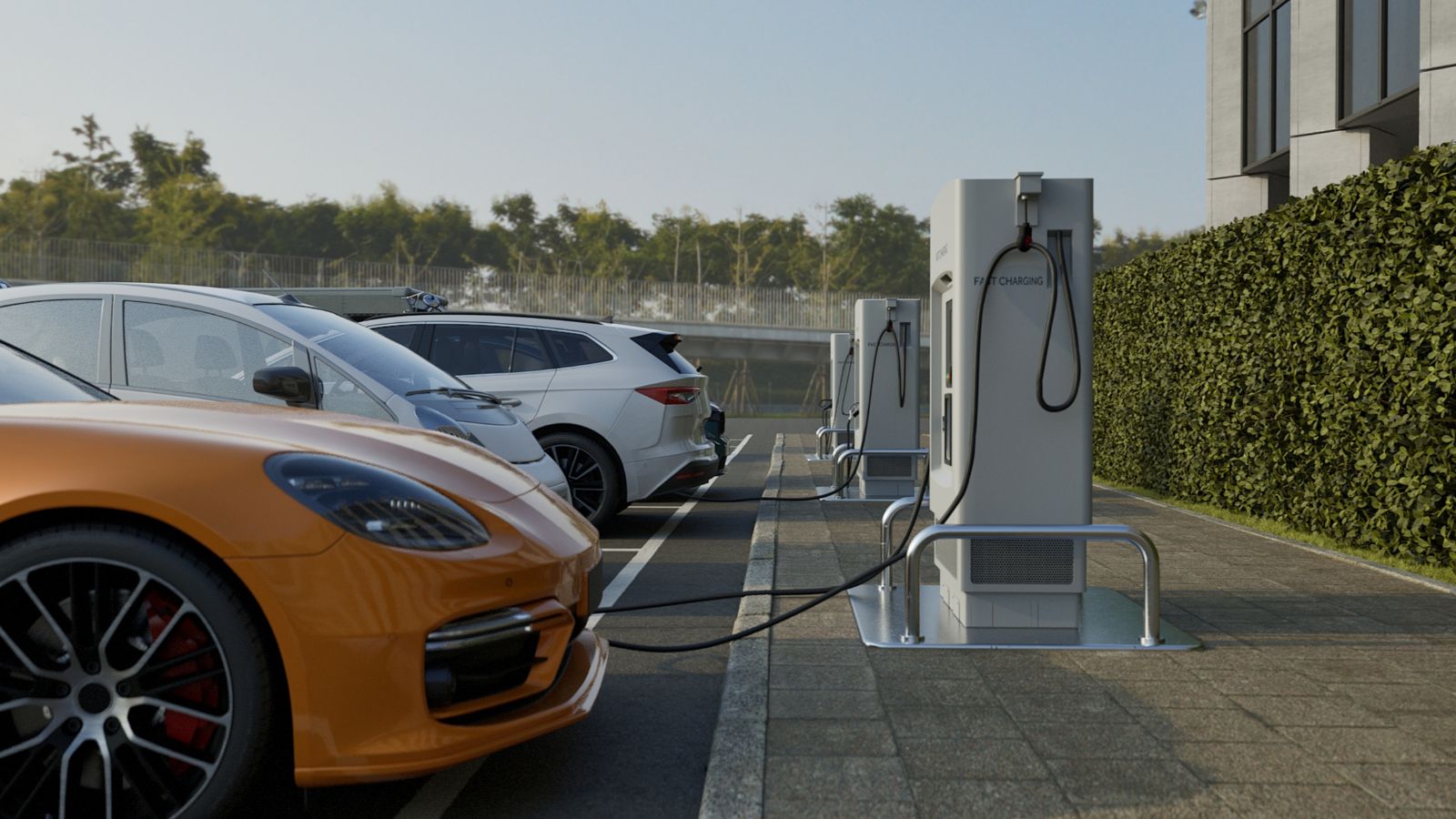
New Brunswick’s electric-vehicle charging network looks increasingly substantial on paper. Federal data cited by CBC shows 294 public charging locations across the province with a combined 596 ports, putting New Brunswick relatively close to neighbouring Nova Scotia despite its smaller population. Yet for some EV owners, the most important number is not how many chargers appear on a map. It is how many actually work when a vehicle arrives with a low battery.
Recent complaints from drivers and advocates have shifted the conversation from simply building more stations toward reliability, redundancy and real-time information. The province is now preparing another multimillion-dollar expansion, including new fast chargers in underserved areas. The challenge will be making sure the growing network is not merely larger, but dependable enough for drivers to trust on an ordinary trip.
A Network Can Look Bigger Than It Feels From Behind the Wheel
New Brunswick now has 294 public charging locations containing 596 ports, according to federal information cited in recent reporting. That is a meaningful expansion from the province’s early EV years and reflects investments by NB Power, private charging operators, businesses and governments. Nova Scotia, by comparison, has roughly 323 locations and more than 700 ports. Tracy Miersch, president of EV advocacy organization New Brunswick EV, has said the province is relatively well positioned compared with other parts of Atlantic Canada. The problem, in her view, is increasingly whether the equipment shown on a map is actually available.
That distinction matters during a road trip. Nova Scotia residents Sam and Ruth Gatenby described recently reaching a charger in Oromocto only to discover after plugging in that it was out of service. They told CBC that finding charging locations generally had not been difficult; finding equipment that was serviceable sometimes was. An unavailable gasoline pump is normally a minor inconvenience because several others sit beside it. At a site with one EV fast charger, the same failure can mean rerouting to another community.
New Brunswick Is Putting Another $5 Million Into Fast Charging
The provincial government announced in August that $5 million would go toward expanding NB Power’s eCharge network. The project is expected to add 16 fast chargers providing 29 ports, with the province saying both underserved communities and heavily used existing locations will be considered. It forms part of more than $6 million being invested in three EV-charging-related initiatives through New Brunswick’s 2026-27 Climate Change Fund.
That approach recognizes that two different infrastructure problems can exist simultaneously. Some communities have large geographic gaps between chargers, while busy locations elsewhere may have too little capacity when several EVs arrive together. A station with one functioning fast charger can technically place a town on the charging map but still create a queue on a summer weekend. Adding several ports to high-traffic locations can therefore be as important as putting new pins on the map. New Brunswick officials have specifically said expansion is planned at some frequently used sites, an important shift toward treating charging capacity rather than station count as the more meaningful measure.
Long Distances Make Reliability More Important in New Brunswick
NB Power project co-ordinator Ronnie Kingston has described underserved areas as places where charging stations can be roughly 60 to 100 kilometres apart. New Brunswick presents an unusual planning challenge because its population is concentrated in communities such as Moncton, Saint John and Fredericton while highways connect much more lightly populated regions. A private operator may see little commercial incentive to install expensive fast-charging equipment in a location where daily utilization remains low, even though that location can be strategically important to long-distance drivers.
That is one reason the province is using public money to fill infrastructure gaps that the private sector may not address on its own. Fast-charging coverage is particularly important for drivers travelling through northern and rural New Brunswick, where losing access to one planned stop can create a significantly longer detour. Charging planners therefore have to think differently from traditional retail businesses. A charger may be valuable even when it is not constantly busy because it provides geographic continuity. But that same logic means reliability becomes critical: when alternatives are dozens of kilometres away, one failed machine matters much more.
Drivers Want Better Information About What Is Actually Available
Another weakness identified by EV advocates is the difficulty of getting a comprehensive, real-time picture of charger availability across different networks. Apps such as PlugShare can be extremely useful because drivers report their own experiences, but crowd-sourced information is not guaranteed to show the operational status of every individual port. Federal infrastructure databases can show where stations exist without necessarily providing a perfectly current picture of whether every charger at those sites is working at a particular moment.
Miersch has argued that New Brunswick does not currently have one definitive count showing how many of its listed chargers are online compared with how many are unavailable, awaiting repairs or not yet commissioned. That makes the 596-port figure valuable for measuring infrastructure deployment but less useful as an instantaneous measure of usable capacity. For drivers, the difference is significant. A trip plan built around three mapped chargers can look comfortable until one is occupied and another is offline. Better live-status information, quicker fault reporting and clearer repair timelines can make existing infrastructure feel substantially more reliable without adding a single new station.
NB Power’s Reliability Figure Tells a Different Part of the Story
NB Power says availability across its own eCharge network exceeds 98 per cent and says it uses equipment selected for reliability, maintains agreements for parts and service, and provides a 24-hour toll-free support number at charging stations. The utility also encourages drivers to keep a physical network card as a backup because mobile phones, cellular connections or communication between a charger and its host system can occasionally fail.
That figure does not necessarily conflict with drivers reporting broken chargers. The province-wide total of 596 ports includes infrastructure belonging to multiple networks and operators, while NB Power’s availability statement refers specifically to the network it manages. Availability can also be measured across time: a network may achieve a very high overall percentage even though an individual driver encounters an outage at exactly the wrong moment. The distinction highlights why charging reliability cannot be reduced to one statistic. Systemwide uptime, the number of ports at each location, repair duration, communication failures and the distance to the next working charger all shape the experience a driver actually has.
EV Adoption Has Continued Even as Purchase Incentives Changed
New Brunswick ended its provincial EV purchase incentive on July 1, 2025, saying it wanted to redirect attention toward charging infrastructure. At the time, the government said nearly 7,000 electric vehicles were already on provincial roads and that EVs had surpassed its target of accounting for six per cent of new light-duty vehicle sales by 2025. The former program offered support for eligible new and used EVs as well as home chargers, helping move the market beyond its early-adopter phase.
The picture in 2026 has become more complicated. Transport Canada reported that EVs represented 4.7 per cent of new light-duty vehicle registrations in New Brunswick in the first quarter. Recent reporting based on Statistics Canada data also found 421 zero-emission vehicles registered in the province during that quarter, compared with just five in the first quarter of 2017. New Brunswick EV has pointed to limited dealer inventory as one factor behind a roughly 20 per cent year-over-year drop in EV sales during the first half of 2026, even as national EV sales moved higher.
The Next Test Is Whether Drivers Can Depend on the Network
New Brunswick’s latest funding suggests policymakers are moving beyond the simplest phase of EV infrastructure development. The first objective was getting chargers onto major routes. The next is harder: providing enough redundancy that the failure or occupation of one port does not derail a trip. Adding 29 fast-charging ports will help, particularly if planners place multiple chargers at busy sites and strategically close the longest gaps between communities.
Reliability will matter just as much as construction. Drivers need accurate live-status information, equipment that can be repaired quickly, payment systems that work consistently and enough ports to absorb weekend or tourist-season demand. New Brunswick already has a much denser charging network than it did when the eCharge network launched in 2017. The complaints being heard now are therefore partly a sign of a maturing EV market: drivers increasingly expect charging infrastructure to function like ordinary transportation infrastructure. The measure of success will not simply be whether the province can push its total beyond 596 ports, but whether drivers stop having to wonder which of those ports will actually work when they arrive.