



















• About
  • Contact
AutoIgloo
  • News & Trends
    Bosch Workers Demand ‘Made in EU’ Rules as Supplier Plans 13,000 Auto Job Cuts

    Bosch Workers Demand ‘Made in EU’ Rules as Supplier Plans 13,000 Auto Job Cuts

    Buick Is Refreshing Its Electra E7 Just Five Months After Launch as China’s EV Cycle Speeds Up

    Buick Is Refreshing Its Electra E7 Just Five Months After Launch as China’s EV Cycle Speeds Up

    Leapmotor Unveils Next-Generation EV Platform and Promises a Second Brand in 2027

    Leapmotor Unveils Next-Generation EV Platform and Promises a Second Brand in 2027

    18 Vehicles That Could Trigger Buyer’s Remorse Faster Than Expected in Canada

    Maserati Reportedly Turns to Huawei and JAC for Two New EVs as Luxury Brand Fights Sales Slump

    The EV Charging Habit That Can Annoy Everyone Around You

    Leapmotor and FAW Team Up on Solid-State and Sodium-Ion Batteries as China’s EV Tech Race Accelerates

    Chinese EV Price Pressure Gets a New Benchmark as Voyah Opens $63,420 Luxury MPV Orders

    Europe’s EV Share Jumps to 30.5% as Electric-Car Sales Blow Past Forecasts

  • Car Reviews
    Honda Asked Suppliers for 30% Parts Cost Cuts as $9.4-Billion Savings Drive Hits Global Supply Chain

    Why Some Buyers Are Choosing Older Hondas Over Newer SUVs

    18 Things That Can Make a Car Unsafe for Winter Road Trips

    Why Some Drivers Are Avoiding Vehicles With Complex Infotainment Systems

    21 Cars Canadians Are Starting to Regret Buying

    Why Some Drivers Regret Buying Big Wheels and Low-Profile Tires

    17 Vehicles That Are Quietly Getting Crushed by Insurance Costs in Canada

    Why So Many Drivers Are Nervous About Chinese-Made EV Batteries

    20 Used SUVs Canadians Should Think Twice About Buying

    20 Used SUVs Canadians Should Think Twice About Buying

    15 Vehicles That Are Starting to Feel Like a Bad Deal Around May Long Weekend

    15 Vehicles That Are Starting to Feel Like a Bad Deal Around May Long Weekend

  • Buying Guides
    18 Things That Can Make a Car Harder to Park Than Expected

    Why Some Buyers Regret Choosing the Sport Package

    The Traffic Stop Mistake That Can Turn a Warning Into a Ticket

    20 Things Canadians Should Check Before Buying a Vehicle With a Loan Still Owing

    The Dealership Fee That Buyers Should Always Ask About

    The Dealership Fee That Buyers Should Always Ask About

    23 Features That Are Making New Cars Harder (and Pricier) to Repair in Canada

    Why Some Canadians Are Avoiding Cars With Expensive Windshields

    18 Red Flags a Used Vehicle May Be a Money Pit

    The Car Buying Mistake That Makes Negotiating Almost Impossible

    Why Some Canadians Are Regretting Buying Vehicles With No Spare Tire

    Why Some Canadians Are Regretting Buying Vehicles With No Spare Tire

  • Comparisons
    Honda Asked Suppliers for 30% Parts Cost Cuts as $9.4-Billion Savings Drive Hits Global Supply Chain

    Why Some Buyers Are Choosing Older Hondas Over Newer SUVs

    25 EV Charging Mistakes Canadians Make in March (That Wreck Range)

    Why Some Canadians Are Choosing Hybrids Over Full EVs Again

    21 Used Car Features That Can Become Expensive Problems Later

    Why Some Canadians Are Choosing Front-Wheel Drive Over All-Wheel Drive

    Canada’s Auto Fight Gets Uglier as BYD Threatens to Sue Trump Administration

    Tesla Vs. BYD: Are Chinese EV’s Actually Better for Canadians?

    17 Vehicles That Are Quietly Getting Crushed by Insurance Costs in Canada

    Why So Many Drivers Are Nervous About Chinese-Made EV Batteries

    20 Used SUVs Canadians Should Think Twice About Buying

    20 Used SUVs Canadians Should Think Twice About Buying

  • EVs & Hybrids
    The Used EV Question Canadians Should Ask Before Buying One

    The Used EV Question Canadians Should Ask Before Buying One

    Why Some EV Owners Are Getting Sticker Shock From Home Charging Setups

    Why Some EV Owners Are Getting Sticker Shock From Home Charging Setups

    20 Signs Your Car Battery Is About to Leave You Stranded

    Canadian Auto Jobs Become a Central Fault Line as Ottawa Reveals Why It Rejected U.S. Vehicle Terms

    25 EV Charging Mistakes Canadians Make in March (That Wreck Range)

    Why Some Canadians Are Choosing Hybrids Over Full EVs Again

    The EV Charging Habit That Can Annoy Everyone Around You

    Canada Is Missing an EV-Battery Export Opening as EU Lithium Demand Heads for a 9-to-12-Fold Jump: Report

    16 Used-EV Surprises Canadians Don’t See Coming Until After They Buy

    The EV Charging Habit That Can Annoy Everyone Around You

  • More
    • Pricing & Deals
    • Winter Driving
    • Ownership & Maintenance
No Result
View All Result
AutoIgloo
  • News & Trends
    Bosch Workers Demand ‘Made in EU’ Rules as Supplier Plans 13,000 Auto Job Cuts

    Bosch Workers Demand ‘Made in EU’ Rules as Supplier Plans 13,000 Auto Job Cuts

    Buick Is Refreshing Its Electra E7 Just Five Months After Launch as China’s EV Cycle Speeds Up

    Buick Is Refreshing Its Electra E7 Just Five Months After Launch as China’s EV Cycle Speeds Up

    Leapmotor Unveils Next-Generation EV Platform and Promises a Second Brand in 2027

    Leapmotor Unveils Next-Generation EV Platform and Promises a Second Brand in 2027

    18 Vehicles That Could Trigger Buyer’s Remorse Faster Than Expected in Canada

    Maserati Reportedly Turns to Huawei and JAC for Two New EVs as Luxury Brand Fights Sales Slump

    The EV Charging Habit That Can Annoy Everyone Around You

    Leapmotor and FAW Team Up on Solid-State and Sodium-Ion Batteries as China’s EV Tech Race Accelerates

    Chinese EV Price Pressure Gets a New Benchmark as Voyah Opens $63,420 Luxury MPV Orders

    Europe’s EV Share Jumps to 30.5% as Electric-Car Sales Blow Past Forecasts

  • Car Reviews
    Honda Asked Suppliers for 30% Parts Cost Cuts as $9.4-Billion Savings Drive Hits Global Supply Chain

    Why Some Buyers Are Choosing Older Hondas Over Newer SUVs

    18 Things That Can Make a Car Unsafe for Winter Road Trips

    Why Some Drivers Are Avoiding Vehicles With Complex Infotainment Systems

    21 Cars Canadians Are Starting to Regret Buying

    Why Some Drivers Regret Buying Big Wheels and Low-Profile Tires

    17 Vehicles That Are Quietly Getting Crushed by Insurance Costs in Canada

    Why So Many Drivers Are Nervous About Chinese-Made EV Batteries

    20 Used SUVs Canadians Should Think Twice About Buying

    20 Used SUVs Canadians Should Think Twice About Buying

    15 Vehicles That Are Starting to Feel Like a Bad Deal Around May Long Weekend

    15 Vehicles That Are Starting to Feel Like a Bad Deal Around May Long Weekend

  • Buying Guides
    18 Things That Can Make a Car Harder to Park Than Expected

    Why Some Buyers Regret Choosing the Sport Package

    The Traffic Stop Mistake That Can Turn a Warning Into a Ticket

    20 Things Canadians Should Check Before Buying a Vehicle With a Loan Still Owing

    The Dealership Fee That Buyers Should Always Ask About

    The Dealership Fee That Buyers Should Always Ask About

    23 Features That Are Making New Cars Harder (and Pricier) to Repair in Canada

    Why Some Canadians Are Avoiding Cars With Expensive Windshields

    18 Red Flags a Used Vehicle May Be a Money Pit

    The Car Buying Mistake That Makes Negotiating Almost Impossible

    Why Some Canadians Are Regretting Buying Vehicles With No Spare Tire

    Why Some Canadians Are Regretting Buying Vehicles With No Spare Tire

  • Comparisons
    Honda Asked Suppliers for 30% Parts Cost Cuts as $9.4-Billion Savings Drive Hits Global Supply Chain

    Why Some Buyers Are Choosing Older Hondas Over Newer SUVs

    25 EV Charging Mistakes Canadians Make in March (That Wreck Range)

    Why Some Canadians Are Choosing Hybrids Over Full EVs Again

    21 Used Car Features That Can Become Expensive Problems Later

    Why Some Canadians Are Choosing Front-Wheel Drive Over All-Wheel Drive

    Canada’s Auto Fight Gets Uglier as BYD Threatens to Sue Trump Administration

    Tesla Vs. BYD: Are Chinese EV’s Actually Better for Canadians?

    17 Vehicles That Are Quietly Getting Crushed by Insurance Costs in Canada

    Why So Many Drivers Are Nervous About Chinese-Made EV Batteries

    20 Used SUVs Canadians Should Think Twice About Buying

    20 Used SUVs Canadians Should Think Twice About Buying

  • EVs & Hybrids
    The Used EV Question Canadians Should Ask Before Buying One

    The Used EV Question Canadians Should Ask Before Buying One

    Why Some EV Owners Are Getting Sticker Shock From Home Charging Setups

    Why Some EV Owners Are Getting Sticker Shock From Home Charging Setups

    20 Signs Your Car Battery Is About to Leave You Stranded

    Canadian Auto Jobs Become a Central Fault Line as Ottawa Reveals Why It Rejected U.S. Vehicle Terms

    25 EV Charging Mistakes Canadians Make in March (That Wreck Range)

    Why Some Canadians Are Choosing Hybrids Over Full EVs Again

    The EV Charging Habit That Can Annoy Everyone Around You

    Canada Is Missing an EV-Battery Export Opening as EU Lithium Demand Heads for a 9-to-12-Fold Jump: Report

    16 Used-EV Surprises Canadians Don’t See Coming Until After They Buy

    The EV Charging Habit That Can Annoy Everyone Around You

  • More
    • Pricing & Deals
    • Winter Driving
    • Ownership & Maintenance
No Result
View All Result
AutoIgloo
No Result
View All Result

Home » News & Trends

Jaguar Land Rover Job-Cut Fight Escalates as Government Steps In Over 4,000 Positions

Nate Brewer by Nate Brewer
September 6, 2026
Reading Time: 6 mins read
A A
Photo Credit: Shutterstock

Photo Credit: Shutterstock

467
SHARES
1.5k
VIEWS
Share on FacebookShare on Twitter

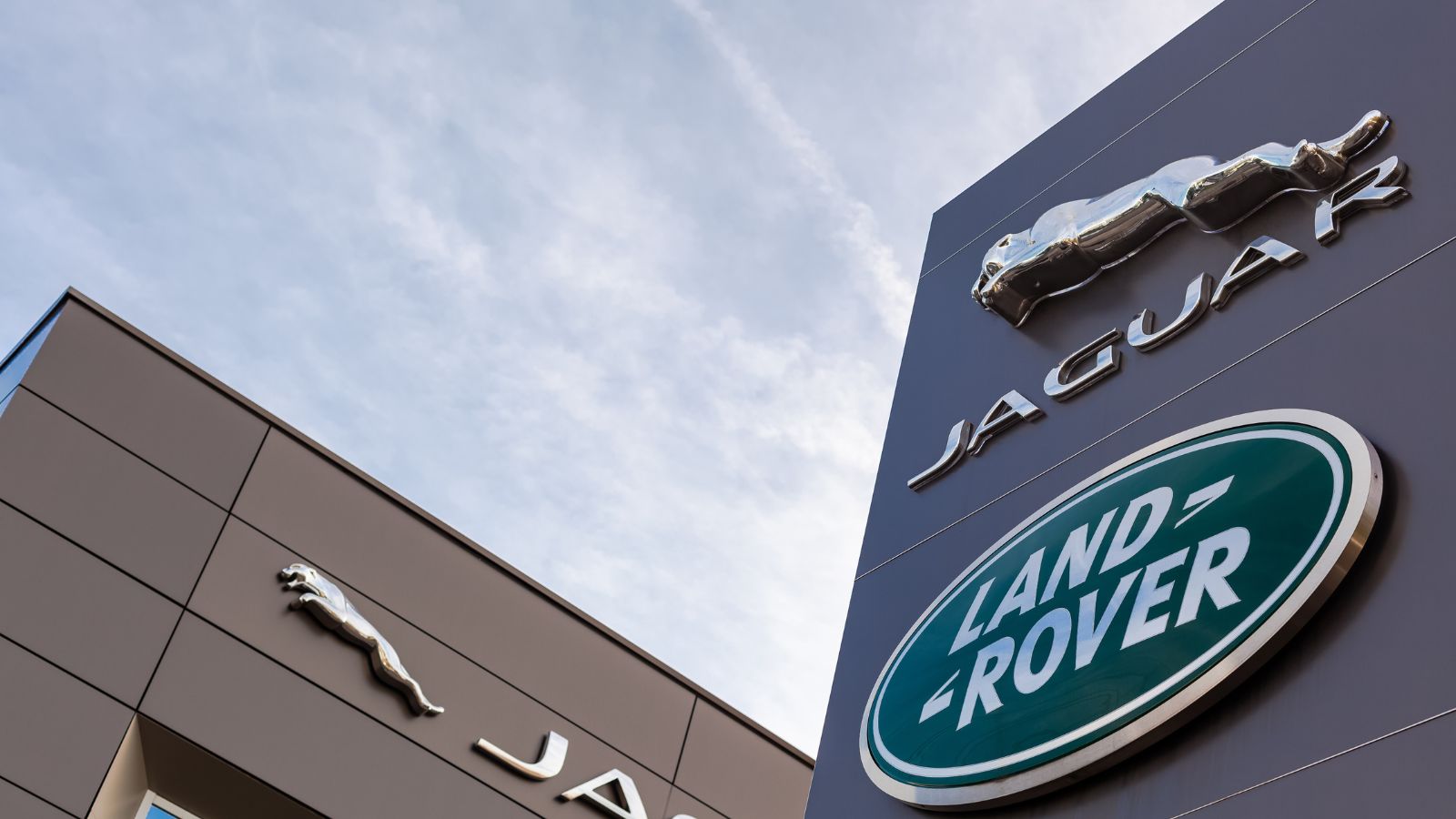
Jaguar Land Rover’s latest restructuring has quickly grown from a corporate cost-cutting exercise into a national industrial dispute. The luxury carmaker has opened a voluntary redundancy programme for salaried and management employees, with reports indicating that up to 4,000 UK positions could ultimately disappear over the next two years. JLR has not confirmed that final figure, but the potential scale has been enough to draw the British government and Unite into urgent discussions with the company. The confrontation arrives at an awkward moment: JLR remains profitable, is preparing important new electric models and wants to expand dramatically in North America, yet weaker sales, tariffs, the lingering effects of a major cyberattack and high operating costs have intensified pressure to become leaner. For thousands of employees, that corporate reset has suddenly become a deeply personal question about whether their roles survive it.

A Voluntary Redundancy Plan With Potentially Thousands of Departures

JLR told employees and trade-union representatives that it was opening a voluntary redundancy programme aimed at salaried and management workers. The company has stopped short of announcing precisely how many positions it expects to remove, creating an important distinction between what JLR has formally confirmed and reports that as many as 4,000 jobs could ultimately go. The reductions are expected to unfold over roughly two years rather than through a single immediate round of dismissals.

Even so, the scale is substantial. JLR’s own UK economic-impact material says the company directly employs about 32,800 people across 17 British sites. A reduction approaching 4,000 positions would therefore represent a significant reshaping of its domestic workforce. The initial concentration on salaried and management employees also means the announcement is not simply a story about assembly-line staffing. Engineers, administrators, managers and other white-collar employees are now confronting the kind of uncertainty that has increasingly spread across the global auto sector.

Government Intervention Has Raised the Stakes

The dispute moved beyond JLR’s offices once Business Secretary Jonathan Reynolds said he would meet chief executive PB Balaji and company representatives to discuss the expected reductions. Reynolds has said the government wants to explore ways of mitigating job losses, turning the restructuring into a test of how far ministers should go when one of Britain’s largest manufacturers decides it must shrink its payroll.

There is already a boundary around that intervention. Reynolds has ruled out simply providing JLR with a bailout, arguing that government cannot take responsibility for running individual companies. That does not mean ministers have no leverage. Britain already uses investment programmes, loan guarantees, energy-policy measures and support for zero-emission manufacturing to influence the sector. The debate is therefore becoming less about whether government should become involved—it already is—and more about what kind of involvement can realistically protect employment without effectively asking taxpayers to absorb JLR’s operating costs.

Unite Wants Job Protection, Not Another Round of Industrial Retreat

Unite has reacted sharply, with general secretary Sharon Graham arguing that repeated reductions across British manufacturing cannot be treated as isolated corporate decisions. The union has blamed a combination of inadequate long-term investment, expensive industrial energy and pressure created by the transition to zero-emission vehicles. Its immediate objective is expected to be limiting compulsory redundancies and pushing alternatives such as voluntary departures, redeployment and retraining wherever possible.

That distinction matters for workers. A voluntary programme gives employees some agency over whether to leave and normally provides negotiated compensation, while compulsory redundancies can impose much greater uncertainty on households that did not plan for an employment transition. JLR has major operations in communities including Solihull, Wolverhampton, Coventry and Halewood, meaning workforce decisions extend beyond individual paycheques. Local suppliers, service businesses and skilled-labour markets are connected to those plants. For Unite, protecting jobs is consequently also an argument about preserving the industrial capability that future vehicle programmes will need.

JLR Is Still Profitable, but Its Financial Cushion Has Become Thinner

The job reductions are not occurring because JLR has suddenly stopped making money. Its results for the three months ended June 30 showed £6.0 billion in revenue and £109 million in profit before tax and exceptional items. The problem is the direction of travel: revenue was down 9.6% from a year earlier, wholesale volumes declined 9.2%, and pre-tax profit before exceptional items fell 68.9% from £351 million in the comparable quarter.

Cash generation was even more uncomfortable. JLR reported negative free cash flow of £998 million for the quarter, although it retained £5.9 billion of total liquidity. Temporary supply problems contributed to the weakness, including disruption caused by a fire at a major component supplier and wider geopolitical interruptions. The planned wind-down of older Jaguar models also reduced volumes ahead of the brand’s next generation. Those figures explain why management can simultaneously describe JLR as profitable and still argue that significant structural savings are necessary.

The Bigger Target Is £1.7 Billion in Savings

The redundancies form part of a much larger efficiency programme. JLR announced in June that it wants to remove approximately £1.7 billion of costs over two years through what it calls its Enterprise Missions. The effort extends beyond labour: material costs, warranties, fixed expenses and operating processes are all supposed to contribute. Management’s goal is to build a company that remains financially viable at a considerably lower level of vehicle sales.

JLR has said it wants to move its break-even point toward 300,000 vehicles annually. That target provides crucial context for the job cuts. The company is not merely reacting to one weak quarter; it is redesigning its cost base so that another downturn, trade shock or production disruption does not inflict the same damage. For employees, however, “lower break-even” is more than an accounting objective. Every permanent cost removed from the business can translate into a department being consolidated, a management layer disappearing or responsibilities being divided among fewer people.

U.S. Tariffs Hurt Just as JLR Wants America to Become Much Bigger

Few contradictions illustrate JLR’s predicament better than the United States. America is central to its growth ambitions, particularly for high-margin Range Rover and Defender vehicles, yet new U.S. tariffs have made selling British-built vehicles there more expensive. Under the UK-U.S. economic arrangement, Britain secured a quota allowing up to 100,000 vehicles to enter at a 10% tariff rather than the 27.5% rate that had applied previously. Even 10%, however, represents a meaningful additional cost for an export-heavy manufacturer.

At the same time, CEO PB Balaji has laid out an extraordinarily ambitious North American objective. JLR has said it ultimately wants its U.S. business to grow to roughly the size of the entire company today, and it is exploring Defender products specifically designed for American customers in collaboration with Stellantis. That makes cost control at home strategically important. JLR is effectively trying to fund expansion into one of its most valuable markets while insulating itself against the trade barriers attached to reaching that market.

The 2025 Cyberattack Is Still Part of the Story

JLR entered the current restructuring after one of the most disruptive episodes in its recent history. A cyber incident in September 2025 forced the company to shut down systems and pause vehicle production. Manufacturing remained interrupted for five weeks before a phased restart began in October, with production returning to normal levels by mid-November. The disruption affected not only JLR but suppliers that depended on regular orders and payments from the automaker.

Financial damage followed. JLR reported £196 million of cyber-related exceptional costs in the quarter ended September 2025, while the broader shutdown contributed to steep revenue and production declines. The British government responded by backing a commercial loan with a guarantee expected to unlock up to £1.5 billion, primarily to provide confidence to the supply chain. That history helps explain why ministers are again closely involved. Less than a year after helping stabilize JLR and its suppliers after an extraordinary external shock, government officials are now confronting the employment consequences of the company’s attempt to make itself more resilient.

Four Thousand JLR Roles Matter Far Beyond One Company

JLR’s economic footprint explains why the potential reductions have attracted such political attention. The company estimates that it directly employed 32,800 people across 17 UK locations in its economic-impact assessment and supported about 199,000 jobs when indirect and induced employment was included. The same study estimated JLR’s total contribution to UK GDP at £17.9 billion in 2024. Those figures are company-commissioned estimates, but they illustrate the breadth of activity surrounding a major vehicle producer.

The national industry is substantial as well. SMMT figures put direct UK automotive-manufacturing employment at more than 188,000 people, supported by thousands of component businesses. Yet factory output remains under pressure: total UK vehicle production was down 8.1% over the first seven months of 2026, while July alone recorded an 11.6% year-over-year decline. Against that backdrop, JLR’s restructuring is being watched as a potential signal of whether Britain can protect high-value automotive employment through another period of technological and trade upheaval.

The Electric Transition Makes the Timing Especially Sensitive

The cuts arrive just as JLR is spending heavily on its next generation of vehicles. Its five-year investment programme is expected to total about £18 billion, with projects including Range Rover Electric, Range Rover Sport Electric, new models based on the Electrified Modular Architecture and the reborn electric Jaguar. The first Range Rover Electric is being built in Solihull, demonstrating why existing British plants and the skills inside them remain central to the company’s future even as other jobs are being reviewed.

Government policy is evolving at the same time. Britain opened a review of its Zero Emission Vehicle mandate in August, explicitly examining whether the transition can continue while protecting consumers, investment and automotive employment. More than one in four new UK cars was already electric when that review began. The tension is therefore no longer simply electric versus petrol. The harder challenge is deciding how quickly manufacturers can transform factories, products and workforces without destabilizing the industrial base expected to build the cleaner vehicles of the future.


Recommended.

17 Cars That Are Starting to Feel Too Expensive to Keep in 2026

Tesla’s New FSD Can Take the Wheel to Avoid a Crash as Version 14.3.9 Breaks Cover

September 6, 2026
18 Cars With Parts Prices So Wild They’re Becoming Hard to Own in Canada

17 Vehicles Canadians Love Until the Ownership Costs Kick In

May 7, 2026

Trending.

⁠$28 Billion in Canadian Goods Face 50% Trump Tariffs at Midnight as Deal Still Isn’t Final

Canada-U.S. Trade Deal Fell Apart After Washington Left Ontario-Built Ford and GM Trucks Out of Auto Tariff Relief

August 23, 2026
Doug Ford Says U.S. ‘Wasn’t Budging’ on 25% Auto Tariffs as Ontario Puts ‘Every Single Tool’ on the Table

Doug Ford Says U.S. ‘Wasn’t Budging’ on 25% Auto Tariffs as Ontario Puts ‘Every Single Tool’ on the Table

August 23, 2026
Chinese EV Price Pressure Gets a New Benchmark as Voyah Opens $63,420 Luxury MPV Orders

Ottawa EV Owners Put Electric Cars on Display as Gas Prices Push Back Toward $2 a Litre

September 5, 2026
Mexico Pushes U.S. to Cut Auto Tariff From 25% to 5%–10% — and Give Canadian Parts More Room

Ottawa’s Chinese-EV Quota Opens Canada to 6.1% Tariffs Instead of the Former 100% Surtax

August 22, 2026
16 Cars That Could Lose Their Cool Factor Fast in Canada This Summer

Tesla Raises Canadian Prices by as Much as $30,000 as U.S. Auto Tariffs Hit Buyers

September 4, 2026
  • About
  • Contact
  • Privacy Policy
  • Disclaimer
  • Editorial Policies
  • Terms and Conditions
A Revir Media Group Website

2026 Autoigloo - © All rights reserved

No Result
View All Result
  • News & Trends
  • Car Reviews
  • Buying Guides
  • Comparisons
  • EVs & Hybrids
  • More
    • Pricing & Deals
    • Winter Driving
    • Ownership & Maintenance

2026 Autoigloo - © All rights reserved

This website uses cookies. By continuing to use this website you are giving consent to cookies being used. Visit our Privacy and Cookie Policy.