

























Honda’s electrification strategy is changing quickly, and one of its most important vehicles could become the clearest sign of that shift. New reporting indicates the automaker wants to begin North American production of a next-generation CR-V hybrid as early as February 2027, accelerating the rollout by several months as demand for hybrids grows.
The reported timetable has not yet been officially confirmed by Honda, but it fits closely with the company’s publicly announced plans. Honda has redirected development and manufacturing resources toward hybrids, cancelled several prominent North American electric vehicles and promised a wave of next-generation hybrid models beginning in 2027. For a company whose CR-V is already one of North America’s most popular vehicles, moving its next hybrid generation forward could be far more consequential than simply refreshing another SUV.
The Next CR-V Hybrid Could Arrive Earlier Than Expected
The most significant new development is the reported timing. Nikkei Asia reported that Honda intends to accelerate mass production of its next-generation hybrid vehicles by several months, with production of a new CR-V hybrid in North America potentially beginning as early as February 2027. Subsequent reports from Road & Track and financial news services cited the same timetable. The new CR-V is reportedly expected to receive a substantial redesign while becoming an early showcase for Honda’s latest hybrid technology.
There is an important distinction, however. Honda has publicly confirmed that its next generation of hybrid models will begin arriving in 2027, but it has not formally announced a February 2027 CR-V production date, final specifications or an on-sale schedule. That makes the accelerated CR-V timing credible but still reported rather than official. What Honda has said directly is that it intends to bring compelling hybrid products to market faster than originally planned. The reported CR-V timetable fits that strategy unusually well.
Honda Has a Powerful Reason to Put the CR-V First
Few vehicles matter more to Honda’s North American business than the CR-V. Honda sold 403,768 CR-Vs in the United States during 2025, making it the company’s best-selling model and one of the four highest-volume vehicles of any kind in the country. Hybrid versions represented more than half of that total, with roughly 218,000 CR-V hybrids sold. That means the hybrid is no longer a niche alternative within the CR-V family; it has become central to the nameplate’s commercial success.
The trend has continued into 2026. During the first half of the year, CR-V hybrid models represented roughly 55% of U.S. CR-V volume, while Honda’s overall hybrid sales continued setting records. That gives the company an unusually strong business case for putting new hybrid technology into the CR-V quickly. A technological improvement applied to a low-volume vehicle might affect tens of thousands of buyers. Applied to the CR-V, it can influence hundreds of thousands of annual sales, dealership inventories and Honda’s overall fuel-economy performance.
The New Hybrid Platform Is More Than an Updated Engine
Honda’s next-generation hybrid program involves substantially more than modifying the system used in today’s CR-V. The company has developed a new mid-size platform that it says is about 90 kilograms, or 198 pounds, lighter than the existing platform. Honda is also targeting more than 60% parts commonality among vehicles using the architecture. Shared sections such as the engine compartment and rear underbody can therefore be standardized while individual models retain different cabins and exterior designs.
Honda has paired the new platform with an upgraded two-motor hybrid system and a newly developed electric all-wheel-drive unit. The company is targeting a fuel-economy improvement of more than 10% for next-generation hybrid models while reducing the cost of the hybrid system by more than 30% compared with its 2023 technology. Those targets matter because hybrids must succeed on price as well as efficiency. Making the underlying system lighter, cheaper and easier to share across several vehicles could allow Honda to expand hybrid availability without turning every electrified model into a premium-priced offering.
Honda’s EV Pullback Has Become Much Bigger Than a Delayed Model
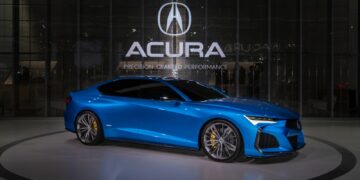
The faster hybrid push comes after a dramatic reassessment of Honda’s electric-car strategy. In March 2026, Honda cancelled development and planned North American launches of three major EVs: the Honda 0 SUV, Honda 0 Saloon and Acura RSX. These were not obscure projects. The 0 Series had previously been presented as the foundation of Honda’s next generation of global battery-electric vehicles, while the RSX was intended to help move Acura deeper into the EV market.
Honda said its broader electrification reassessment could result in losses of as much as 2.5 trillion yen when related costs are included. The company had already reduced planned electrification and software spending from 10 trillion yen to 7 trillion yen in 2025 as EV demand developed more slowly than anticipated. By May 2026, Honda was explicitly reallocating near-term capital from EV programs toward gasoline and hybrid vehicles. The scale of those decisions shows why the reported acceleration of the CR-V hybrid is significant: resources are being moved, not merely marketing priorities.
Hybrids Are Becoming the Centre of Honda’s Near-Term Product Plan
Honda now plans to introduce 15 next-generation hybrid models globally by the end of the fiscal year ending March 31, 2030, with North America receiving particular attention. That target is an expansion of the 13-model hybrid rollout announced a year earlier. Honda has also displayed a new Honda hybrid sedan prototype and an Acura hybrid SUV prototype, both intended to demonstrate the technology and architecture that will underpin upcoming production vehicles.
Manufacturing is being reorganized around the same strategy. Honda says all of its North American automobile plants will become capable of producing hybrid vehicles. Excess capacity at its Ohio plants is being redirected toward gasoline and hybrid production, while part of the battery manufacturing capacity at its L-H Battery joint venture with LG Energy Solution is being adapted for hybrid batteries. Honda also plans to increase North American sourcing of key motor and inverter components. Taken together, these moves suggest that hybrid production is becoming embedded across Honda’s manufacturing system rather than being reserved for a handful of specialized models.
Honda Is Responding to a Hybrid Market That Keeps Getting Bigger
Honda’s strategy is also being shaped by what customers are buying. Hybrids represented about 19% of U.S. retail vehicle sales in August 2026, according to industry data cited by Reuters. Rising fuel costs have added another incentive for consumers who want better efficiency without depending completely on charging infrastructure. Honda and Toyota, two manufacturers that retained substantial hybrid lineups while competitors poured billions into battery-only models, have consequently found themselves well positioned for the shift.
Competition in the CR-V’s own segment is particularly intense. Toyota’s sixth-generation RAV4 abandoned a conventional gasoline-only powertrain in the U.S. and is sold with hybrid or plug-in-hybrid systems. Toyota’s regular RAV4 hybrid uses its latest-generation electrified powertrain, while the plug-in version offers additional electric-only driving capability. For Honda, allowing its highest-volume SUV to remain on an older hybrid architecture for too long would risk surrendering technological ground in one of the industry’s most valuable segments. Accelerating the next CR-V therefore has a competitive logic as well as an environmental one.
Canada Has a Particular Stake in What Honda Does Next
The CR-V story carries unusual importance north of the U.S. border because Honda has produced the SUV in Alliston, Ontario, for years. Honda of Canada Manufacturing’s Plant 2 currently builds the CR-V, and the facility served as a North American lead plant when the current-generation CR-V hybrid was introduced. The present Canadian-market CR-V Hybrid combines a 2.0-litre Atkinson-cycle four-cylinder engine with two electric motors for 204 horsepower and 247 pound-feet of torque. Honda Canada rates some versions at as little as 6.4 L/100 kilometres combined.
What has not been confirmed is whether the reported February 2027 next-generation production start would involve Alliston. That distinction matters, especially after Honda indefinitely suspended its planned comprehensive Ontario EV value chain in May 2026. The project, originally announced as a roughly C$15-billion investment, had envisioned major new EV and battery production in the province. Existing Honda operations and jobs in Alliston were not cancelled, however, leaving the plant’s established CR-V and hybrid expertise highly relevant as Honda’s North American priorities change.
Honda Is Pulling Back From EVs, Not Walking Away From Them Forever
Describing Honda’s strategy simply as an abandonment of EVs would go too far. The company’s near-term spending and product priorities have clearly moved toward hybrids, but Honda still identifies electrification as part of its long-term carbon-neutrality strategy. Its May 2026 business briefing said the company would continue developing a competitive future EV hardware platform and maintain research into technologies such as all-solid-state batteries. Honda also plans selected EV introductions in markets where it believes conditions are more favourable.
The bigger change is timing. Honda no longer appears willing to spend aggressively on battery-electric vehicles simply because earlier industry forecasts suggested rapid adoption was inevitable. During the three fiscal years through March 2029, the company plans roughly 0.8 trillion yen of EV investment, compared with approximately 4.4 trillion yen allocated to gasoline, hybrid and related vehicle programs. Honda describes its long-term approach as “multi-faceted,” incorporating hybrids, EVs, carbon-neutral fuels and other technologies. In practical terms, hybrids have become the bridge Honda expects to carry much more of the business through the remainder of this decade.
The Biggest Questions About the Next CR-V Remain Unanswered
Even with the reported February 2027 production target, major details about the next CR-V remain unknown. Honda has not published final power, fuel economy, battery capacity, dimensions, pricing or trim information. It has also not confirmed whether every next-generation CR-V will use a hybrid powertrain or whether conventional gasoline versions will continue alongside it. Honda’s next-generation mid-size architecture itself can support different powertrain configurations, so a hybrid-focused strategy does not automatically mean a hybrid-only CR-V.
Those unanswered questions should become increasingly important as 2027 approaches. What can already be established is that Honda has the technology, manufacturing plan and financial incentive to move quickly. Hybrid demand is strong, the CR-V is one of its most valuable products, and the company has deliberately redirected resources away from several cancelled EV programs. If the reported timetable holds, the next CR-V could become one of the earliest and most visible examples of Honda’s new strategy: electrification advancing not through an immediate leap to battery-only vehicles, but through a much larger generation of hybrids first.